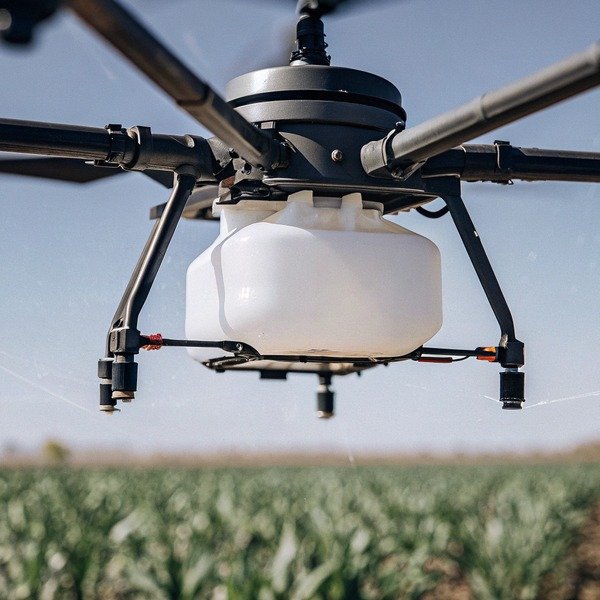
We often see our clients struggle with the complexity of customs paperwork long before our drones even leave the factory floor. Import delays caused by incorrect classification can hurt your operational timeline and unexpectedly drain your budget. You need clarity to protect your profit margins.
The primary HS code for agricultural drones is 8806.23.00 for models weighing between 7 kg and 25 kg, or 8806.24.00 for heavier units. While older classifications used 8802 or 8424, the 2021 HTSUS update established heading 8806 specifically for unmanned aircraft, streamlining import compliance.
Let’s examine the specific codes and duty calculations you need to know to ensure a seamless import process.
What is the correct HS code classification for agricultural spraying drones?
When we configure flight parameters for our heavy-lift sprayers, we know that accurate weight documentation is just as critical as the engineering itself. Using an incorrect weight class on your entry documents is a common error that leads to immediate red flags at the border.
Agricultural spraying drones generally fall under heading 8806, defined by Maximum Take-Off Weight (MTOW). Use 8806.23 for drones between 7 kg and 25 kg, and 8806.24 for those between 25 kg and 150 kg. Always verify the exact weight specifications to select the accurate subheading.

Understanding the classification logic is vital because the regulations changed drastically in recent years. Before December 2021, the Harmonized Tariff Schedule of the United States (HTSUS) did not have a dedicated heading for Unmanned Aircraft Systems (UAS). Back then, we often saw importers debating whether to classify their products as "Helicopters" under heading 8802 or as "Mechanical Appliances for Projecting liquids" under heading 8424. This ambiguity caused significant inconsistency in duty rates and customs treatment.
Today, the World Customs Organization and the US International Trade Commission have solved this US International Trade Commission 1 World Customs Organization 2 by introducing Heading 8806. This heading specifically covers "Unmanned aircraft." The key to finding your specific code lies entirely in the weight of the machine.
The Critical Importance of MTOW
Customs authorities classify these aircraft based on their Maximum Take-Off Weight (MTOW) Maximum Take-Off Weight 3, not just the empty weight of the drone. This distinction is crucial for agricultural drones, which carry heavy liquid payloads. You must ensure that the technical specifications sheet we provide matches the weight class declared on your commercial invoice.
Here is a breakdown of the specific subheadings under Heading 8806 that apply to the agricultural drones we manufacture and export:
Table 1: HS Code Classification by Weight for Agricultural Drones
| HTSUS Subheading | Weight Category (MTOW) | Typical Application |
|---|---|---|
| 8806.22.00 | More than 250 g but not more than 7 kg | Small scouting or mapping drones used for crop analysis. |
| 8806.23.00 | More than 7 kg but not more than 25 kg | Medium-sized sprayers. This is the most common category for standard agricultural drones. |
| 8806.24.00 | More than 25 kg but not more than 150 kg | Heavy-lift industrial sprayers designed for large-scale farming operations. |
| 8806.92.00 | Other unmanned aircraft | Less common for standard electric rotors, usually reserved for different propulsion types. |
The "Sprayer" vs. "Aircraft" Debate
Occasionally, some customs brokers may still suggest using HS Code 8424.49 (Agricultural or horticultural sprayers). Their logic is that the "principal function" of the machine is spraying, not flying. However, since the 2021 update, Heading 8806 is the legally preferred classification for the aircraft itself.
If you import the spraying system separately—without the drone—it might fall under 8424. But when we ship a complete "Ready-to-Fly" unit, Heading 8806 is the standard. Using an outdated code like 8424.49 might offer a different duty rate, but it carries a high risk of rejection and retroactive penalties during a customs audit. We always advise sticking to the 8806 series to remain compliant with modern US customs rulings.
How do I calculate the import duty rate for drones coming from China?
Our export team constantly monitors trade policy shifts to provide the most accurate landed cost estimates possible. Sudden tariff changes can erase your expected profit margin overnight if you only calculate the base duty rate without considering country-specific surcharges.
To calculate the total import duty, add the general duty rate (typically 0% to 1.1% for drones) to the Section 301 China-specific tariff, which often adds an extra 25%. You must apply this combined percentage to the Commercial Invoice value to determine your final landed cost.

Calculating the financial impact of importing from China requires a two-step math process. Many new importers look up the HTS code, see a "Free" or very low rate, and assume that is all they will pay. Unfortunately, this overlooks the trade remedies currently in place under Section 301 of the Trade Act of 1974. Section 301 of the Trade Act of 1974 4 Trade Act of 1974 5
Step 1: The General Rate of Duty
Under the "General" column "General" column of the HTSUS 6 of the HTSUS, unmanned aircraft imported from Most Favored Nations (which includes China) often have a very low duty rate. Most Favored Nations 7
- For 8806.23.00, the general rate is typically Free or 1.1%, depending on the specific year's schedule.
- This base rate is what applies to drones coming from countries without specific trade sanctions.
Step 2: The Section 301 Tariff
Because our manufacturing base is in China, imports into the US are subject to additional duties. As of the current trade policies, most industrial drones fall under strict tariff lists (often List 4A or similar iterations). This usually imposes an additional 25% duty on top of the general rate.
It is vital to understand that this is not a tax on the shipping cost; it is a tax on the Value of Goods Declared (FOB price).
Practical Calculation Example
To help you visualize the cost, here is a scenario for importing a batch of our medium-sized agricultural drones.
Table 2: Estimated Duty Calculation for a $10,000 Order
| Cost Component | Rate / Formula | Calculation |
|---|---|---|
| Product Value (FOB) | Agreed Purchase Price | $10,000 |
| General Duty | Assumed 0% (Base Rate) | $0 |
| Section 301 Tariff | 25% of Product Value | $2,500 |
| Merchandise Processing Fee (MPF) | ~0.3464% (Min $31 / Max $614) | ~$35 |
| Harbor Maintenance Fee (HMF) | 0.125% (If ocean freight) | $12.50 |
| Total Estimated Duties & Fees | Sum of above fees | $2,547.50 |
| Total Landed Cost | Product + Duties + Freight (Excl.) | $12,547.50 + Freight |
Minimizing Risk of Undervaluation
You might be tempted to ask us to declare a lower value on the commercial invoice to save on that 25% tariff. We must strictly advise against this. US Customs and Border Protection (CBP) actively audits low-value shipments from China. If they determine the value was under-declared, you face severe penalties, seizure of the goods, and potential blacklisting for future imports.
Our invoices always reflect the true transaction value to ensure your business remains compliant and reputable. While the 25% tariff is a significant cost, it is a known variable that you can factor into your pricing strategy. Getting caught evading duties is an unquantifiable risk that could shut down your supply chain entirely.
Do I need a different HS code if my drone includes a camera or other payloads?
We often integrate advanced multispectral cameras into our agricultural drones to help clients monitor crop health. A frequent question we receive is whether adding these high-tech sensors changes the paperwork from an aircraft classification to a camera classification.
Generally, you do not need a different HS code if the camera is permanently integrated, as the drone is classified by its principal function under heading 8806. However, detachable payloads imported separately must use their own specific codes, such as 9027 for analysis sensors or 8525 for cameras.

The concept of "Principal Function" is central to customs classification. When we manufacture a drone specifically for agriculture, the camera or spray tank is an integral part of the machine's purpose. The drone cannot perform its job without it. Therefore, the entire unit is classified as an unmanned aircraft.
Integrated vs. Detachable Payloads
If the camera is built into the fuselage or permanently mounted (meaning it cannot be easily removed without tools or disassembly), the entire system is classified under 8806. The camera is considered a part of the drone.
However, if you purchase a "modular" drone system where the payload is shipped in a separate box or is designed to be swapped out rapidly (e.g., swapping a spray tank for a granular spreader), the classification can get tricky.
- Scenario A (Bundled Kit): If we ship the drone and the camera in the same box as a "set" for retail sale, General Rule of Interpretation (GRI) 3(b) usually applies. General Rule of Interpretation (GRI) 3(b) 8 This rule dictates that the set is classified by the component that gives it its "essential character." For an agricultural drone, the aircraft (flight capability) is usually the essential character, so it stays under 8806.
- Scenario B (Separate Imports): If you order spare cameras or sensors separately from the drone to keep as backup stock, you cannot use the drone HS code. You must classify them as specific electronic components.
Common Spare Parts Classifications
Maintaining a fleet of agricultural drones means you will eventually need to import spare parts. Unlike the full drone unit, parts generally do not fall under Section 8806 unless they are specifically "Parts of unmanned aircraft" (often 8807). Many generic parts have their own headers.
Table 3: HS Codes for Common Drone Components & Accessories
| Component | HS Code Heading | Notes |
|---|---|---|
| Lithium Batteries | 8507.60 | Highly regulated for safety; often have separate duty rates. |
| Propellers / Rotors | 8807.30 | Classified as parts of unmanned aircraft. |
| Remote Controllers | 8526.92 | Radio remote control apparatus. |
| Digital Cameras | 8525.80 | If imported separately from the drone. |
| Multispectral Sensors | 9027.50 | Instruments for physical or chemical analysis. |
Export Controls and "Dual-Use"
Beyond simple HS codes, adding high-end cameras brings up the issue of Export Administration Regulations (EAR). If your agricultural drone uses a high-resolution thermal camera, it might be considered "Dual-Use" technology (capable of military application).
While this doesn't change the HS code, it does require checking the ECCN (Export Control Classification Number). Even though we handle the export side from China, you as the importer must ensure that the equipment doesn't require a specific import license in the US, especially if you plan to resell to government entities. We always verify the technical capabilities of our cameras to ensure they remain within the "Civilian Use" thresholds to simplify this process for you.
Where can I verify the HS code to ensure smooth customs clearance for my shipment?
We aim for zero delays when our crates arrive at US ports, as reliability is the cornerstone of our brand. Relying on guesses leads to seizures, so we always recommend verifying data through official government channels before the shipment is loaded onto the vessel.
You can verify your HS code by consulting the Customs Rulings Online Search System (CROSS) for precedents or by requesting a binding ruling directly from US Customs and Border Protection (CBP). Additionally, working with a licensed customs broker ensures your classification aligns with the latest HTSUS updates.

Even with the best advice, customs classification can be subjective. An officer at the Port of Long Beach might interpret a "multipurpose" drone differently than an officer in Newark. To mitigate this risk, you have three powerful tools at your disposal.
1. The CROSS Database (Customs Rulings Online Search System)
This is a free, searchable database provided by the US government. It contains full texts of ruling letters issued by CBP.
- How to use it: Search for keywords like "agricultural drone," "sprayer aircraft," or "quadcopter."
- Benefit: You can find recent rulings (post-2021) that match our product specifications. If CBP has already ruled that a 15kg spray drone is 8806.23, you can cite this ruling ID on your paperwork to justify your classification. It acts as a strong precedent.
2. Binding Rulings
If your legal team or customs broker is unsure about a specific new model—perhaps one with a unique hybrid engine or novel payload—you can request a "Binding Ruling" from CBP.
- The Process: We can provide you with detailed schematics, photos, and descriptions. You submit these to CBP before importing.
- The Result: CBP issues a legal letter determining the exact HS code.
- Why it matters: Once you have this letter, the port authorities must accept that classification. It eliminates uncertainty. The downside is that it can take 30 to 90 days to receive, so this is best for long-term planning, not urgent orders.
3. Licensed Customs Brokers
We strongly recommend that all our clients, especially those importing high-value industrial equipment, engage a licensed US customs broker. licensed US customs broker 9
- Expertise: They have software that updates daily with tariff changes, anti-dumping duties, and exclusions.
- Liability: They act as your agent. While you are ultimately responsible, their guidance is backed by professional liability and deep industry knowledge.
- Documentation: We provide the Commercial Invoice, Packing List, and Bill of Lading, but the broker is the one who files the Entry Summary (CBP Form 7501).
Documentation We Provide to Assist You
To ensure your broker has what they need, our factory standardizes our export documentation. We clearly list:
- Detailed Description: Not just "Drone," but "Unmanned Aircraft for Agricultural Spraying, Model X, 6 Rotors."
- CAS/Technical Specs: Listing the net weight and MTOW clearly to support the 8806.23/24 decision.
- Country of Origin: Marked clearly on the product label and the box to satisfy US marking rules.
By combining our accurate documentation with your broker's expertise and verification from the CROSS database, you create a CROSS database 10 "compliance shield" that protects your business from costly border delays.
Conclusion
Determining the correct HS code for agricultural drones—typically 8806.23 or 8806.24 depending on weight—is the first step toward a profitable import strategy. By understanding the 2021 classification changes, calculating the cumulative impact of Section 301 tariffs, and verifying your codes through official channels, you can avoid unexpected costs and delays. We are ready to provide the precise technical data you need to clear customs with confidence.
Footnotes
1. US agency providing the official Harmonized Tariff Schedule used for all US imports. ↩︎
2. Official international body that maintains the Harmonized System used for global trade classification. ↩︎
3. Standard aviation metric used by customs to categorize unmanned aircraft into specific weight brackets. ↩︎
4. Official USTR page detailing Section 301 tariffs and investigations. ↩︎
5. Primary US legislation authorizing the Section 301 tariffs applied to Chinese-origin goods. ↩︎
6. Official USITC search tool for the Harmonized Tariff Schedule and duty rates. ↩︎
7. Trade principle determining the standard duty rates for countries with normal trade relations. ↩︎
8. Official USITC document defining the General Rules of Interpretation for classification. ↩︎
9. Professional association representing licensed brokers who manage legal compliance for US importers. ↩︎
10. Official CBP database for searching binding customs rulings. ↩︎

 English
  Español de México
  Deutsch
  Français
  Русский
  العربية
