
When we collaborate with new clients in the United States or Europe, we often notice a hesitation to commit to a full container load immediately full container load 1. This caution is justified; relying on spec sheets alone can lead to costly mistakes if the equipment fails during a critical harvest window. Instead of gambling on a bulk purchase, we recommend initiating a pilot program that stress-tests both the hardware and our logistical capabilities.
To conduct a successful small batch trial, you should order 2 to 5 units to verify technical specifications against real-world performance, test the supplier’s shipping channels for dangerous goods like batteries, and evaluate the responsiveness of their technical support team before scaling up to a long-term partnership.
The following guide details the precise steps and metrics you need to evaluate during this crucial testing phase.
What specific performance metrics should I track when field testing sample agricultural drones?
Our engineering team spends countless hours calibrating flight controllers flight controllers 2, yet we know that lab results differ from the harsh reality of a dusty, windy farm. If you do not validate the specific operational limits of the sample units, you risk deploying a fleet that cannot handle your local environmental conditions.
You must track actual spray width uniformity, battery voltage sag under load, flow rate accuracy compared to the controller display, and the stability of the RTK connection in obstructed areas to ensure the drone meets the efficiency claims made in the manufacturer’s datasheet.

Validating the Spray System
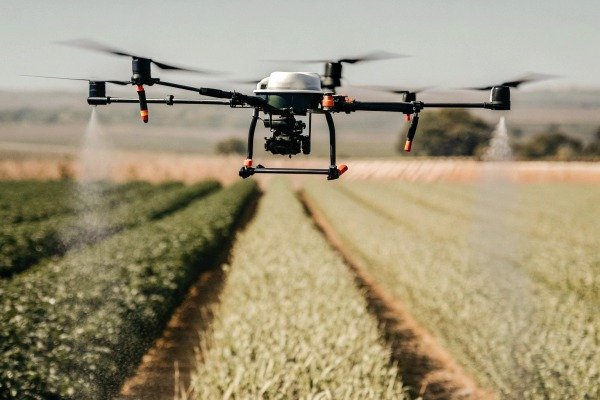
The core function of an agricultural drone is precise liquid delivery. During your trial, do not simply fly the drone; measure the output. Place water-sensitive paper on the ground at varying intervals to verify the effective spray width and droplet density. We often see discrepancies where the software claims a flow rate of 5 liters per minute, but the actual output varies due to pump calibration or nozzle wear.
You should also test the system with liquids of different viscosities if you plan to spray fertilizers rather than just pesticides. Thicker liquids can strain the pumps and reduce battery life significantly. A rigorous test involves running the tank dry to ensure the flow meter creates an accurate "break point" log, allowing the drone to resume spraying exactly where it left off after a refill.
Battery Thermal Management and Endurance
Battery performance is the most common point of failure. In our testing facility in Chengdu, we control the temperature, but your fields might be 35°C (95°F) or hotter. You need to record the flight time not just when hovering, but when the drone is fully loaded and maneuvering against the wind. Monitor the battery temperature immediately after landing. If the cells are overheating, it indicates poor thermal management, which leads to rapid degradation and expensive replacement costs.
Flight Stability and RTK Accuracy
GPS drift can be disastrous for automated crop spraying. Test the sample units near tree lines or structures to see how quickly the RTK system regains a fixed solution after a signal loss. RTK system 3 A reliable industrial drone should maintain a stable hover within centimeters, even when the signal is weak.
Comparison: Datasheet vs. Field Reality
Use the table below to log the differences between what is promised and what you observe.
| Metric | Manufacturer Datasheet Claim (Typical) | Field Test Target (Acceptable Variance) | Why It Matters |
|---|---|---|---|
| Flight Time (Loaded) | 15 Minutes | +/- 10% of claim | Determines acres covered per hour. |
| Spray Width | 6 Meters | > 5.5 Meters consistently | Ensures no crop strips are missed. |
| Flow Rate Accuracy | +/- 2% error | < 5% error | Prevents over-application of chemicals. |
| Recharge Time | 15 Minutes (20-90%) | < 20 Minutes | Affects how many battery sets are needed. |
| Obstacle Avoidance | Detects wires/poles | Must stop 2m before impact | Prevents costly crashes. |
Can I request OEM branding and software modifications on a small quantity trial order?
We understand that establishing your own brand identity is crucial for distinguishing your services in a competitive market like the US. However, requesting deep customization on a trial order of just two or three units often leads to high costs or rejection, as setting up molds and software branches consumes significant engineering resources.
You can request basic OEM branding such as logo stickers, custom paint schemes, and startup screen logos on small trial orders, but deep software modifications or structural mold changes usually require non-recurring engineering fees or a larger Minimum Order Quantity (MOQ).
Cosmetic Branding vs. Structural Changes
For a small batch trial, we are generally happy to apply your company’s logo using high-quality decals or laser engraving. This allows you to present the unit to your end customers or investors as a proprietary product during the pilot phase. Painting the fuselage a specific color (e.g., John Deere green or a high-visibility orange) is also feasible for small batches, though it may add a few days to the lead time.
However, asking for a redesigned frame or a custom-molded tank is not improved for a trial order. These changes require new tooling, which costs thousands of dollars. We recommend sticking to the standard chassis for the trial to validate the mechanics first. If the trial succeeds, we can discuss structural changes for the bulk order.
Software Customization and SDKs
Software is where value is added, but it is also where costs escalate. For a trial order, you should check if the flight controller supports an open SDK (Software Development Kit). Software Development Kit 4 This allows your local team to develop custom apps or integrate with farm management software without needing us to rewrite the core firmware.
If you require specific firmware changes—such as limiting the maximum altitude for regulatory compliance or changing the language interface—this can often be done remotely. regulatory compliance 5 However, requesting a completely new flight mode or UI overhaul is best reserved for when you have committed to a larger volume.
Negotiating NRE Fees
If you absolutely need a unique feature for the trial units, be prepared to pay a Non-Recurring Engineering (NRE) fee. This covers our R&D time. A fair supplier will often offer to refund this fee once your total order volume hits a certain threshold (e.g., 50 or 100 units).
Customization Feasibility Matrix
| Customization Type | Feasibility for Small Batch (2-5 Units) | Estimated Extra Cost | Lead Time Impact |
|---|---|---|---|
| Logo Stickers/Decals | High | Low / Free | None |
| Custom Paint Color | Medium | Moderate ($100-$300/unit) | +1 Week |
| Packaging Box Logo | High | Low (Sticker) / High (Print) | None |
| Firmware Parameters | Medium | Low (if standard params) | 1-2 Days |
| Custom App/UI | Low | High (NRE required) | +2-4 Weeks |
| New Frame Mold | None | Very High (Tooling cost) | +2 Months |
How do I handle logistics and customs clearance for a small batch drone shipment from China?
In our experience shipping to distributors worldwide, the most common delay is not manufacturing, but the complex regulations surrounding lithium batteries. Since agricultural drones use high-capacity batteries that are classified as Class 9 Dangerous Goods high-capacity batteries 6, a simple mistake in paperwork can cause your trial units to be seized or returned. Class 9 Dangerous Goods 7
To handle logistics for a small batch efficiently, you should utilize a Door-to-Door (DDP) shipping service that includes customs clearance and duty payments, ensuring the supplier handles the Dangerous Goods (DG) certification and packaging compliance for the lithium batteries.

The Challenge of Class 9 Dangerous Goods
Agricultural drones typically run on large 22,000mAh or 30,000mAh batteries. These exceed the standard 100Wh limit for air travel, meaning they cannot be shipped via standard express courier services without strict DG (Dangerous Goods) declaration.
For your trial order, ask us to provide the MSDS (Material Safety Data Sheet) and the UN38.3 test report. Material Safety Data Sheet 8 Without these documents, customs in the US or Europe will reject the shipment. We usually package batteries in separate, fire-retardant boxes within the main shipment to comply with IATA regulations.
Choosing the Right Incoterms
For a full container, FOB (Free on Board) is standard. FOB (Free on Board) 9 However, for a small trial of 2-5 units, we strongly recommend DDP (Delivered Duty Paid). Under DDP terms, the supplier (us) bears the risk and cost until the drones arrive at your warehouse. This means we handle the export declaration in China and the import clearance in your country. This saves you from hiring a customs broker for a small, one-off shipment.
Protecting the Payload
Air freight handling can be rough. Ensure the trial units are packed in flight cases (hard shell cases with foam inserts) rather than just cardboard boxes. While this adds to the shipping weight and cost, it ensures the delicate gimbals, spray nozzles, and carbon fiber arms arrive intact. A damaged trial unit ruins the evaluation before it even begins.
Shipping Methods Comparison
| Method | Speed | Cost | Suitable For | DG Battery Handling |
|---|---|---|---|---|
| Air Express (DHL/FedEx) | 3-7 Days | Very High | Spare parts, sensors (no big batteries) | Very Strict / Often Rejected |
| Special Line Air (DDP) | 10-15 Days | High | Complete Drone Sample + Batteries | Handled by Forwarder |
| Sea Freight (LCL) | 25-40 Days | Moderate | 5+ Units (Heavy weight) | Easy |
| Sea Freight (FCL) | 25-40 Days | Low | Volume Orders (>20 Units) | Easiest |
How can I test the supplier's technical support and spare parts availability during the pilot phase?
We know that a drone sitting idle during the spraying season is losing money every minute, which is why we emphasize rapid response times. Many buyers focus solely on the hardware performance but fail to realize that the quality of after-sales service is the true determinant of a profitable long-term partnership.
You should simulate a critical failure during the trial by disconnecting a component or asking for complex troubleshooting advice to measure the supplier’s response time, English proficiency, and ability to ship specific spare parts quickly.

The "Stress-to-Failure" Communication Test
Do not wait for a real crash to test the support team. Create a scenario. For example, email the supplier stating that the pump is not priming or the compass is failing to calibrate. Monitor how long it takes for them to reply.
- Do they reply within 24 hours?
- Is the advice technical and actionable, or vague?
- Do they offer a video tutorial or a diagram?
If we take three days to reply to a simple query during the sales phase, imagine how long we might take when you have already paid for 100 units.
Audit the Spare Parts Ecosystem
Agricultural drones are tools, and tools break. Propellers, nozzles, pumps, and landing gear are consumables. During your trial, ask for a complete price list of spare parts.
More importantly, place a small "shadow order" for a few random parts—a motor mount, a specific cable, or a spray nozzle. See if these parts are in stock and can be shipped immediately. If the supplier has to manufacture a replacement arm from scratch, it suggests they do not keep adequate inventory for repairs.
The Right to Repair
Evaluate how easy it is to swap components yourself. Some manufacturers glue their frames or use proprietary screws that require special tools. As a distributor or large farm, you need the "right to repair" in the field. right to repair 10
Try to replace a motor or a pump on the sample unit. If it requires soldering or remote software activation from the factory to pair the new part, this will be a logistical nightmare for your customers. We design our SkyRover units with modularity in mind, but you must verify this modularity physically during the trial.
Support Evaluation Checklist
- Response Time: Target < 12 hours.
- Language: Can the engineers communicate complex technical issues in clear English?
- Documentation: Are the repair manuals detailed or just basic user guides?
- Video Support: Does the supplier provide video calls for troubleshooting?
- Warranty Terms: Are the terms for "water damage" or "crash" clearly defined?
Conclusion
Conducting a small batch trial order is the most effective way to mitigate risk before importing agricultural drones. By rigorously testing performance metrics, validating logistics for dangerous goods, and stress-testing the supplier's support network, you move beyond the datasheet and verify the real-world viability of the partnership. Start with a small, calculated investment today to ensure a scalable and profitable operation tomorrow.
Footnotes
1. Authoritative definition of the logistics term from a global industry leader. ↩︎
2. Provides general technical background and definition for the specific drone component mentioned. ↩︎
3. Explains the technical background of Real-time Kinematic positioning for high precision. ↩︎
4. Example of an industry-standard SDK for drone customization and integration. ↩︎
5. Official US regulations for commercial drone operations and compliance. ↩︎
6. Guidance on handling and recycling high-capacity lithium-ion batteries. ↩︎
7. Official guidelines for shipping lithium batteries as dangerous goods. ↩︎
8. Official OSHA page for Hazard Communication standards, including Safety Data Sheets. ↩︎
9. Defines the standard international trade terms like FOB and DDP. ↩︎
10. Background on the movement for consumer ability to repair their own electronics. ↩︎

 English
  Español de México
  Deutsch
  Français
  Русский
  العربية
