
Buying expensive equipment without physical validation often leads to operational failures during critical emergencies. When we configure our production lines for export, we know that seeing a spec sheet is never enough for safety-critical hardware.
To ensure reliability, you should request a fully functional airframe for stability testing, separate mechanical samples of the fire extinguishing payload, and raw material samples to verify heat resistance. Additionally, asking for a pre-production unit to evaluate OEM branding and API software integration is essential for seamless deployment.
Below, we break down the specific sample types you need to secure a safe and effective investment.
Should I request a fully functional prototype to test flight stability and payload capacity?
Relying solely on video demonstrations allows suppliers to hide instability issues under ideal weather conditions. In our flight test facility in Xi’an, we see huge performance differences when drones face real-world wind shear. real-world wind shear 1
You must request a fully functional prototype to verify the drone’s flight stability while carrying its maximum rated payload. This sample allows you to measure actual battery endurance against supplier claims and test the aircraft’s ability to maintain position in high winds, ensuring it meets safety standards for active fire zones.
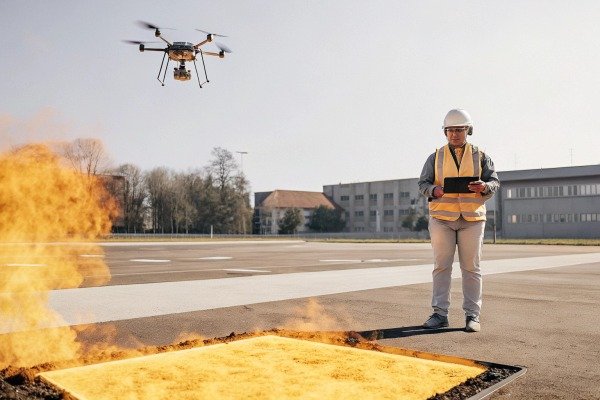
The Critical Need for "Loaded" Flight Testing
When you browse catalogs, you will often see impressive flight times listed, sometimes exceeding impressive flight times listed 2 45 or 60 minutes. However, these figures usually reflect a drone hovering with no payload in zero-wind conditions. In a real fire scenario, your drone will be carrying heavy water hoses, dry powder tanks, or fire extinguishing balls. fire extinguishing balls 3
We strongly advise our clients in the US and Europe to request a prototype specifically to test "loaded" performance. You need to see how the propulsion system reacts when the total weight creates drag and inertia. A high-quality drone should maintain responsiveness even when fully loaded. If the sample feels sluggish or drifts significantly when stopping, the motors or Electronic Speed Controllers (ESCs) may be Electronic Speed Controllers (ESCs) 4 underpowered.
Verifying Wind Resistance Capabilities
Firegrounds create their own weather. The heat from a blaze generates strong updrafts generates strong updrafts 5 and turbulence. A standard consumer drone will fail here. When testing the sample, do not just fly it on a calm day. If possible, test it in wind conditions of at least 10 to 12 meters per second.
Watch the gimbal camera feed during these tests. Does the video shake? If the video feed is unstable, your thermal imaging accuracy thermal imaging accuracy 6 will suffer, making it hard to spot hotspots. We calibrate our flight controllers to counter these forces, but you must verify this behavior yourself.
Battery Sag and Thermal Management
Another reason to test a full prototype is to check the battery management system. battery management system 7 Under heavy load, poor-quality batteries experience "voltage sag," where power drops suddenly, forcing an early landing. Run the sample drone until the low-battery warning triggers. Check if the battery temperature is within safe limits immediately after landing. Overheating batteries significantly reduce the lifespan of your fleet and pose a safety risk during storage.
Testing Checklist for Flight Prototypes
| Test Category | What to Measure | Red Flag Warning |
|---|---|---|
| Endurance | Flight time with 100% payload weight. | Flight time is <70% of the marketed spec. |
| Stability | Hover position accuracy in wind. | Drifting >1 meter without stick input. |
| Response | Braking distance from full speed. | Drone "wobbles" or takes too long to stop. |
| Thermal | Battery temp after 20-min flight. | Battery is too hot to touch (>60°C). |
Is it necessary to obtain a separate sample of the fire extinguishing mechanism for functional testing?
A drone that flies perfectly is useless if the drop mechanism jams when you need it most. Our engineering team spends months refining servo reliability, yet mechanical failures remain the most common issue in this industry.
Yes, obtaining a separate sample of the fire extinguishing mechanism is necessary to test release reliability without risking the expensive airframe. This allows you to perform repetitive cycle tests, evaluate targeting accuracy for drop payloads, and inspect the durability of the servo motors and release hooks under stress.
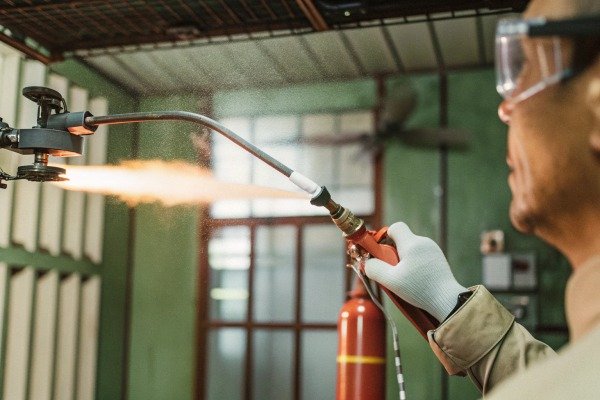
Isolating the Mechanism for Repetitive Testing
Firefighting payloads—whether they are drop mechanisms for fire balls, foam sprayers, or glass breakers—are mechanical systems with moving parts. If you only test them while flying, you are limited by battery life. By requesting a standalone sample of the mechanism (or a "ground test kit"), you can trigger the release cycle hundreds of times on a workbench.
We often send these independent units to our distributors. You should look for inconsistency. Does the servo stick after the 50th release? Does the latch fail to open fully? In a real fire, a jammed payload means the mission fails. It is better to break a sample servo on a table than to have a live payload stuck on a drone hovering over a burning building.
Assessing Accuracy and Dispersion
For spray systems or powder tanks, the pattern of dispersion matters. A separate sample allows you to mount the system on a test rig and measure the spray width and pressure. If the nozzle clogs easily with standard dry powder, you need to know before you buy.
For drop mechanisms, consider the delay between the "fire" command and the actual release. Even a half-second delay can cause the fire ball to miss the target by meters if the drone is moving. Testing the mechanism separately allows you to measure this latency precisely using high-speed video or simple timing tools.
Compatibility with Standard Extinguishants
Different countries use different standards for fire extinguishing balls and chemicals. A mechanism designed for a standard Chinese payload might not fit a specific US-manufactured fire ball perfectly.
Requesting a sample allows you to physically fit your local consumables into the launcher. We have had customers discover that their specific brand of fire ball was 2mm too wide for a generic holder. Catching this early allows us to customize the holder design for you before mass production.
Payload Mechanism Evaluation Criteria
| Payload Type | Key Test Focus | Desired Outcome |
|---|---|---|
| Drop Release | Cycle reliability (Open/Close). | 100 successful releases in a row without jamming. |
| Spray Tank | Nozzle flow rate and pattern. | Uniform spray without dripping or clogging. |
| Glass Breaker | Impact force and reset time. | Sufficient force to break tempered glass; fast reset. |
| Powder Tank | Dispersion range. | Powder covers the target area effectively. |
Do I need to ask for material samples to verify the drone's heat and weather resistance?
Standard plastics warp instantly when exposed to the radiant heat of a structure fire radiant heat of a structure fire 8, leading to catastrophic crashes. We strictly use high-grade carbon fiber composites, but we always encourage buyers to verify raw material quality independently.
You definitely need to ask for material samples to verify the drone’s heat and weather resistance capabilities. Testing raw carbon fiber fragments and seal components ensures the airframe can withstand radiant heat from fires and that IP-rated gaskets effectively prevent water and soot ingress during operations.
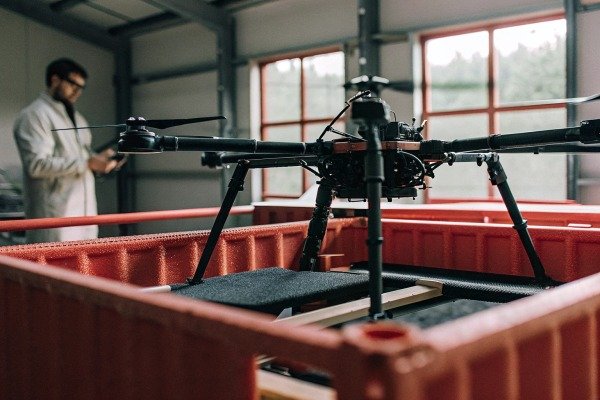
Why Material Samples Matter for Firefighting
Firefighting drones operate in hostile environments. They face intense radiant heat from below, soot and ash in the air, and water spray from hoses. You cannot evaluate material quality just by looking at a photo.
We recommend asking for a sample of the arm tube material and a section of the main body shell. You can perform simple yet effective tests. For example, expose the carbon fiber sample to high heat (simulating proximity to a fire) to see if the resin softens or delaminates. Inferior carbon fiber uses cheap resin that loses structural integrity at relatively low temperatures (around 80°C or 176°F). High-quality aerospace composites should withstand significantly higher temperatures without warping.
Verifying Ingress Protection (IP Rating)
Your drone will likely get wet, either from rain or from the spray of fire hoses. Suppliers often claim IP54 or IP65 ratings. IP54 or IP65 ratings 9 To verify this, ask for samples of the rubber gaskets or port covers used on the drone.
Inspect the elasticity and thickness of these seals. Cheap rubber becomes brittle quickly or fails to seal properly after a few uses. If the supplier is willing, request a "dummy" housing sample—an empty shell with all seals in place. You can submerge this in water or blast it with dust, then open it up to check for leaks. This is a non-destructive way to verify their manufacturing tolerances before you trust expensive electronics inside.
Corrosion Resistance for Long-Term Use
Firefighting foams and retardants can be corrosive. If the drone uses exposed metal screws or motor mounts, they must be stainless steel or specially coated aluminum.
Request a sample set of the fasteners (screws, bolts) used in the assembly. A simple salt spray test or soaking them in a mild corrosive solution can tell you if they will rust after a few months. Rusty screws can seize, making maintenance impossible and potentially leading to structural failure during flight due to metal fatigue.
Material Verification Steps
- Heat Test: Place the carbon fiber sample near a heat source and measure deformation.
- Solvent Test: Wipe the material with industrial cleaners to ensure the finish doesn't strip.
- Seal Inspection: Stretch and twist rubber gaskets to check for tearing or poor memory.
- Hardware Check: Verify screws are non-magnetic stainless steel or high-grade coated alloy.
Can I request a pre-production sample to evaluate OEM branding and software integration?
Software bugs or mismatched branding colors can ruin the launch of a new drone program for your department. We frequently collaborate with clients to customize ground station interfaces, but this requires early validation.
Requesting a pre-production sample is essential to evaluate OEM branding quality and ensure seamless software integration. This sample allows you to verify that custom logos and paint schemes meet your specifications and that the drone’s API connects correctly with your existing incident command software and video streaming platforms.
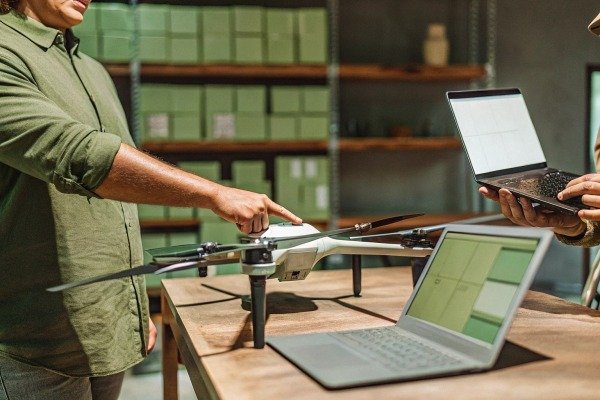
Validating Software Interoperability
Modern firefighting requires data integration. You are likely using software like DroneSense software like DroneSense 10, or a proprietary incident command app. You need to know if the drone's video feed and telemetry can be pulled into these systems.
A pre-production sample should come with the SDK (Software Development Kit) or API access enabled. Do not accept a "closed" system if you plan to integrate. Connect the sample drone to your network. Does the video stream have high latency? Is the telemetry data (altitude, battery, GPS) accurate? We often provide a "developer unit" to our partners specifically for this purpose. If the software crashes or the API documentation is incomplete, it is a major warning sign.
OEM Branding and Physical Customization
If you are a distributor selling to fire departments, appearance matters. You might want the drone in "Fire Engine Red" or with specific agency logos applied.
A pre-production sample is the "Golden Sample." It represents exactly what the mass-produced units will look like. Check the paint finish. Is it durable, or does it scratch off easily? Are the logos decals (cheap) or screen-printed/laser-etched (professional)?
Also, check the remote controller (Ground Control Station). If you requested custom boot-up screens or specific button mappings for payload release, this is the time to verify them. Changing these details after 100 units are manufactured is incredibly expensive and time-consuming.
User Interface (UI) Usability
Firefighters operate under high stress. The flight control software needs to be intuitive. Use the sample to evaluate the UI. Are the critical buttons (Return to Home, Payload Release) easy to find? Is the text readable in bright sunlight?
We have seen interfaces that look great in a dark office but are invisible outdoors. Taking the pre-production sample outside allows you to verify screen brightness and UI layout. If the font is too small or the menus are confusing, you can request changes before the final firmware is locked in.
Pre-Production Evaluation Matrix
| Feature | What to Inspect | Acceptance Criteria |
|---|---|---|
| API/SDK | Connectivity with 3rd party apps. | Video/Data stream connects within 5 seconds. |
| Paint/Finish | Durability and color accuracy. | No peeling; matches Pantone color code. |
| GCS Screen | Outdoor visibility. | Clearly visible in direct sunlight (>1000 nits). |
| Boot Sequence | Startup time and logos. | System ready <60 seconds; correct branding. |
Conclusion
Testing is the only bridge between a manufacturer's promise and a firefighter's safety. By requesting a functional flight prototype, independent payload mechanisms, raw material samples, and a software-ready pre-production unit, you eliminate the risks of buying based on paper specs alone. Contact us to arrange a comprehensive sample kit for your evaluation.
Footnotes
1. Official government aviation safety guidance on wind shear hazards. ↩︎
2. Example of manufacturer specifications showing maximum flight times. ↩︎
3. Official site of the original fire extinguishing ball manufacturer. ↩︎
4. General definition of the electronic component controlling motor speed. ↩︎
5. Educational resource explaining fire weather and updraft creation. ↩︎
6. Industry standard for thermal imagers in fire service. ↩︎
7. Research overview of battery management system functions and safety. ↩︎
8. Government research on fire dynamics and heat transfer. ↩︎
9. Official standards body defining Ingress Protection (IP) ratings. ↩︎
10. Official product page for the mentioned incident command software. ↩︎

 English
  Español de México
  Deutsch
  Français
  Русский
  العربية
