
Walking through our assembly lines in Xi’an, we often see the hesitation on the faces of new international clients. You are under immense pressure to modernize your fleet, but wiring a large sum overseas for unproven technology feels like a gamble. We understand that finding the balance between securing a good price and minimizing risk is the hardest part of your job.
For high-performance firefighting drones, the recommended firefighting drones 1 initial order quantity is one unit. This single-unit entry point allows you to verify critical flight stability, payload release mechanisms, and battery endurance without risking capital on a fleet that might not meet your specific operational standards.
Once you understand the strategic value of starting small, the next logical step is to determine if a single unit is truly sufficient for your rigorous testing protocols.
Can I purchase a single sample unit to test performance before a larger order?
When our engineering team prepares a new heavy-lift model for export to the US or Europe, we treat the first unit as a capability demonstration, not just a sale. We know that you cannot simply trust a spec sheet when lives and property are at risk.
Yes, reputable manufacturers almost always permit a single-unit purchase for performance verification. This "pilot unit" is essential for your team to conduct real-world tests, such as thermal camera accuracy and drop-system reliability, before authorizing a larger procurement contract.
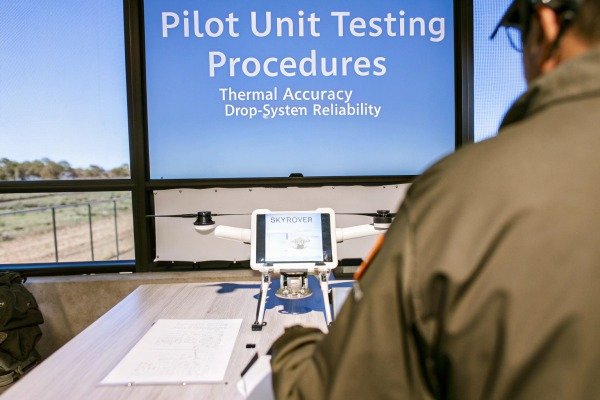
The Critical Importance of the Pilot Unit
In the industrial drone sector, specifically for firefighting applications, the "try before you buy" approach is not just a luxury; it is a necessity. At our factory, we encourage clients to push that single sample unit to its limits. Why? Because a PDF brochure cannot demonstrate how a drone behaves in 10m/s crosswinds while carrying a 20kg fire hose.
Buying one unit allows you to validate three non-negotiable pillars of performance:
- Flight Stability and Control: Firefighting drones often fly near high-rise buildings where wind tunnels and turbulence are unpredictable. You need to physically test if the flight controller holds position flight controller 2 accurately or if it drifts dangerously.
- Payload Mechanism Reliability: Whether you are dropping fire extinguishing balls or using a dry powder sprayer, the release mechanism must work 100% of the time. A jammed release mechanism during a real fire is a failure of the entire system.
- Data Link Robustness: You must verify the video transmission range in your specific urban or forest environment. Interference in New York is very different from interference in a rural farm area.
Testing Protocols You Should Implement
When you receive this first unit, we recommend a structured testing phase. Do not just fly it around the parking lot. We advise our partners to simulate actual emergency scenarios. This includes "endurance testing" where you fly the drone until the battery hits its critical low voltage return-to-home limit, ensuring the software behaves as promised.
Risk vs. Reward of Single-Unit Procurement
Below is a breakdown of why we advocate for this approach, even if the per-unit shipping cost is higher.
| Feature | Single Pilot Unit Order | Direct Bulk Order (5+ Units) |
|---|---|---|
| Capital Risk | Low: Only risking the cost of one asset. | High: Risking budget on unverified tech. |
| Customs Clearance | Simple: Easier to clear one box as a "sample." | Complex: Large shipment attracts more scrutiny. |
| Deployment Speed | Fast: We can air freight one unit in 7 days. | Slow: Sea freight takes 30-45 days. |
| Feedback Loop | High: You can request changes for the next batch. | None: You are stuck with what you ordered. |
| Unit Cost | Standard: No volume discount applied. | Discounted: Typically 10-20% cheaper. |
By purchasing one unit, you are essentially buying insurance against future headaches. If the drone fails your tests, your loss is minimal. If it passes, you can proceed to the next stage of negotiation with confidence.
How do I negotiate lower MOQs with Chinese manufacturers for the first trial batch?
In our dealings with procurement managers, we value long-term potential over a quick bulk sale. If you approach us with a clear roadmap rather than just a request for a cheap price, we are much more likely to be flexible with our terms.
To secure low MOQs, clearly communicate your future fleet expansion plans and offer to pay a slightly higher "sample premium" for the first unit. Negotiate a retroactive discount clause where this premium is credited back to you once a follow-up order exceeds five or ten units.

The Psychology of the Manufacturer
To negotiate effectively, you must understand our perspective. Setting up a production run, calibrating sensors, and arranging dangerous goods (battery) shipping for a single unit takes almost as much administrative effort as doing it for ten. Therefore, when a buyer demands a low MOQ and the lowest bulk price simultaneously, it signals a lack of seriousness.
However, there are specific strategies to get the best of both worlds.
Strategy 1: The "Retroactive Volume Discount"
This is the most effective tool in your negotiation playbook. When you order that first unit from us, do not try to force the price down to the 50-unit tier immediately. Instead, agree to the standard sample price but add a clause to the purchase order.
- The Clause: "If the buyer places an order for 5 additional units within 90 days of receiving the sample, the price difference between the sample rate and the bulk rate will be credited toward the new order."
This shows us you are serious about scaling. It protects us from buyers who just want one cheap toy, and it protects you from overpaying in the long run.
Strategy 2: Share Your Procurement Roadmap
We are more willing to lower MOQs or waive setup fees if we see the bigger picture. When you contact us, don't just ask "What is the MOQ?" Instead, introduce your organization:
- "We are equipping three fire stations."
- "We need one unit for validation in Q1, followed by 10 units in Q3."
- "We have a tender for a local forestry service."
This context changes you from a "retail buyer" to a "strategic partner."
Negotiation Checklist for MOQ and Pricing
Use this checklist when drafting your initial inquiry email to us or any supplier.
| Negotiation Point | Goal | Why it Works |
|---|---|---|
| Sample Price | Pay full price now, rebate later. | Reduces supplier risk; shows good faith. |
| Spare Parts | Include a robust maintenance kit. | Increases order value without forcing a 2nd drone. |
| Lead Time | Accept standard (non-rush) production. | Allows factory to fit your single unit into gaps. |
| Marketing | Offer a case study or test video. | value-add for the supplier's marketing. |
By focusing on the relationship rather than just the transaction, you will find that "Minimum Minimum Order Quantity 3 Order Quantity" is often a flexible guideline rather than a rigid rule.
Will customizing the software or hardware affect the minimum order quantity limits?
Our R&D department frequently integrates specific radio radio frequencies 4 frequencies or third-party mapping software for US clients. These requests add complexity to our production line, which naturally impacts how few units we can afford to produce at once.
Extensive hardware customization, such as unique mold designs, may raise the MOQ, but software integration typically does not. For most functional modifications, we still encourage producing one prototype unit first to ensure the new systems communicate correctly before scaling production.

Software Customization vs. Hardware Changes
It is important to distinguish between the types of customization you need, as they affect the MOQ differently. At SkyRover, we categorize these requests into three levels.
Level 1: Light Customization (No MOQ Impact)
This includes simple changes that do not alter the physical production process.
- Logo Printing: Placing your department's logo on the drone arm.
- Software Settings: Pre-configuring flight parameters (e.g., maximum altitude limits, return-to-home height).
- Radio Frequency: Swapping a 2.4GHz module for a 900MHz module (if standard options exist).
- Result: You can still order just 1 unit.
Level 2: Integration Customization (Low MOQ Impact)
This involves integrating third-party payloads or sensors that we do not standardly stock.
- Specific Thermal Cameras: If you require a FLIR Vue Pro R instead of FLIR Vue Pro R 5 our standard sensor.
- Proprietary Radios: Integrating a specific MANET radio for your mesh MANET radio 6 network.
- Result: We still allow a 1 unit MOQ, but we may charge a "Non-Recurring Engineering" (NRE) fee. This fee covers the technician's time to solder, wire, and test the new component.
Level 3: Structural/Deep Customization (High MOQ Impact)
This is where you ask us to change the physical frame, motor mounts, or battery form factor.
- New Frame Mold: Designing a completely new airframe shape.
- Custom Battery Voltage: Requiring a non-standard voltage architecture.
- Result: These require opening new molds or tooling. The MOQ might jump to 50 or 100 units, or require a massive upfront tooling fee ($10,000+). However, even in this case, we must produce a prototype (1 unit) first, which will be very expensive but necessary.
Why Software Integration Requires a Pilot Unit
Many buyers assume software changes are instant. However, flight controllers are sensitive. If you ask us to modify the firmware to support a specific third-party mapping app, we need to test it.
We had a client who wanted a specific "cluster control" feature to fly three drones simultaneously. They wanted to order 10 units immediately. We refused and insisted on 1 unit first. Why? Because the software latency needed to be tested in their specific Wi-Fi environment. If we had shipped 10, and the software lagged, they would have had 10 useless drones.
Customization Impact Table
| Customization Type | Typical MOQ Requirement | Estimated Lead Time Impact | Cost Implication |
|---|---|---|---|
| Standard Model (Off-the-shelf) | 1 Unit | 7-10 Days | Standard Price |
| Custom Color/Logo | 1 Unit | +3 Days | Minimal / Free |
| 3rd Party Payload Integration | 1 Unit | +14 Days | Cost of Payload + NRE Fee |
| Custom Firmware Features | 1 Unit (Prototype) | +20-30 Days | High Development Fee |
| New Airframe Design | 50+ Units (after proto) | +3-6 Months | High Tooling Fees |
Always verify if your "customization" is actually just a configuration change. Often, what you need can be achieved with standard settings, keeping your MOQ at one.
How does a small initial order quantity impact the shipping costs and unit price?
When we book air freight for a single 50kg box containing lithium batteries, the logistics paperwork is just as heavy as for a full pallet. This lack of economy of scale is the main trade-off when purchasing a pilot unit.
Ordering a small quantity significantly increases the per-unit shipping cost because hazardous material handling fees are fixed regardless of volume. Additionally, the unit price will likely reflect the standard retail rate, missing out on the 20-30% discounts often applied to bulk orders of five or more drones.

The "Dangerous Goods" Factor
Shipping firefighting drones is not like shipping T-shirts. These drones are powered by massive high-capacity Lithium Polymer (LiPo) batteries Lithium Polymer (LiPo) batteries 7 (e.g., 22000mAh 12S). In the logistics world, these are Class 9 Dangerous Goods (UN3480). UN3480 8
Whether we ship one battery or twenty, the airline charges a fixed "DG Handling Fee," "Document Fee," and "Emergency Surcharge."
- Scenario A (1 Drone): Shipping cost might be $800. Per unit cost = $800.
- Scenario B (5 Drones): Shipping cost might be $2,500. Per unit cost = $500.
By ordering one unit, you are paying a premium for logistics. However, this premium is worth it to ensure the product arrives safely and legally.
Unit Price Economics
As a manufacturer, our profit margins on a single unit are slim because the administrative overhead (sales support, tech support setup, export filing) is high.
- Retail Price (1 Unit): We charge the full price to cover these fixed overheads.
- Wholesale Price (5-10 Units): We can offer a 15-20% discount because we can batch the production and quality control processes.
Why You Should Still Pay the Higher Price
It is tempting to look at the shipping quote and say, "Wow, shipping is 20% of the drone's value! Let's order 5 to make it worth it." This is a trap.
If you order 5 units to "save on shipping," and the drones turn out to be incompatible with your local fire truck's power systems, you haven't saved $2,000 on shipping; you have lost $50,000 on unusable inventory.
Door-to-Door Delivery Services
At SkyRover, we offer DDP (Delivered Duty Paid) services for US Delivered Duty Paid 9 and EU clients. This means we handle the customs, duties, and final delivery to your warehouse. For a single unit, this is incredibly valuable because you do not need to hire a customs broker for a customs broker 10 one-off test.
- Small Order: We use specialized air couriers (DG compliant). It is fast (7-12 days) but expensive.
- Large Order: We can use sea freight (LCL or FCL). It is cheap but takes 35 days.
For your initial order, speed is usually more important than cost. You want to get the test unit, validate it, and then place the "real" order. The extra $500 spent on air shipping the sample is the cost of doing business efficiently.
ROI of the Initial Order
Think of the initial order costs not as "procurement" but as "due diligence."
| Cost Component | Single Unit Impact | Bulk Order Impact | Recommendation |
|---|---|---|---|
| Unit Price | High (Base Price) | Low (Volume Discount) | Accept high price for validation. |
| Shipping/Unit | High (Fixed Fees) | Low (Economies of Scale) | Use Air Freight for speed. |
| Import Duties | Low Total Amount | High Total Amount | Easier to manage cash flow. |
| Storage | Negligible | Requires Warehouse Space | Don't stock until tested. |
Conclusion
Setting the right initial order quantity is the first step in building a secure supply chain for your firefighting operations. While the temptation to bulk buy for discounts is strong, the smart move is always to start with one comprehensive pilot unit. This validates our manufacturing quality, tests the drone's real-world capability, and minimizes your financial risk. Once we have proven our value to you, we can scale up to fleet orders where the real cost savings kick in.
Footnotes
1. Links to NFPA 2400, the standard for drones in public safety operations. ↩︎
2. References a leading open-source flight control system used in industrial UAVs. ↩︎
3. Provides a general definition of this key supply chain term. ↩︎
4. Official FCC guidance on radio frequency safety and regulation. ↩︎
5. Direct link to the specific thermal camera product mentioned. ↩︎
6. Links to a major manufacturer of MANET radios used in drone mesh networks. ↩︎
7. Educational resource from MIT on the safety and handling of lithium batteries. ↩︎
8. Official DOT/PHMSA regulations regarding the shipping of standalone lithium batteries. ↩︎
9. Official definition of DDP Incoterms by the International Chamber of Commerce. ↩︎
10. Official US Customs and Border Protection information about customs brokers. ↩︎

 English
  Español de México
  Deutsch
  Français
  Русский
  العربية
