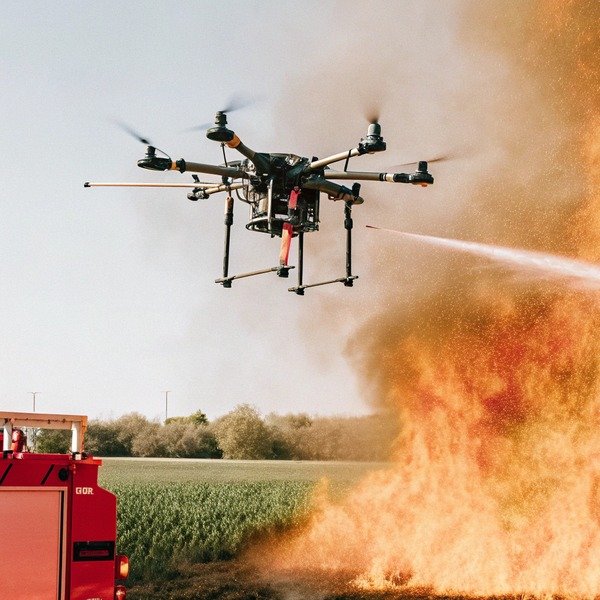
When we sit down with procurement teams at our Xi’an headquarters to finalize a specification sheet, we often notice that buyers underestimate how rapidly specific customization requests can escalate the final bill of materials. bill of materials 1
Firefighting drone OEM customization drives up costs primarily through high-payload structural reinforcements, advanced radiometric radiometric thermal camera 2 thermal sensors, and specialized flight autonomy development. These features require premium components, extended R&D hours for software integration, and rigorous durability testing to ensure the aircraft survives extreme heat and water exposure during active operations.
Here is a breakdown of the specific factors that will influence your budget.
How do specific hardware upgrades like high-end thermal cameras impact my final OEM quote?
In our experience sourcing components for custom orders, optical sensors are frequently the single most expensive line item on the invoice, often surpassing the cost of the airframe itself.
Upgrading to high-end thermal cameras significantly impacts your OEM quote because industrial-grade radiometric sensors and dual-gimbal systems are costly to procure and integrate. These units require specialized calibration for accurate temperature data, increasing both the raw component price and the engineering labor needed to ensure stable video transmission through smoke.

The Cost of Seeing Through Smoke
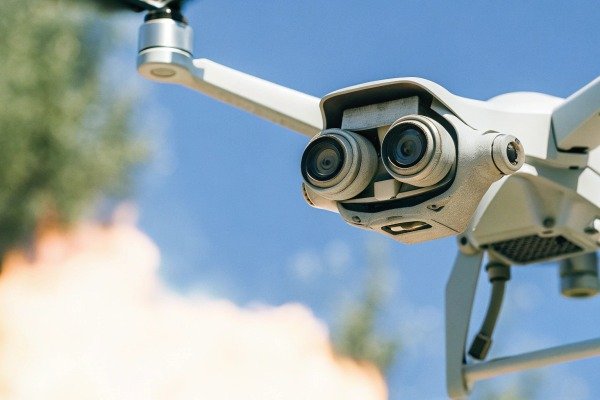
When clients request a standard visual camera, the integration is straightforward. However, firefighting demands more than just a visual feed; it requires the ability to see through thick smoke and identify hotspots. This is where costs begin to climb. A basic thermal camera provides a heat map, but a radiometric thermal camera measures the specific temperature of every pixel.
For a professional-grade octocopter, integrating a radiometric sensor allows the operator radiometric sensor 3 to know exactly how hot a fire is, which is critical for decision-making. These sensors are subject to strict export controls and limited supply chains, driving up the price. Furthermore, combining a thermal sensor with a high-zoom optical camera into a single gimbal requires complex stabilization motors. If you require a 30x optical zoom alongside a 640×512 thermal resolution thermal resolution 4, the gimbal mechanism must be robust enough to handle the weight while filtering out the vibrations from heavy-lift motors.
Transmission Systems and Interference
Another hardware factor is the video transmission link. Standard transmission systems fail in high-interference environments like urban fires or forest wildfires. Upgrading to a system with strong anti-interference capabilities—often involving frequency hopping or AES-XTS 512-bit encryption AES-XTS 512-bit encryption 5 AES-XTS 512-bit encryption 6 for security—adds significant hardware costs. We often have to source specialized receiver modules that can punch through electromagnetic noise, ensuring the pilot maintains control even when the drone is obscured by smoke.
Comparison of Sensor Integrations
The table below illustrates how different sensor choices impact the relative cost of the payload system.
| Sensor Configuration | Functionality | Estimated Cost Impact |
|---|---|---|
| Standard 4K Visual | Basic surveillance and recording. | Low (Baseline) |
| Visual + 10x Zoom | Better situational awareness from a distance. | Moderate (+15-20%) |
| Dual Sensor (Visual + Thermal) | Heat detection and visual overlay. | High (+40-60%) |
| Radiometric Thermal + 30x Zoom + Laser Rangefinder | Precise temperature data, long-range scouting, and distance measurement. | Very High (+100-150%) |
Will requesting custom software development for flight control systems significantly raise my budget?
Our software engineers often spend weeks coding custom protocols, meaning requests for unique flight behaviors or specialized user interfaces will directly increase non-recurring engineering (NRE) fees.
Requesting custom software development will significantly raise your budget due to the intensive R&D required for proprietary flight algorithms and specialized user interfaces. Developing features like autonomous swarm coordination or simplified controls for gloved operators involves writing and testing complex code, which adds substantial non-recurring engineering fees to your project.
The Reality of "Smart" Features
Many buyers assume that features like "autonomous obstacle avoidance" or "swarm capability" are standard swarm capability 7 toggles we can simply switch on. In reality, these require deep software customization. If you need a fleet of drones to coordinate a suppression effort autonomously—where one drone detects the fire and signals others to drop extinguishing balls—we must develop a custom communication protocol. This "swarm" logic is not off-the-shelf technology. It requires writing proprietary algorithms that allow the drones to talk to each other without colliding, which involves hundreds of hours of simulation and field testing.
Ground Control Station (GCS) Customization
A frequently overlooked cost driver is the customization of the Ground Control Station (GCS). Firefighters operate in high-stress environments, often wearing thick, heavy protective gloves. A standard tablet interface with small touch buttons is unusable in these conditions.
If you ask us to redesign the GCS interface to feature large, high-contrast buttons and simplified menus, our UI/UX team must rebuild the application layer. This also extends to the hardware; we may need to integrate physical toggle switches onto the remote controller for critical functions like "Drop Payload" or "Return to Home," rather than relying on a touchscreen. These physical and software modifications ensure safety but add a layer of development cost that is amortized over the number of units you purchase.
Impact of Autonomy Levels on Budget
The following breakdown highlights how software complexity correlates with development time and cost.
| Autonomy Level | Description | Development Complexity | Cost Implication |
|---|---|---|---|
| Manual Flight | Standard pilot control with GPS stability. | Minimal | Included in Base Price |
| Waypoint Navigation | Pre-planned flight paths for scouting. | Low | Low (Standard Feature) |
| Obstacle Avoidance | Radar/LiDAR integration for safety. | High | Moderate Hardware + Software Fee |
| Swarm/Multi-Agent | Multiple drones coordinating tasks autonomously. | Extreme | High NRE (Non-Recurring Engineering) Fees |
Does adding private label branding and custom transport packaging increase the unit cost?
When we manage production runs, adding logos is simple, but creating custom molds for rugged transport cases requires a significant upfront investment that affects unit economics.
Adding private label branding and custom packaging increases unit costs, particularly for small batches, due to setup fees and mold tooling expenses. While simple logo printing is inexpensive, designing custom foam inserts and ruggedized transport cases requires specific manufacturing molds, which can add a significant premium if the order volume is low.
The Economics of Private Labeling
There is a misconception that branding is just a sticker. While we can easily apply a vinyl decal to the arm of an octocopter for a negligible cost, true OEM branding involves more permanence. If you require your logo to be screen-printed or laser-engraved onto the carbon fiber frame or the remote controller chassis, we incur setup costs for the printing plates. For an order of 500 units, this cost is pennies per drone. For an order of 10 units, the setup fee significantly inflates the per-unit price.
Custom Transport Packaging
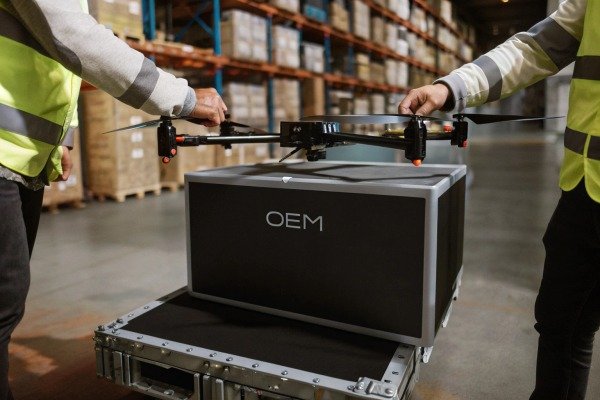
Firefighting drones are heavy and delicate pieces of machinery. They cannot be shipped in cardboard boxes. They require industrial-grade aluminum or hard plastic cases with custom-cut foam inserts.
If you are purchasing a standard model, we use our existing case molds. However, if your customization involves changing the shape of the drone—perhaps by adding a larger camera or a specific fire-extinguishing bomb tank—the standard case will no longer fit. We must then design and manufacture a new foam mold or even a new hard shell mold.
- CNC Cut Foam: For medium batches, we can CNC cut the foam to fit your unique payload. This is slower and more expensive per unit than molded foam.
- Injection Molded Cases: For high durability, an injection-molded case is best. injection-molded case 8 However, creating a new metal mold for the case shell can cost thousands of dollars upfront. If you do not amortize this over a large order, it becomes a massive line item.
Branding and Packaging Tiers
The table below outlines the cost implications of different branding and packaging choices.
| Customization Item | Process | MOQ (Min Order Qty) Impact | Cost Estimator |
|---|---|---|---|
| Logo Sticker | Vinyl application. | None | Negligible |
| Screen Print Logo | Ink transfer onto frame. | Low (10+ units) | Low Setup Fee |
| Custom Boot Screen | Logo appears on GCS startup. | Moderate | Software Setup Fee |
| Custom Foam Insert | CNC cutting or water jet. | Low | Moderate Per Unit |
| Custom Hard Case | New injection mold creation. | High (100+ units) | Very High Upfront Tooling |
Should I expect additional fees for specialized durability testing or international certification compliance?
We strictly adhere to standard quality checks, but requesting specific third-party certifications or extreme environmental stress tests forces us to engage external labs and halts standard production.
You should expect substantial additional fees for specialized durability testing and international certification, as these processes involve third-party laboratory validation and destructive testing. Achieving standards like high IP ratings for waterproofing or BVLOS compliance requires costly engineering iterations and lengthy administrative procedures that are not covered in the base manufacturing price.
The Price of Proven Durability
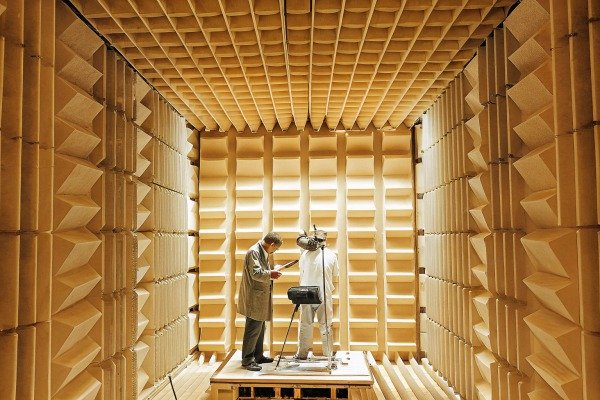
Firefighting drones must operate in rain, high winds, and near intense heat. Our standard octocopters come with a baseline level of weather resistance. However, if your tender requires a certified Ingress Protection (IP) rating Ingress Protection (IP) rating 9 Ingress Protection 10—such as IP56 (protected against high-pressure water jets)—we cannot simply claim it; we must prove it.
This involves sending units to a certified laboratory for testing. Often, this is a destructive process, or at least one that puts significant wear on the test unit. If you require a "heat resistance" test where the drone hovers near a 400°C heat source, we must use high-temperature composite materials and specialized shielding for the battery and electronics. These materials are significantly more expensive than standard carbon fiber.
International Certification Compliance
Exporting to the US or Europe often brings regulatory hurdles.
- CE/FCC Certification: While our standard products comply, custom configurations (e.g., a new radio frequency for your specific region) require new EMI/EMC testing to ensure they don't interfere with other electronics.
- NDAA Compliance: For US clients, ensuring the drone is NDAA-compliant (free of certain banned components) often means we must source chips and flight controllers from non-restricted vendors. These components often carry a premium compared to standard supply chain options.
- BVLOS (Beyond Visual Line of Sight): If your operation plans to fly drones beyond the pilot's view, the drone needs specific redundancy features (like parachute systems or dual GPS) to meet aviation authority standards. Validating these systems requires extensive field trials and paperwork, adding to the "soft costs" of the project.
Hidden Costs in Durability Upgrades
- Sealing Labor: achieving a high IP rating requires manual labor to seal every port, screw hole, and seam with specialized gaskets and compounds.
- QC Rejection Rate: Stricter durability requirements mean a higher rejection rate during our internal Quality Control (QC). If we test 100 motors and only 80 meet your "extreme heat" spec, the cost of the rejected 20 is absorbed into the price of the final units.
Conclusion
Customizing a firefighting drone ensures it meets specific mission requirements, but every deviation from the standard model carries a cost. From radiometric thermal sensors and custom software protocols to ruggedized packaging and certified durability testing, these expenses add up. By understanding these cost drivers upfront, you can prioritize essential features and negotiate a clearer, more accurate contract.
Footnotes
1. SAP provides the industry-standard definition for BOMs in manufacturing and procurement contexts. ↩︎
2. ISO standard for thermographic equipment and radiometric performance. ↩︎
3. Explains the technical capability of radiometric sensors to measure temperature data per pixel. ↩︎
4. Manufacturer guide explaining thermal resolution and its impact on image quality. ↩︎
5. IEEE standard documentation for XTS-AES encryption methods. ↩︎
6. Official NIST publication defining the XTS-AES encryption mode used for secure data transmission. ↩︎
7. DARPA leads advanced research into autonomous multi-agent drone swarm coordination. ↩︎
8. Pelican is the industry leader for rugged injection-molded transport cases referenced in the text. ↩︎
9. The IEC establishes the international standards for enclosure protection ratings against water and dust. ↩︎
10. General background on IP rating standards for hardware durability. ↩︎

 English
  Español de México
  Deutsch
  Français
  Русский
  العربية
