
Watching a high-performance thermal drone get stuck at customs due to paperwork errors is a nightmare we strive to prevent for our international partners.
To evaluate a supplier’s RoHS compliance, demand a valid EU Declaration of Conformity referencing Directive Directive 2011/65/EU 1 2011/65/EU and test reports from accredited labs like SGS. Ensure they audit homogenous materials via XRF screening and verify specific exemptions for sensors or batteries to guarantee seamless customs clearance.
Let’s look at the critical steps to verify your supplier meets these strict European standards.
What specific documentation should I request to verify a drone manufacturer's RoHS compliance?
We have seen buyers accept generic CE certificates only to face legal bans later, so we prioritize transparent documentation packages for every export shipment.
You must request a full technical file including the EU Declaration of Conformity (DoC) explicitly citing RoHS 3 (Directive 2015/863). Additionally, require third-party test reports for all ten restricted substances and a Bill of Materials (BOM) analysis confirming every component meets compliance limits.

When sourcing large quadcopters for firefighting missions, relying on a simple "CE" sticker is a dangerous gamble. The CE mark is a claim of compliance, but the technical documentation is the proof. In our engineering department, we compile extensive technical files to back up every certification we issue. For a buyer, the first line of defense is knowing exactly which papers to demand.
The EU Declaration of Conformity (DoC)
This is the single most important document. It is a legal statement where the manufacturer accepts full responsibility for the product's compliance. However, not all DoCs are created equal. You must check that it specifically lists Directive 2011/65/EU and its amendment (EU) 2015/863 (often called RoHS 3). If the DoC only lists the Machinery Directive or EMC Directive without mentioning RoHS, the drone is not legally cleared for the EU market.
Third-Party Test Reports
While internal testing is good, third-party verification is better. We work with accredited agencies like SGS, TÜV, or Intertek to validate our claims. TÜV 2 accredited agencies like SGS 3 You should ask for test reports that cover the 10 restricted substances. Do not accept a report that is three years old if the product design has changed. The report must match the specific model number of the firefighting drone you are purchasing.
Bill of Materials (BOM) and Declarations
A complex firefighting drone consists of thousands of parts, from carbon fiber frames to tiny resistors. A compliant supplier should be able to provide a BOM review where they have collected compliance declarations from their upstream component suppliers. This "paper trail" proves that they are managing compliance down to the sub-component level.
| Document Type | What to Check For | Why It Matters |
|---|---|---|
| EU Declaration of Conformity | Reference to Directive 2011/65/EU and (EU) 2015/863. | Legal proof of manufacturer responsibility. |
| Test Reports (SGS/TÜV) | Dates within the last 12-18 months; correct model number. | Independent verification of hazardous substance levels. |
| BOM Analysis | Declarations for critical parts (motors, ESCs, cameras). | Ensures no non-compliant parts are hidden in the assembly. |
| Safety Data Sheets (SDS) | Chemical composition of batteries and coolants. | Verifies handling safety and material makeup. |
How can I confirm that the raw materials and components used in my firefighting drones are truly RoHS compliant?
Sourcing reliable raw materials is the foundation of our assembly process, as one non-compliant screw can fail an entire shipment during European market surveillance checks. market surveillance 4
Confirm material compliance by auditing the supplier’s incoming quality control (IQC) protocols, specifically their use of X-ray X-ray Fluorescence (XRF) 5 Fluorescence (XRF) screening on raw inputs. Ensure they test at the homogeneous material level rather than the component level to prevent masking high concentrations of hazardous substances.
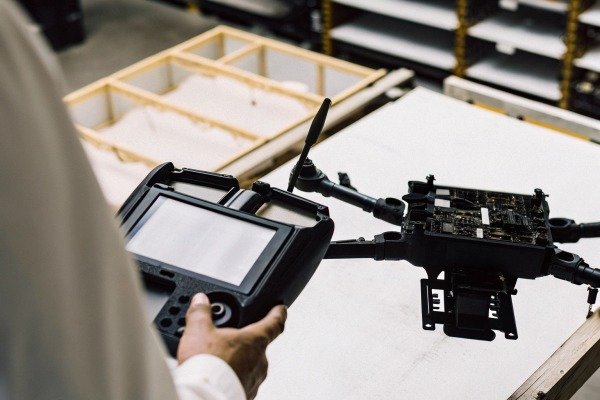
Understanding how a manufacturer verifies raw materials is crucial because RoHS applies to "homogeneous materials." This means a supplier cannot simply grind up a whole camera gimbal, test the dust, and claim the average lead content is low. They must verify the paint, the aluminum casing, the solder on the PCB, and the plastic insulation separately. In our factory, we treat this distinction with extreme seriousness.
The Role of XRF Screening
The most effective way for a supplier to monitor this is through X-ray Fluorescence (XRF) spectroscopy. This is a non-destructive testing method that we use during Incoming Quality Control (IQC). When a batch of connectors or wires arrives at our warehouse, we use a handheld or benchtop XRF analyzer to scan for lead, cadmium, mercury, and other restricted elements. If a supplier cannot show you their XRF screening logs or explain their sampling methodology, they likely have no real control over their raw materials.
Supply Chain Control
Firefighting drones require high-performance components, often involving specialized alloys or heat-resistant plastics. High-risk components include:
- Solders: Must be lead-free lead-free 6 (typically Tin-Silver-Copper Tin-Silver-Copper 7).
- Plastics: Cables and housings must be free of restricted phthalates phthalates (DEHP, BBP, DBP, DIBP) 8 (DEHP, BBP, DBP, DIBP).
- Plating: Screws and connectors must not use Hexavalent Chromium for corrosion resistance.
You should ask your supplier how they manage their Tier 2 and Tier 3 vendors. Do they require annual re-testing of raw materials? Do they have a "Green Procurement" policy? A reliable manufacturer will have a database of approved vendors who have signed strict environmental compliance agreements.
High-Risk Component Breakdown
Certain parts of a firefighting drone are more likely to contain hazardous substances than others. Focusing your verification on these high-risk areas is a smart strategy.
| Component Category | High-Risk Substance | Why It Is Used (Traditionally) | Compliant Alternative |
|---|---|---|---|
| PCBs & Wiring | Lead (Pb) | Easy soldering, prevents whiskers. | Lead-free solder (SnAgCu). |
| Plastic Housings | Phthalates (DEHP/DBP) | Makes plastic flexible (plasticizers). | Non-toxic plasticizers. |
| Metal Fasteners | Hexavalent Chromium | Corrosion protection. | Trivalent Chromium plating. |
| Switches/Relays | Mercury (Hg) | Electrical conductivity. | Solid-state or mechanical alternatives. |
What questions should I ask during a factory audit to assess their hazardous substance control processes?
When clients visit our Xi’an facility, we encourage them to inspect our substance control logs to prove our commitment to safety and environmental standards.
During an audit, ask how the factory segregates compliant and non-compliant materials to prevent cross-contamination during assembly. Inquire about their “Green Procurement” standards for sub-suppliers and request a demonstration of their internal testing equipment and records for recent production batches.

A factory audit is the ultimate truth-teller. Paperwork can be forged, but production lines do not lie. When you or your third-party auditor visits a drone manufacturer, the focus should shift from "what they have" to "what they do." We have found that the most revealing insights come from asking about process controls and segregation.
Segregation and Cross-Contamination
One of the biggest risks in manufacturing is cross-contamination. If a factory produces both domestic products (which might have looser regulations) and EU-bound products on the same line, there is a risk of mixing up materials.
- Question to ask: "How do you physically segregate RoHS-compliant materials from non-compliant ones in your warehouse?"
- What to look for: Distinct labeling systems (e.g., green labels for RoHS parts), separate storage bins, and restricted access to compliant inventory.
Process Control and Traceability
For firefighting drones, which are often produced in smaller, high-value batches, traceability is key. You need to know that the specific flight controller in your drone came from a compliant batch.
- Question to ask: "Can you trace a specific batch of solder paste used in production back to its material safety test report?"
- What to look for: A batch code system that links finished goods to raw material lots. Ask them to pick a random drone off the line and show you the travel card or digital record for its assembly.
Management of Non-Conforming Products
Mistakes happen. A supplier might accidentally receive a batch of cables containing lead. The critical factor is how they handle it.
- Question to ask: "What is your procedure when an incoming material fails XRF screening?"
- What to look for: A quarantine area (often a locked cage or red-taped zone), a "Non-Conformance Report" (NCR) log, and evidence that the bad material was returned to the vendor or disposed of properly, rather than being "used up" to save money.
Exemptions Management
Under RoHS, some applications have exemptions (e.g., lead in high-melting-point solders or specific optical glass).
- Question to ask: "Are you claiming any RoHS exemptions for this specific drone model? If so, which Annex III or IV clauses apply?"
- What to look for: Knowledge. If they claim an exemption that expired in 2021, they are not keeping up with regulations.
How does a supplier's adherence to RoHS standards affect the customs clearance process for my drone shipments to Europe?
We navigate complex export regulations daily, knowing that strict compliance is the only way to ensure timely delivery to your warehouse without border delays.
RoHS compliance is a mandatory prerequisite for the CE mark, which customs officers inspect immediately upon arrival. Non-compliant shipments risk indefinite seizure, costly destruction orders, or forced re-exportation, causing severe operational delays and financial penalties for your distribution business.

The relationship between RoHS and customs clearance is direct and unforgiving. In the European Union, the RoHS directive is not just a "nice to have"—it is a requirement for the CE marking. If your firefighting drones arrive in Hamburg or Rotterdam with a CE mark but fail a spot check for hazardous substances, the consequences are immediate. We emphasize this to our partners because the importer (you) is often the one legally liable for placing the product on the market.
The CE Mark and Presumption of Conformity
Customs officers use the CE mark as a first filter. However, Market Surveillance Authorities (MSAs) frequently conduct random checks. If they test a sample and find lead levels above 1000ppm or cadmium above 100ppm, they will challenge the "Presumption of Conformity." If your supplier cannot produce the technical file we discussed earlier within a short window (usually 10 days), the goods are deemed non-compliant.
Risks of Seizure and Destruction
The financial impact of a RoHS violation at the border goes beyond the cost of the goods.
- Storage Fees: While the investigation is ongoing, your drones sit in bonded warehouses, racking up daily fees.
- Destruction Costs: If the drones are confirmed hazardous, you cannot simply sell them elsewhere. You may be forced to pay for their environmentally safe destruction.
- Blacklisting: Frequent violations can lead to your company—and the manufacturer—being flagged in the RAPEX (Safety Gate) system, ensuring every future shipment is inspected. RAPEX (Safety Gate) 9
The 2026 C-Class Regulation Connection
With the full enforcement of Regulation (EU) 2019/945 approaching in 2026 Regulation (EU) 2019/945 10, customs scrutiny is tightening. Firefighting drones typically fall into the "Specific" category or higher C-classes (C3, C5, C6). To obtain these class markings, the drone must meet all safety and environmental standards, including RoHS. A drone without a valid C-label (backed by RoHS compliance) will essentially be unsellable for commercial operations.
| Consequence | Severity | Impact on Business |
|---|---|---|
| Shipment Delay | Medium | Missed delivery deadlines for fire departments; increased storage costs. |
| Refusal of Entry | High | Cost of shipping goods back to China; loss of freight fees. |
| Seizure & Destruction | Critical | Total loss of capital; additional bills for hazardous waste disposal. |
| RAPEX Listing | Critical | Reputational damage; increased scrutiny on all future imports. |
Conclusion
Verifying RoHS compliance safeguards your business from legal risks and ensures your firefighting drones are reliable, sustainable, and ready for deployment.
Footnotes
1. Official text of the RoHS Directive mentioned in the article. ↩︎
2. Service page for the specific testing body mentioned. ↩︎
3. Service page for the specific testing laboratory mentioned. ↩︎
4. Official EU Commission page explaining the surveillance process. ↩︎
5. Manufacturer page explaining the technology used for screening. ↩︎
6. General background information on lead-free soldering concepts. ↩︎
7. Scientific overview of the specific solder alloy composition. ↩︎
8. Official European Chemicals Agency page on the restricted substances. ↩︎
9. Official portal for the EU rapid alert system mentioned. ↩︎
10. Official EASA regulation text governing drone classes. ↩︎

 English
  Español de México
  Deutsch
  Français
  Русский
  العربية
