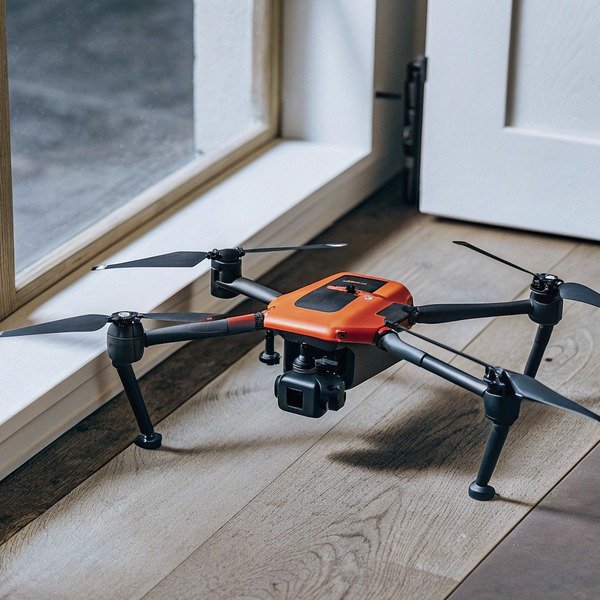
Watching a heavy-lift drone wobble during a test flight at our Xi’an facility taught us that stability starts at the joint, not just the flight controller.
Ask vendors if their arm locks utilize integrated sensors, like magnetic or optical detectors, to prevent takeoff when unsecured. Additionally, verify if the mechanism includes a secondary mechanical latch and request vibration test data confirming stability under heavy payload stress.
Let’s explore the critical questions that ensure your fleet remains airborne and safe during hazardous operations.
What specific arm lock designs should I look for to ensure maximum flight stability?
When designing our SkyRover frames, we noticed that simple friction locks often fail under high-heat stress, leading to dangerous vibrations during mission-critical moments.
Look for arm locks featuring a threaded collar or cam-lock design combined with electronic lock detection sensors. These systems mechanically secure the arm against movement while digitally confirming the status to the flight controller, ensuring the drone cannot fly if the arms are loose.

The Mechanics of Stability
In the industrial drone sector, the arm lock is the foundation of flight performance. industrial drone sector 1 If the arm moves even a fraction of a millimeter, the flight controller receives conflicting data from the Inertial Measurement Unit (IMU). Inertial Measurement Unit (IMU) 2 This causes the motors to overcompensate, leading to oscillation or "shakes" in the video feed. When we consult with fire departments, we emphasize that stability is not just about the software; it is about mechanical rigidity.
You should look for designs that mechanically compress the joint. A threaded collar, similar to a high-pressure hose fitting, offers the best compression. It tightens around the entire circumference of the arm tube. This eliminates "play" or wiggle room.
Electronic Verification Systems
Modern safety standards now demand more than just a physical lock. Modern safety standards 3 High-end firefighting drones should have "smart" arms. firefighting drones 4 This involves a sensor inside the joint.
- Magnetic Hall Sensors: A small magnet in the arm triggers a sensor when fully locked.
- Micro-switches: A physical button that gets pressed when the latch is closed.
- Optical Sensors: A light beam that is broken when the arm is in position.
If these sensors do not detect a "closed" state, the drone software must block the motors from starting. This prevents the pilot from taking off with a loose arm in a rush.
Comparing Lock Architectures
Different manufacturers use different locking philosophies. Here is a breakdown of what we see in the market and what you should prioritize for heavy-lift operations.
H3 – Comparison of Common Arm Lock Mechanisms
| Lock Type | Mechanism Description | Stability Rating | Suitability for Firefighting |
|---|---|---|---|
| Threaded Collar | A rotating ring screws over the joint, compressing it like a plumbing fitting. | High | Best. Extremely rigid and dust-proof. |
| Cam-Lock Latch | A lever pulls the joint together, similar to a bicycle wheel quick-release. | Medium-High | Good. Fast to deploy, but tension must be adjusted regularly. |
| Push-Button Pin | A spring-loaded pin clicks into a hole. | Low-Medium | Poor. Prone to developing "slop" or play over time. |
| Friction Fit | The arm is jammed into a slot without a dedicated lock. | Low | Unsafe. High risk of failure under vibration. |
When you speak to a sales representative, ask specifically if the lock allows for tool-free tension adjustment. Over time, all mechanisms loosen. A good design allows the pilot to tighten the lock by hand in the field without needing a hex key or screwdriver.
How can I verify the material strength and durability of the folding arm mechanism?
We often reject cheaper alloys in our supply chain because they become brittle after repeated folding cycles in cold weather, risking structural failure during winter deployments.
Request material certifications specifying aviation-grade aluminum (like 7075 or 6061) or carbon fiber composites for the knuckles. Additionally, ask for lifecycle test reports showing the mechanism withstands thousands of fold cycles without developing play or metal fatigue.

Material Science in High-Heat Environments
Firefighting drones face a unique challenge: rapid temperature changes. A drone might sit in a cold fire truck at 5°C and then fly near a blaze where temperatures exceed 60°C. This causes thermal expansion. If the materials are cheap, the arm lock might jam (expand) or become loose (contract). thermal expansion 5
We recommend insisting on CNC-machined Aluminum 7075. This alloy is used in aerospace wings. It has high tensile strength and resists fatigue. Some cheaper drones use cast aluminum or molded plastic for the folding knuckle. Plastic can melt or warp near a fire. Cast aluminum is brittle and can crack if the drone lands hard.
Validating Durability Claims
Do not just accept the brochure's word. You need to ask for the "Cycle Test" data. This test involves a machine folding and unfolding the arm thousands of times.
- Ask: "What is the rated lifecycle of the folding mechanism?"
- Target: You want a number above 2,000 cycles.
- Ask: "Are the knuckles CNC machined or die-cast?"
- Target: CNC machined is superior.
H3 – Identifying Wear Patterns
When evaluating a demo unit, inspect the inside of the folding joint. If you see metal shavings or powder, it means the aluminum is grinding against itself. This is a sign of soft material or poor anodization. High-quality joints usually feature a liner or a washer made of a different material (like brass or Teflon) to reduce friction and wear.
H3 – Material Performance Checklist
| Material Component | Recommended Material | Why It Matters for Firefighting |
|---|---|---|
| Main Knuckle | 7075-T6 Aluminum | High strength-to-weight ratio; resists cracking on hard landings. |
| Locking Collar | 6061 Aluminum | slightly softer than the knuckle to prevent seizing (galling). |
| Pivot Pin | Stainless Steel | Resists rust from water spray and foam; high shear strength. |
| Bushing/Washer | Phosphor Bronze or Teflon | Self-lubricating; prevents the joint from squeaking or grinding. |
We always advise our clients to check if the pivot pin is made of stainless steel. Firefighting drones get wet. If the pin rusts, the arm will seize up, and you will not be able to fold it back into the case.
Do the arm locks feature secondary safety latches to prevent accidental unlocking during operations?
During field tests with heavy payloads, we discovered that primary locks can loosen from vibration without a backup system, creating a single point of failure.
Yes, premium firefighting drones must feature a dual-locking system, such as a physical safety pin or a spring-loaded catch that engages automatically. This redundancy ensures the arm remains rigid even if the primary tightening collar or latch unintentionally loosens during turbulent flight.
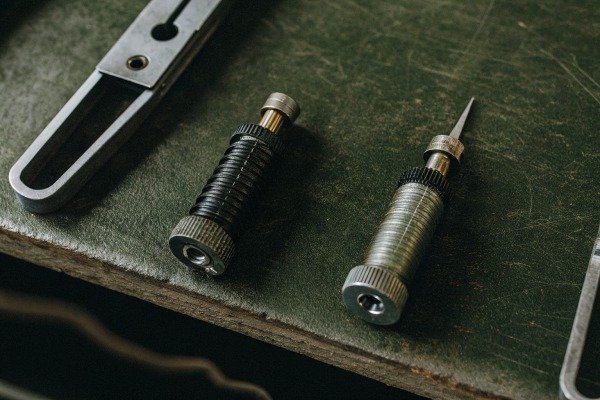
The Principle of Redundancy
In aviation, redundancy is life. A single failure should never bring down the aircraft. In aviation, redundancy is life 6 The primary lock (like the threaded collar) does the heavy lifting. It holds the arm stiff. However, vibration acts like an invisible hand, constantly trying to unscrew that collar.
A secondary safety latch acts as a fail-safe. It does not bear the load of the arm, but it physically blocks the arm from folding. Even if the primary lock completely falls off, the secondary latch keeps the drone in the air.
Types of Secondary Mechanisms
When you inspect a drone, look for these specific features:
- Safety Pins: A steel pin that slides through the joint. This is the most reliable method. It is visual and physical. You can see the pin is in.
- Spring-Loaded Buttons: A button that clicks into place when the arm is fully extended. You must press this button to fold the arm.
- Reverse-Thread Collars: Some designs use threads that tighten when the drone vibrates, rather than loosen.
H3 – Human Error and Safety Latches
The secondary latch also protects against pilot error. In the chaos of an emergency response, a pilot might forget to tighten the main collar fully. emergency response 7 If there is a secondary "click" system, the arm is still safe for a short flight.
We integrate these features because we know that in the field, operators are wearing thick gloves. They might not have the tactile feedback to know if a screw is perfectly tight. A large, visible safety lever or pin is easier to verify visually than a tight screw.
H3 – Redundancy Features to Request
| Feature Name | Function | Verification Question |
|---|---|---|
| Safety Pin | Physically blocks folding movement. | "Does the arm require a separate action to unlock after the main latch is opened?" |
| Visual Indicator | Shows red/green status of the lock. | "Is there a color-coded mark that confirms the lock is fully engaged?" |
| Audible Click | Sound confirms engagement. | "Does the mechanism make a distinct sound when securely locked?" |
| Tethered Parts | Prevents loss of pins/nuts. | "Are the safety pins tethered to the frame so they don't get lost in the grass?" |
If a vendor tells you their primary lock is "so strong it doesn't need a backup," be very skeptical. Every mechanical system can fail. Redundancy is the hallmark of professional equipment.
What vibration and stress test reports should I request to validate the arm lock reliability?
Our engineering team spends weeks analyzing flight logs to ensure arm joints do not generate noise affecting the IMU, which is critical for precision hovering in smoke.
Request flight logs demonstrating vibration levels below 2.0 m/s² on the arm joints during full-load maneuvers. Also, ask for drop test results and thermal cycling reports that prove the locks maintain integrity when transitioning between Mean Time Between Failures (MTBF) 8 extreme heat and freezing altitudes.
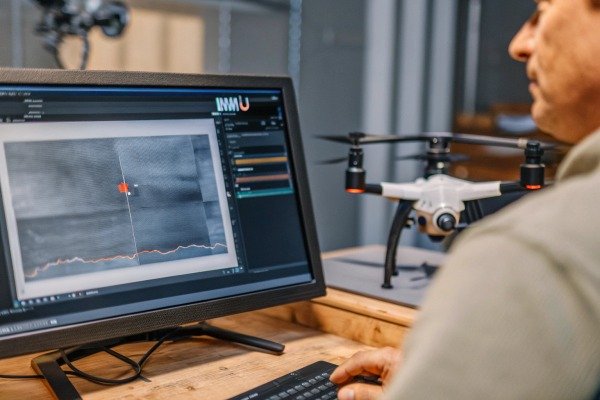
Understanding Vibration Data
Vibration is the enemy of drones. It loosens screws, confuses sensors, and cracks solder joints. Vibration is the enemy 9 The arm lock is the most common source of bad vibration. If the lock is loose, the motor at the end of the arm acts like a lever, amplifying the shaking.
When you ask for a "Vibration Test Report," you are looking for specific data. You want to see the vibration amplitude measured in gravity (g) or m/s².
- Good Result: Vibration under 1.0 m/s² during hover.
- Acceptable Result: Vibration under 2.5 m/s² during aggressive braking.
- Bad Result: Spikes over 4.0 m/s². This indicates the arm is moving independently of the body.
Stress Testing for Real-World Scenarios
Firefighting drones carry heavy loads: water hoses, extinguisher balls, or heavy thermal cameras. The arm locks must support this weight plus the G-force of flight.
You should request a Static Load Test Report. This shows how much weight hangs on the arm before the lock breaks. For a drone that carries 10kg, the arm lock should handle at least 30kg of force to account for G-forces during a hard turn.
H3 – The "Shake and Bake" Test
The most rigorous test is combined thermal and vibration testing. We call this the "Shake and Bake." The drone is placed on a vibration table inside a climate chamber. vibration table 10 It is shaken while the temperature cycles from -20°C to +50°C.
This simulates a winter fire response. The metal contracts in the cold air, potentially loosening the lock. Then the vibration starts. If the design is poor, the arm will fail. Asking for this specific report separates high-end manufacturers from toy makers.
H3 – Key Testing Metrics to Demand
| Test Type | Metric to Look For | Real-World Implication |
|---|---|---|
| Vibration Analysis | < 2.0 m/s² (RMS) | Ensures stable video and accurate GPS holding. |
| Static Load | 3x Max Payload Weight | Ensures arm won't snap during high-speed braking. |
| Drop Test | 1 meter drop (folded) | Ensures the lock doesn't crack if the case is dropped. |
| Thermal Cycling | -20°C to +60°C | Ensures the lock works in winter and near fires. |
| Ingress Protection | IP55 or higher | Ensures water spray/foam doesn't jam the lock. |
Finally, ask about Mean Time Between Failures (MTBF) for the locking mechanism. This is a statistical value based on testing. If they cannot provide this data, it is likely they have not tested it thoroughly enough for industrial safety standards.
Conclusion
Purchasing a firefighting drone requires looking beyond the camera specs and focusing on structural safety. By asking about sensor integration, material grades like 7075 aluminum, redundant latches, and vibration data, you ensure your team operates with reliable equipment that won't fail when lives are on the line.
Footnotes
1. Leading manufacturer’s portal for industrial and public safety drone solutions. ↩︎
2. Explains the critical sensor technology that relies on arm stability for accurate flight data. ↩︎
3. Manufacturer documentation illustrating current safety features and standards in professional drones. ↩︎
4. Recent news coverage highlighting the real-world deployment and challenges of firefighting drones. ↩︎
5. Scientific explanation of how temperature changes affect material dimensions and joint fit. ↩︎
6. Official aviation safety principles regarding system redundancy to prevent catastrophic failures. ↩︎
7. Educational resource on the complexities and safety requirements of emergency management operations. ↩︎
8. Industry standard terminology for measuring the reliability of mechanical components over time. ↩︎
9. Scientific background on how vibration impacts aerospace structures and electronic components. ↩︎
10. Technical standards for conducting vibration testing on unmanned aerial systems. ↩︎

 English
  Español de México
  Deutsch
  Français
  Русский
  العربية
