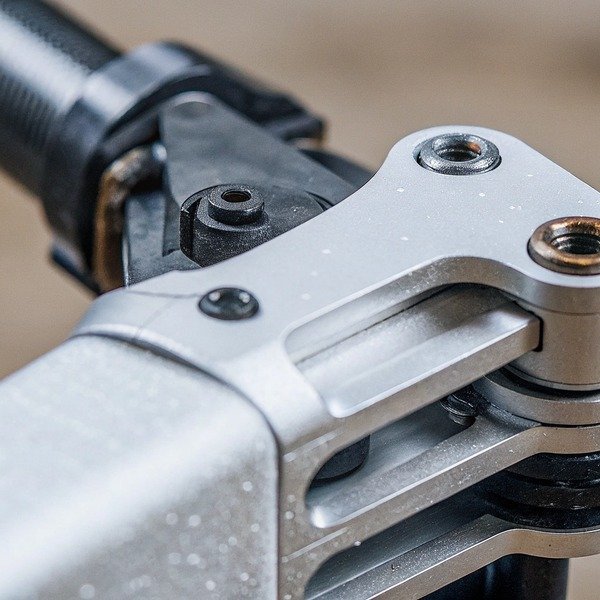
We have witnessed how a single jammed hinge can ground an entire mission during a critical wildfire response. wildfire response 1 In our testing facility, we often push prototypes to destruction because we know that a folding mechanism is not just about portability; it is the structural backbone of the aircraft. If this joint fails, the payload drops, and the mission ends.
To verify durability, you must request fatigue test reports confirming over 10,000 cycles under load and inspect the hinge materials for 7075 aviation-grade aluminum. Additionally, verify that the locking system uses heavy-duty clamps rather than simple threads and check for IP-rated seals that prevent soot and water ingress during high-heat operations.
Here is how you can systematically validate these critical engineering points before signing a procurement contract.
What specific fatigue test reports should I request to confirm the folding arm lifespan?
When we prepare our compliance documentation for export to US markets, we notice that many buyers overlook specific cycle testing data. It is painful to see expensive equipment fail because the buyer assumed a “folding” feature meant it was tested for years of daily abuse.
You should request a “Loaded Cycle Fatigue Report” that validates the mechanism for at least 1,000 to 10,000 open-close cycles while carrying a simulated payload. This report must demonstrate that the hinge maintains structural rigidity without developing play or metal fatigue after repetitive use in simulated operational environments.

Understanding the Cycle Test Standards
Simply asking "is it tested?" is not enough. In the industrial drone sector, there is a massive difference between a standard consumer folding test and a heavy-lift fatigue test. A consumer drone might be tested for 500 folds with no weight attached. However, a firefighting drone carrying a 12kg to 150kg payload exerts massive torque on the hinge pin every time it lifts off.
We recommend asking for raw data regarding "loaded" vs. "unloaded" cycles. An unloaded test only proves the hinge moves freely. A loaded test proves the hinge will not snap when the drone pulls a 6G maneuver in high winds. The best reports will show that the manufacturer placed a static load on the arm tip and cycled the lock 1,000+ times.
The Importance of Payload Simulation
Firefighting drones often carry heavy external payloads, such as dry powder extinguishant tanks or heavy sensor gimbals. The folding mechanism is the weak point where force transfers from the motor to the central frame. If the test report does not account for this weight, the data is useless.
You need to verify if the manufacturer used a "Safety Factor" in their fatigue testing. For example, if the max takeoff weight is 50kg, the test rig should apply 75kg or 100kg of force to the folding joint to ensure a safety margin. This ensures that even as the metal ages, it retains enough strength to handle emergency maneuvers.
Key Metrics to Analyze in Reports
When you receive the PDF reports from the supplier, look specifically for "deformation metrics." This data point measures how much the arm droops after the test cycles are complete. If the arm sags even by a millimeter, it alters the thrust vector of the motor, reducing flight stability thrust vector 3.
Fatigue Testing Comparison Table
Use this table to benchmark the reports you receive from suppliers.
| Test Parameter | Standard Consumer Drone | Professional Firefighting Drone | What You Should Demand |
|---|---|---|---|
| Cycle Count | 500 – 1,000 cycles | 5,000 – 10,000+ cycles | Minimum 5,000 cycles |
| Load Condition | Unloaded (Arm weight only) | Loaded (Max Payload Simulation) | 120% of Max Takeoff Weight |
| Environmental Context | Room Temperature | -20°C to 50°C | Temperature extremes included |
| Acceptable Play | < 1.0 mm | < 0.1 mm | Zero perceptible play |
| Locking Force | Finger tight | Tool tensioned / Heavy Clamp | Consistent tension force |
How do I evaluate the quality of materials used in the drone's hinge points?
Our supply chain team rejects batches of aluminum that do not meet specific hardness ratings because we know soft metal deforms quickly under vibration. A shiny surface surface treatment 4 finish often hides cheap alloys that will strip threads or crack after just a few months of service.
Verify that the structural components utilize CNC-machined 7075 aviation aluminum alloy combined with high-modulus carbon fiber tubes. You must also check for anodic oxidation coatings on metal parts to prevent galvanic corrosion where the aluminum meets carbon fiber, which causes invisible structural weakening over time.

The Difference Between 6061 and 7075 Aluminum
In the world of drone manufacturing, not all aluminum is created equal. Many budget-friendly suppliers use 6061 aluminum because it is cheaper and easier to cut. However, for a heavy-lift firefighting drone, 6061 is often too soft for the critical pivot points in a folding mechanism.
We insist on 7075 aluminum (often called aerospace grade). 7075 aluminum 5 It has zinc as the primary alloying element, which gives it strength comparable to many steels while retaining the lightweight properties of aluminum. When you evaluate a drone unit, ask for the material certification (Mill Test Report) for the hinge block. If the hinge deforms, the arm becomes loose, causing violent vibration that confuses the flight controller sensors.
Galvanic Corrosion Risks
Firefighting drones operate in wet, humid, and chemically aggressive environments. A major hidden killer of folding arms is galvanic corrosion. This happens when carbon fiber (which acts like a cathode) touches aluminum (the anode) in the presence of moisture (an electrolyte).
Over time, the aluminum will corrode and turn into white powder, loosening the bond between the tube and the hinge.
- Inspection Tip: Look closely at where the round carbon tube enters the metal folding block. Is there a layer of fiberglass, glue, or a specialized coating separating them?
- Direct Contact: If raw carbon touches raw aluminum, the lifespan of that joint is significantly reduced.
Thermal Expansion Mismatch
Firefighting drones face extreme heat near fires and freezing cold in winter storage. Carbon fiber has a near-zero coefficient of thermal expansion, meaning it does not coefficient of thermal expansion 6 change size much with temperature. Aluminum, however, expands when hot and shrinks when cold.
If the tolerance in the folding hinge is too tight without accounting for this, the mechanism can seize up in high heat (like near a fire). Conversely, in freezing weather, it might become too loose. High-quality designs use bushings or washers made from materials like brass or specialized polymers that buffer this expansion difference, ensuring the arm folds and unfolds smoothly regardless of the temperature.
Material Durability Checklist
| Component | Preferred Material | Warning Signs (Low Quality) |
|---|---|---|
| Hinge Block | 7075-T6 Aluminum | Cast Aluminum (rough texture) |
| Pivot Pin | Stainless Steel or Titanium | Mild Steel (prone to rust) |
| Bushings | Brass or Self-Lubricating Polymer | Plastic or Direct Metal-on-Metal |
| Tube Joint | Carbon Fiber with Fiberglass Buffer | Direct Carbon-to-Aluminum contact |
How can I verify that the locking mechanism will not loosen during high-vibration operations?
We routinely run vibration tables in our QC department that shake frames until loose screws literally fly across the room. It is terrifying to imagine a heavy-duty arm retracting mid-flight because a simple thread design backed out due to the high-frequency hum of eight heavy motors.
Look for a locking system that features a heavy-duty clamp or sleeve design rather than relying solely on threaded friction. Ensure the mechanism includes a secondary safety latch or pin redundancy, and check if the design has passed MIL-STD-810 vibration testing standards to guarantee security during flight.

The Threat of High-Frequency Vibration
Octocopters used in firefighting generate massive amounts of high-frequency vibration. high-frequency vibration 7 This vibration acts like an ultrasonic cleaner, loosening any threaded connection that isn't chemically locked or mechanically secured.
A "screw-type" folding arm, where you twist a collar to tighten it, is the most prone to failure. Operators often forget to tighten it fully, or vibration backs it off. The superior design is a "clamp-lock" or "snap-lock" system. These work like the quick-release on a bicycle wheel but are industrial strength. Once the lever is over the center point, physics holds it closed. Even if vibration occurs, the clamp tightens rather than loosens.
Redundancy is Non-Negotiable
For a drone carrying expensive payloads over people or property, a single point of failure is unacceptable. The best folding mechanisms have two steps to unlock:
- Primary Lock: The main clamp or thread that holds the arm rigid.
- Secondary Safety: A small pin, button, or latch that prevents the primary lock from opening even if it becomes loose.
When you inspect a demo unit, try this test: Undo the main lock but don't fold the arm. Shake the drone violently. Does the arm flop down immediately? If yes, it lacks redundancy. A good design will hold the arm in the socket loosely even if the main clamp fails, allowing the pilot time to land.
Evaluating Thread Lockers and Hardware
If the design does use screws near the hinge (even if not for the main action), ask if they use thread-locking fluid (like Loctite) thread-locking fluid 8.
- Blue Loctite: Removable with tools (good for maintenance).
- Red Loctite: Permanent (requires heat to remove).
We recommend checking that critical pivot bolts use "Nyloc" nuts (nuts with a nylon insert) or safety wire. You can visually inspect this. If you see a bare nut without a nylon ring or safety wire, that is a red flag for durability.
Comparison of Locking Mechanism Types
| Mechanism Type | Vibration Resistance | Ease of Use | Maintenance Need |
|---|---|---|---|
| Threaded Collar | Low (Prone to loosening) | Slow (Requires many turns) | High (Needs constant cleaning) |
| Over-Center Clamp | High (Self-tightening) | Fast (One motion) | Medium (Check tension bolt) |
| Spring-Loaded Pin | Medium (Depends on spring) | Very Fast | Low (prone to jamming if dirty) |
| Bolt-Through | Highest (Solid bolt) | Slow (Requires tools) | Very Low |
What should I look for to ensure the folding design withstands harsh environmental conditions?
Our engineers have analyzed returned units that were clogged with a paste made of water and ash, which ground down the internal bearings like sandpaper. Real-world firefighting involves soot, chemical sprays, and rain, so a clean-room folding design will inevitably seize up in the field.
Prioritize “open-design” hinge architectures that allow for easy flushing of debris or fully sealed units with IP67 ratings. Verify that internal wiring passing through the fold is protected by abrasion-resistant sheathing and that the joint materials are treated to withstand corrosive soot and water exposure.

The "Grinding Paste" Problem
In a fire scene, the air is filled with conductive soot and ash. When this mixes with moisture (from rain or fire hoses), it forms an abrasive paste. If the folding mechanism is complex with many hidden internal cavities, this paste gets inside and cannot be cleaned out. Over time, it grinds away the aluminum and carbon fiber, creating "slop" or play in the arm.
There are two ways to solve this, and you should look for one of them:
- Fully Sealed (IP67): The hinge is enclosed in a rubber boot or gasket system. Nothing gets in. This is excellent but hard to maintain if a repair is needed.
- Open Architecture: The hinge is skeletal. Debris can get in, but it can also be blasted out with compressed air or a water rinse. For heavy industrial use, open architecture is often preferred because it is easier for the crew to service on-site.
Cable Routing and Fatigue
The folding mechanism isn't just mechanical; it is a conduit for power and data. The thick power cables running from the battery to the motor pass directly through this hinge. Every time you fold the arm, you bend that cable.
- Bend Radius: Check that the design allows for a gentle curve of the wire, not a sharp 90-degree kink.
- Abrasion Protection: The cables should be wrapped in braided nylon or a silicone sheath where they pass through the metal hinge. If you see bare colored wire rubbing against the aluminum edge, reject it. The vibration will eventually cut through the insulation, causing a short circuit and a crash.
Corrosion Resistant Coatings
Firefighting drones are often exposed to chemical retardants which can be corrosive chemical retardants 9. Raw aluminum will oxidize.
Ask the supplier about the surface treatment. "Hard Anodizing Hard Anodizing 10" (Type III) is the gold standard. It creates a ceramic-hard layer on the aluminum surface that resists scratches and chemicals. Paint is often not enough, as it chips off at the hinge points, exposing the metal.
Furthermore, inspect the bearings. High-quality folding joints use sealed stainless steel bearings. If the bearings are open (visible balls), the grit from the fire scene will destroy them in weeks.
Conclusion
Verifying the durability of a firefighting drone's folding mechanism requires moving beyond the spec sheet and interrogating the engineering principles. By demanding load-bearing fatigue reports, inspecting for galvanic corrosion protection, ensuring clamp-based locking redundancy, and validating environmental resilience, you protect your investment and your mission. Do not settle for "standard" durability; demand proof of industrial-grade resilience to ensure your fleet is ready when the alarm rings.
Footnotes
1. Official US Forest Service page on wildfire management and response. ↩︎
2. General background on the concept of flight stability in aviation. ↩︎
3. Authoritative explanation of thrust physics from NASA. ↩︎
4. General background on surface treatment and finishing processes for industrial materials. ↩︎
5. Technical specifications for 7075 aluminum from a major producer. ↩︎
6. General background on the material property definition. ↩︎
7. SAE International standard for failure mode and effects analysis in aerospace. ↩︎
8. Official product page from the leading manufacturer (Henkel/Loctite). ↩︎
9. Official US Forest Service page regulating fire chemicals. ↩︎
10. Industry council defining standards for aluminum anodizing. ↩︎

 English
  Español de México
  Deutsch
  Français
  Русский
  العربية
