
We often see clients struggle with complex equipment without proper guidance. At our factory, we know that lack of training risks safety and wastes your budget on avoidable crashes.
Most reputable industrial drone suppliers provide remote video training, often combining live sessions with pre-recorded modules. To verify quality, request a detailed syllabus, check for alignment with aviation standards like FAA Part 107, and ask for instructor credentials or a pilot demo session before finalizing your purchase.
Let's break down exactly what you should look for to ensure your team is ready for the field.
Is the remote training conducted via live video calls or pre-recorded tutorials?
When we set up export contracts, clients often worry about the language barrier. Poor communication leads to confusion, making effective learning impossible during critical setup phases.
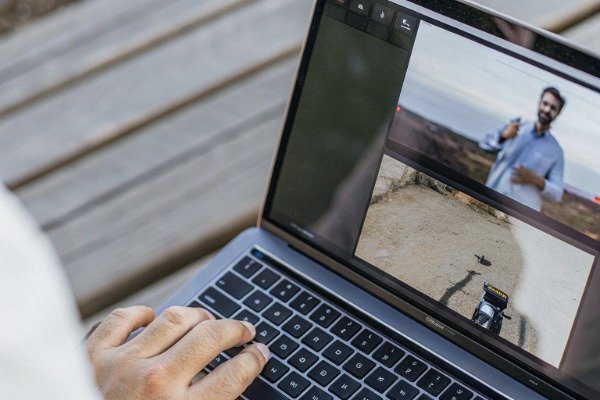
Suppliers typically offer a hybrid approach, using pre-recorded tutorials for basics and live video calls for complex Q&A. To ensure effectiveness, confirm if the live sessions are one-on-one and if the platform supports high-definition screen sharing for detailed software walkthroughs.
The Hybrid Approach: Why You Need Both
In our experience exporting to the US and Europe, we have found that a single format rarely suffices for industrial-grade equipment. Firefighting drones are not consumer toys; they require a deep understanding of mission planning software and hardware integration.
We usually recommend a structure where the "static" knowledge—such as unboxing, propeller installation, and basic charging safety—is delivered via high-quality pre-recorded videos. This allows your team to watch and re-watch the basics at their own pace. However, the "dynamic" knowledge—such as troubleshooting a connection error or interpreting thermal imaging data in real-time—must be handled via live video calls.
When evaluating a supplier, you must ask if their live training is a generic webinar or a dedicated one-on-one session. Generic webinars often prevent you from asking specific questions about your unique use case, such as operating in high-wind urban canyons or extreme heat environments.
Addressing the Language Barrier
One critical insight we have gained from our global sales is the importance of language support. If your supplier is based overseas, you must verify their ability to communicate technical concepts in English (or your local language).
If the supplier cannot provide a fluent English-speaking instructor, you should ask about their alternatives. Do they use real-time AI translation tools? Do they provide subtitled video content? A supplier who cannot bridge this communication gap will leave you stranded when technical issues arise.
Comparing Training Formats
To help you evaluate what a supplier is offering, we have compiled a comparison of training formats we see in the industry.
| Feature | Live Video Calls | Pre-Recorded Tutorials | Hybrid Model (Recommended) |
|---|---|---|---|
| Interactivity | High (Real-time Q&A) | None | High |
| Pacing | Dictated by instructor | Self-paced | Flexible |
| Customization | Tailored to your specific drone model | Generic for the series | Tailored deep-dives |
| Language Risk | High (accent/fluency issues) | Low (usually scripted/subtitled) | Balanced |
| Cost to Supplier | High (requires staff time) | Low (one-time production) | Moderate |
You should explicitly ask the sales representative: "If I encounter a specific error code during the live training, can the instructor demonstrate the fix on their end immediately?" If the answer is vague, their "live training" might just be a sales presentation in disguise.
Does the training curriculum cover both flight operations and routine maintenance?
We build drones to last, but neglect destroys them. Without maintenance knowledge, your expensive equipment fails mid-mission, endangering operations and costing thousands in repairs.
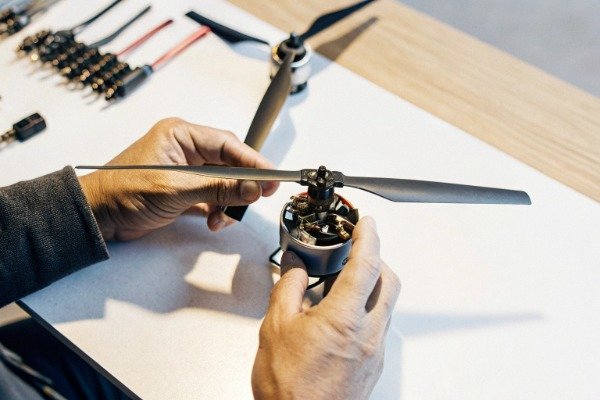
Comprehensive training must cover both flight maneuvers and preventative maintenance. A quality curriculum includes specific modules on battery care, motor cleaning, and sensor calibration, ensuring your equipment remains operational and safe long after the initial purchase.
The Importance of a Syllabus Document
When we collaborate with clients on design and development, we emphasize that the hardware is only as good as the maintenance it receives. Before you sign a purchase order, you should demand to see the training syllabus or curriculum outline.
Do not accept a verbal promise that "we teach you everything." You need a document that lists specific modules. If a supplier hesitates to provide this, it is a red flag that their training process is ad-hoc or non-existent. A professional manufacturer will have a standardized curriculum that they can share with you immediately.
Critical Maintenance Modules
For firefighting drones specifically, the environment is harsh. Smoke particles, high heat, and water spray can degrade components faster than in agricultural or survey use. Therefore, the training must go beyond "how to fly."
We strongly suggest verifying that the curriculum covers thermal camera calibration. Firefighting relies on accurate temperature readings to identify hotspots. If your team does not know how to adjust for emissivity or atmospheric interference (like heavy smoke), the data you gather is useless.
Furthermore, look for "stress-testing" scenarios in the curriculum. Does the training teach you what to do if a motor fails? Does it cover emergency return-to-home procedures if the signal is lost due to interference? These are not standard flight operations; they are survival skills for your equipment.
Flight vs. Maintenance Breakdown
Below is a checklist of what a robust firefighting drone curriculum should include. Use this to audit the syllabus your potential supplier sends you.
| Category | Essential Topics to Look For | Why It Matters |
|---|---|---|
| Flight Operations | • Basic Maneuvers (GPS/Atti modes) • Waypoint Mission Planning • Thermal Camera Settings (Isotherms) • Night Flight Protocols |
Ensures the pilot can control the aircraft and gather actionable data during a fire. |
| Routine Maintenance | • Motor & Propeller Inspection • Airframe Cleaning (Smoke residue) • Firmware Updates • Gimbal Calibration |
Prevents mechanical failure and extends the lifespan of the asset. |
| Battery Management | • Storage Voltage Levels • Cycle Count Monitoring • Temperature Constraints |
Batteries are the most volatile component; mishandling leads to fires or mid-air power loss. |
| Emergency Procedures | • Signal Loss Recovery • Compass Error Troubleshooting • Forced Landing Techniques |
Prepares the pilot for the worst-case scenarios common in emergency response. |
Verifying Depth of Knowledge
In our engineering department, we often say that a pilot who can't fix a minor issue is a pilot who will be grounded. Ask the supplier if they provide "level 1 repair training" remotely. This usually involves simple tasks like swapping a landing gear leg or replacing a damper plate. If they can teach your team these simple fixes via video, you will save weeks of downtime by avoiding shipping the drone back to the factory for minor repairs.
Can I request a short demo session to evaluate the instructor's communication skills?
Our sales team frequently encounters skepticism about remote support quality. If an instructor cannot explain simple concepts clearly, your team will struggle to master complex thermal imaging features.
Yes, you should absolutely request a 15-minute demo session. This allows you to evaluate the instructor's English proficiency, technical knowledge, and ability to troubleshoot issues in real-time, ensuring they can effectively train your staff before you commit.

The "Try Before You Buy" Strategy
In the B2B industrial drone market, a demo is standard practice, yet many buyers forget to ask for a training demo. They ask for a product demo (to see the drone fly), but they rarely test the service (to see how the teaching works).
When we onboard new distributors, we encourage them to hop on a call with our technical support team. This serves two purposes. First, it verifies the connection quality. If the supplier's internet is lagging or the video resolution is too low to see the screen clearly, remote training will be a nightmare. Second, it tests the instructor's soft skills.
thermal imaging data 1
Evaluating Communication and Patience
Firefighting drones involve complex software interfaces like ATAK (Android Team Awareness Kit) or proprietary ground control stations. The instructor needs to explain these interfaces simply.
During your requested demo, ask a "dumb" question intentionally. For example, ask, "How do I turn it on?" and watch how they respond. Do they rush you? do they get frustrated? or do they explain it patiently with visual aids? Their reaction in a low-stakes demo predicts how they will handle your team during a high-stress training session.
data security 2
Technical Competence Check
You should also use this demo to verify their technical depth. Ask a specific question about the thermal sensor, such as: "How do I change the color palette to highlight temperatures above 500 degrees?"
A qualified instructor will immediately share their screen or point the camera at the controller to show you the exact menu steps. A poor instructor will say, "I'll check the manual and get back to you."
aviation insurance providers 3
Instructor Evaluation Scorecard
We recommend using a simple scorecard during this demo to make an objective decision.
| Criteria | Passing Standard | Red Flag |
|---|---|---|
| Video Quality | HD (1080p), clear audio, stable connection. | Pixelated video, lag, background noise. |
| Language Skills | Fluent or near-fluent; technical terms used correctly. | Heavy reliance on translation apps; inability to understand your questions. |
| Teaching Style | Uses visual aids, screen sharing, and physical demonstrations. | Just talks at the camera; reads from a script. |
| Technical Knowledge | Answers specific feature questions immediately. | Deflects questions; gives generic answers. |
| Platform Familiarity | Smoothly switches between camera and screen share. | Struggles to operate the video conference software (Zoom/Teams). |
If the supplier refuses a short 10-15 minute demo of their training capability, proceed with extreme caution. It usually means they outsource their support or lack confidence in their team's ability to communicate.
national airspace 4
Will my team receive a certificate of completion after the training?
We understand that government contractors need paper trails. Operating without proof of training creates liability issues and can void insurance policies during critical firefighting missions.
EASA certification 5
Most professional suppliers issue a manufacturer-specific certificate upon successful completion of the course. While this is not a substitute for national licenses like FAA Part 107, it validates that your team knows the specific operating procedures for that drone model.

Manufacturer Certification vs. Regulatory Licensing
It is crucial to distinguish between the two types of "licenses" in the drone world. As a manufacturer, we issue certificates that prove you know how to operate our specific machine—how to unfold the arms of a SkyRover, how to use our specific software, and how to interpret our battery data.
However, this is not a license to fly in national airspace. In the United States, you need an FAA Part 107 license. In Europe, you need EASA certification. Our training prepares you for the technical operation, but it does not legally authorize commercial flights.
When verifying a supplier, ask if their training curriculum aligns with these national standards. For example, does their "flight safety" module reference FAA airspace classes? If so, it shows they understand the regulatory environment you operate in.
Android Team Awareness Kit 7
The Value of the Certificate
Why does the manufacturer certificate matter if it's not a legal license?
- Insurance: Many aviation insurance providers require proof that the pilot has been trained on the specific airframe they are insuring. A generic Part 107 license might not be enough if you crash a $20,000 heavy-lift drone. The insurer wants to know you were trained on that drone.
- Liability: In the event of an accident, having a training certificate from the manufacturer demonstrates due diligence. It shows that your department took reasonable steps to ensure operator competence.
- Contract Requirements: If you are a distributor selling to government agencies, they often mandate that the "OEM provides training certification."
Data Sovereignty and Security Training
In recent years, we have seen a massive shift towards data security. Firefighting drones often stream live video of critical infrastructure or emergency scenes. A certificate of completion should ideally reflect that the pilot has been trained on data security protocols.
Ask the supplier: "Does the certification exam cover data privacy?" The training should teach your team how to ensure video feeds are encrypted, how to turn off cloud syncing if necessary, and how to manage flight logs locally. This is particularly important for government clients who are sensitive to where their data is stored.
adjust for emissivity 8
Verifying the "Test"
Finally, ask how the certificate is earned. Is it just for attendance? Or is there a pass/fail exam?
- Attendance-based: Low value. Anyone can sit through a Zoom call.
- Competency-based: High value. This usually involves a written test and a review of flight logs.
We recommend suppliers who require you to upload flight logs from your first few practice flights. The instructor reviews these logs to ensure the drone was flown smoothly and safety checks were performed. Only then is the certificate issued. This "log review" process is the gold standard for remote verification.
urban canyons 9
Conclusion
To ensure safety and ROI, verify that your supplier offers hybrid training (live + video), provides a detailed syllabus covering maintenance, allows a pre-purchase instructor demo, and issues a competency-based certificate.
mission planning software 10
Footnotes
1. NIST research specifically regarding thermal imaging applications in fire services. ↩︎
2. Authoritative resource on cyber threats and security best practices. ↩︎
3. Overview of insurance policies specific to aircraft and drone operations. ↩︎
4. Official FAA definition and overview of the National Airspace System. ↩︎
5. Official European Union Aviation Safety Agency page for drone regulations. ↩︎
6. Official FAA page detailing requirements for commercial drone pilots. ↩︎
7. Official government website for the TAK situational awareness software suite. ↩︎
8. Explains the physical property crucial for accurate thermal temperature readings. ↩︎
9. Defines the environmental phenomenon affecting wind and GPS signals in cities. ↩︎
10. Explains the software systems used to plan and control drone flights. ↩︎

 English
  Spanish
  German
  French
  Dutch
Dutch  Arabic
