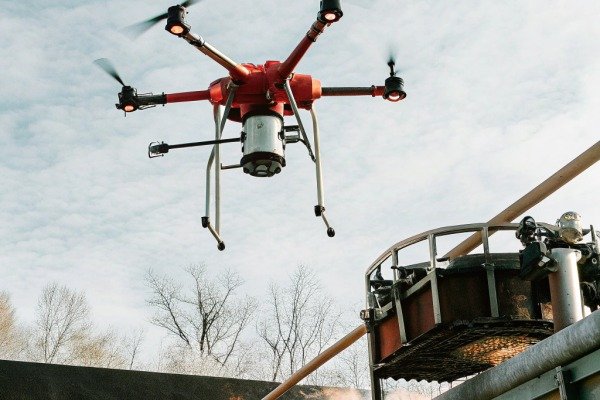
Facing a hazardous chemical fire is a nightmare for any site manager. Hazardous chemical fire 1 When we test our latest prototypes at our flight grounds in Xi’an, we simulate these intense scenarios to ensure our equipment does not fail when lives are at risk.
Yes, leading suppliers offer modular payloads tailored for specific scenarios, including hazardous chemical fires. We integrate specialized sensors for gas detection and customizable extinguishing systems capable of deploying dry powder or foam, ensuring safe remote operations in corrosive environments.
Let’s explore how these specialized solutions can be adapted to your specific industrial needs.
Can I customize the drone payload to carry specific extinguishing agents for hazardous chemical fires?
Standard water tanks are useless against chemical fires, and using the wrong agent can make things worse. In our conversations with US procurement managers, we emphasize that a “one-size-fits-all” drone often becomes a liability in complex hazmat situations.
You can absolutely customize payloads for specific chemical threats. Manufacturers like us engineer interchangeable canister systems that support dry chemical powder, foam, or CO2 grenades, allowing you to switch agents rapidly based on the fire class and volatility of the hazardous material.
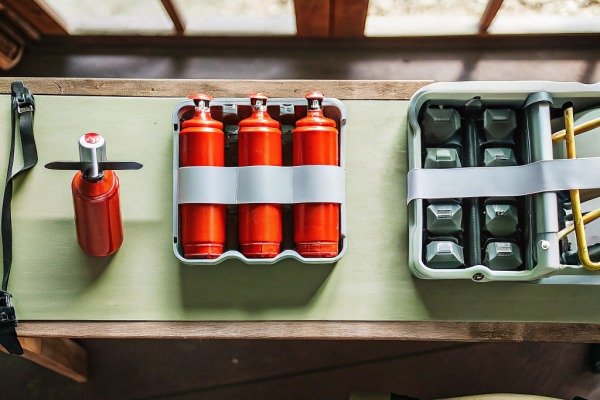
When dealing with industrial incidents, the type of fire dictates the tool. A standard water-drop drone is excellent for wildfires or cooling down structural debris. However, it is dangerous if used on a Class B (flammable liquid) or Class D Class B (flammable liquid) 2 (combustible metal) fire. This is why payload customization is the most critical conversation we have with our clients.
The Modular Design Approach
We design our drones, such as the SkyRover series, with a focus on modularity. The airframe features a sleek, bright red body for high visibility, contrasting with black propellers. But the real magic happens underneath. We utilize a standardized mounting rail system. This allows the operator to swap out the payload in minutes. You do not need a new drone for every fire type; you just need the right attachment.
For hazardous chemical scenarios, we offer specific modules. These are not just buckets. They are precision-engineered delivery systems.
- Dry Powder Canisters: These are essential for electrical or liquid fires where water helps spread the fire. The drone hovers over the source and releases a cloud of powder to suffocate the flames.
- Fire Extinguishing Bombs: These are capsules filled with agents like ABC dry powder. ABC dry powder 3 They are designed to break upon impact, suppressing the fire instantly at the core.
- Compressed Air Foam Systems (CAFS): For large liquid spills, foam creates a blanket that seals the vapors. Compressed Air Foam Systems 4
Matching Agents to Hazards
It is vital to match the extinguishing agent to the chemical hazard present at your facility. During our design phase, we look at the weight and aerodynamics of these agents. A foam tank behaves differently in flight than a solid capsule. Our flight controllers are tuned to adjust stability based on what the drone is carrying.
Below is a guide on which payload matches specific chemical fire scenarios:
| Fire Scenario | Recommended Drone Payload | Extinguishing Mechanism |
|---|---|---|
| Flammable Liquids (Class B) | Foam Spray Tank | Creates a film to seal vapors and cut off oxygen. |
| Electrical Equipment (Class C) | Dry Chemical Powder / CO2 | Non-conductive suppression preventing short circuits. |
| Combustible Metals (Class D) | Specialized Dry Powder Drop | Smothers heat without reacting with the metal. |
| General Debris (Class A) | Water Tank / Mist Sprayer | Cooling and saturation of solid materials. |
By customizing the payload, you transform a surveillance tool into an active suppression asset. This flexibility ensures that your investment covers the wide range of risks found in modern industrial parks.
Do you offer software development services to integrate gas detection sensors for hazmat operations?
Flying blind into a toxic plume is a risk no pilot should take. Toxic plume 5 Our software engineers spend weeks coding SDKs to ensure that invisible threats, like gas leaks, become visible data points on your flight controller screen.
Suppliers frequently provide software development services to fuse gas detection data into the pilot’s display. We develop SDKs that allow multi-gas detectors and photoionization sensors to overlay real-time toxicity heatmaps onto the flight interface, ensuring safe standoff distances during hazmat assessments.
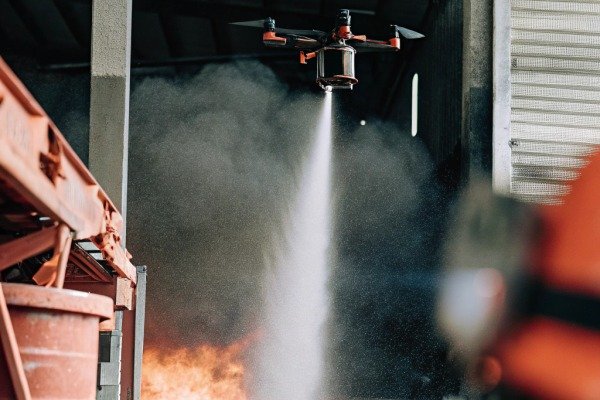
Hardware is only half the battle. In a hazmat operation, information is safety. A drone might survive a flight through a toxic cloud, but if the pilot doesn’t know the concentration of the gas, the ground crew is still at risk. This is where custom software integration becomes a game-changer.
Real-Time Data Fusion
We do not just strap a sensor to a drone and hope for the best. We write code that talks to the sensor. When we export to clients in Europe or the US, they often request integration with specific sensor brands they already trust. We take those third-party sensors—like Photoionization Detectors (PID) or Multi-Gas Detectors Photoionization Detectors 6—and integrate their data streams into our flight app.
Imagine flying the drone toward a chemical plant. On your screen, you see the live video feed. But overlaid on that video is a dynamic color map. Green means safe air; red means high toxicity. This is “Augmented Reality” for firefighters. It allows the incident commander to see the shape and direction of the gas plume in real-time.
The Role of Digital Twins
Advanced software services now include “Digital Twin” technology. Digital Twin 7 We can help integrate the drone’s data into a 3D model of your facility. If you have a map of your piping and ventilation systems, the drone can feed sensor data into that model. This predicts where the gas will travel next.
This level of integration requires open communication. We provide the API (Application Programming Interface) documentation to your IT team, or we do the coding ourselves. It allows for:
- Automated Alerts: The controller vibrates if gas levels exceed a threshold.
- Flight Logging: Every second of gas data is recorded with GPS coordinates for post-incident analysis.
- Safety Zones: The software can prevent the drone from flying too close to explosive concentrations if equipped with non-explosion-proof motors.
This software capability turns the drone from a camera into a flying laboratory. It saves time during the assessment phase and keeps human responders out of the “Hot Zone.”
How can I collaborate with the manufacturer to design a solution for complex industrial fire environments?
Every industrial site has unique challenges, and off-the-shelf products rarely fit perfectly. When we receive inquiries from large contractors, we always suggest a joint design session to align our manufacturing capabilities with their specific site hazards.
Collaboration involves a structured OEM/ODM process where you share site schematics and specific hazard profiles with our engineers. We then co-design features like explosion-proof casings or signal repeaters for heavy interference zones, validating the prototype through joint field testing before mass production.

Many procurement managers, like the professionals we work with in the US, worry that buying from overseas means zero customization. The reality is different. We thrive on solving complex engineering problems. The key to a successful solution is the collaboration process between your team and our factory team.
The OEM/ODM Process
We operate as an Original Equipment Manufacturer (OEM). This means we can build a drone that carries your brand, but more importantly, it carries your specifications. The process usually starts with a detailed discussion about the “pain points.”
- Are there high magnetic fields? (We need shielded compasses).
- Is the heat extreme? (We need high-temp battery casings).
- Is the environment explosive? (We need spark-proof motors).
We recently worked with a client who needed a drone to navigate inside a smoke-filled warehouse. We collaborated to integrate LiDAR sensors that allow the drone to “see” walls LiDAR sensors 8 even when the optical camera is blinded by smoke. This solution was born from a direct conversation, not a catalog.
Validating the Design
Design is nothing without testing. Once we agree on the specs, we build a prototype. We invite clients to view the testing via video link or visit our facility in Chengdu. We simulate your environment as closely as possible. If the drone fails, we redesign it. We do not ship until the solution works.
Here is what a typical collaboration timeline looks like:
| Phase | Duration | Actions Taken |
|---|---|---|
| 1. Discovery | 1-2 Weeks | You share site layouts and hazard lists. We sign NDAs. |
| 2. Engineering | 3-4 Weeks | Our team drafts CAD designs and selects components (sensors, motors). |
| 3. Prototyping | 4-6 Weeks | We build the first unit and integrate custom software. |
| 4. Validation | 2 Weeks | Field testing (flight stability, payload release, signal stress test). |
| 5. Production | Varies | Mass production and quality control checks before export. |
By treating the manufacturer as a partner rather than just a vendor, you gain access to our R&D capabilities. This ensures the final product is not just a gadget, but a tailored safety tool.
What technical support do suppliers provide to ensure the drone performs well in corrosive chemical scenarios?
Chemicals are brutal on electronics; we have seen corrosion destroy circuit boards [corrosion destroy circuit boards](https://www.ampp.org/about/what-is-corrosion) [9](#footnote-9) in days if left unchecked. We advise our clients that the sale is just the beginning of our relationship, especially when maintaining equipment in harsh environments.
Reputable suppliers provide technical support that includes guidance on protective coatings and post-mission decontamination protocols. We offer detailed maintenance schedules, remote troubleshooting for sensor calibration, and supply corrosion-resistant spare parts to extend the lifespan of drones operating near acidic or caustic vapors.
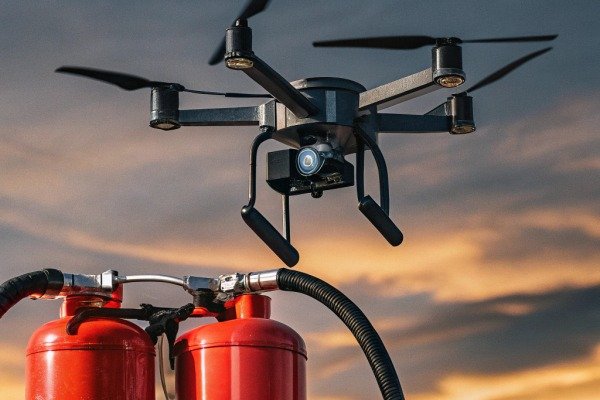
A major concern for buyers is the longevity of the equipment. Chemical fires release acidic vapors that can eat through standard wiring and sensors. If a supplier sells you a drone and disappears, that drone will likely fail after its first major mission. Robust technical support is the only way to ensure a return on investment.
Protection and Maintenance
We take proactive steps during manufacturing. We use conformal coatings on all internal Printed Circuit Boards (PCBs). conformal coatings 10 This acts as a barrier against moisture and chemical vapors. However, no coating is perfect forever.
Technical support often involves teaching your team how to care for the drone. We provide “Decontamination Protocols.” After a flight through a chemical plume, the drone must be cleaned. We provide specific cleaning agents that neutralize acids without damaging the carbon fiber body or the motors.
Remote Support and Spare Parts
We know that shipping a drone back to China for repairs is slow and costly. That is why we focus on remote support and modular spare parts.
- Remote Diagnostics: We can access the drone’s flight logs remotely to diagnose sensor drift or motor issues.
- Spare Parts Kits: We recommend buying a “crash kit” or “maintenance kit” along with the drone. This includes extra propellers, motors, and landing gear.
- Video Tutorials: We create custom videos showing your technicians how to swap out a corroded port or recalibrate a gas sensor.
Data for Liability
Another aspect of support is data management. In chemical incidents, there are often legal investigations. Our “Black Box” support ensures that you can retrieve flight telemetry and sensor data securely. This data proves where the drone flew and what it detected, which is crucial for insurance and regulatory compliance.
| Maintenance Task | Frequency in Chem Environments | Supplier Support Provided |
|---|---|---|
| Hull Cleaning | After every flight | Supply of neutralizing cleaning fluids. |
| Sensor Calibration | Weekly | Remote software calibration tools. |
| Motor Inspection | Monthly | Video guides on checking for corrosion. |
| Firmware Update | Quarterly | Over-the-air updates for improved stability. |
Support is not an afterthought; it is a feature. It ensures your specialized tool remains ready for the next emergency.
Conclusion
Purchasing a drone for hazardous chemical fires requires more than just picking a model from a website. It requires a partner who understands the chemistry of fire and the engineering of flight. By customizing payloads, integrating gas sensors, and collaborating on design, you can secure a solution that truly protects your personnel. We are ready to help you build that solution.
Footnotes
- OSHA standards for hazardous waste operations and emergency response (HAZWOPER). ↩︎
- OSHA definitions of fire classes and appropriate extinguishing agents. ↩︎
- General background on the chemical composition and uses of this agent. ↩︎
- NIST research detailing the effectiveness of Compressed Air Foam Systems. ↩︎
- Government software tool used for modeling toxic gas dispersion. ↩︎
- EPA standard operating procedures for using Photoionization Detectors in the field. ↩︎
- Government institute research on digital twin standards in manufacturing. ↩︎
- Manufacturer of high-resolution LiDAR sensors for industrial automation. ↩︎
- Global industry authority on materials protection and corrosion control. ↩︎
- Major manufacturer documentation on conformal coating properties for electronics protection. ↩︎

 English
  Español de México
  Deutsch
  Français
  Русский
  العربية
