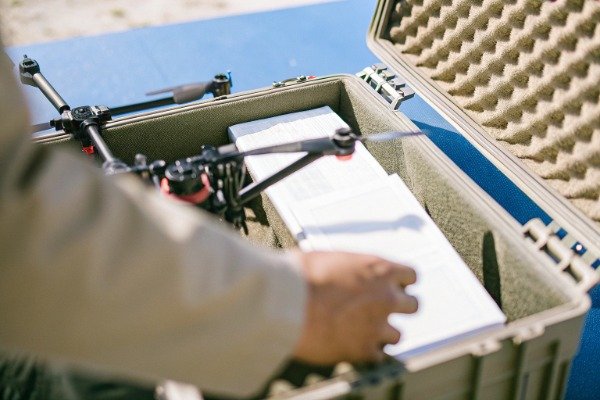
At our factory, we see clients worry about shipping delicate firefighting drones. A single logistics error can ruin a sample before you even test it. We understand that securing your investment during transit is just as critical as the manufacturing process itself.
To ensure safe arrival, select DDP Incoterms so the supplier handles customs and duties. Always classify lithium batteries under UN3480/UN3481 regulations, use custom foam packaging for sensitive sensors, and hire a customs broker to manage HTS codes and FCC compliance for smooth US entry.
Navigating international logistics requires a clear strategy. Let's break down the specific steps to protect your drone sample from the factory floor to your door.
What shipping methods are best for transporting lithium batteries in drone samples?
When we pack our long-endurance drones, battery safety is our top priority. Incorrect labeling often leads to immediate carrier rejection at the airport, causing frustrating delays for our partners who are eager to test the equipment.
The best method is air freight via a carrier certified for Dangerous Goods. You must classify batteries as Class 9 Dangerous Goods (UN3480 for loose batteries, UN3481 for contained in equipment), ensure charge levels are below 30%, and use UN-tested packaging to prevent short circuits.
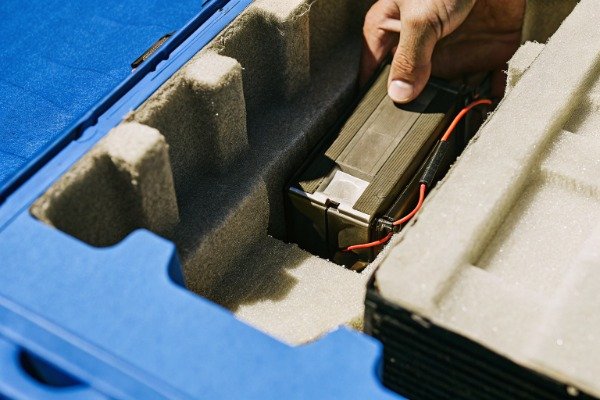
Shipping industrial drones involves navigating strict regulations regarding lithium-ion batteries. These are not standard AA batteries; the high-capacity power units used in firefighting drones are classified as hazardous materials. Understanding the distinction between shipping methods is vital for compliance and speed.
regulations regarding lithium-ion batteries 1
Understanding IATA Regulations
The International Air Transport Association (IATA) sets the global standards for shipping batteries by air. For a firefighting drone sample, speed is usually the priority, making air freight the standard choice over sea freight. However, air freight regulations are the strictest. We always advise our clients that batteries must be declared correctly to avoid fines or seizure.
There are three main classifications you will encounter on the shipping documents:
- UN3480: Lithium-ion batteries packed without equipment. This is common if you are ordering spare batteries alongside the drone. These are strictly regulated on passenger aircraft and often must fly on Cargo Aircraft Only (CAO).
- UN3481: Lithium-ion batteries packed with equipment (in the same box but not installed).
- UN3481: Lithium-ion batteries contained in equipment (installed inside the drone).
The 30% State of Charge (SoC) Rule
One of the most critical checks we perform on our production line before shipping is the State of Charge (SoC). For air transport, lithium-ion batteries must not exceed 30% of their rated capacity. This significantly reduces the risk of thermal runaway during flight. If a supplier ships fully charged batteries, they are violating international safety laws. When you receive your sample, you will need to charge it fully before your first test flight.
Dangerous Goods (DG) Certification
Not all logistics providers can handle these shipments. You must use a freight forwarder or courier (like DHL, FedEx, or UPS) that has a specialized Dangerous Goods department. They will require a Material Safety Data Sheet (MSDS) or SDS from us to verify the battery chemistry and safety testing (UN38.3 test summary).
Comparison of Battery Shipping Classifications
| UN Number | Description | Packing Instruction (IATA) | Restrictions |
|---|---|---|---|
| UN 3480 | Batteries shipped alone (loose) | PI 965 | Strict quantity limits; State of Charge < 30%; Often Cargo Aircraft Only. |
| UN 3481 | Batteries packed with equipment | PI 966 | Batteries must be protected from short circuit; Limit on net weight per package. |
| UN 3481 | Batteries contained in equipment | PI 967 | Securely installed in the drone; Drone must be turned off and protected from accidental activation. |
By strictly adhering to these codes, we ensure that the shipment passes through dangerous goods checks at origin airports in China without being returned to the factory.
How do I ensure the supplier handles US customs clearance for drone imports?
We often help US clients navigate complex import rules. Without proper documentation, your firefighting drone sample could sit in a customs warehouse indefinitely, delaying your critical product demonstrations and potentially incurring storage fees.
You ensure this by negotiating Delivered Duty Paid (DDP) shipping terms. This obligates the supplier to manage all export and import formalities, pay duties, and handle clearance. Alternatively, hire a licensed US Customs Broker to file the ISF and verify HTS codes like 8806.22.
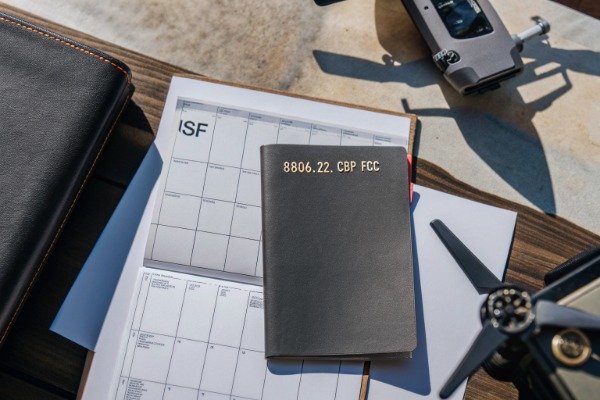
Importing industrial technology into the United States involves more than just paying for shipping. It requires a strategic approach to trade terms and documentation to ensure the supplier takes responsibility for the complex parts of the process.
The Power of Incoterms: Why DDP Matters
In international trade, Incoterms define who is responsible for what. When we work with a new client purchasing a sample, we often recommend DDP (Delivered Duty Paid). Under this term, the supplier is responsible for:
- Export clearance from China.
- International freight.
- Import clearance in the US.
- Payment of all import duties and taxes.
- Final delivery to your specified address.
This is the "hassle-free" option for buyers. However, if you choose DAP (Delivered at Place), the supplier only ships it to your door, but you are responsible for paying the duties and clearing customs. If you are not experienced with US Customs and Border Protection (CBP), DAP can lead to unexpected delays.
HTS Codes and Duties
Correct classification is essential. Industrial drones typically fall under the Harmonized Tariff Schedule (HTS) heading 8806. For example, a firefighting drone usually falls under 8806.22 (Unmanned aircraft, other than for the carriage of passengers, with a maximum take-off weight of more than 7 kg but not more than 150 kg).
If the HTS code is incorrect, you risk paying the wrong duty rate or facing penalties. Furthermore, because our products are manufactured in China, they may be subject to Section 301 tariffs, which are additional duties imposed on Chinese goods. A DDP agreement shifts the burden of calculating and paying these variable costs to the supplier.
Regulatory Compliance: FCC and FDA
Customs clearance isn't just about taxes; it's about agency requirements.
- FCC: Drones transmit radio signals. The import paperwork must show FCC compliance (Form 740). We ensure our radio modules are FCC certified to prevent the shipment from being flagged.
- FDA: If the drone has a laser rangefinder or specific camera sensors, it might require FDA accession numbers regarding radiation-emitting devices.
Responsibility Matrix by Incoterm
| Responsibility | Ex Works (EXW) | FOB (Free on Board) | DAP (Delivered at Place) | DDP (Delivered Duty Paid) |
|---|---|---|---|---|
| Export Packaging | Buyer | Seller | Seller | Seller |
| Loading at Origin | Buyer | Seller | Seller | Seller |
| Intl. Freight | Buyer | Buyer | Seller | Seller |
| US Import Clearance | Buyer | Buyer | Buyer | Seller |
| Import Duties/Taxes | Buyer | Buyer | Buyer | Seller |
| Delivery to Door | Buyer | Buyer | Seller | Seller |
Choosing DDP for your sample order removes the administrative burden from your team, allowing you to focus on planning the flight tests rather than arguing with customs officers.
Should I request specific packaging to prevent damage during air freight?
Our engineers calibrate sensitive gimbals before shipping. Standard cardboard boxes rarely survive the drops and vibrations common in international air transit, which can misalign sensors and render a high-precision firefighting drone useless upon arrival.
Montreal Conventions 2
Yes, you must request heavy-duty, moisture-sealed packaging with custom-cut high-density foam inserts. This setup immobilizes the drone arms, protects the gimbal mechanism from shock, and shields electronic components from humidity changes, ensuring the sample arrives in perfect working condition for your testing.
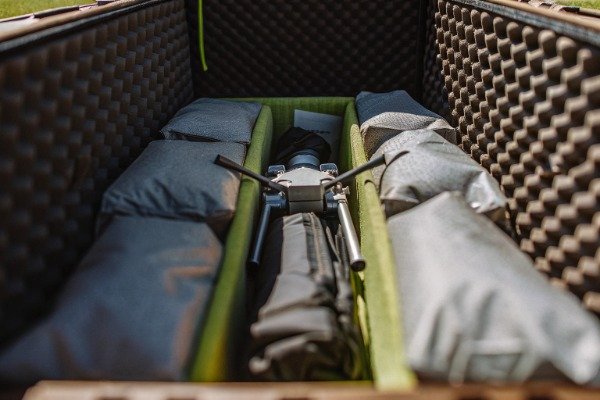
When you order a sample, you are evaluating the quality of the product. If the product arrives damaged due to poor packaging, it reflects poorly on the manufacturer, but it also wastes your time. We believe that the packaging is part of the product itself, especially for industrial equipment.
FCC certified 4
The Risks of "Last Mile" Delivery
While international air freight is relatively smooth, the "last mile"—the truck delivery from the airport to your office—is where most damage occurs. Packages are often thrown, dropped, or stacked under heavier items. A standard cardboard box offers zero structural integrity against crushing forces.
The Solution: Industrial Flight Cases
For firefighting drones, which are heavy and contain expensive thermal cameras, we recommend shipping the unit inside a hard-shell flight case (aluminum or high-impact plastic).
- Custom Foam: The foam must be laser-cut to fit the specific drone model. "Pick-and-pluck" foam is insufficient for heavy industrial drones as it degrades quickly. High-density EVA foam is best.
- Gimbal Locks: The camera gimbal is the most fragile component. It must be physically locked in place with a plastic bracket or foam block to prevent it from swinging violently during turbulence.
- Moisture Protection: Air cargo holds experience rapid temperature changes, leading to condensation. We place large desiccant (silica gel) bags inside the case and wrap the entire drone in a sealed anti-static bag.
Reusability for Field Operations
Requesting high-quality packaging for the sample isn't just for shipping; it serves your future operations. When you take the drone to a fire department for a demo, pulling it out of a professional, ruggedized case looks far more professional than unpacking a cardboard box. It shows you are selling a serious industrial tool.
Packaging Tiers for Industrial Drones
| Packaging Type | Protection Level | Pros | Cons | Recommended For |
|---|---|---|---|---|
| Standard Cardboard | Low | Cheap, lightweight | No impact protection, not water-resistant | Spare parts only |
| Reinforced Carton + Foam | Medium | Moderate cost, decent shock absorption | Can be crushed, absorbs moisture | Low-cost consumer drones |
| Hard-Shell Flight Case | High | Impact resistant, waterproof, reusable | Heavier, higher shipping cost | Industrial/Firefighting Drones |
| Wooden Crate | Very High | Maximum crush protection | Very heavy, requires fumigation certs | Large agricultural drones |
Investing in the flight case for your sample ensures that the first time you power on the drone, it performs exactly as it did on our testing grounds.
Harmonized Tariff Schedule 5
What insurance options cover the full value of the drone sample during transit?
We know that losing a high-value sample is costly. Relying solely on basic carrier liability coverage is a gamble you should not take, as the reimbursement is often calculated by weight rather than the actual value of the technology.
US Customs and Border Protection 6
You should purchase comprehensive "All-Risk" cargo insurance that covers the full invoice value plus shipping costs. Ensure the policy explicitly covers electronic goods and includes clauses for loading/unloading damage, theft, and "General Average," as carrier liability is often limited to a small amount per kilogram.
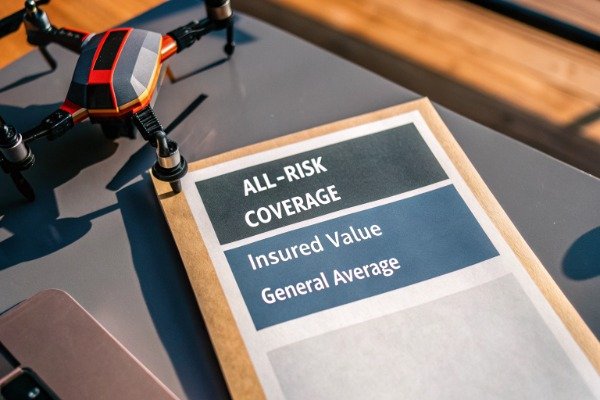
Many buyers assume that if DHL or FedEx loses their package, they will be fully reimbursed. This is a dangerous misconception. Carrier liability is not insurance; it is a limited warranty that is notoriously difficult to claim against.
Material Safety Data Sheet 8
Carrier Liability vs. Cargo Insurance
Standard carrier liability is limited by international conventions (like the Warsaw or Montreal Conventions). For air freight, this limit is often around $20 to $25 per kilogram.
- Scenario: You buy a firefighting drone sample worth $10,000. It weighs 20kg.
- Without Insurance: If the carrier loses it, they might pay you only $500 (20kg * $25). You lose $9,500.
- With Insurance: You are reimbursed the full $10,000, plus the cost of shipping.
What "All-Risk" Really Means
We advise clients to secure "All-Risk" insurance. Despite the name, it covers "all risks except those specifically excluded." This is the broadest form of coverage available.
Key inclusions to look for:
- Theft and Pilferage: High-tech drones are targets for theft.
- Rough Handling: Damage caused by dropping or crushing.
- General Average: A maritime principle where, if a ship is in danger and jettisons cargo to save the vessel, all cargo owners share the loss. While rare for air freight, it is a standard clause in good policies.
Calculating the Cost
Insurance is surprisingly affordable. It is typically calculated as a percentage of the CIF value (Cost of goods + Insurance + Freight). Rates usually range from 0.3% to 0.8% of the total value. For a $10,000 drone, the premium might only be $50–$80. This is a negligible cost for peace of mind.
Steps to File a Successful Claim
If your sample arrives damaged, you must act fast. Insurance companies have strict timelines.
- Inspect Immediately: Do not sign the delivery receipt as "clean" if the box looks damaged. Note "Damaged" on the driver's paperwork.
- Take Photos: Photograph the outer box, the inner packaging, and the damage to the drone before moving it.
- Retain Packaging: Do not throw away the box or foam; the insurer may want to inspect it.
- Notify Us: We can assist by providing the original packing photos to prove the condition at the time of shipment.
Insurance Comparison Table
| Feature | Carrier Liability | Third-Party Cargo Insurance |
|---|---|---|
| Coverage Basis | Limited by weight (e.g., $20/kg) | Full Invoice Value + Freight (110%) |
| Proof Required | Must prove carrier negligence | Must prove damage occurred during transit |
| Claim Speed | Slow (Months) | Faster (Weeks) |
| Cost | Included in freight | Additional premium (approx. 0.5%) |
| Risk Coverage | Limited | Comprehensive (Theft, Damage, Loss) |
By securing proper insurance, you transform a potential financial disaster into a manageable administrative task, ensuring your budget remains intact for the actual procurement.
thermal runaway 9
Conclusion
To successfully import a firefighting drone sample, prioritize safety and compliance over speed. Choose DDP terms to simplify customs, insist on hard-shell flight cases for protection, and never skip comprehensive cargo insurance.
International Air Transport Association (IATA) 10
Footnotes
1. Official US DOT resource for hazardous materials shipping regulations. ↩︎
2. International treaty establishing liability limits for air carriers. ↩︎
3. FDA requirements for importing electronic products with radiation-emitting components. ↩︎
4. Official FCC page regarding equipment authorization for radio devices. ↩︎
5. Official US government tool for classifying imported goods. ↩︎
6. The US agency responsible for regulating international trade and customs. ↩︎
7. Official rules for international trade terms published by the ICC. ↩︎
8. Defines the safety documentation required for shipping hazardous goods. ↩︎
9. Explains the dangerous reaction that safety regulations aim to prevent. ↩︎
10. Official organization setting global standards for air transport of batteries. ↩︎

 English
  Español de México
  Deutsch
  Français
  Русский
  العربية
