
In our years of exporting to the US market, we have seen too many farmers lose money because their equipment provided inflated coverage data. Precise operational statistics are not just numbers; they are the foundation of your billing and chemical management.
To ensure accuracy, you must specifically ask about the integration of Real-Time Kinematic (RTK) positioning and verify how the software calculates spray spray width 1 overlap. Request field test data that compares the drone’s telemetry logs against known physical ground measurements to confirm the system’s claimed efficiency matches real-world results.
Below, we break down the critical questions you need to ask suppliers to ensure you are buying a tool that delivers honest data.
What specific positioning technologies should I look for to ensure precise field mapping?
When we assist clients in configuring their fleets, we often notice that standard standard GPS 2 GPS modules are insufficient for professional spraying. If the positioning drifts, your entire area calculation becomes unreliable from the moment of takeoff.
Look for dual-antenna RTK (Real-Time Kinematic) systems that offer centimeter-level accuracy, far superior to the meter-level error of standard GPS. Ensure the drone includes terrain-following radar to maintain consistent altitude, as height fluctuations directly affect the ground sample distance (GSD) and the precision of the mapped boundary.
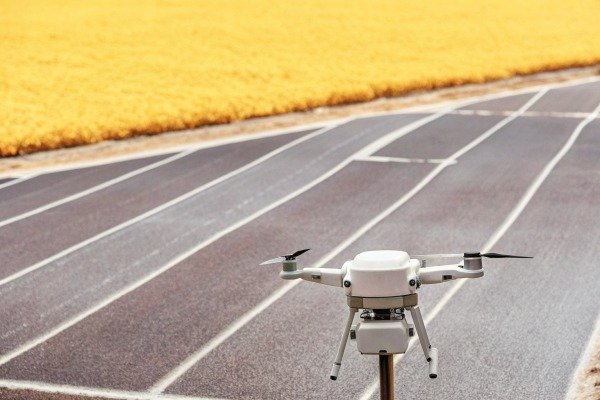
The Necessity of RTK in Modern Agriculture
In our factory's R&D department, we moved away from relying solely on standard GNSS years ago standard GNSS 3 for our agricultural lines. The reason is simple: standard GPS has a drift of up to two meters. When you are calculating the operational area of a field that requires precise chemical application, a two-meter error margin on every pass accumulates into a massive discrepancy by the end of the day.
When you inquire with a seller, you must confirm that the drone uses Real-Time Kinematic (RTK) positioning. Unlike standard GPS, which calculates position based on satellite timing signals alone, RTK uses a fixed base station or a network correction stream to remove errors. This brings the hovering accuracy down to ±10 cm horizontally and vertically.
Understanding Ground Sample Distance (GSD)
For drones that perform mapping missions to define spray boundaries, you need to ask about Ground Sample Distance (GSD). This metric represents the physical distance on the ground covered by the center of two consecutive pixels in an image.
- Mapping Accuracy: A lower GSD means higher resolution. For precise field mapping, you generally want a GSD between 3 cm and 10 cm.
- Altitude Impact: We always remind our partners that GSD is tied to flight altitude. If a seller claims high accuracy but recommends flying at 120 meters with a low-resolution sensor, the resulting area map will lack the definition needed to identify small "no-spray" zones.
Terrain Following and Altitude consistency
Another critical technology to ask about is Terrain-Following Radar. Area statistics are calculated based on a projected 2D plane. If the field is sloped and the drone does not adjust its height, the actual sprayed surface area will differ actual sprayed surface area 4 from the calculated map.
We install millimeter-wave radars on our SkyRover units to ensure the drone maintains a constant height millimeter-wave radars 5 relative to the crop canopy, not sea level. If the drone flies higher than planned, the spray width increases, and the density decreases; if it flies lower, the width narrows. Both scenarios corrupt your "covered area" statistics.
Comparison of Positioning Technologies
| Technology | Typical Horizontal Accuracy | Impact on Area Stats | Recommended for |
|---|---|---|---|
| Standard GNSS | ± 1.5m – 2.5m | High Error (Overlap/Gaps) | Basic Scouting |
| Single-Antenna RTK | ± 10cm – 30cm | Moderate Accuracy | General Mapping |
| Dual-Antenna RTK | ± 1cm – 5cm | High Precision | Precision Spraying |
| Optical Flow | N/A (Relative positioning) | Low (Drifts over time) | Indoor/GPS-denied |
Ask the supplier to demonstrate how their system handles signal loss. Does it switch to "Optical Flow" or visual positioning? If so, does the area calculation stop, or does it estimate? This distinction is vital for accurate records.
How can I verify that the flight control software delivers reliable data for my spraying operations?
Our software engineers spend countless hours refining algorithms to differentiate between “flying” and “working.” A drone that counts every minute in the air as productive time will ruin your efficiency metrics.
Ask the seller if their flight software automatically filters out non-productive movements like headland turns, ferry flights, and hovering. Reliable systems should only log area when the pumps are active and the drone is within the designated field boundary, ensuring your billing data matches the actual work performed.
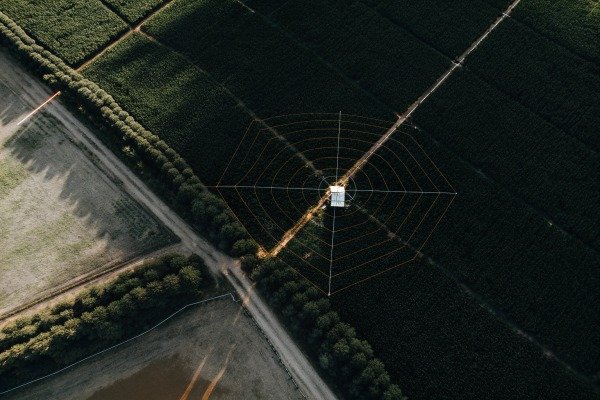
Distinguishing Flight Path from Effective Spray Area
One of the most common tricks in the industry involves conflating "flight path coverage" with "effective spray area." When we design our control apps, we strictly separate these two data streams.
You must ask the seller: "Does the software subtract the area covered during turns?"
When a drone reaches the end of a row, it typically shuts off the spray, turns around (a maneuver that can take several meters), and re-enters the next row. If the software calculates area based simply on the distance traveled multiplied by spray width, it will include these turns. This can inflate your billable area by 10% to 15%.
Dead Reckoning and Signal Loss
What happens when the drone flies under a tree line or near a metal structure and loses RTK lock? This is where software robustness is tested. You should inquire about the system's Dead Reckoning capabilities.
- Inertial Measurement Unit (IMU): Does the drone use its internal IMU to estimate position during signal gaps?
- Data Correction: Does the software "smooth" the path after the flight? Some systems will draw a straight line through a signal gap, while others might show a jagged, erratic path that adds false acreage to the total.
Data Synchronization Frequency
In our experience with large-scale operations in Europe, data loss often happens during transmission. Ask about the synchronization frequency between the drone and the ground station or cloud.
If the drone only syncs data every 30 seconds, a momentary disconnect could result in a lost packet of data representing a significant portion of the field. We recommend systems that log data onboard at high frequencies (10Hz or higher) and upload a consolidated, verified log post-flight. This ensures that even if the remote controller disconnects briefly, the internal record of the sprayed area remains accurate.
Handling Overlap and Boundaries
Effective software must account for Spray Overlap. To ensure uniform coverage, adjacent spray paths must overlap slightly.
- Question to ask: "Does the total area statistic count the gross sprayed area (including overlap) or the net field area?"
- Why it matters: If you are billing a client, you bill for the net field size (e.g., 10 hectares). If the drone reports the gross area (e.g., 11 hectares due to overlap), you will have a discrepancy. The software should allow you to toggle between these views.
Automated Exclusion Zones
Finally, ask if the software handles Exclusion Zones. If there is a pond or a utility pole in the middle of the field, you will mark it as an obstacle. The best software automatically subtracts this area from the total "to-be-sprayed" figure. If the system includes the obstacle area in the final report simply because it is inside the outer boundary, your statistics will be false.
What is the standard error margin I should expect when the drone calculates total covered area?
Through our rigorous testing in diverse environments, from the humidity of Chengdu to the dry winds of the US Midwest, we know that zero error is impossible. However, there is a clear line between acceptable variance and hardware failure.
Expect a standard error margin of roughly 3% to 5% for total covered area in high-quality agricultural drones. Discrepancies often stem from flow meter calibration drift or inconsistent spray widths caused by wind, so ask for flow sensor accuracy specs, ideally within a ±2% range.

The Role of Flow Meters in Area Calculation
While GPS tells you where the drone is, the Flow Meter confirms that liquid is actually leaving the tank. In our high-end SkyRover models, we use high-precision electromagnetic flow meters.
You should ask the supplier: "What is the precision rating of the flow meter?"
Lower-end drones use impeller-based flow meters, which can easily get clogged with viscous fertilizers impeller-based flow meters 6 or wettable powders. This leads to the system wettable powders 7 thinking it has sprayed more (or less) liquid than it actually has. If the drone calculates area based on "Liquid Consumed / Target Dosage," a faulty flow meter will give you a completely wrong area statistic.
Spray Width Variability
The calculation Area = Distance × Width seems simple, but Width is a variable, not a constant.
- Wind Effect: Crosswinds can compress the spray pattern. If the drone software assumes a fixed 5-meter width but the wind reduces effective coverage to 4 meters, you are under-applying, yet the report says you are on target.
- Altitude Impact: As mentioned earlier, higher altitude increases width but reduces density.
Ask the seller: "Does the drone dynamically adjust the calculated spray width based on altitude data?" Advanced systems use the radar altitude data to adjust the theoretical width in the logs, providing a more accurate "effective area" post-flight.
Liquid Level Sensors vs. Flow Meters
Some budget drones rely on Liquid Level Sensors in the tank rather than flow meters in the tubes.
- The Problem: Liquid sloshing during flight makes level sensors noisy and inaccurate.
- Our Advice: Avoid systems that rely solely on tank level sensors for area stats. They are good for "Empty Tank" warnings but terrible for "Total Area" calculations.
Factors Influencing Error Margins
When negotiating with a supplier, use this table to understand where their error margins might come from. If they claim "0% Error," they are not being honest.
| Factor | Typical Error Contribution | Mitigation Strategy |
|---|---|---|
| Flow Meter Drift | ± 2% – 5% | Regular calibration with clear water. |
| GNSS Positioning | ± 1% – 3% | Use RTK base stations. |
| Wind Drift | ± 5% – 10% | Fly during low wind; use drift-reducing nozzles. |
| Terrain Variation | ± 2% – 4% | High-quality terrain-following radar. |
Calibrating for Viscosity
We always tell our clients: water is not fungicide. Different liquids have different viscosities.
Ask: "Does the system allow for viscosity calibration factors?"
If you are spraying a thick suspension, the flow rate changes compared to water. If the drone's computer is calibrated only for water, your area statistics based on volume will be incorrect. The software should allow you to input a "Flow Coefficient" to correct this.
Should I request a comparison test between the drone's statistics and manual surveying results?
We actively encourage our distributors to challenge our specs. Confidence comes from verification, and we believe that a side-by-side comparison is the only way to truly understand a machine’s capabilities.
Yes, requesting a comparison test is crucial. Ask the supplier to fly a known acreage—verified by handheld GPS or manual survey—and compare it against the drone’s post-flight report. This validation exposes any “drift” in the internal calculations and confirms the reliability of the telemetry.
Designing a Valid "Ground Truth" Test
Simply flying the drone and looking at the screen isn't enough. When we validate our units for export, we follow a strict protocol. You should propose a similar test to your potential supplier.
- Survey the Field First: Use a high-precision handheld RTK rover to map the boundary of a test field. Let's say this manual survey confirms the field is exactly 10.0 hectares.
- Execute the Mission: Program the drone to spray this field.
- Compare the Data: Look at the drone's "Completed Area" report.
- If the drone reports 10.1 ha, it is within acceptable limits (1% error).
- If it reports 11.5 ha, the software is likely over-counting turns or overlap.
- If it reports 9.0 ha, it might be skipping areas or having flow meter issues.
Checking for "Phantom" Spraying
One critical thing to watch for during the demo is Phantom Spraying.
Ask the pilot to simulate a "Refill" mid-mission. When the drone returns to the home point and then flies back to the interruption point, watch the area counter.
- The Issue: Poorly coded systems sometimes count the return flight as "sprayed area" simply because the mission is active.
- The Test: The area counter should completely freeze while the drone is ferrying back and forth. If the numbers tick up during the ferry flight, the statistics are flawed.
Pressure Sensor Calibration
Ask the supplier about Pressure Sensor Calibration before the test. Over time, pressure sensors drift. If the drone uses pressure to estimate flow (instead of a flow meter), this drift is fatal to accuracy.
Request that they show you the calibration menu. calibration menu 8 If the interface is hidden or requires a factory technician to access, you will have trouble maintaining accuracy in the long run. You want a system where you, the user, can perform a "Bucket Test" (spraying into a bucket for 1 minute Bucket Test 9 and weighing it) to calibrate the system yourself.
Test Protocol Checklist
When you visit a supplier or request a demo video, use this checklist to ensure the test is legitimate.
| Checkpoint | What to Observe | Red Flag |
|---|---|---|
| Boundary Definition | Manual survey vs. Drone map | Boundary differs by >0.5m |
| Ferry Flight | Area counter status | Counter increases during return |
| Tank Refill | Resume logic | Drone "resumes" 10m away from stop point |
| Obstacle Avoidance | Flight path map | Path goes through the obstacle on map |
| Final Report | Export format | Only PDF available (cannot analyze raw data) |
By insisting on these comparisons, you filter out the "toys" from the industrial tools. It shows the seller that you understand the technology and expect professional-grade reliability.
Conclusion
Accurate operational area statistics are not a luxury; they are essential for cost control and compliance. operational area statistics 10 By inquiring about RTK integration, software filtering of non-productive flight, flow meter precision, and demanding side-by-side comparison tests, you protect your investment. At SkyRover, we believe an informed buyer is our best customer, and we encourage you to use these questions to verify the quality of any agricultural drone you consider purchasing.
Footnotes
1. University extension resource explaining the importance of spray width in calibration. ↩︎
2. Official US government source defining standard GPS accuracy and performance standards. ↩︎
3. Official information on Global Navigation Satellite Systems and their international standards. ↩︎
4. FAA regulations and guidance regarding flight altitude and operational area for UAS. ↩︎
5. Technical documentation on millimeter-wave radar technology used for terrain sensing. ↩︎
6. Overview of different flow measurement technologies, including impeller-based systems. ↩︎
7. Educational resource defining pesticide formulations like wettable powders. ↩︎
8. Example of professional drone documentation covering calibration and maintenance procedures. ↩︎
9. University guide specifically detailing the bucket method for sprayer calibration. ↩︎
10. General background on how drones generate operational statistics in agriculture. ↩︎

 English
  Español de México
  Deutsch
  Français
  Русский
  العربية
