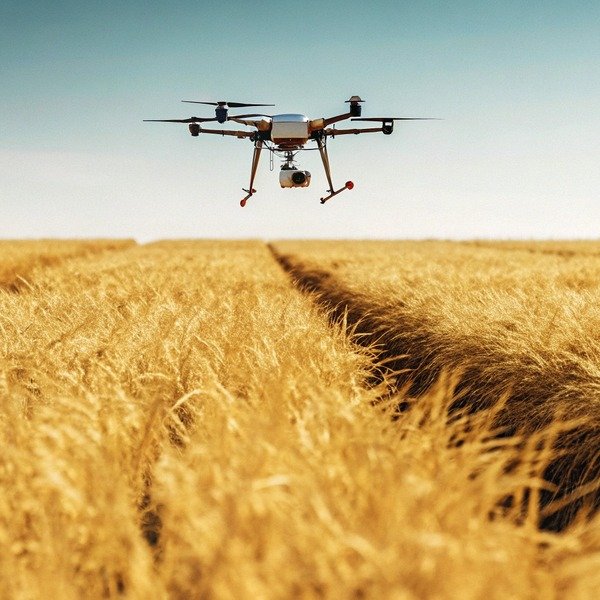
Investing in agricultural technology is expensive agricultural technology 1, and nothing hurts a bottom line more than equipment that becomes useless within a year. When we design our latest SkyRover frames in our Xi’an headquarters, we often hear from clients who were burned by previous suppliers who vanished after the sale. You need a partner who innovates, not just a seller moving boxes.
To evaluate R&D capabilities, you must analyze the supplier’s history of firmware updates, their investment in modular hardware design, and their engineering team’s collaboration with research institutes. A strong R&D focus ensures the drone can adapt to new sensors and regulatory changes without requiring a full system replacement.
Below, we break down the specific evidence you need to vet a supplier’s long-term viability effectively.
How can I verify if the supplier offers long-term software support and firmware updates for their flight controllers?
Software Software Development Kit 2 often ages faster than hardware, which is why our software team in Chengdu spends half their time refining code for models released two years ago. If a supplier treats software as an afterthought, your fleet will ground itself the moment a new operating system or regulation emerges. You need assurance that the “brain” of your drone will keep learning.
You should request a changelog history for their past three models to see the frequency of meaningful updates versus simple bug fixes. Additionally, verify if they provide a comprehensive Software Development Kit (SDK) or Open API, which proves they support third-party integration and long-term custom development.

The Importance of the Update Log
When you interview a potential supplier, do not just ask if they update their software. Ask to see the evidence. A reliable manufacturer will have a detailed "changelog" or release history. This document tells a story about their R&D commitment.
If you see an update every six months that only says "bug fixes," be cautious. This usually means they are doing the bare minimum to keep the product functional. However, if you see updates that unlock new flight modes, improve battery management algorithms, or optimize spray patterns based on user feedback, this is a green flag. It shows the engineering team is active. It shows they are analyzing flight data and pushing improvements to existing hardware.
API and SDK Availability
For our professional clients in the United States, the ability to customize is critical. A "closed" system is a dead end. You should specifically ask if the drone supports an SDK Software Development Kit 3 (Software Development Kit).
An SDK allows your own developers or third-party software companies to write programs that control the drone. This might not seem important today, but in two years, you might want to integrate a new AI weed-detection camera. If the flight controller is locked, you cannot do it. If the supplier offers an SDK, you have a bridge to the future.
Distinguishing Between Consumer and Industrial Support
Consumer drone companies often force updates that limit functionality (like geofencing). Industrial R&D is different. It focuses on stability and expanding capabilities.
Assessing Backward Compatibility
Ask the supplier about their oldest operational model. Can it run today's mission planning software? If their 2019 model is incompatible with their 2024 ground station app, that is a warning sign. It suggests that when they release a new product, they abandon the old one. Real R&D value comes from extending the lifecycle of your asset, not forcing you to rebuy.
Key Questions for Software Verification
| Feature | Question to Ask Supplier | Desired Answer (Reduces Obsolescence Risk) |
|---|---|---|
| Update Frequency | "Can I see the firmware release notes for your 2021 model?" | "Yes, here are quarterly updates adding new features." |
| SDK Access | "Do you provide an onboard SDK or mobile SDK?" | "Yes, we support API access for custom payloads." |
| Legacy Support | "Is your current app compatible with previous hardware generations?" | "Yes, our app supports models up to 5 years old." |
| Data Security | "Where is flight log data stored and processed?" | "Local storage options are available; you own your data." |
What evidence should I look for to confirm the manufacturer can handle custom engineering requests and OEM projects?
Every farm and every region has unique challenges, which is why we frequently receive requests to modify our heavy-lift platforms for specialized payloads. If a supplier simply buys parts and assembles them, they will stare blankly when you ask for a structural modification. You need a partner who understands the physics behind the frame.
Look for a supplier with a vertically integrated manufacturing process and a dedicated in-house engineering team rather than just assembly workers. Ask for case studies where they successfully modified a core product for a client, specifically looking for examples of structural design changes or custom voltage integration.

The "Sticker Slap" vs. True OEM
Many suppliers on Alibaba are actually trading companies or simple assemblers. They buy frames from Factory A, motors from Factory B, and flight controllers from Factory C. They put a sticker on it and call it their own. These companies cannot handle R&D because they did not design the product.
To avoid this, you need to verify their "vertical integration." This means they control the production of key components. When we work with clients, we can alter the carbon fiber mold or change the power distribution board because we own the design files.
Verifying Engineering Headcount
Ask for an organizational chart. A healthy industrial drone manufacturer should have a significant ratio of engineers to sales staff. If a company has 20 salespeople and only 2 engineers, they are a sales organization, not a technology organization.
At SkyRover, with our team of 70, a large portion is dedicated to technical roles. CAD design 4 This density of talent is what allows for "Custom Engineering." You should ask: "Who handles the CAD design if we need CAD design 5 a custom mount?" If they say they outsource it, the project will be slow and expensive.
Case Studies of Customization
Do not settle for "Yes, we can do that." Ask for proof. Request a specific example of a previous OEM project.
- Did they change the arm length to accommodate larger propellers?
- Did they rewrite the pump control logic for a granular spreader?
- Did they integrate a specialized camera for a university research project?
Real R&D teams love to show off these challenges. They will likely have photos of prototypes. If they cannot show you a prototype history, they likely haven't done true OEM work.
Technology Readiness Levels (TRL)
When discussing custom projects, listen to how they describe the process. Professional R&D teams use terms like prototyping, bench testing, and field validation. prototyping, bench testing, and field validation 6 If they promise a finished custom product in one week, they are lying or reckless. Engineering takes time. A supplier who outlines a realistic timeline with testing phases is one who understands the complexity of R&D.
OEM Capability Checklist
| Capability Indicator | Low R&D Capability (Reseller/Assembler) | High R&D Capability (True Manufacturer) |
|---|---|---|
| Design Files | "We cannot share or modify the frame design." | "We can modify CAD files to fit your payload." |
| Prototyping | No rapid prototyping facilities visible. | In-house 3D printing and CNC machining. |
| Staffing | Mostly sales and assembly line labor. | Dedicated teams for structure, avionics, and software. |
| Minimum Order | Requires huge volume for minor changes. | Willing to engineer pilot units (paid NRE) for testing. |
Is the agricultural drone design modular enough to allow for easy hardware upgrades and sensor integration in the future?
We build our drones to be workhorses, but we know that a spray tank today might need to be a seed spreader tomorrow. If the frame is glued together or uses proprietary non-standard connectors, you are trapped. A modular design is the physical proof that a manufacturer respects your long-term investment.
Evaluate the drone for standard mounting points, accessible CAN bus ports, and generic power connectors rather than proprietary interfaces. A truly modular design allows you to swap spray systems for spreading systems or upgrade sensors without cutting wires or voiding the warranty.

The Trap of Integrated Designs
Some consumer-grade agricultural drones are sleek and beautiful, but they are fully enclosed. If the GPS module fails, or if a better GPS comes out next year, you cannot change it. The shell is sealed.
In industrial agriculture, "ugly" often means practical. You want exposed or easily accessible ports. You want to see screws, not glue. Modularity means the airframe is a platform, not just a product. It allows you to separate the flight platform from the mission payload.
Standard Interfaces are Key
When evaluating a unit, look at the connections.
- Power: Are they using standard XT90 or AS150 connectors? Or is it a custom plug you can only buy from them?
- Data: Do they expose the CAN bus or UART ports CAN bus 7? These are the industry standards for talking to external devices like radar or multispectral cameras.
If a supplier uses standard interfaces, they are essentially future-proofing your purchase. It means if they go out of business, or if a better camera comes from a different company, you can still plug it in.
Sensor Integration
Agriculture is moving from "blanket spraying" to "precision spot spraying." This requires smart sensors. A drone purchased today needs to be ready for the sensors of 2026.
Ask the supplier: "If I buy a new hyperspectral camera next year, how do I attach it?"
A bad answer: "You will need to buy our new drone model."
A good answer: "You can use the bottom expansion port and configure the serial input in the software."
Repairability as a Function of Modularity
Modularity is not just about upgrades; it is about survival. In the field, crashes happen. If an arm breaks, can you replace just the arm? Or do you have to replace the entire central chassis?
We design our SkyRover units so that arms, landing gear, and tanks are independent modules. This reduces the cost of ownership significantly. When vetting a supplier, ask for their "Spare Parts List." If the list only contains large assemblies and not individual components, their design is not modular enough.
Hardware Modularity Grades
| Feature | Low Modularity (Consumer Grade) | High Modularity (Industrial Grade) |
|---|---|---|
| Arms | Molded into the main body. | Detachable, often with folding mechanisms. |
| Payload | Fixed camera/tank. | Quick-release mounts for swapping tanks/cameras. |
| Flight Controller | Integrated into the main board. | Separate unit that can be upgraded/replaced. |
| Battery | Proprietary casing and connector. | Standard industrial interface (e.g., Tattu-style smart batteries). |
How do I evaluate the technical background and experience of the supplier's engineering team during the vetting process?
We take pride in our recruitment because the quality of a drone is defined by the engineers international standard-setting bodies 8 who solve the problems you don’t even see. When we export to Europe or the US, clients often assume all Chinese factories are the same, but the difference in engineering pedigree is massive. You need to know if the team understands aviation, or just electronics.
Investigate the supplier’s participation in international standard-setting bodies, their patent portfolio for original inventions, and their history of collaboration with agricultural universities. High-quality engineering teams often publish technical white papers and possess certifications that go beyond basic safety requirements.

Academic and Research Collaborations
Real innovation usually happens at the intersection of industry and academia. In China, top manufacturers often work with agricultural universities to test spray patterns and droplet efficacy.
Ask the supplier: "Do you have any joint laboratories or research projects with universities?"
If they do, it means their R&D is grounded in agronomy, not just mechanics. They aren't just making a flying machine; they are studying how the downwash affects the crops. This scientific approach prevents obsolescence because the product is built on data, not trends.
The Patent Portfolio
You do not need to be a patent lawyer to check this. Ask the supplier for a list of their patents.
Look for "Invention Patents" (which cover new technology) versus "Design Patents" (which just cover how something looks).
If a company only has design patents, they are likely just copying existing tech and changing the shell. If they have invention patents regarding flight stability, spray nozzle control, or obstacle avoidance algorithms, it proves they have deep R&D capabilities. This intellectual property is the foundation of long-term support.
Regulatory Knowledge
The regulations for drone spraying are tightening globally (FAA Part 137 in the US, SORA in Europe FAA Part 137 9). An engineering team that ignores this is dangerous. SORA in Europe 10
Test their knowledge. Ask them: "How does your redundant system design help with a SORA application in Europe?" or "does your remote ID solution comply with the latest FAA rule?"
A strong engineering team will know exactly what you are asking. They design their products to meet these future standards. If they look confused, their product might become illegal to fly in your country within a year.
Beyond the Datasheet
Finally, look for "White Papers" or technical blogs. Marketing teams write brochures; engineering teams write white papers. If a supplier publishes detailed testing results showing how their drone performs in high winds or how their nozzle arrangement reduces drift, it shows technical confidence.
Engineering Team Vetting Matrix
| Criteria | Warning Sign | Positive Signal |
|---|---|---|
| University Ties | None mentioned. | Official partner of Agricultural Universities or Research Institutes. |
| Patents | Only design/appearance patents. | Utility/Invention patents for control systems or structures. |
| Compliance | "We have CE certificate." (Generic) | "We support remote ID and have fail-safe redundancy for BVLOS." |
| Documentation | Only marketing flyers. | Detailed technical manuals, SDK documentation, and test reports. |
Conclusion
Evaluating a supplier's R&D capability is the only way to protect your investment from becoming expensive e-waste. By looking beyond the glossy marketing and digging into firmware logs, modular design philosophy, and engineering partnerships, you can distinguish between a short-term seller and a long-term partner. At SkyRover, we believe that open questions lead to better partnerships. Do not be afraid to demand evidence of innovation; a true manufacturer will always be happy to provide it.
Footnotes
1. Official US government resource defining agricultural technology and innovation. ↩︎
2. Official documentation for a professional SDK, demonstrating how manufacturers support third-party hardware and software integration. ↩︎
3. Definition of SDK by a major technology industry leader. ↩︎
4. General background on computer-aided design systems used by engineering teams for structural drone development. ↩︎
5. Autodesk is the global industry standard for CAD software. ↩︎
6. NASA’s official framework for Technology Readiness Levels, defining the stages of professional engineering validation. ↩︎
7. Official ISO standard defining the CAN bus data protocol. ↩︎
8. ISO technical committee documentation for international standards regarding unmanned aircraft systems quality and safety. ↩︎
9. Official FAA regulations for agricultural drone operations. ↩︎
10. Official European Union Aviation Safety Agency guidelines for the Specific Operations Risk Assessment framework. ↩︎

 English
  Español de México
  Deutsch
  Français
  Русский
  العربية
