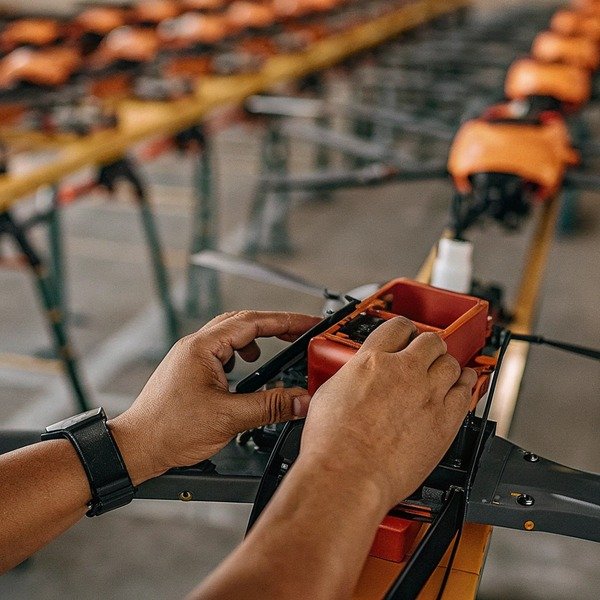
When we test new prototypes on our assembly line in Xi’an, the most frequent debate isn’t about flight speed, but about downtime. You might worry that choosing the wrong power system will leave your equipment grounded during the critical harvest window, costing you time and money when it matters most.
Electric agricultural drones offer lower upfront costs, simpler maintenance, and zero emissions but suffer from short flight times requiring frequent battery swaps. In contrast, hybrid models provide significantly longer endurance and heavier payload capacity for large fields, though they come with higher noise levels, vibration issues, and complex mechanical maintenance.
To help you make the right investment, let’s break down the specific technical trade-offs between these two systems.
Do hybrid agricultural drones offer significantly longer flight times than electric models for large fields?
In our experience configuring flight plans for clients in the Midwest United States, we see how frustrating range anxiety can be. Nothing kills operational efficiency faster than a drone returning to the landing pad every 20 minutes for a swap, interrupting the spray pattern in the middle of a vast field.
Yes, hybrid drones offer significantly longer flight times, typically achieving two to four hours of continuous operation compared to the 30 to 60 minutes common with electric models. This extended endurance allows for uninterrupted coverage of large acreages, making hybrids the superior choice for extensive mapping or high-volume spraying tasks.

The Energy Density Gap
When we design drone frames, we constantly battle against gravity. The primary reason hybrid drones fly longer is the fundamental difference in energy density between liquid fuel and lithium Lithium Polymer 1 batteries. energy density 2 A gallon of gasoline holds far more potential energy per pound than even the most advanced LiPo (Lithium Polymer) batteries we source.
For an electric drone to fly longer, we must add more batteries. However, this adds weight, which in turn consumes more power to lift, creating a point of diminishing returns. Most electric agricultural drones hit a "performance wall" at around 30 to 45 minutes of flight time with a payload. Beyond this, the drone becomes too heavy to be efficient.
Operational Workflow Impact
On a large farm, this time difference changes your daily workflow. With an electric model, your pilot is essentially tethered to the charging station. For a 10-hour work day, an electric drone might spend 3 to 4 hours on the ground swapping batteries and waiting for system checks.
Hybrid models, which use a small internal combustion engine to generate electricity for the motors, bypass this. They can land, refuel in two minutes, and take off again. This "quick-turn" capability means a single hybrid unit can often do the work of two electric units simply because it stays in the air longer.
Efficiency Breakdown by Field Size
We have compiled data from various field tests to illustrate where the crossover point lies.
| Feature | Electric Drone | Hybrid (Gas-Electric) Drone |
|---|---|---|
| Typical Flight Time | 20 – 45 minutes | 2 – 4.5 hours |
| Refuel/Swap Time | 5 – 10 minutes (swap) | 2 – 3 minutes (refuel) |
| Ideal Field Size | Small to Medium (under 50 acres) | Large (over 100 acres) |
| Energy Source | LiPo / Solid State Battery | Gasoline / Heavy Oil |
| Payload Impact | Flight time drops drastically with weight | Moderate drop with weight |
If you are managing vast monoculture crops, the hybrid's ability to cover hundreds of acres in a single flight path vast monoculture crops 3 reduces the risk of missing rows or overlapping sprays due to frequent interruptions.
Is the maintenance of hybrid drone engines more complex than managing electric battery systems?
Our repair team frequently processes warranty claims and service requests, giving us a clear view of long-term durability. We often see customers underestimate the mechanical expertise required to keep a miniature combustion engine running smoothly in a dusty, high-vibration agricultural environment.
Hybrid drone maintenance is much more complex than electric systems because it involves managing internal combustion engines with moving parts, oil filters, and ignition systems. Electric drones rely on solid-state technology, requiring only basic cleaning and battery health monitoring, which significantly reduces the technical skill needed for daily upkeep.

The Reality of Moving Parts
Electric drones are mechanically simple. They consist of a flight controller, Electronic Speed Controllers (ESCs), and motors. Electronic Speed Controllers 4 These components are "solid-state," meaning they have few moving parts subject to friction. Maintenance usually involves wiping down the frame, checking for loose screws, and ensuring the propellers are balanced.
Hybrid drones are different. They carry a miniature power plant on board. This engine has pistons, rings, spark plugs, and carburetors or fuel injection systems. These parts operate at very high RPMs (often 6,000 to 10,000 RPM) to generate sufficient current. This creates significant wear and tear. You must perform scheduled oil changes, clean air filters daily (especially in dusty fields), and tune the engine for different altitudes and temperatures.
Vibration: The Silent Killer
One issue our engineers fight constantly in hybrid designs is vibration. The combustion engine creates high-frequency vibrations that travel through the frame. high-frequency vibrations 5
- Sensor Failure: Delicate electronics, like IMUs (Inertial Measurement Units) and cameras, hate vibration. It can cause flight instability or blurry mapping data.
- Structural Fatigue: Constant shaking can loosen fasteners and cause micro-cracks in carbon fiber arms over time.
- Connector Wear: Electrical connectors can vibrate loose, leading to sudden power loss.
Battery Care vs. Engine Tuning
While electric drones are simpler mechanically, they require discipline regarding battery chemistry. Lithium batteries are volatile. Lithium batteries 6 If you store them fully charged for weeks, they degrade. If you drain them too low, they die. However, this is a procedural task, not a mechanical one.
In contrast, a hybrid engine might fail to start on a cold morning because the carburetor is clogged or the spark plug is fouled. This requires a pilot who is also a mechanic.
Maintenance Comparison Table
| Maintenance Task | Electric Drone | Hybrid Drone |
|---|---|---|
| Daily Routine | Charge batteries, check props | Mix fuel/oil, clean air filter, check spark plug |
| Periodic Service | Inspect wiring (every 50 hours) | Change oil, replace piston rings (every 50 hours) |
| Major Overhaul | Replace motors (rare) | Rebuild/Replace engine (every 200-500 hours) |
| Skill Level Required | Basic Technician | Small Engine Mechanic |
| Common Failure Point | Battery cell imbalance | Carburetor clogging or piston seizure |
How do the upfront costs and operational expenses compare between electric and hybrid options?
When we prepare export invoices for our European distributors, the price difference is visible European distributors 7, but the Total Cost of Ownership (TCO) tells a different story. Total Cost of Ownership 8 Total Cost of Ownership (TCO) 9 You might save money on the initial purchase of an electric unit, only to spend that savings later on high-capacity battery packs.
Electric drones typically have lower upfront costs but incur high long-term expenses due to the limited lifespan and high price of smart batteries. Hybrid drones have a higher initial purchase price and ongoing fuel costs, but their engines generally offer a longer service life before requiring expensive replacements, balancing the long-term investment.

The "Battery Tax" on Electric Models
The sticker price of an electric drone is usually 20-30% lower than a comparable hybrid model. This makes them attractive for budget-conscious buyers. However, the hidden cost lies in the batteries.
Agricultural drones demand high power output. A battery set might only last for 200 to 400 charge cycles before it can no longer hold a safe charge. If you fly heavily, you might burn through a battery set in a few months. A single smart battery for a large ag drone can cost over $1,000. If you need 4 sets to keep flying continuously, that is a $4,000 recurrent cost that repeats every season.
Hybrid Operational Economics
Hybrid drones burn gasoline, which is an ongoing operational expense (OpEx). However, gasoline is cheap compared to lithium batteries per unit of energy delivered.
The major cost for hybrids is the engine itself. While robust, small two-stroke engines have a finite life. You might need to replace the entire generator unit after 500 hours of flight. This is a large, lump-sum expense, similar to replacing a transmission in a truck. However, widely available gasoline engines often hold their resale value better than used lithium batteries, which are essentially worthless once degraded.
Calculating Your ROI
To decide which is cheaper, you must look at your usage intensity.
- Low Intensity (Occasional use, small fields): Electric wins. You won't cycle the batteries enough to kill them quickly, and you avoid the high entry price of the hybrid.
- High Intensity (Commercial spraying, daily use): Hybrid often wins. The cost of fuel is lower than the depreciation cost of replacing multiple $1,000 battery packs every few months.
5-Year Cost Projection Estimate
The following table estimates costs for a commercial operator flying 500 hours per year.
| Cost Category | Electric Model | Hybrid Model |
|---|---|---|
| Initial Unit Cost | $15,000 | $22,000 |
| Power Source Cost (Year 1) | $4,000 (4 Battery Sets) | $1,500 (Fuel + Oil) |
| Maintenance/Repair (Year 1) | $500 (Parts) | $1,200 (Engine Service) |
| Replacement Cycle | New batteries every 300 cycles | Engine rebuild every 400 hours |
| Total 3-Year Estimate | ~$35,000 | ~$32,000 |
Note: Prices are estimates based on current market trends and can vary by brand.
Should I prioritize battery charging convenience or fuel availability when choosing a drone model?
We often ask our customers about the infrastructure at their work sites before recommending a model. It makes little sense to buy a high-tech electric fleet if your fields are twenty miles from the nearest power outlet and you lack heavy-duty generators.
You should prioritize fuel availability if you operate in remote locations with poor electrical infrastructure, as carrying liquid fuel is easier than managing multiple heavy generators. Conversely, prioritize battery charging convenience if you operate near grid power or sensitive areas where the noise and exhaust of gas engines would be disruptive.

The Logistics of Field Charging
Operating an electric drone fleet in the field is a logistical challenge. Fast-charging large agricultural batteries requires a lot of current. Plugging a charger into a standard wall outlet (if you can find one) takes too long.
Most commercial operators end up bringing a gasoline generator to the field to charge their electric batteries. This creates an ironic situation: you are burning gas to generate electricity to charge a battery to fly an "electric" drone. This adds a step of energy conversion that is less efficient than just burning the gas in the drone itself (as a hybrid does).
However, if you have a barn or hangar with 220V grid power nearby, electric becomes very convenient. You simply swap packs and let the grid do the work.
Fuel Flexibility in Remote Areas
For vast farms in regions like the American Midwest or rural Australia, fuel is king. You can carry jerry cans of gasoline in the back of a pickup truck. It is energy-dense, portable, and instant.
- Turnaround Time: Pouring gas takes 2 minutes. Cooling down a hot battery and charging it takes 30-60 minutes.
- Weight: Carrying 10 gallons of gas is manageable. Carrying 10 sets of heavy backup batteries requires a serious transport setup.
Noise and Environmental Impact
Convenience isn't just about power; it's about "social" convenience.
- Electric: Near-silent. You can fly near livestock without spooking them. You can fly near residential areas early in the morning without complaints.
- Hybrid: Loud. They sound like a flying lawnmower. If you are contracting near suburbs or sensitive animal populations, the noise "inconvenience" might result in you losing the contract or getting fined.
Infrastructure Decision Matrix
| Your Situation | Recommended Power System | Why? |
|---|---|---|
| Remote field, no grid power | Hybrid | Easier to transport fuel than generators/batteries. |
| Operations near houses/schools | Electric | Noise regulations will ground hybrids. |
| Mixed terrain, multiple sites | Hybrid | No need to set up charging stations at each new site. |
| Organic farm / Eco-labeling | Electric | Zero emissions align with brand values. |
Conclusion
When choosing between electric and hybrid agricultural drones, the decision ultimately rests on the scale of your operation and your tolerance for maintenance. Electric models are ideal for small to medium farms near residential areas, offering simplicity and quiet operation. residential areas 10 Hybrid models are the workhorses for large-scale, remote operations where flight endurance outweighs the headache of engine maintenance. We recommend assessing your field size and infrastructure first; buy the tool that fits your land, not just the one with the most attractive price tag.
Footnotes
1. Provides technical background on the specific battery chemistry used in agricultural drones. ↩︎
2. Explains the physical concept of energy storage per unit mass mentioned in the text. ↩︎
3. Provides context on the environmental and management challenges of large-scale monoculture farming. ↩︎
4. Official documentation from a leading manufacturer regarding ESC technology in drones. ↩︎
5. Links to international standards for measuring and managing mechanical vibration in equipment. ↩︎
6. Department of Energy page explaining the technology and chemistry of lithium batteries. ↩︎
7. Provides context on the European market environment for agricultural technology exports. ↩︎
8. Academic resource on calculating machinery costs and TCO in an agricultural setting. ↩︎
9. Authoritative definition of the business metric used for cost comparison. ↩︎
10. Official FAA regulations regarding drone operations near people and residential areas. ↩︎

 English
  Español de México
  Deutsch
  Français
  Русский
  العربية
