
When looking at the pallets leaving our factory floor in Xi’an, I often think about the hesitation your end customers might feel. You are dealing with fire chiefs and safety managers who need absolute certainty, yet they face tight budgets and aging equipment. When we design these aircraft, we focus on bridging that gap between high-performance needs and economic reality.
To successfully showcase these drones, you must highlight the superior cost-performance ratio that allows for fleet deployment rather than single-unit purchases. Emphasize the advanced thermal thermal sensors 1 imaging capabilities for visibility in smoke, the modular design that simplifies local repairs, and the specific reliability data derived from our extreme climate testing in China to prove they handle heat and interference better than legacy systems.
Here is how you can break down these advantages to win over even the most skeptical clients.
How can I highlight the superior cost-performance ratio of these drones compared to local competitors?
In our dealings with distributors across Europe and the US, we often see budgets consumed by a single, overpriced unit. When we source components in Chengdu, we leverage a supply chain that allows us to build robust tools supply chain 2 without the premium price tag attached to Western brand names.
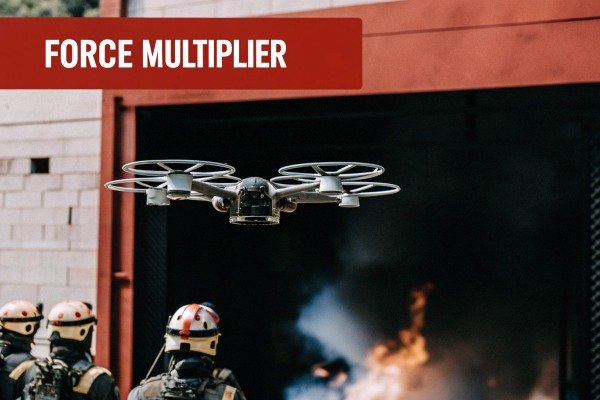
You should position our drones as a “Force Multiplier” solution where the same budget equips a department with a coordinated fleet rather than one asset. Highlight that our manufacturing efficiency allows you to offer redundancy—if one drone needs service, the department still has two others in the air—ensuring zero downtime during critical emergency operations.

The economic argument is your strongest door opener, but it must be framed correctly. Do not just say the drones are "cheaper." In the firefighting industry, "cheap" sounds like "unreliable." Instead, use the term "Force Multiplier." Force Multiplier 3
When you present our black quadcopter with its bright orange housing to a fire chief, explain that for the price of one competitor's unit, they can acquire a fleet of three SkyRover drones. This changes the conversation from "cost savings" to "operational redundancy." operational redundancy 4 In emergency services, redundancy is life-saving. If a department only has one expensive drone and it suffers a battery failure or a broken propeller, their aerial capability is gone. With a fleet, the mission continues.
We achieve this price point not by cutting corners on the carbon fiber frame or the motors, but through our proximity to the component supply chain in China. We want you to show your customers the math. A lower capital expenditure (CapEx) means they can allocate more budget capital expenditure 5 to pilot training and spare batteries, which are the real drivers of mission success.
Furthermore, consider the "swarm" potential. Modern firefighting requires eyes on multiple sides of a building. Modern firefighting 6 A single drone, no matter how expensive, can only be in one place at once. A cost-effective fleet allows a commander to position one drone at the front, one at the rear, and one doing thermal scans of the roof simultaneously. This is a capability that expensive local competitors simply cannot match within a standard municipal budget.
Comparing Investment Strategies
Use the table below to show your clients the difference between buying a single legacy unit and a SkyRover fleet.
| Feature | Competitor (Single Unit Strategy) | SkyRover (Fleet Strategy) | Operational Benefit |
|---|---|---|---|
| Asset Count | 1 Drone | 3 Drones | Redundancy: No loss of capability if one unit is grounded. |
| Coverage | Single viewpoint | Multi-angle simultaneous views | Situational Awareness: Monitor front, back, and roof concurrently. |
| Risk Tolerance | Low (Too expensive to risk) | High (Affordable replacement) | Mission Capability: Pilots can fly closer to hazards to get better data. |
| Maintenance | Factory return (Weeks) | On-site modular swap (Minutes) | Uptime: Equipment is always ready for the next call. |
What specific technical features should I emphasize to prove reliability in extreme firefighting conditions?
We test our airframes in the humidity of southern China humidity of southern China 7 and the freezing altitudes of the western mountains to ensure they survive. We know that a fire scene is chaotic, hot, and full of signal interference, so we engineer our flight controllers signal interference 8 to push through these barriers.
Focus on the dual-sensor payload that combines high-definition optical zoom with thermal imaging to see through thick smoke where human eyes fail. Emphasize the drone’s high-temperature resistant materials and stable digital transmission links that maintain connection even in environments with heavy radio frequency interference, ensuring the pilot never loses control during a mission.
Reliability is the primary fear for any buyer of imported electronics. To counter this, you need to get technical about the "Orange Housing" and what lies beneath it. The bright orange color is not just a design choice; it is for visual line-of-sight compliance in smoke-filled skies. visual line-of-sight compliance 9 However, the real reliability story is inside.
First, talk about Thermal Penetration. In a structural fire, smoke often blinds ground crews. Our drones use thermal sensors that "see" heat signatures. This allows firefighters to identify the seat of the fire (the hottest point) instantly, rather than spraying water blindly. It also helps locate victims who may be unconscious and obscured by smoke. You should highlight that our systems have been battle-tested in real-world scenarios, such as the high-rise drills in Fuzhou, where drones helped contain simulated fires in half the time of traditional methods.
Second, address Signal Stability. Fire scenes are noisy. There are radios, trucks, and metal structures interfering with signals. Our transmission systems use frequency-hopping technology to maintain a strong link with the remote controller. This is crucial for safety. A drone that loses connection near a burning building is a liability. Our system is designed to return home automatically if the link is truly lost, but the connection robustness is high.
Finally, discuss Environmental Hardening. Firefighting drones must handle water spray and heat. While they cannot fly into the flames, they must hover near them. Our frames use high-grade composites that resist warping under heat. The motors are sealed to prevent ash and water ingress. When you pitch this to a client, explain that these are not modified camera drones; they are industrial tools built for "dirty" environments.
Key Reliability Specs to Quote
| Specification | Performance Standard | Why It Matters to Firefighters |
|---|---|---|
| Wind Resistance | Level 7 (up to 17 m/s) | Can fly during storms or creating strong updrafts near fires. |
| Ingress Protection | IP45 or higher | Rain, water spray from hoses, and airborne ash won't kill the electronics. |
| Signal Range | 10km+ (Unobstructed) | Pilots can operate from a safe "Cold Zone" distance away from the hazard. |
| Hover Accuracy | ±0.1m (RTK enabled) | Holds position steady for precise thermal scanning without pilot struggle. |
How do I use OEM customization options to meet the unique needs of local fire departments?
Our engineering team in Xi’an works daily to modify code and hardware brackets for our partners. We understand that a “one-size-fits-all” approach rarely works for specialized emergency teams, which is why we offer deep customization options that many large competitors refuse to touch.
You can offer a fully localized experience by utilizing our OEM services to modify firmware for local radio compliance and integrate custom payloads like gas detectors or drop-release mechanisms. Highlight your ability to brand the flight interface and drone housing with the department’s own identity, making the imported product feel like a native, purpose-built solution.
One of the biggest advantages of working with a factory like ours is agility. Large western corporations often lock their ecosystems. If a fire department wants a specific spotlight or a megaphone, they have to wait years for the manufacturer to release it. With us, you can offer this customization as part of the deal.
Payload Versatility is a massive selling point. The cross-shaped frame of our drone is designed with universal mounting points. If a rural fire department needs a megaphone to shout evacuation orders to hikers, we can integrate that. If an industrial safety manager needs a "sniffer" to detect hazardous chemical leaks before sending in men, we can mount a gas detector. You are not just selling a drone; you are selling a platform that adapts to their specific hazard profile.
Software and Radio Localization is equally critical. You can reassure your clients that the product is legal and compliant. We can customize the firmware to respect local geofencing rules (No-Fly Zones) and radio frequency limits (FCC in the US, CE in Europe). This removes the legal headache for the procurement officer.
Additionally, do not underestimate the power of Branding. We can paint the center fuselage in the specific color code of the local agency or apply their insignia. When a fire chief sees their department’s logo on the start-up screen of the controller, the product stops feeling "foreign" and starts feeling like their equipment. It builds immediate psychological ownership and trust.
Customization Possibilities
| Customization Type | Examples | Benefit to End Customer |
|---|---|---|
| Physical Payload | Dry powder balls, Megaphones, Searchlights | Adapts the drone for specific missions (Rescue vs. Fighting vs. warning). |
| Firmware/Software | Geofencing limits, Logo on boot screen, Custom UI language | Ensures legal compliance and ease of use for non-technical operators. |
| Hardware Branding | Custom housing colors, Agency decals | Builds team morale and professional appearance during public operations. |
How can I reassure my clients about the long-term availability of spare parts and technical support?
We know the ocean between us can make clients nervous about repairs, which is why we prioritize sending “repair kits” with every major shipment. We design our products to be modular so that you, the distributor, can solve 90% of issues without ever needing to ship a frame back to China.
Guarantee peace of mind by establishing a local ‘buffer stock’ of consumable parts like propellers, arms, and landing gear, which we supply with your initial fleet order. Showcase the drone’s modular architecture that allows for simple field swaps and assure them of direct access to our engineering team for complex troubleshooting, effectively eliminating long overseas downtime.

The fear of the "broken toy" is real. Clients worry that if an imported drone crashes, it becomes a paperweight because parts are weeks away. You need to flip this narrative by explaining our Distributed Support Model.
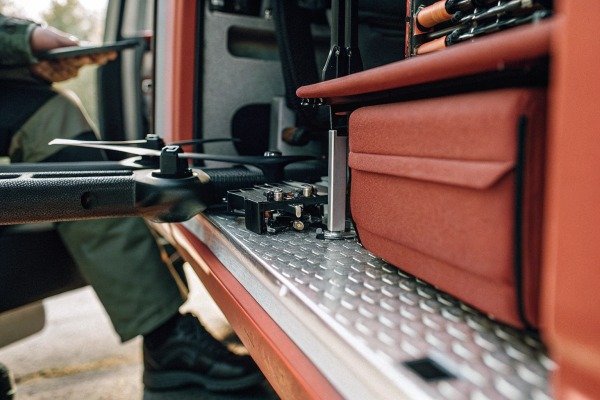
First, focus on the Modular Design. Our black quadcopter frame is not a sealed black box. The arms, motors, and landing gear are designed to be replaced with standard tools. You should demonstrate this to your customer. Show them how to detach a damaged arm and plug in a new one. When they see that a repair takes 15 minutes on a workbench rather than 6 weeks at a service center, their anxiety disappears.
Second, promote the Buffer Stock Strategy. When you sell a fleet to a fire department, you should bundle a "Crash Kit" (propellers, two extra arms, one extra landing gear set). We provide these to you at a very low cost. By having these parts sitting on the shelf at the fire station, the "supply chain" distance becomes zero. They have the part before they even break the drone.
Third, offer Virtual Engineering Support. Tell them that you are backed by the actual creators of the technology. If there is a complex software error, we don't just send you a manual; we can hop on a video call. We support you, so you can support them. This layered support system (You + Us) is often more responsive than the automated ticketing systems of giant tech conglomerates.
Recommended Maintenance & Support Structure
- Tier 1 (User Level): Propeller swaps, battery charging, lens cleaning. (Zero downtime).
- Tier 2 (Distributor/You): Arm replacement, motor replacement, firmware flashing. (24-48 hour turnaround).
- Tier 3 (Manufacturer/Us): Mainboard logic issues, deep sensor calibration. (Remote diagnosis or component replacement).
By presenting this structured plan, you prove that you are not just "shifting boxes" from China, but providing a sustainable, long-term capability.
Conclusion
Successfully selling our firefighting drones requires moving the conversation beyond just "made in China." You must frame the SkyRover solution as a reliable, customizable, and cost-effective force multiplier. By showcasing the ability to deploy fleets instead of single units, demonstrating the life-saving potential of our thermal sensors thermal sensors 10, and guaranteeing support through local parts buffers, you prove that our technology is not just an alternative, but a superior choice for modern emergency response. We are ready to build the fleet that will protect your community.
Footnotes
1. Provides scientific context on the application of thermal imaging in fire services. ↩︎
2. Explains the global logistics framework that enables cost-effective manufacturing of high-performance tools. ↩︎
3. Defines the strategic concept of force multiplication in emergency service procurement. ↩︎
4. International standards for maintaining operational continuity and system redundancy in critical services. ↩︎
5. Academic explanation of capital expenditure and its impact on municipal budget allocation. ↩︎
6. Links to the leading authority on fire safety standards and operational practices. ↩︎
7. News context regarding the environmental conditions and testing grounds for industrial equipment. ↩︎
8. References NIST research on communication challenges in public safety environments. ↩︎
9. Cites official FAA regulations regarding pilot visibility requirements for drone operations. ↩︎
10. Industry-leading documentation on the application of thermal imaging for emergency response. ↩︎

 English
  Español de México
  Deutsch
  Français
  Русский
  العربية
