
Seeing a shipment of our precision-engineered quadcopters ruined by saltwater intrusion is a nightmare scenario. You invest heavily in advanced technology, so protecting that investment against transit risks is non-negotiable.
For importing high-value firefighting drones from China, you must purchase Institute Cargo Clauses (A). This "All-Risk" policy covers theft, water damage, and rough handling. Ideally, secure an annual open policy with specific extensions for lithium batteries to ensure full warehouse-to-warehouse protection.
Below, we break down the specific policies and clauses that secure your supply chain.
Which Institute Cargo Clauses provide the comprehensive coverage I need for expensive equipment?
We rigorously test every thermal sensor at our Xi’an facility, but we cannot control the violence of ocean storms. Relying on basic coverage often leaves expensive avionics completely unprotected against common transit shocks.
Institute Cargo Clauses (A) offers the necessary "All-Risk" coverage required for sensitive electronics. Unlike Clauses (B) or (C), which only cover major catastrophes like sinking, Clause (A) protects against breakage, moisture, and theft, covering approximately 95% of potential transit perils.

When you import industrial drones, you are moving sophisticated computers with wings. The standard protection offered by many logistic providers defaults to the bare minimum, which can be disastrous for high-tech cargo. In the world of marine insurance, the "Institute Cargo Clauses" (ICC) are the global standard Institute Cargo Clauses 1, and understanding the difference between them is vital for your bottom line.
The Hierarchy of Coverage
Most importers assume "insurance is insurance," but the gap between Clause C and Clause A is the difference between total loss and full recovery.
- Institute Cargo Clause (C): This is the most basic level. It is a "Named Perils" policy. It strictly covers catastrophic events like the vessel stranding, sinking, burning, or colliding. If a container of our drones is dropped by a crane or gets wet due to a hole in the container roof, Clause C pays nothing.
- Institute Cargo Clause (B): This adds a few more named perils, such as washing overboard or water entry from sea/river (but often not rain). It is still insufficient for delicate electronics.
- Institute Cargo Clause (A): This is the industry standard for manufactured goods. It operates on an "All-Risks" basis. This means everything is covered unless it is specifically excluded. For firefighting drones, which are vulnerable to moisture, physical impact, and theft, this is the only logical choice.
Comparing the Clauses
To visualize why we strongly advise our clients to insist on Clause A, look at this comparison of covered risks:
| Risk / Peril | Institute Cargo Clause (A) | Institute Cargo Clause (B) | Institute Cargo Clause (C) |
|---|---|---|---|
| Fire or Explosion | Covered | Covered | Covered |
| Vessel Sinking/Stranding | Covered | Covered | Covered |
| General Average | Covered | Covered | Covered |
| Theft / Pilferage | Covered | Not Covered | Not Covered |
| Water Damage (Rain/Sea) | Covered | Limited | Not Covered |
| Rough Handling / Breakage | Covered | Not Covered | Not Covered |
| Piracy | Covered | Not Covered | Not Covered |
The "General Average" Threat
There is a maritime law concept called "General Average" that shocks many of our first-time buyers. General Average 2 If a ship catches fire or gets stuck (like the Ever Given Ever Given 3 in the Suez Canal), the salvage costs are split proportionally among all cargo owners on board.
Even if your drones are untouched and in perfect condition, you could be legally forced to pay thousands of dollars to release your cargo. A comprehensive Clause A policy covers these General Average contributions. Without it, your goods are held hostage until you pay a cash deposit. Given that 90% of our exports to the US travel via ocean freight, this exposure is real and must be insured.
How do Incoterms like CIF and FOB dictate who is responsible for insuring the shipment?
When we structure quotes for US clients, we often see confusion about liability transfer points. Assuming the other party has you covered can lead to a financial blind spot if the policy quality is unknown.
Incoterms determine the insurance buyer. Under CIF, the seller provides insurance, but it is often minimal coverage held by a foreign insurer. Under FOB, you control the insurance policy, ensuring local claims support and comprehensive "All-Risk" coverage for your capital equipment.

The acronyms on your commercial invoice—FOB (Free on Board) or CIF FOB (Free on Board) 4 commercial invoice 5 (Cost, Insurance, and Freight)—are not just shipping instructions; they are legal definitions of risk.
The Dangers of CIF (Cost, Insurance, and Freight)
In a CIF arrangement, we (the manufacturer) or the trading company are responsible for purchasing the insurance. While this sounds convenient for you, it has significant downsides for the buyer:
- Minimal Compliance: Sellers are only legally required to purchase minimum cover (Clause C) under standard Incoterms rules (Incoterms 2020 changed this to Clause A for manufactured goods, but many contracts still default to the cheapest option).
- Claims Difficulty: If damage occurs, you hold the policy certificate, but the insurer is likely based in China. Filing a claim requires navigating time zones, language barriers, and foreign legal systems.
- Lack of Transparency: You often don't know the specific exclusions of the policy until it is too late.
Why FOB (Free on Board) is Safer for Importers
When you buy on FOB terms, our responsibility ends once the drones are loaded onto the vessel in China. From that point on, you control the freight and the insurance.
- Local Control: You purchase insurance from a US or European provider (like Allianz, Chubb, or a specialist broker).
- Better Coverage: You can dictate the terms, ensuring Clause A and war/strike clauses are included.
- Faster Payouts: If a claim arises, you deal with a local agent who speaks your language and operates in your time zone.
Valuation: The 110% Rule
Regardless of the Incoterm, industry best practice dictates that you insure the cargo for 110% of the CIF value.
- Calculation: (Cost of Goods + Freight Cost + Insurance Premium) x 1.10.
- Reasoning: This extra 10% covers your administrative costs, potential profit loss, and currency fluctuation during the claims process. If you only insure the invoice value, you will lose money even if the claim is paid in full.
| Feature | CIF (Seller Insures) | FOB (Buyer Insures) |
|---|---|---|
| Policy Holder | Seller (Manufacturer) | Buyer (You) |
| Insurer Location | Origin Country (China) | Destination Country (USA/EU) |
| Coverage Level | Often Minimum (Clause C) | Customizable (Clause A) |
| Claims Process | Slow, foreign language barriers | Fast, local support |
| Risk Control | Low | High |
Will my policy cover specific damages to sensitive electronic components and drone batteries?
Our flight controllers and high-capacity LiPo batteries are the heart of the drone system. high-capacity LiPo batteries 6 Standard policies often exclude these specific components due to their hazardous nature and extreme fragility.
Standard policies usually exclude internal electronics and batteries unless modified. You need specific endorsements for Class 9 Dangerous Goods to cover lithium batteries and a Concealed Damage Clause to allow time for testing internal sensors after the cargo arrives at your warehouse.
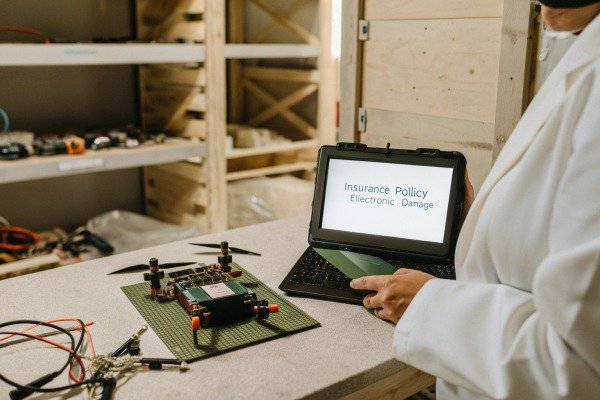
Firefighting drones are not just metal and plastic; they are bundles of sensitive avionics and high-energy power systems. A standard "All-Risk" policy might cover the box getting crushed, but it might deny a claim for a battery fire or a sensor that stopped working without visible external damage.
The Lithium Battery Challenge
Firefighting drones use large Lithium Polymer (LiPo) batteries. These are classified as Class 9 Dangerous Goods.
- The Exclusion Risk: Many marine cargo policies have strict exclusions for hazardous materials. If your policy does not explicitly endorse the transport of Class 9 goods, a fire caused by a battery thermal runaway could void the entire claim.
- Compliance is Coverage: Insurers will only pay if the batteries were packed according to UN 38.3 standards. Our factory ensures this compliance, but your insurance broker must know you are shipping batteries so the policy reflects the risk.
Concealed Damage Clauses
This is critical for electronics. Often, a shipping container looks fine on the outside, but the vibration during a rough Pacific crossing has loosened internal soldering or damaged the gyroscope.
- Standard Rule: Usually, you must report damage within 3 days of delivery.
- The Problem: You might not unbox and test every drone immediately.
- The Solution: Negotiate a Concealed Damage Extension. This gives you a discovery period (e.g., 30 to 60 days) to open the boxes, power up the drones, and run diagnostics. If we ship you 50 units, you need time to verify that all 50 flight controllers initiate correctly.
Brand Protection / Control of Damaged Goods
If a batch of our SkyRover drones gets water damage, they might still look salvageable. Insurers often have the right to take damaged goods and sell them on the secondary market to recover costs.
- The Risk: You do not want potentially compromised firefighting equipment being sold on eBay with your brand name (or ours) on it. If that drone fails during a fire, the liability blows back on the brand.
- The Clause: Add a Control of Damaged Goods clause. This entitles you to declare the goods a total loss and destroy them, rather than allowing the insurer to sell them as salvage salvage costs 7.
Summary of Essential Extensions
| Extension Clause | Purpose for Drone Importers |
|---|---|
| Concealed Damage | Extends time to report internal damage not visible on packaging. |
| Dangerous Goods | Ensures coverage for Class 9 LiPo batteries. |
| War & Strikes | Covers damage from riots, strikes, or civil commotion (vital for supply chains). |
| Control of Damaged Goods | Prevents insurer from selling unsafe drones as salvage; protects brand reputation. |
Should I purchase insurance through my freight forwarder or find an independent provider?
We have seen clients wait months for carrier payouts that barely cover the shipping costs. Choosing the right partner for your coverage is just as vital as the policy text itself.
Purchase through an independent specialist or a dedicated cargo insurance broker rather than relying on the freight forwarder’s default policy or carrier liability. Independent brokers offer tailored exclusions, lower deductibles, and faster claims advocacy, whereas carrier liability is capped at negligible amounts.

When you book your shipment, the freight forwarder will often ask freight forwarder 8, "Do you want to add insurance for $50?" It is tempting to just click "Yes," but for high-value industrial equipment, this convenience comes at a cost.
The Myth of Carrier Liability
Never confuse "Carrier Liability" with insurance. Carrier Liability 9
- Limited Liability: Airlines and ocean carriers limit their payout by weight, not value.
- Air Freight: Often capped at around $20 per kilogram.
- Ocean Freight: Capped at $500 per customary shipping unit (container).
- The Math: If one of our firefighting drones weighs 20kg but costs $15,000, carrier liability might pay you $400 ($20 x 20kg). You lose $14,600. Liability protection is effectively useless for high-tech goods.
Freight Forwarder Policies vs. Independent Brokers
Freight forwarders often resell a generic blanket policy. While better than nothing, it has drawbacks:
- Generic Terms: It is a "one size fits all" policy. It might not include the specific "Control of Damaged Goods" or "Concealed Damage" clauses we discussed earlier.
- Conflict of Interest: If the forwarder damaged your goods, their insurance arm might be incentivized to deny the claim or delay it to protect their premiums.
Why Independent Brokers Win
Using a specialized cargo insurance broker (like Trade Risk Guaranty or Marsh) allows you to build Trade Risk Guaranty or Marsh 10 a policy around your specific business needs.
- Annual Open Policy: If you import regularly (e.g., 3-4 times a year), an annual policy is cheaper than insuring shipment-by-shipment. It covers all your imports automatically, so you never forget to insure a load.
- Advocacy: A broker works for you, not the shipping line. When a claim happens, they fight to get you paid.
Decision Matrix: Who to Buy From
| Provider Type | Cost | Coverage Quality | Claims Speed | Recommended For |
|---|---|---|---|---|
| Carrier Liability | $0 (Included) | Extremely Low (Weight based) | Slow (6-12 months) | Low-value bulk raw materials (Sand, Scrap). |
| Freight Forwarder | Moderate | Standard / Generic | Moderate | One-off shipments of general goods. |
| Independent Broker | Competitive | High / Tailored | Fast (30-60 days) | High-value electronics, Drones, Frequent importers. |
Conclusion
Importing firefighting drones requires more than just logistical planning; it demands financial shielding. By securing Institute Cargo Clauses (A) under a Buyer-controlled (FOB) arrangement, and adding extensions for batteries and concealed damage, you protect your capital from factory floor to fire station.
Footnotes
1. Official source for the Institute Cargo Clauses standards. ↩︎
2. Provides a comprehensive definition of this maritime law concept. ↩︎
3. News report on the specific event mentioned in the text. ↩︎
4. Official US government explanation of Incoterms. ↩︎
5. US Customs guidance on import documentation requirements. ↩︎
6. FAA regulations regarding the transport of lithium batteries. ↩︎
7. Legal definition of salvage in the context of maritime law. ↩︎
8. International representative body for the freight forwarding industry. ↩︎
9. Major logistics provider explaining the difference between liability and insurance. ↩︎
10. Link to one of the specific insurance brokers mentioned as an example. ↩︎

 English
  Español de México
  Deutsch
  Français
  Русский
  العربية
