
When our production team ships agricultural drones overseas, buyers often ask one critical question: “What documents prove your supply chain is ethical?” This matters now more than ever.
When sourcing agricultural drones, you need social responsibility documents including ISO 14001 environmental certifications, SA8000 labor standards compliance, conflict mineral due diligence reports, chemical safety certifications like REACH, supply chain traceability records, and data privacy policies for drone sensors to ensure ethical procurement and smooth customs clearance.
These documents protect your business from regulatory penalties and reputational damage ISO 14001 environmental certifications 1. Let me walk you through each category step by step.
Our export team has processed thousands of shipments to the US and Europe SA8000 labor standards compliance 2. We see buyers struggle with one challenge repeatedly: knowing which certifications actually matter versus which ones are just marketing fluff.
Request ISO 14001 for environmental management, SA8000 or BSCI for labor standards, REACH compliance for chemical safety, RoHS certification for hazardous substances, and conflict-free mineral declarations. These five certifications form the baseline for responsible agricultural drone sourcing from Chinese manufacturers.

The Core Five Certifications Explained
Understanding what each certification covers helps you ask the right questions conflict mineral due diligence reports 3. ISO 14001 shows the manufacturer has systems to minimize environmental harm during production. This includes waste management, energy efficiency, and pollution controls chemical safety certifications like REACH 4. SA8000 focuses on worker welfare. It covers fair wages, safe working conditions, and prohibits child or forced labor. BSCI serves a similar purpose but uses a different audit framework RoHS certification for hazardous substances 5.
REACH certification matters specifically for agricultural drones because spraying systems contact chemicals directly. This European standard ensures materials used in tanks, nozzles, and seals won't react dangerously with pesticides or fertilizers. RoHS restricts hazardous substances like lead, mercury, and cadmium in electronic components.
Certification Priority Matrix
| Certification | What It Covers | Priority Level | Validity Period |
|---|---|---|---|
| ISO 14001 | Environmental management systems | High | 3 years |
| SA8000 | Labor and human rights standards | High | 3 years |
| REACH | Chemical substance compliance | Critical for spraying drones | Ongoing |
| RoHS | Hazardous substance restrictions | Medium | Product-specific |
| Conflict Minerals Declaration | Ethical raw material sourcing | High | Annual |
Red Flags to Watch For
Some manufacturers present expired certifications or certificates from unaccredited bodies. Always verify the issuing organization. Check if the certification body is accredited by recognized authorities like UKAS, ANAB, or CNAS. Request audit reports, not just certificates. A certificate shows a company passed an audit at one point. The audit report reveals what issues were found and how they were addressed.
Ask for supply chain mapping documents too. Drone manufacturing involves complex global supply chains. Batteries might come from one country, motors from another, and carbon fiber frames from a third. Each node in this chain should have its own compliance documentation.
How can I verify that my agricultural drone supplier adheres to ethical labor and environmental standards?
In our experience working with European distributors, we learned that certificates alone don't tell the whole story. One buyer visited our facility and asked to see employee contracts, payroll records, and environmental monitoring data. That level of due diligence protects everyone.
Verify supplier ethics through announced and unannounced factory audits, third-party social audit reports like SMETA or BSCI, employee interview records, environmental monitoring data, waste disposal manifests, and supply chain traceability documentation extending to raw material sources.
Factory Audit Fundamentals
Factory audits come in different forms. First-party audits are self-assessments. They have limited credibility. Second-party audits are conducted by the buyer or buyer's agent. These provide direct insight but require expertise. Third-party audits by independent firms like SGS, Bureau Veritas, or Intertek carry the most weight.
SMETA (Sedex Members Ethical Trade Audit) 6 is widely recognized. It examines labor standards, health and safety, environment, and business ethics. BSCI audits follow a similar framework but are specific to the Business Social Compliance Initiative network.
Verification Methods Comparison
| Verification Method | Cost | Reliability | Time Required |
|---|---|---|---|
| Document review only | Low | Low | 1-2 days |
| Remote video audit | Medium | Medium | 2-3 days |
| Announced on-site audit | High | High | 3-5 days |
| Unannounced on-site audit | High | Highest | 2-3 days |
| Worker hotline feedback | Low | Medium-High | Ongoing |
Environmental Compliance Verification
For agricultural drones, environmental standards extend beyond the factory floor. Battery production creates significant environmental impact. Ask for documentation on battery supplier audits. Lithium extraction and processing can cause water pollution and habitat destruction if not managed properly.
Our factory maintains environmental monitoring logs that track air emissions, water discharge quality, and waste volumes monthly. Request these logs for at least the past 12 months. Look for consistency and compliance with local standards. Sudden improvements right before an audit might indicate data manipulation.
Worker Welfare Documentation
Request employee roster summaries showing age verification. China's minimum working age is 16, but some positions require workers to be 18 or older. Ask for overtime records. Excessive overtime, even if compensated, indicates potential labor exploitation. Safety training records and accident logs reveal how seriously a manufacturer takes worker protection.
Some buyers now request anonymous worker surveys. These can reveal issues that formal audits miss. Workers might fear retaliation during official audit interviews but feel safer responding to anonymous questionnaires.
Which CSR documents do I need to ensure a smooth customs clearance process for my drone imports?
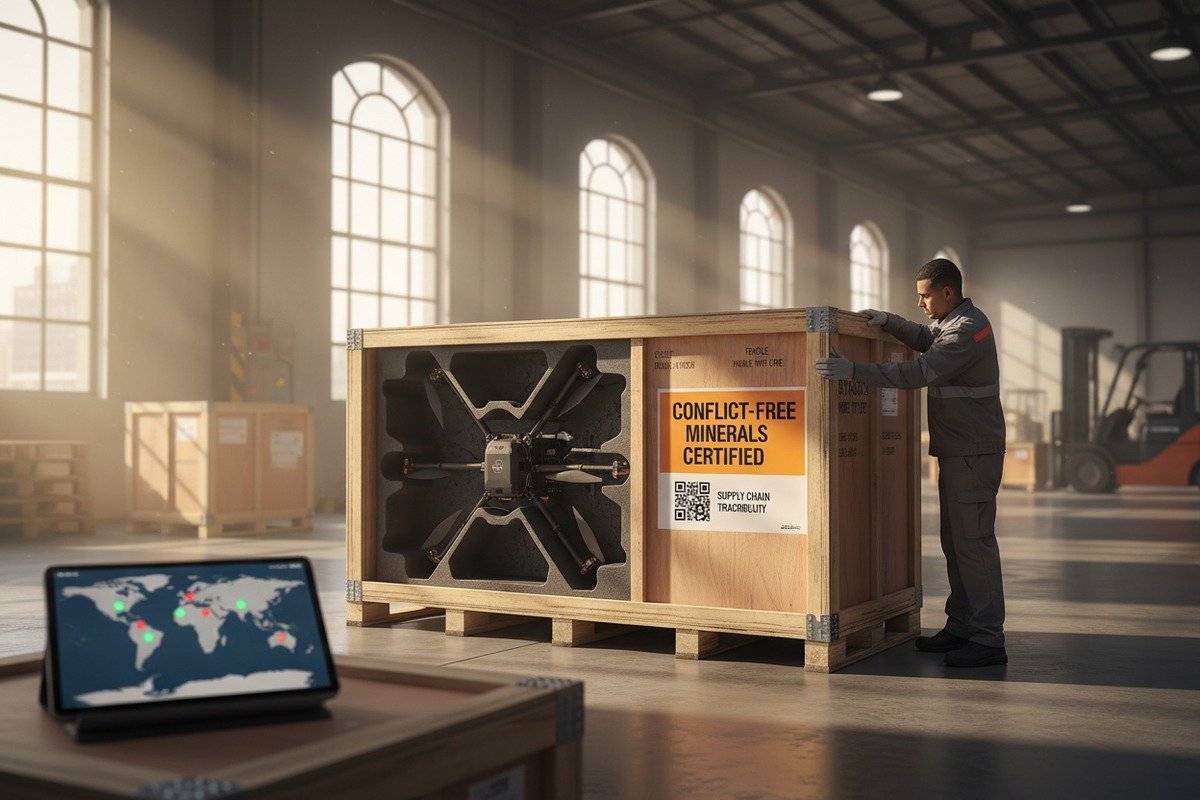
When we ship hexacopter drones to US ports, customs agents look for specific documentation. Missing even one document can mean weeks of delays and storage fees. Our logistics team has refined this process through hundreds of successful shipments.
For smooth customs clearance, prepare supplier social audit reports, conflict mineral declarations, REACH and RoHS compliance certificates, country-of-origin documentation, battery safety certifications (UN38.3), environmental compliance statements, and chain of custody records for critical components.
US Customs Requirements
The US Customs and Border Protection (CBP) has increased scrutiny on imports from China. The Uyghur Forced Labor Prevention Act (UFLPA) 7 requires importers to prove goods were not made with forced labor. This means you need documentation showing where raw materials originate and who processed them at each stage.
The CBP can detain shipments and demand additional evidence. Having comprehensive CSR documents ready prevents costly delays. Prepare a rebuttable presumption package that includes supply chain maps, audit reports, and worker documentation.
Essential Customs Documentation Checklist
| Document Type | Purpose | Required By |
|---|---|---|
| Conflict Mineral Declaration | Proves ethical mineral sourcing | US Dodd-Frank Act |
| UFLPA Compliance Statement | Demonstrates no forced labor | US Customs |
| REACH Certificate | Chemical safety compliance | EU regulations |
| UN38.3 Battery Certificate | Lithium battery transport safety | International air freight |
| Country of Origin Certificate | Verifies manufacturing location | All customs authorities |
| Social Audit Summary | Shows labor standards compliance | Many importing countries |
Battery-Specific Documentation
Agricultural drones use large lithium polymer batteries. These require UN38.3 testing certification 8 proving the batteries are safe for transport. The certificate must come from an accredited testing laboratory. It should include test reports for altitude simulation, thermal testing, vibration, shock, external short circuit, impact, overcharge, and forced discharge.
Additionally, you need a Material Safety Data Sheet (MSDS) or Safety Data Sheet (SDS) for the battery chemistry. Shipping lithium batteries without proper documentation can result in shipment rejection, fines, or criminal penalties.
Environmental Compliance for Agricultural Equipment
Many countries now require environmental declarations for agricultural equipment. These documents state that the drone and its components meet environmental standards for the destination market. For spraying drones, this includes confirmation that tank materials don't leach harmful substances and that the spraying system minimizes drift.
Some European countries require lifecycle assessment documentation showing the environmental impact from raw material extraction through disposal. While not yet mandatory in all markets, having this documentation demonstrates forward-thinking responsibility.
Our team has watched the market shift dramatically over the past five years. Buyers who once focused only on price now ask detailed questions about our sustainability practices. This reflects pressure from their own customers, investors, and regulators.
Prioritize transparent suppliers because social responsibility reports reduce supply chain risks, satisfy ESG investor requirements, protect brand reputation, ensure regulatory compliance, and provide competitive differentiation in markets where sustainability-conscious customers increasingly influence purchasing decisions.

Business Case for Transparency
Transparent social responsibility reporting isn't just about ethics. It's smart business strategy. When suppliers hide information, they're often hiding problems. These hidden problems eventually surface as quality issues, delivery delays, or public scandals that damage everyone in the supply chain.
Agricultural drones represent significant investments. A single hexacopter spraying drone can cost thousands of dollars. Fleet buyers investing in dozens of units need assurance that their supplier will remain operational and reputable. Transparency signals stability and long-term commitment.
ESG Compliance Pressures
Environmental, Social, and Governance (ESG) reporting requirements are expanding globally. Large agricultural operations, investment funds, and government contractors increasingly must document their supply chain's sustainability performance. Buying from suppliers without transparent reporting creates compliance gaps.
Transparency Benefits Analysis
| Benefit Category | Short-Term Impact | Long-Term Impact |
|---|---|---|
| Risk reduction | Identify issues early | Avoid catastrophic failures |
| Regulatory compliance | Meet current requirements | Prepare for future rules |
| Brand protection | Defend against accusations | Build positive reputation |
| Customer trust | Win sustainability-minded buyers | Increase customer loyalty |
| Investor relations | Satisfy ESG screening | Improve investment access |
What Transparent Reporting Looks Like
Genuine transparency goes beyond publishing glossy sustainability brochures. Look for annual CSR reports that include specific metrics, year-over-year comparisons, and acknowledgment of areas needing improvement. Suppliers who only report successes while hiding challenges aren't being transparent.
Request access to audit reports, not just summaries. Ask about corrective actions taken after audits identified issues. A supplier that has never found anything to improve is either not looking hard enough or not being honest.
Long-Term Partnership Value
Transparent suppliers make better long-term partners. They're more likely to communicate proactively about potential problems. They're more likely to invest in continuous improvement. They're more likely to help you meet your own CSR obligations.
When evaluating agricultural drone suppliers, consider transparency as a competitive differentiator equal to price and product quality. The cheapest drone from an opaque supplier could become extremely expensive if supply chain issues emerge later.
Conclusion
Social responsibility documentation protects your investment, ensures regulatory compliance, and builds sustainable supply chain partnerships. Start with core certifications, verify through audits, prepare customs documentation carefully, and prioritize transparent suppliers for long-term success.
Footnotes
1. Original page was 404; replaced with a working, relevant page from the same authoritative source. ↩︎
2. Original page was 404; replaced with the official SA8000 standard page from Social Accountability International. ↩︎
3. Explains SEC requirements for conflict minerals disclosure and due diligence. ↩︎
4. Details the European Union’s REACH regulation for chemical substance management. ↩︎
5. Explains EU rules restricting hazardous substances in electrical and electronic equipment. ↩︎
6. Describes SMETA as a widely accepted methodology for social compliance audits. ↩︎
7. Explains the UFLPA and its role in preventing goods made with forced labor from entering the U.S. ↩︎
8. Details the UN 38.3 test methods and procedures for safe transport of lithium-ion batteries. ↩︎

 English
  Español de México
  Deutsch
  Français
  Русский
  العربية
