
When we finalize a production schedule for a new fleet of firefighting drones, a delayed deposit stops our assembly line cold, putting your critical delivery timeline at serious risk.
Prioritize payment banks or platforms that offer low foreign exchange markups (under 0.5%) and support direct local currency settlement to minimize costs. You must balance low transaction fees against transfer speeds, as digital fintech platforms often clear funds within 24 hours compared to 3-5 days for traditional SWIFT wires, ensuring your urgent drone procurement is not delayed.
Here is how to optimize your payment strategy for high-value hardware imports.
We often see clients shocked when their landed cost exceeds the commercial invoice because intermediary banks commercial invoice 1 took a significant slice of their heavy-lift drone budget before the funds even reached our account.
Hidden wire fees and exchange rate spreads of 2-5% can significantly inflate the cost of high-value firefighting drones. To protect your margins, compare the “mid-market” rate against your bank’s offer and select the “OUR” instruction code to cover all intermediary charges upfront, preventing underpayment delays that stall shipping.
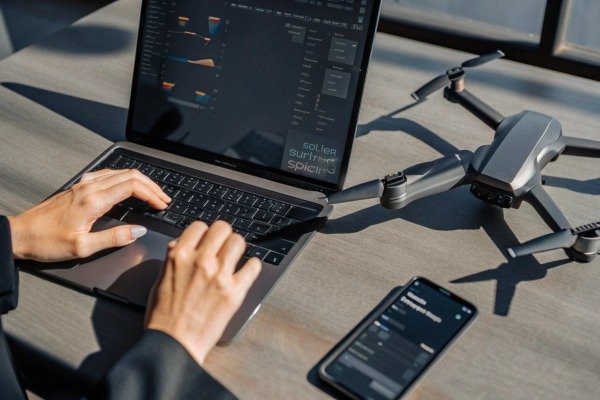
When you are importing high-value industrial equipment like our SkyRover firefighting drones, the price tag firefighting drones 2 on the invoice is rarely the final amount you pay if you are not careful with your banking choice. Many procurement managers focus solely on the unit price of the drone, ignoring the financial logistics that can add thousands financial logistics 3 of dollars to the final bill.
The Invisible Cost of Exchange Rate Spreads
The most significant hidden cost is not the fixed wire transfer fee (usually $25–$50) but the exchange rate markup, also known as the "spread." Traditional banks often claim they charge low fees, but they make their profit by giving you an exchange rate that is worse than the real market rate.
For example, if the mid-market rate is 1 USD = 7.20 CNY, your bank might offer you 1 USD = 7.00 CNY. On a small sample order, this might not matter. However, for a $50,000 order of heavy-lift drones, a 2.8% spread means you are paying an extra $1,400 just to move your money. That is the cost of an entire set of replacement batteries or thermal camera upgrades wasted on banking profits.
Understanding Wire Instruction Codes
Another critical factor that causes friction in our order processing is the wire transfer instruction code. When you fill out your international wire form, you will see three options: OUR, SHA, and BEN.
- OUR (Sender Pays): You cover all transaction fees. We receive the full deposit amount.
- SHA (Shared): You pay your bank's fee, and we pay the intermediary bank fees. We receive slightly less than the invoice amount.
- BEN (Beneficiary Pays): We pay all fees. We receive significantly less than the invoice amount.
In our experience, when a client selects "SHA" or "BEN," the payment arrives short by $20 to $80 due to intermediary bank deductions. This forces us to pause the release of the drones until the small balance is paid, creating unnecessary administrative delays.
Fee Structure Comparison
To help you visualize where the money goes, we have broken down the typical costs associated with different payment methods for a standard transaction.
| Cost Component | Traditional Big Bank | Specialized Fintech (e.g., Wise, Payoneer) | Regional Small Bank |
|---|---|---|---|
| Upfront Wire Fee | $30 – $50 | $5 – $15 | $40 – $80 |
| Exchange Rate Markup | 2.5% – 5.0% | 0.4% – 1.0% | 3.0% – 6.0% |
| Intermediary Fees | Often hidden ($20+) | usually included or low | High (Daisy-chain routing) |
| Total Cost on $20k Order | ~$650 – $1,050 | ~$100 – $250 | ~$700 – $1,280 |
Choosing the right provider can save you enough capital to purchase additional spare parts or cover shipping insurance, rather than handing that value over to financial institutions.
Will slow bank transfer times delay the manufacturing or shipping of my imported drones?
Our flight testing team cannot begin final calibration and packing until funds fully clear, meaning a stuck payment leaves your urgent firefighting equipment sitting on the tarmac while paperwork processes.
Yes, slow bank transfers via the traditional SWIFT network typically take 2-5 business days, directly pushing back manufacturing slots. Chinese holidays and compliance checks on dual-use technology can extend this to weeks, so utilizing faster digital payment rails or direct CNY settlement is crucial for maintaining strict delivery timelines.

Time is a critical resource in the firefighting industry. When you place an order for a drone fleet, it is often in response to an upcoming fire season or a specific tender requirement. Delays in payment processing do not just annoy the finance department; they physically delay the movement of goods.
The SWIFT Network Bottleneck
Most traditional banks use the SWIFT network to move money SWIFT network 4. This is not a direct transfer of cash. Instead, it is a secure messaging system that tells one bank to credit another. If your bank does not have a direct relationship with our bank in China, the money must pass through one or more "correspondent banks" or "intermediary banks." correspondent banks 5
Each stop in this chain adds time. A transfer might leave your account on Monday, sit in a New York clearing house on Tuesday, move to a Hong Kong correspondent on Wednesday, and finally reach us on Thursday or Friday. If any single bank in that chain flags the transaction for a random security check, the delay increases.
Compliance Triggers for Drone Technology
This is particularly relevant for our industry. Firefighting drones are high-tech equipment equipped with thermal cameras, high-power motors thermal cameras 6, and long-range transmission systems. These components can sometimes be flagged as "dual-use" goods dual-use goods 7 (civilian goods that could have military applications).
When bank compliance algorithms see terms like "Drone," "UAV," or "Thermal Imaging" on a wire transfer reference, they often freeze the transaction for manual review. We have seen payments delayed for over two weeks because a bank officer needed to verify the end-use of the product. To avoid this, we provide all necessary certifications upfront, but using a bank familiar with international trade can speed this up significantly.
The Impact of Chinese Holidays
You must also consider the calendar. The Chinese banking system shuts down completely during major holidays.
- Chinese New Year (CNY): Usually in January or February. Banks close for 7 to 10 days.
- Golden Week: First week of October. Banks close for 7 days.
If you initiate a transfer via a slow SWIFT method two days before these holidays, the funds will not clear until the banks reopen. Your order will essentially be frozen for ten days. Using faster payment methods that settle instantly can help you beat these holiday deadlines.
| Factor Causing Delay | Standard Impact | Worst Case Scenario | Mitigation Strategy |
|---|---|---|---|
| Intermediary Banks | +1 to 3 Days | +7 Days (Routing error) | Use Fintech with local payouts |
| Dual-Use Compliance | +2 to 5 Days | +30 Days (Funds frozen) | Provide invoice & end-user cert |
| Chinese Holidays | +7 to 10 Days | +14 Days (Backlog) | Pay 3 days before holiday starts |
| Time Zone Differences | +1 Day | +2 Days | Initiate transfers early AM (EST) |
How can I compare transaction costs across different banks when paying suppliers in China?
We advise our partners to look beyond the advertised wire fee on the banking website, as the real cost often hides in the fine print of international transfer agreements and currency conversion.
You should compare the total cost of ownership by adding fixed wire fees to the exchange rate margin, not just the upfront transaction charge. Ask banks for their specific correspondent banking relationships with China to estimate intermediary fees, and calculate the potential cost of delay if funds get stuck in a complex routing chain.

Comparing banks is not as simple as looking at a price list. Because the foreign exchange market fluctuates every second foreign exchange market 8, banks are not always transparent about their margins. To truly compare costs for importing SkyRover drones, you need to perform a "Total Cost" calculation for a hypothetical transaction.
How to Calculate the Real Cost
To compare Bank A (Traditional) vs. Bank B (Fintech), follow this simple formula:
- Ask for the Exchange Rate: Call both providers at the exact same time and ask, "If I want the supplier to receive 100,000 CNY today, how many USD do I need to send?"
- Calculate the Difference: You will likely find that Bank A requires you to send more USD than Bank B.
- Add the Fees: Add the fixed wire fee ($25-$50) to that USD amount.
- Factor in Intermediary Fees: If using a traditional bank, assume an extra $20-$40 will be deducted along the way unless you select "OUR."
The difference in the total USD required is your real cost comparison. Often, a "free transfer" promotion from a bank is actually more expensive because their exchange rate is poor.
Evaluating Correspondent Networks
A crucial, often overlooked question to ask your bank account manager is: "Do you have a direct correspondent relationship with Chinese banks, or do you route through third parties?"
Large global banks (like HSBC, Citi, or Chase) often have their own branches or direct partners in mainland China. This means transfers are treated as internal or direct, reducing fees and increasing speed. Smaller regional banks or credit unions in the US typically do not have this access. They have to "daisy-chain" your money through larger banks.
If your local credit union sends money to a major US bank, which sends it to a Hong Kong bank, which sends it to our bank in Xi'an, you are paying fees at every step. For high-volume imports, moving your business account to a bank with strong Asia trade routes is a strategic decision.
Comparison of Banking Types for Importers
Here is a breakdown of how different banking categories stack up for drone importers.
| Banking Type | Best For | Pros | Cons |
|---|---|---|---|
| Global Banks (HSBC, Citi) | Large Corporate Orders (>$100k) | High security, Letter of Credit support, direct routes. | Slow onboarding, higher fees for small amounts. |
| Digital Fintech (Wise, Airwallex) | SME & Urgent Orders (<$50k) | Lowest fees, real exchange rates, very fast speed. | Limited trade financing (loans), lower limits. |
| Local/Regional Banks | Domestic Business | Personal relationship, convenience. | Slowest speeds, highest hidden fees, poor tracking. |
| Crypto/Stablecoins | Tech-Savvy Buyers | Instant settlement (minutes), 24/7 availability. | Volatile, regulatory risks, difficult accounting. |
What are the fastest banking methods to ensure my funds clear quickly for urgent procurement needs?
When a client needs rush delivery for an active fire season, we recommend specific payment channels that let us verify the deposit and release the cargo immediately.
Digital fintech platforms and direct offshore Renminbi (CNH) transfers are the fastest methods, often clearing within 24 hours by bypassing US correspondent banks. Using local payment rails or real-time settlement networks ensures your deposit arrives instantly, allowing manufacturers to release urgent firefighting drone shipments without waiting for traditional wire clearance.

In emergency procurement scenarios—such as replacing equipment during a wildfire outbreak—waiting five days for a wire transfer is not an option. We have established protocols to handle urgent payments, but they require you to use modern banking methods.
The Power of Paying in Local Currency (CNH)
One of the most effective ways to speed up transfers is to pay in Offshore Renminbi (CNH) rather than USD. When you send USD to China, the transaction must be cleared through US banking systems and then converted upon arrival in China, which is subject to strict foreign exchange controls by the State Administration of Foreign Exchange (SAFE) State Administration of Foreign Exchange 9.
However, if you use a bank or fintech provider that allows you to buy CNH and send it directly, the funds arrive as local currency. This bypasses the complex conversion process on our end. For us, it looks like a domestic transfer. We receive the alert almost immediately, allowing us to green-light your shipment the same day.
Fintech and Virtual IBANs
Modern platforms like Wise, Payoneer, or Airwallex have changed Wise, Payoneer, or Airwallex 10 the game for importers. These platforms hold local bank accounts in major countries. When you pay us via these platforms, you are technically sending money to their local US account, and they pay us from their local Chinese account.
Because the money does not actually cross borders in the traditional sense (it is a ledger balance update), the "transfer" can happen in hours or even minutes. For drone parts and sample orders, this is the gold standard for speed.
Critical Compliance: The Name Match Rule
Regardless of the method you choose, there is one error that causes more delays than anything else: Typos in the beneficiary name.
China’s banking system is extremely strict regarding SAFE regulations. The beneficiary name on your wire transfer must match our bank account name exactly, character for character, including punctuation.
- Correct: SKYROVER INTELLIGENT TECHNOLOGY CO., LTD.
- Incorrect: SKYROVER INTELLIGENT TECHNOLOGY CO LTD
- Incorrect: SKY ROVER TECH CO., LTD.
If you miss a period or abbreviate "Company" to "Co" when the official name uses the full word, the automatic banking system in China will reject the funds. The money will bounce back to you, but you will still be charged the fees, and we will lose weeks sorting it out. Always copy and paste the bank details we provide in the Proforma Invoice exactly.
Conclusion
Choosing the right payment partner protects your margins and guarantees that your SkyRover drones arrive ready for the mission. By prioritizing transparent fee structures, direct routing, and strict adherence to beneficiary details, you ensure that your procurement process is as efficient and reliable as our flight systems.
Footnotes
1. Official US government definition and requirements for commercial invoices in trade. ↩︎
2. Industry standard (NFPA 2400) covering drone usage in fire service. ↩︎
3. Educational resource on supply chain and financial logistics from MIT. ↩︎
4. Official website of the global financial messaging network provider. ↩︎
5. General definition of the banking relationship used for cross-border payments. ↩︎
6. Major manufacturer of thermal imaging technology used in drones. ↩︎
7. US government regulations defining dual-use items in international trade. ↩︎
8. Overview of the global decentralized market for currency trading. ↩︎
9. Official Chinese government authority regulating foreign exchange transactions. ↩︎
10. Example of a major fintech platform facilitating international B2B payments. ↩︎

 English
  Español de México
  Deutsch
  Français
  Русский
  العربية
