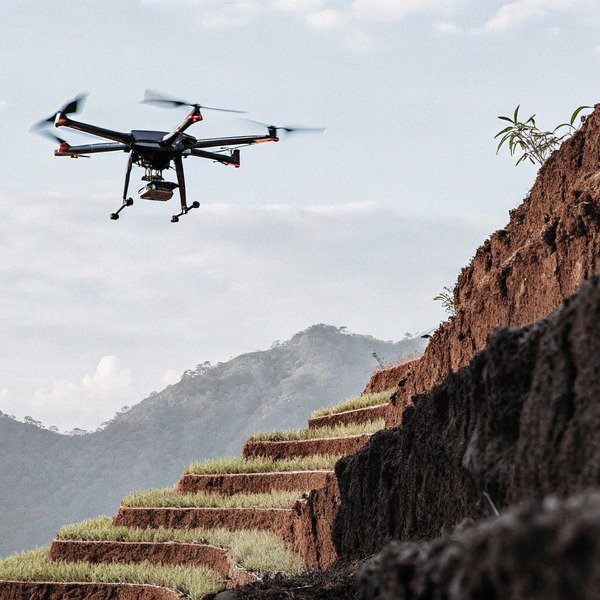
When we collaborate with our US partners on custom flight control systems, the biggest challenge we hear about isn’t the crops themselves—it is the land. Farming on steep inclines and navigating deep valleys creates dangerous blind spots and unpredictable wind patterns that ground standard equipment. Without the right specifications, you risk crashing expensive hardware into a ridge or achieving poor spray results due to inconsistent altitude.
To succeed in this environment, you should look for a drone equipped with real-time terrain-following radar and high-torque propulsion systems optimized for high-altitude lift. Essential features also include omnidirectional obstacle avoidance to navigate complex hazards like trees, a rugged carbon fiber frame for transport durability, and long-range signal transmission to maintain connection in valleys.
Let’s examine the specific technologies that turn these rugged landscapes into manageable assets.
How does terrain-following radar ensure consistent spraying coverage on steep slopes?
During our field tests in the hilly regions of Sichuan, which mirror the topography of many Western US farms, we observed that standard GPS altitude hold is useless on inclines. Western US farms 1 If a drone maintains a fixed sea-level altitude, it will crash into the rising ground or fly too high as the land drops away, leading to chemical drift and wasted money.
Terrain-following radar continuously scans the ground beneath the drone, automatically adjusting flight altitude in real-time to match the changing slope. This technology ensures the spray nozzles remain at a fixed, optimal distance from the crop canopy, preventing chemical drift and guaranteeing uniform application coverage even on the steepest and most irregular gradients.
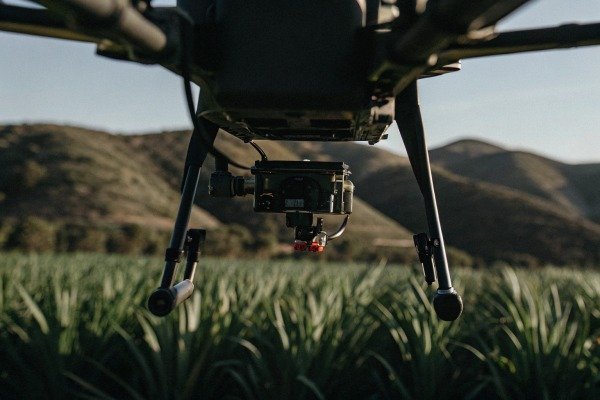
To understand why this feature is non-negotiable for mountain operations, we must look at the difference between relative height and absolute altitude. In flat fields, a barometer is sufficient. However, in the mountains, the ground changes instantly.
The Mechanics of Millimeter-Wave Radar
Our engineering team integrates millimeter-wave radar into our SkyRover series because it provides a rapid feedback loop. millimeter-wave radar 2 Unlike optical sensors or cameras, which can be fooled by shadows in a valley or bright sunlight reflecting off wet leaves, radar uses radio waves. It bounces a signal off the ground and measures the time it takes to return. This data is fed into the flight controller hundreds of times per second.
When the drone approaches a slope, the radar detects the decreasing distance to the ground. The flight controller then commands the motors to increase thrust immediately, pushing the drone up to maintain the pre-set height (e.g., 3 meters above the crop). This reaction must be instantaneous. If there is lag, the drone might clip the top of a terrace or a sudden rock outcrop.
Radar vs. Pre-Loaded Maps (DEM)
Some operators rely solely on 3D maps or Digital Elevation Models (DEM). Digital Elevation Models 3 Digital Elevation Models (DEM) 4 While we support this in our mission planning software, relying only on maps is risky. A map does not know if a new fence was built yesterday or if a landslide changed the terrain profile. Real-time radar is the safety net that reacts to the physical reality of the moment.
Comparison of Altitude Sensors
We have compiled a comparison of common sensor types to help you understand why radar is superior for this specific application.
| Sensor Type | Best Environment | Weakness in Mountains | Reliability Rating |
|---|---|---|---|
| Barometer | Flat plains | Zero awareness of rising terrain; causes crashes. | Low |
| GPS (RTK) | Open fields | Maintains Mean Sea Level (MSL), not height above ground. | Low (for terrain following) |
| LiDAR | Complex structures | Can be affected by heavy dust or thick spray mist. | High |
| Millimeter-Wave Radar | All terrains | Reliable through dust, mist, and varying light conditions. | Very High |
Critical Considerations for Slope Angles
Not all terrain-following systems are equal. When sourcing a drone, you must ask about the maximum climbing angle. Our standard heavy-lift drones are calibrated to handle slopes up to 30 or 45 degrees. If your land is steeper than the drone’s software limit, the drone will stop and hover as a safety precaution.
Furthermore, "smoothing" is a critical software feature. If the terrain is terraced (steps) rather than a smooth slope, the drone needs to react without jerking violently. A jerky motion shakes the liquid tank, causing instability. Good terrain-following software smooths out these steps, creating a fluid flight path that mimics the average slope of the hill. This protects the motors from current spikes and ensures the spray pattern remains even, rather than concentrating chemicals at the bottom of a rise.
What impact does high altitude have on my drone's battery life and payload capacity?
We frequently send replacement propellers to clients operating in the High Rockies because they underestimate the physics of thin air. At high elevations, the air is less dense, meaning the propellers must spin significantly faster air is less dense 5 to generate the same amount of lift, which places immense strain on the power system and creates a dangerous heat buildup.
High altitude reduces air density, requiring propellers to spin at higher RPMs to generate lift, which increases battery consumption and significantly shortens flight time. Consequently, the drone's maximum effective payload capacity decreases, often necessitating a reduced chemical load to ensure safety and stability during steep, energy-intensive climbs.
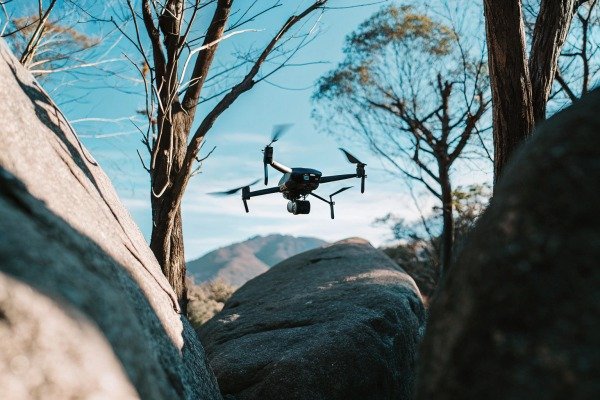
The relationship between altitude and performance is linear and unforgiving. When we test our drones in Tibet, we see dramatic shifts in performance compared to our sea-level tests in eastern China.
The Physics of Thin Air and Lift
An agricultural drone generates lift by pushing air downward. In dense air at sea level, the "grip" is strong. At 6,000 or 8,000 feet, the air is thin. To carry a 40-liter tank, the motors must work 20% to 30% harder. This has two immediate effects:
- Reduced Flight Time: A battery that lasts 15 minutes at sea level might only last 10 minutes in the mountains.
- Motor Overheating: Despite the air being colder, the motors run hotter because they are drawing higher current continuously.
Optimizing Your Setup for Elevation
To combat this, we often recommend "High-Altitude Propellers" to our customers in mountainous regions. These propellers have a more aggressive pitch (angle) and a larger surface area. They bite into the thin air more effectively, allowing the motors to spin at a lower, more efficient RPM. Using standard propellers at high altitude is inefficient and unsafe.
Calculating Payload Reductions
You cannot expect to carry the full rated payload at high elevation. Overloading a drone in thin air leaves it with no "reserve power." If a gust of wind hits the drone, or it needs to climb rapidly to avoid a tree, the motors will already be at 100% capacity and will fail to react, leading to a crash.
Here is a general guideline we use for payload adjustments based on elevation. Note that these are estimates and vary by motor efficiency.
| Elevation (Feet) | Air Density Reduction | Recommended Payload Reduction | Flight Time Impact |
|---|---|---|---|
| Sea Level (0 ft) | 0% | 0% (Full Payload) | 100% (Baseline) |
| 3,000 ft | ~9% | Reduce by 5-10% | ~90% of Baseline |
| 6,000 ft | ~17% | Reduce by 15-20% | ~80% of Baseline |
| 9,000 ft | ~24% | Reduce by 25-30% | ~65-70% of Baseline |
Battery Management in Cold Mountain Air
Mountain environments often mean colder temperatures, especially in the morning. Lithium polymer batteries rely on chemical reactions that slow down in the cold. Lithium polymer batteries 6 Before you take off, the battery temperature needs to be above 15°C (59°F). We design our battery management systems (BMS) to self-heat, but users must be aware of this. If you launch a cold drone in thin air with a heavy load, you might trigger a "voltage sag." This is where the battery voltage drops suddenly under load, tricking the drone into thinking the battery is empty and forcing an emergency landing—potentially into a ravine.
Therefore, for mountain operations, you are not just looking for a drone; you are looking for a system that includes high-pitch propellers and smart batteries capable of handling the dual stress of cold temperatures and high current draw.
Our support team has analyzed flight logs from crashes where pilots thought they were safe because they had a forward-facing camera. In the mountains, threats come from all sides—power lines crossing valleys, unexpected branches, and rock faces behind the drone as it turns. A single-direction sensor is a recipe for disaster in such a chaotic environment.
You need an omnidirectional radar system combined with binocular vision sensors to detect obstacles in 360 degrees. This setup allows the drone to identify and bypass complex hazards like power lines, tree branches, and cliff faces, even in low-light conditions or when flying against the sun where cameras might fail.

Navigation in the mountains is fundamentally different from the plains. In the plains, obstacles are usually well-defined boundaries like fences. In the mountains, the environment is unstructured.
The Necessity of Omnidirectional Sensing
"Omnidirectional" means the drone can see forward, backward, left, right, up, and down. Why is this critical?
- Turning: Agricultural drones often fly automated "sweeping" patterns. When the drone reaches the end of a row and turns, the tail swings around. If there is a tree behind the drone, a forward-facing sensor won't see it.
- Ascending/Descending: As the drone climbs a slope, it might encounter overhanging branches. Upward-facing radar is essential here.
Radar vs. Vision: The Hybrid Approach
We integrate both radar and vision sensors because they cover each other's weaknesses. vision sensors 7
- Vision Sensors (Cameras): These are excellent at identifying shapes and textures. They allow the pilot to see obstacles on the screen. However, they struggle with "wire detection" (thin power lines) and get blinded by direct sunlight or low light at dusk.
- Radar Sensors: These excel at detecting hard objects, regardless of light. They can "see" a power line that is invisible to the camera.
Understanding Blind Spots
Even with advanced sensors, "blind spots" exist. We work hard to minimize these, but the physical placement of landing gear or tanks can block sensors.
Intelligent Path Planning
It is not enough to just detect an obstacle; the drone must know what to do. In our latest firmware, we implemented logic specifically for complex terrain.
- Bypass Strategy: On flat ground, the drone can fly around a tree.
- Hover Strategy: In mountains, flying "around" might mean flying into a cliff. Often, the safest autonomous action in a mountain environment is to stop and hover, alerting the pilot to take manual control.
Sensor Performance Matrix
This table breaks down how different obstacles commonly found in US mountain farms are handled by sensor types.
| Obstacle Type | Vision Sensor Effectiveness | Radar Sensor Effectiveness | Threat Level |
|---|---|---|---|
| Solid Rock Face | High (Good contrast) | High | Low (Easy to detect) |
| Dense Tree Canopy | High | High | Low |
| Leafless Branches | Medium (Hard to see thin twigs) | High | Medium |
| Power Lines | Low (Very hard to see) | High (Millimeter-wave excels here) | Extreme |
| Guy Wires | Very Low | Medium/High | Extreme |
Night Operations
Many US farmers prefer spraying at night when winds are calmer and pollinators (bees) are inactive. pollinators (bees) 8 Vision sensors are useless at night without powerful floodlights. Omnidirectional radar allows the drone to operate safely in total darkness, maintaining its distance from the slope and avoiding trees. For mountain operations, where wind conditions often force night spraying, reliance on radar-based obstacle avoidance is mandatory.
How durable should the drone frame be to withstand strong winds and rugged transport?
We build our frames knowing they will not be landing on paved runways; they will be bouncing in the back of a pickup truck driving up a gravel fire road. If the frame is made of brittle plastic or low-grade metal, the vibrations from transport alone can loosen internal connections before the drone even starts its mission.
The drone frame must be constructed from aviation-grade carbon fiber or reinforced aluminum to resist high-velocity mountain winds and transport vibrations. A high Ingress Protection (IP) rating is also critical to prevent water and dust damage from sudden weather changes common at high elevations.
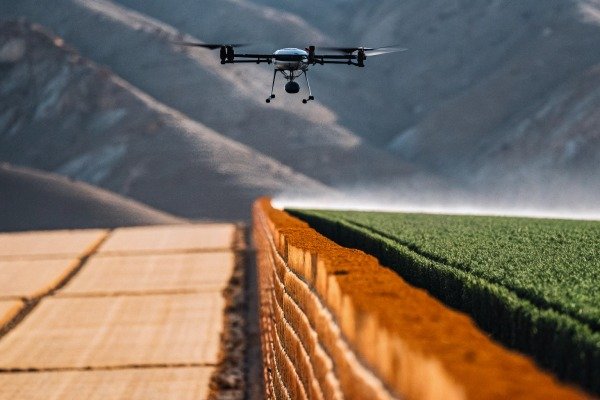
Durability is often overlooked in favor of software features, but in the mountains, hardware integrity is paramount.
Material Science: Carbon Fiber vs. Aluminum
We primarily use carbon fiber for the arms and body of our SkyRover drones. carbon fiber 9 carbon fiber 10 Carbon fiber has a high strength-to-weight ratio.
- Stiffness: In high winds (common in mountains), the frame must not flex. If the arms flex, the flight controller receives confusing data from the Inertial Measurement Unit (IMU), causing instability.
- Vibration Damping: Carbon fiber naturally absorbs high-frequency vibrations from the motors, protecting sensitive electronics.
Aluminum is used for the folding joints. These high-stress points require the ductility of metal to prevent snapping under shock loads, such as a hard landing.
The Importance of Folding Mechanisms
Mountain farms are rarely contiguous. You will likely transport the drone between multiple small plots. This means folding and unfolding the drone arms dozens of times a day. We test our folding clasps for thousands of cycles. A cheap plastic clasp will wear out, leading to "arm play" (wiggling). Even a millimeter of movement in the arm can cause the drone to drift during flight.
IP Ratings and Weatherproofing
Mountain weather is unpredictable. You might take off in sunshine and land in a drizzle.
- IP67 Rating: This is the standard we aim for. The "6" means it is dust-tight (critical for dry, dusty harvest seasons), and the "7" means it can handle temporary immersion in water.
- Sealed Electronics: The flight controller, ESCs (Electronic Speed Controllers), and radar modules must be potted (filled with resin) or sealed in waterproof housings.
- Corrosion Resistance: If you are spraying fertilizers, they can be corrosive. We use anti-corrosion coatings on all exposed metal parts.
Field Repairability
Finally, accidents happen. In a remote mountain area, you cannot wait two weeks for a repair. We design our drones with a modular architecture.
- Quick-Swap Arms: If a motor fails or an arm snaps, the user should be able to unbolt the entire arm unit and replace it in the field.
- Accessible Tanks: Pumps and flow meters should be easy to reach for cleaning.
Durability Checklist for Buyers
When evaluating a drone model, inspect these physical aspects:
| Component | What to Look For | Why It Matters |
|---|---|---|
| Arm Joints | Metal latches, no wiggle when locked. | Prevents in-flight vibration and failure. |
| Propellers | Carbon fiber composite (not pure plastic). | Resists warping in strong winds. |
| Landing Gear | Shock-absorbing feet/pads. | Protects payload sensors during rough landings. |
| Wire Routing | Internal routing inside tubes. | Prevents snagging on branches during low flight. |
By prioritizing these physical traits, you ensure your investment survives the rugged reality of mountain agriculture.
Conclusion
Choosing an agricultural drone for mountainous terrain requires looking beyond basic specifications. You need a machine that actively manages altitude with terrain-following radar, compensates for thin air with high-torque propulsion, sees dangers with omnidirectional sensors, and survives the environment with a rugged carbon fiber build. At SkyRover, we believe that when the hardware is tough enough to handle the mountains, the farmer can finally focus on the harvest rather than the flight.
Footnotes
1. Official statistics and data regarding agricultural operations in the Western United States. ↩︎
2. Technical specifications for industry-leading radar systems used in agricultural spraying drones. ↩︎
3. Explains the concept of 3D terrain mapping used in mission planning. ↩︎
4. USGS is the official US government source for elevation data standards and products. ↩︎
5. National Weather Service explains density altitude and its effects on performance in high terrain. ↩︎
6. Technical background on the chemistry and performance of lithium-based power cells. ↩︎
7. Research on vision-based systems for obstacle detection and autonomous navigation. ↩︎
8. Provides official guidance on protecting pollinators during agricultural spraying operations. ↩︎
9. Department of Energy details the high strength-to-weight ratio properties of carbon fiber composites. ↩︎
10. Material specifications for high-strength carbon fiber used in aerospace and drone frames. ↩︎

 English
  Español de México
  Deutsch
  Français
  Русский
  العربية
