
Last month, our engineering team watched a fire department deploy one of our drones during a wildfire training exercise Public Aircraft Operation COAs 1. The pilot hesitated. He wasn't sure if his certifications covered the mission. This confusion costs time. In emergencies, time costs lives.
When purchasing public safety firefighting drones, you must verify FAA Part 107 Remote Pilot Certification for operators, consider Public Aircraft Operation COAs for mission flexibility, ensure Remote ID compliance, and confirm the drone meets registration requirements. No formal airworthiness certification exists for small UAS under 55 pounds.
This guide breaks down every FAA standard you need to know Small unmanned aircraft systems 2. We'll cover pilot certifications, operational paths, hardware requirements, and long-term compliance. Let's start with the basics. FAA Part 107 Remote Pilot Certification 3
Which Specific FAA Airworthiness Certifications Should I Verify Before Purchasing a Drone for My Fire Department?
When we ship drones to U.S. fire departments, procurement managers often ask about airworthiness certificates formal FAA airworthiness certification 4. The answer surprises many buyers. Small drones don't need them.
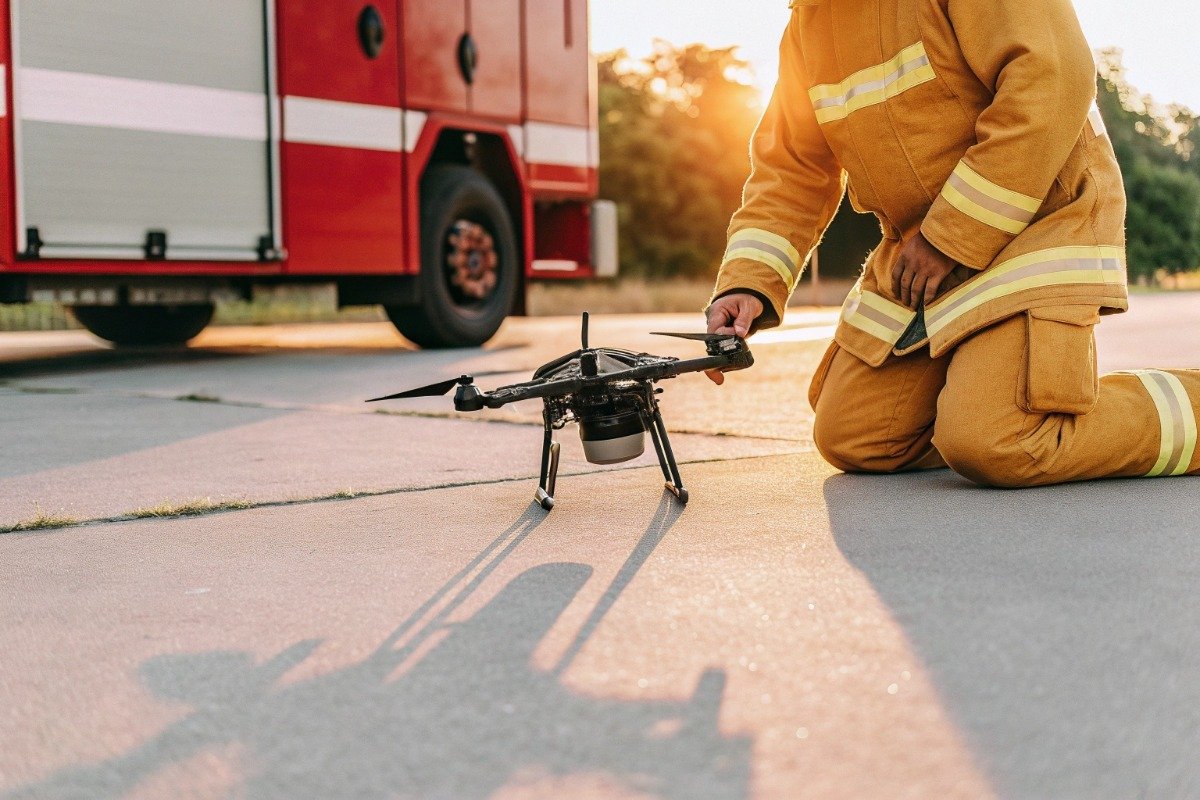
Small unmanned aircraft systems under 55 pounds do not require formal FAA airworthiness certification. Instead, operators must conduct preflight safety inspections before each flight. The responsibility for ensuring the drone is safe to fly falls entirely on the pilot and the department.
Understanding the Airworthiness Gap
Unlike manned aircraft, small drones operate under a different regulatory framework Air traffic management integration 5. The FAA does not issue type certificates or airworthiness certificates for UAS under 55 pounds. This means you won't find an FAA stamp of approval on any firefighting drone in this weight class.
What does this mean for your department? You carry the burden. Your pilots must inspect every drone before every flight. They check the airframe, propellers, batteries, and sensors. They verify firmware updates. They confirm GPS lock. This isn't optional. It's required under Part 107.
What to Look for Instead of Airworthiness Certificates
Since formal certification doesn't exist, smart procurement managers look for other indicators of quality and compliance.
| Verification Item | What It Means | Why It Matters |
|---|---|---|
| FAA Registration | Drone is registered with unique ID | Required for all drones over 0.55 lbs |
| NDAA Compliance 6 | No components from banned manufacturers | Required for government purchases |
| Blue UAS Approved | Vetted by DOD for security | Preferred for public safety agencies |
| CE/FCC Marking | Meets electromagnetic standards | Ensures radio compliance |
| IP Rating | Dust and water resistance level | Critical for fire environments |
Preflight Inspection Requirements
Our quality control team follows the same inspection protocols we recommend to customers. Before any test flight, we check:
- Structural integrity – No cracks in the airframe or arms
- Propeller condition – No chips, bends, or wear marks
- Battery health – Proper voltage and no swelling
- Sensor calibration – Compass and IMU functioning correctly
- Firmware status – Latest updates installed
- Controller link – Strong signal between drone and remote
These checks take five minutes. They prevent crashes. They protect your investment. They keep your team safe.
The Operator's Legal Responsibility
When something goes wrong, the FAA looks at the operator. Did you inspect the drone? Did you follow procedures? Did you maintain flight logs? Documentation matters. Keep records of every preflight check. Store maintenance logs. Track battery cycles.
Some departments create standardized checklists. Others use digital logging apps. The method doesn't matter. Consistency does.
How Do FAA Part 107 Regulations and Public COAs Impact My Choice of Firefighting Drone Hardware?
In our experience exporting to U.S. fire departments, we've seen agencies choose different regulatory paths. Each path affects which drones work best for your missions.
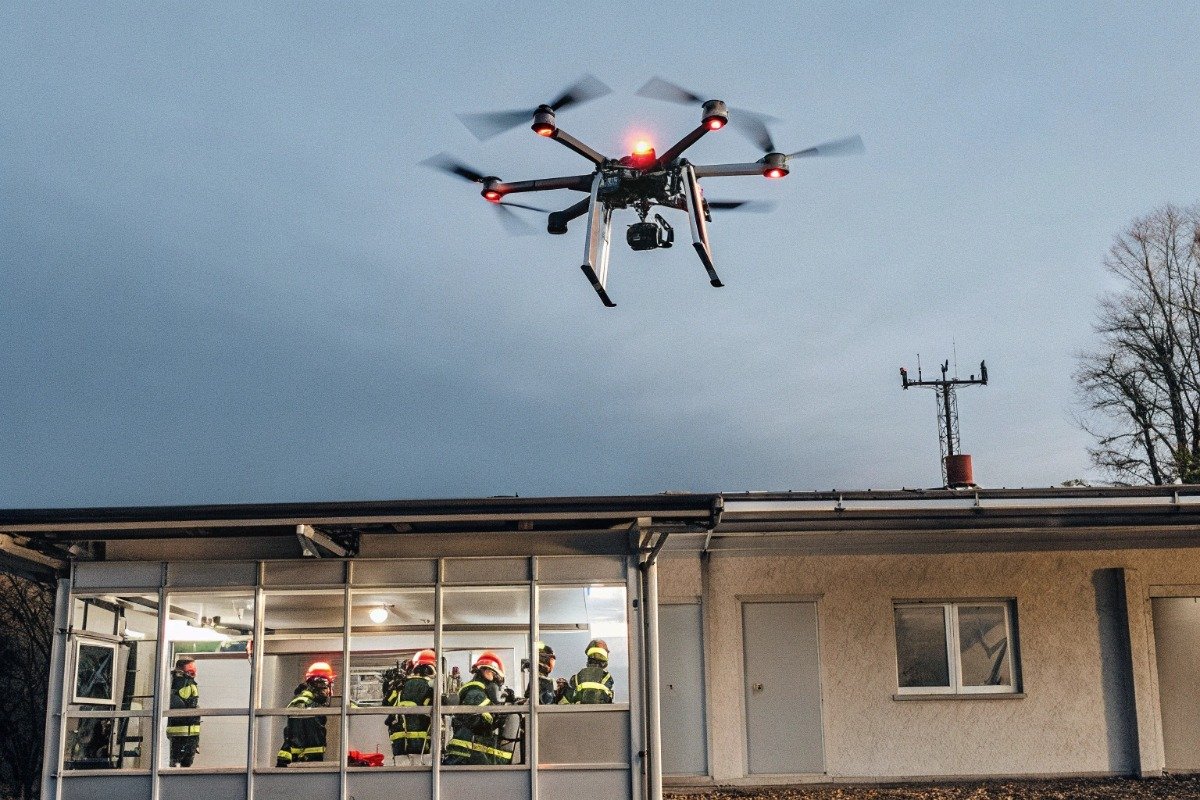
Part 107 regulations limit flights to 400 feet, daylight hours, and visual line of sight. Public COAs offer waivers for night operations, BVLOS, and controlled airspace access. Your regulatory path determines whether you need basic drones or advanced systems with extended range and autonomous features.
Part 107: The Standard Path
Most fire departments start here. Part 107 requires pilots to pass a 60-question knowledge test. They must be at least 16 years old. They need English proficiency. The certificate is valid for 24 months before recurrency training is required.
Under Part 107, your operations face limits:
- Maximum altitude: 400 feet AGL
- Speed limit: 100 mph
- Visibility minimum: 3 statute miles
- Daylight operations only (unless waived)
- Visual line of sight required
- No flights over non-participating people
These rules work for many scenarios. Structure fires. Accident scenes. Training exercises. But wildfires? Search and rescue in smoke? You'll hit walls.
Public Aircraft Operations: The Flexible Path
Fire departments qualify as governmental entities under Title 49 USC 40102. This opens the door to Public Aircraft Operations. With a Certificate of Waiver or Authorization 7 (COA), you gain flexibility.
| Feature | Part 107 | Public COA |
|---|---|---|
| Night Operations | Requires waiver | Can be included |
| BVLOS | Requires waiver | Can be authorized |
| Controlled Airspace | Requires authorization | Streamlined access |
| Altitude Limits | 400 feet standard | Mission-specific |
| Pilot Requirements | Part 107 certificate | Agency-determined |
| Application Process | Individual waivers | Blanket authorization |
Hardware Implications
Your regulatory path shapes your hardware needs. Under strict Part 107, a basic drone with 20-minute flight time and 2-mile range might suffice. You're staying close. You're staying visible.
With a COA authorizing BVLOS, you need more. Extended flight time becomes critical. Our 40-minute endurance models let pilots cover more ground. Seven-mile range matters when you're monitoring a wildfire perimeter. Obstacle avoidance sensors become essential when you can't see the drone directly.
The Hybrid Approach
Many departments use both paths. Pilots get Part 107 certified first. This allows immediate operations under standard rules. Meanwhile, the department applies for a COA. When approved, the same pilots can conduct advanced missions.
This approach requires drones that work in both scenarios. Look for systems that meet Part 107 weight limits but offer features you'll need later. Thermal cameras. Extended batteries. Autonomous flight modes. Buy once. Grow into the capabilities.
Waiver Considerations
Even under Part 107, waivers expand your options. The FAA granted its first BVLOS waiver for firefighting in 2021. More followed. But waivers take time. They require detailed safety plans. Risk mitigation documentation. Operational procedures.
When we work with departments on custom configurations, we consider their waiver plans. A drone with redundant GPS and return-to-home features strengthens waiver applications. Geofencing capabilities show the FAA you've thought about airspace safety.
Does the Firefighting Drone I Am Considering Meet the Latest FAA Remote ID and Safety Standards for Emergency Operations?
When we calibrate our flight controllers, Remote ID compliance 8 is now a standard checkpoint. This requirement changed everything for public safety drone operations.
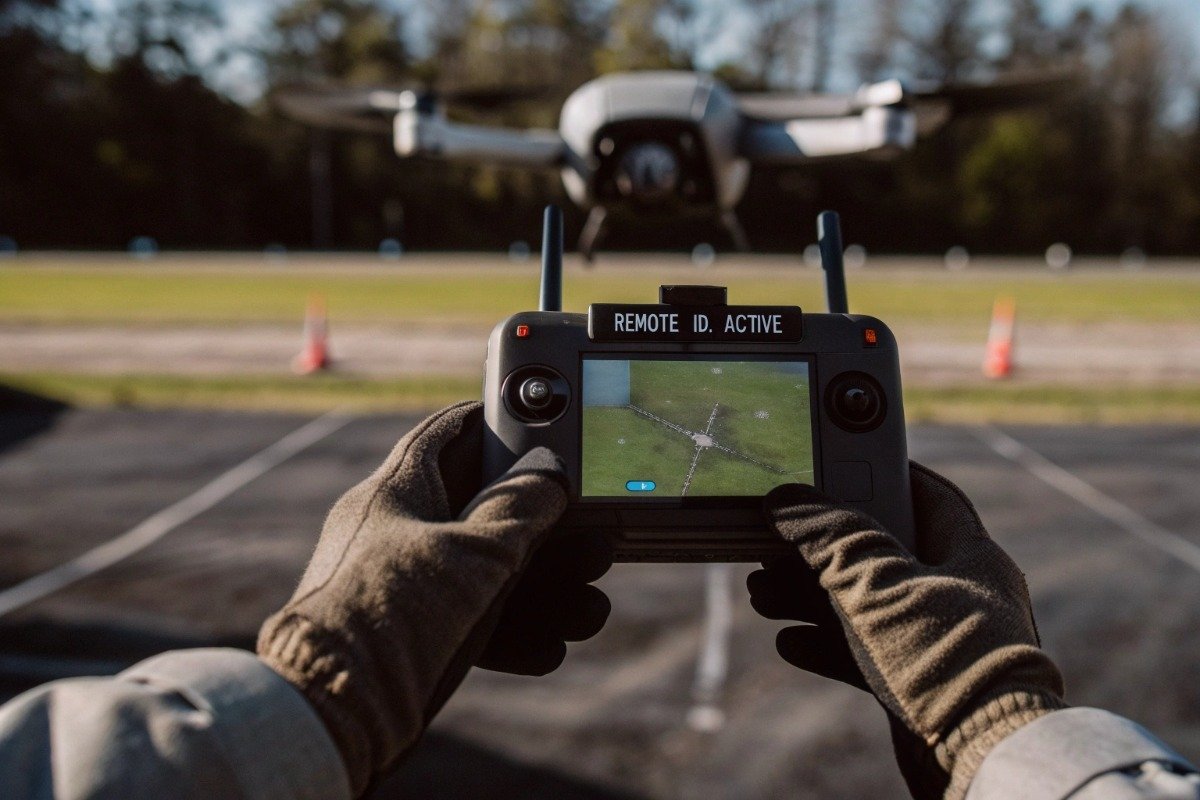
All drones operating in U.S. airspace must broadcast Remote ID information, including the drone's identity, location, altitude, and control station position. Firefighting drones must comply through built-in modules, broadcast modules, or operations within FAA-recognized identification areas. Non-compliant drones cannot legally fly.
What Remote ID Requires
Remote ID acts like a digital license plate. Your drone broadcasts identification data that authorities can receive. This includes:
- Unique identifier (serial number or session ID)
- Drone latitude, longitude, and altitude
- Drone velocity
- Control station latitude and longitude
- Time mark
- Emergency status indicator
The broadcast happens continuously during flight. Anyone with a Remote ID receiver can see your drone's information. This includes law enforcement, other pilots, and the FAA.
Compliance Methods
Three paths exist for Remote ID compliance:
| Method | Description | Best For |
|---|---|---|
| Standard Remote ID | Built into drone at manufacture | New drone purchases |
| Broadcast Module | Add-on device attached to drone | Existing fleet upgrades |
| FRIA Operations | Flying within FAA-recognized areas | Fixed training locations |
For fire departments, Standard Remote ID makes the most sense. New drones from reputable manufacturers include it. When we design systems for public safety clients, Remote ID integration is automatic. No extra modules. No weight penalties. No additional failure points.
Safety Standards Beyond Remote ID
Remote ID is just one piece. Emergency operations demand more. The National Institute of Standards and Technology 9 (NIST) developed standardized test methods specifically for public safety drones. These USTMs evaluate:
Airframe durability – Can the drone handle heat, smoke, and debris? NIST tests push drones through environmental stress scenarios.
Sensor accuracy – Does the thermal camera actually detect heat signatures at rated distances? NIST protocols verify manufacturer claims.
Pilot proficiency – Can operators navigate confined spaces and obstacles? The Basic Proficiency Evaluation for Remote Pilots (BPERP) tests real skills.
Colorado's Department of Public Safety adopted these standards. They've certified 42 operators across 16 agencies using NIST protocols. The tests use inexpensive hardware-store materials. Any department can replicate them.
Emergency Operation Considerations
Standard Part 107 rules can be suspended during emergencies. But this doesn't mean anything goes. The FAA expects:
- Coordination with incident command
- Awareness of manned aircraft in the area
- Communication with air traffic control when applicable
- Documentation of emergency circumstances
Your drone should support these requirements. Look for systems with:
- ADS-B receivers to detect manned aircraft
- Geofencing that can be overridden with proper authorization
- Flight logging that captures emergency operation data
- Communication integration with incident management systems
Interference Penalties
Unauthorized drones near wildfires create serious problems. When civilian drones enter fire zones, manned aircraft must land. Firefighting stops. The FAA takes this seriously.
Penalties include fines up to $75,000 and potential imprisonment. Your department's drones won't face these issues if properly coordinated. But you need systems that prove your authorization. Remote ID helps. So do flight logs showing coordination with incident command.
What Are the Long-Term FAA Compliance Requirements I Must Plan for When Integrating New Drones into My Public Safety Fleet?
Our engineering support team fields calls from departments years after purchase. The questions are always the same. What changed? What do we need to update? Planning ahead prevents these surprises.
Long-term FAA compliance requires pilot recurrency training every 24 months, ongoing drone registration renewals every three years, adaptation to evolving Remote ID standards, potential future airworthiness requirements for specialized operations, and continuous alignment with air traffic management integration as the National Airspace System evolves.

Pilot Certification Maintenance
Part 107 certificates don't last forever. Every 24 months, pilots must complete recurrency training. This involves:
- Completing an online recurrent knowledge course
- Passing the recurrent knowledge test
- Updating records with the FAA
Plan for this. Budget training time. Track expiration dates. A pilot with an expired certificate cannot legally fly. During an emergency, you can't afford to discover your best operator is non-current.
Registration Renewals
Drone registrations expire after three years. The renewal process is simple but easy to forget. Set calendar reminders. Assign someone to track fleet registration status. An unregistered drone is an illegal drone.
| Compliance Item | Frequency | Responsible Party | Consequence of Lapse |
|---|---|---|---|
| Pilot Recurrency | 24 months | Individual pilot | Cannot operate |
| Drone Registration | 3 years | Department | Illegal to fly |
| COA Renewal | Varies | Department | Loss of waivers |
| Firmware Updates | Ongoing | Maintenance team | Potential safety issues |
| Remote ID Verification | Annual | Maintenance team | Non-compliance |
Evolving Standards
The FAA continues developing drone regulations. Future changes may include:
Specialized certification for hazardous environments – As firefighting drones become more common, the FAA may establish specific standards for heat resistance, smoke operation, and payload requirements.
Air traffic management integration – Complex operations will require coordination with broader ATM systems. Your drones may need software updates to communicate with new infrastructure.
Data security requirements – Government agencies face increasing scrutiny over drone data. Future rules may mandate specific cybersecurity standards or domestic manufacturing requirements.
Supply Chain Considerations
NDAA compliance already restricts government purchases from certain manufacturers. This trend will continue. When building your fleet, consider:
- Manufacturer country of origin
- Component sourcing transparency
- Blue UAS approval status
- Long-term manufacturer viability
Buying from established manufacturers with clear supply chains protects your investment. When regulations tighten, compliant drones remain operational. Non-compliant systems become expensive paperweights.
Maintenance and Documentation
Long-term compliance requires documentation. Keep records of:
- Every flight (date, location, duration, pilot, purpose)
- All maintenance performed
- Battery cycle counts and health status
- Firmware version history
- Incident reports
- Training completions
These records protect your department. They demonstrate due diligence. They support insurance claims. They satisfy auditors. Digital systems make this easier. Many modern drones log flights automatically. Integrate this data into your department's records management.
Budget Planning
Compliance costs money. Plan for:
- Annual training expenses
- Registration fees
- Software subscription costs
- Replacement batteries (typically every 200-300 cycles)
- Sensor recalibration
- Firmware update testing
- Potential hardware upgrades for new requirements
Departments that budget proactively avoid surprises. Those that don't find themselves grounded when funds run out.
Conclusion
FAA certification for firefighting drones focuses on operators, not aircraft. Verify pilot credentials. Choose your regulatory path wisely. Ensure Remote ID compliance. Plan for long-term requirements. Your department's effectiveness depends on getting these details right from the start.
Footnotes
1. Official FAA information on Certificates of Waiver or Authorization for public aircraft. ↩︎
2. Provides the regulatory definition of small unmanned aircraft systems. ↩︎
3. Official FAA guide for obtaining the Remote Pilot Certificate. ↩︎
4. Explains FAA policy on airworthiness certification for different UAS types. ↩︎
5. Official FAA information on Unmanned Aircraft System Traffic Management (UTM) and integration. ↩︎
6. Comprehensive industry guide explaining NDAA compliance for drones and its implications. ↩︎
7. Official FAA explanation of Certificates of Waiver or Authorization for UAS. ↩︎
8. Official FAA resource detailing Remote ID requirements and compliance methods. ↩︎
9. Official NIST program page for Uncrewed Aircraft Systems research. ↩︎

 English
  Español de México
  Deutsch
  Français
  Русский
  العربية
