
Every week, our export team handles urgent calls from distributors stuck at EU customs Declaration of Conformity (DoC) 1. Their agricultural drone shipments get held because suppliers provided incomplete or invalid RED certifications 2. This costly mistake delays deliveries and damages business relationships.
You should request a valid Declaration of Conformity (DoC) for RED 2014/53/EU, test reports from an EU-designated Notified Body, technical documentation covering all radio frequencies, and CE marking evidence. These documents prove your agricultural drones meet EU electrical safety, health, and electromagnetic compatibility requirements.
Let us walk through exactly what RED certifications to request and how to verify them before placing your order.
How do I verify that my supplier's RED certification covers all the radio frequencies used by my agricultural drones?
Our engineering team has seen too many cases where suppliers provide RED certificates that only cover GPS modules EU-designated Notified Body 3. Then customs discovers the drone also has 4G telemetry and uncertified video transmission systems. This oversight creates serious problems.
To verify complete frequency coverage, request the technical file listing all radio-equipped components, their operating frequencies, and individual test reports. Cross-reference these against the Declaration of Conformity. Each wireless module—GPS, cellular, RF control, and video transmission—must have documented RED compliance for its specific frequency band.

Understanding Multi-Band Requirements
Agricultural drones are complex wireless devices. A typical spraying drone from our production line contains five to seven radio-equipped components EU Regulation 2019/945 4. Each component operates on different frequency bands and requires separate RED testing.
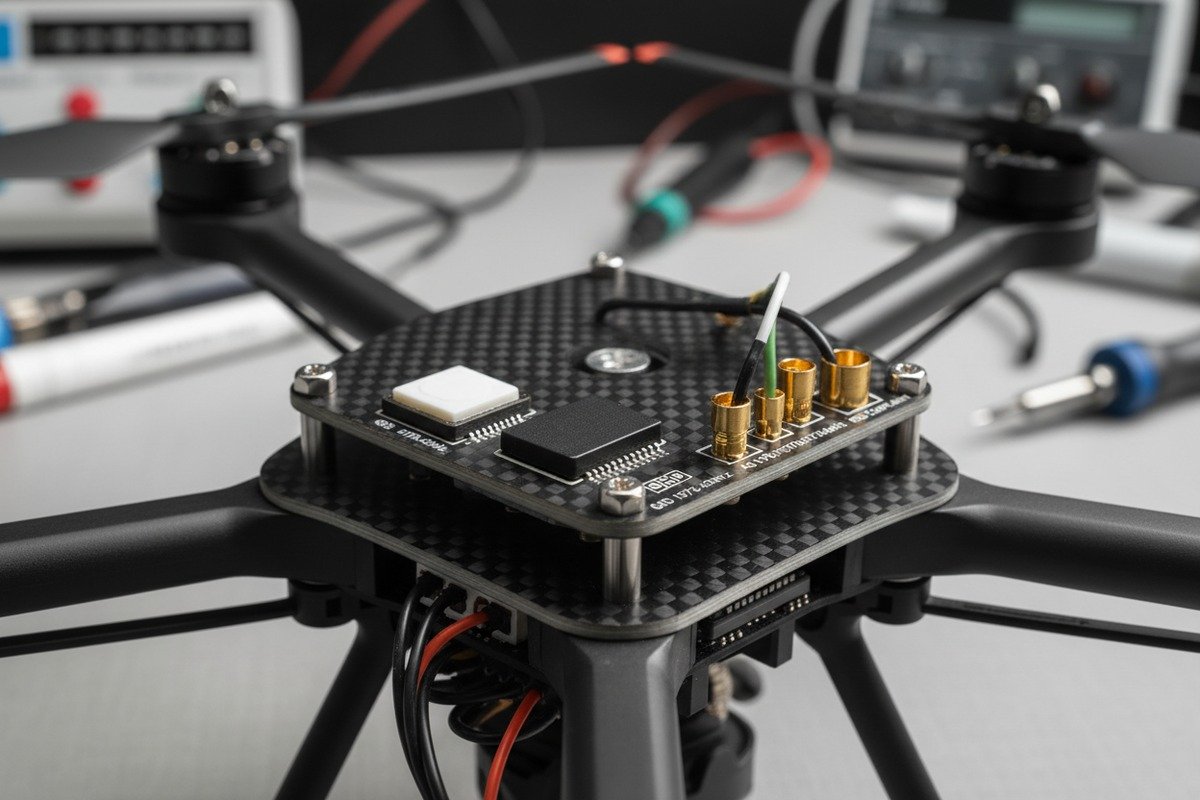
The Radio Equipment Directive 5 covers all equipment that intentionally emits or receives radio waves below 3 THz. For agricultural drones, this includes positioning systems, communication modules, control links, and data transmission equipment Official Journal of the EU 6.
Key Components Requiring Individual Verification
| Component | Typical Frequency Range | Common Issues |
|---|---|---|
| GPS/GNSS Module | 1575.42 MHz (L1), 1227.60 MHz (L2) | Often covered, but dual-band systems need separate verification |
| 4G/5G Cellular | 700-2600 MHz | May require country-specific band certification |
| RF Control Link | 2.4 GHz / 5.8 GHz | Power output limits vary by member state |
| Video Transmission | 5.8 GHz | Often overlooked in certification packages |
| Telemetry System | 433 MHz / 868 MHz / 915 MHz | 915 MHz is NOT legal in EU—verify 868 MHz compliance |
Step-by-Step Verification Process
First, ask your supplier for the complete Bill of Materials listing all radio components. Second, request individual test reports for each component. Third, verify the Notified Body number on each report against the EU NANDO database. Fourth, check that frequency ranges in test reports match the actual components installed.
When we prepare export documentation at our facility, we provide a consolidated frequency compliance matrix. This document maps each wireless component to its corresponding test report and DoC reference. Request this type of summary from your supplier.
National Frequency Variations
EU member states have minor variations in allowed frequencies and power levels. Germany, France, and Spain may permit different maximum transmission power for the same frequency band. Your supplier should confirm which specific markets their certification covers.
What specific technical documentation should I request to ensure my drone shipment clears EU customs smoothly?
We have shipped over three thousand industrial drones to European distributors. The shipments that clear customs fastest all share one thing in common—complete and properly organized technical documentation prepared before shipping.
Request these essential documents: Declaration of Conformity (DoC) referencing RED 2014/53/EU, Notified Body test reports with NB identification number, technical construction file, user manual with RF exposure information, and CE marking evidence. For agricultural drones, also request EU 2019/945 compliance documentation and Class Identification Label certification.

The Complete Documentation Package
Customs authorities can request to see your technical file at any time. Having incomplete documentation does not just delay shipments—it can result in product seizure and destruction. Our export compliance team has developed a standardized documentation package that satisfies even the strictest customs inspections.
Essential Document Checklist
| Document | Purpose | Who Provides It |
|---|---|---|
| Declaration of Conformity | Legal statement of RED compliance | Manufacturer or authorized representative |
| Notified Body Test Reports | Proof of independent testing | Accredited testing laboratory |
| Technical Construction File | Design and manufacturing details | Manufacturer |
| User Instructions | Safe operation and RF exposure info | Manufacturer |
| CE Marking Evidence | Photos showing proper CE label | Manufacturer |
| Class Identification Label | EU 2019/945 drone classification | Manufacturer |
| Frequency Band Documentation | List of all RF frequencies used | Manufacturer with test lab verification |
Verifying Notified Body Credentials
Not all test laboratories can issue valid RED certifications. Only EU-designated Notified Bodies have this authority. Each Notified Body receives a unique identification number from the European Commission.
When we work with testing laboratories, we use only those listed in the NANDO database. You can verify any Notified Body number at the European Commission's official NANDO website. If your supplier's test report shows a Notified Body number that does not appear in NANDO, reject that documentation immediately.
Technical File Contents
The technical construction file should contain general product description, design drawings and manufacturing specifications, list of harmonized standards 7 applied, risk assessment documentation, and quality control procedures. This file does not need to ship with every drone, but your supplier must provide it upon customs request within 24-48 hours.
Pre-Shipment Documentation Review
Before any shipment leaves our warehouse, our quality team conducts a final documentation review. We verify that all certificates match the actual product serial numbers, that Notified Body numbers are valid, and that frequency documentation aligns with installed components. Ask your supplier about their pre-shipment verification process.
Can my OEM manufacturer provide a valid Declaration of Conformity that includes my own brand name?
Many of our distribution partners want to build their own brand identity in their local markets. They ask us whether they can put their company name on the Declaration of Conformity for drones we manufacture. The answer involves understanding legal responsibility.
Yes, your OEM manufacturer can issue a Declaration of Conformity with your brand name, but you become the legal "manufacturer" under EU law. This means you assume full legal responsibility for RED compliance. Alternatively, you can be listed as the "importer" while the actual manufacturer remains legally responsible. Both arrangements require clear written agreements specifying compliance responsibilities.
Understanding Legal Roles Under RED
The Radio Equipment Directive defines three key roles: manufacturer, authorized representative, and importer. Each role carries different legal obligations. Your position on the Declaration of Conformity determines your liability exposure.
Branding Options and Legal Implications
| Arrangement | Your Role | Legal Responsibility | DoC Name |
|---|---|---|---|
| Standard OEM | Importer | Limited to import duties | Manufacturer's name (your brand as product name) |
| White Label | Manufacturer | Full RED compliance responsibility | Your company name |
| Private Label | Importer with branding rights | Shared responsibility per contract | Manufacturer's name with your brand logo |
When You Become the "Manufacturer"
Under EU law, if you place your company name on the product as the manufacturer, you assume all manufacturer obligations. This includes maintaining technical files for ten years, responding to market surveillance requests, and taking corrective action if compliance issues arise.
At our facility, we support both arrangements. Some partners prefer to remain importers while using our manufacturer credentials. Others want full branding control and accept manufacturer status. We provide different documentation packages for each scenario.
Contract Requirements for OEM Branding
Before agreeing to any OEM arrangement, ensure your contract specifies who maintains the technical file, who responds to regulatory inquiries, who handles product recalls if needed, and how liability is allocated. Our legal team has developed template agreements that clearly define these responsibilities.
Authorized Representative Option
If you want your brand on the DoC but prefer not to assume full manufacturer liability, consider appointing an Authorized Representative in the EU. This entity can hold the technical file and respond to authorities on behalf of the manufacturer. This arrangement adds cost but reduces your direct legal exposure.
Practical Recommendations
For most importers and distributors, we recommend keeping the manufacturer's name on the DoC while adding your brand as the product trade name. This preserves your branding while limiting liability. You can still use your logo, packaging, and marketing materials. The DoC simply shows the actual manufacturer's name as required by law.
How do I ensure my agricultural drone supplier is following the latest RED safety and electromagnetic compatibility standards?
Standards evolve constantly. When we upgraded our production line last year, we discovered that three harmonized standards we previously used had been updated. Suppliers who ignore these updates put their customers at legal risk.
Request evidence that your supplier follows current harmonized standards listed in the Official Journal of the EU, conducts periodic compliance reviews, uses recently calibrated test equipment, and has test reports dated within the past two years. Also verify compliance with the January 1, 2026 deadline for EU Regulation 2019/945 drone technical requirements.

Key Harmonized Standards for Agricultural Drones
The EU publishes official lists of harmonized standards that demonstrate RED compliance. Using these standards creates a "presumption of conformity." Your supplier should reference specific standard numbers in their documentation.
Critical Standards to Verify
| Standard | Coverage Area | Current Version |
|---|---|---|
| EN 301 489-1 | EMC general requirements | Check EU Official Journal for latest |
| EN 301 489-17 | EMC for broadband data transmission | Specific to 2.4 GHz / 5 GHz equipment |
| EN 300 328 | 2.4 GHz wideband transmission | Covers WiFi and common control links |
| EN 301 893 | 5 GHz RLAN equipment | Video transmission systems |
| EN 62311 | Human exposure to electromagnetic fields | RF safety assessment |
| EN 60950-1 / EN 62368-1 | Electrical safety | Transitioning to EN 62368-1 |
The 2026 Compliance Deadline
Regulation EU 2019/945 introduces additional technical requirements for drones beyond RED. Starting January 1, 2026, all drones introduced to the EU market must comply with these requirements. This includes Class Identification Labels and new safety features.
Our engineering team has been preparing for this deadline for over a year. We have already updated product designs to meet 2019/945 requirements. Ask your supplier whether their current products comply with both RED and the upcoming 2019/945 technical standards.
Continuous Compliance Monitoring
Good suppliers do not just certify once and forget. At our facility, we maintain a compliance monitoring system that tracks standard updates, certificate expiration dates, and regulatory changes. We notify our distribution partners when re-certification becomes necessary.
Questions to Ask Your Supplier
Ask when their test reports were issued. Reports older than three years may reference outdated standards. Ask which specific harmonized standards they applied. Ask whether they have a regulatory monitoring process. Ask about their 2019/945 compliance status.
EMC Testing Specifics
Electromagnetic compatibility testing 8 ensures your drone does not interfere with other equipment and can withstand interference from external sources. Agricultural environments often have high-power equipment nearby. Proper EMC testing confirms your drone operates reliably in these conditions.
Our test protocols include both emissions testing and immunity testing. Emissions testing confirms the drone does not create harmful interference. Immunity testing confirms the drone continues operating correctly when exposed to external electromagnetic fields. Request both test types from your supplier.
Cybersecurity Requirements
Recent RED updates include cybersecurity requirements for connected devices. Agricultural drones with internet connectivity must implement basic security measures. These requirements take effect in phases, with some already mandatory and others coming soon. Your supplier should demonstrate awareness of these requirements and plans for compliance.
Conclusion
Requesting proper RED certifications protects your business from customs delays, legal liability, and customer complaints. Verify frequency coverage, demand complete documentation, understand OEM branding implications, and confirm current standard compliance. These steps ensure your agricultural drone imports succeed in the EU market.
Footnotes
1. Provides detailed information and requirements for the EU Declaration of Conformity. ↩︎
2. Explains the purpose and scope of RED certifications for products in the EU. ↩︎
3. Official European Commission database for finding and verifying Notified Bodies. ↩︎
4. Official EASA page for the regulation concerning unmanned aircraft systems. ↩︎
5. Direct link to the official legal text of the Radio Equipment Directive. ↩︎
6. Official portal for accessing the Official Journal of the European Union. ↩︎
7. Replaced HTTP 404 link with an authoritative page from the European Commission (.europa.eu) detailing harmonized standards, including a section for Radio Equipment Directive (RED). ↩︎
8. Explains the importance and process of electromagnetic compatibility testing for RED compliance. ↩︎

 English
  Español de México
  Deutsch
  Français
  Русский
  العربية
