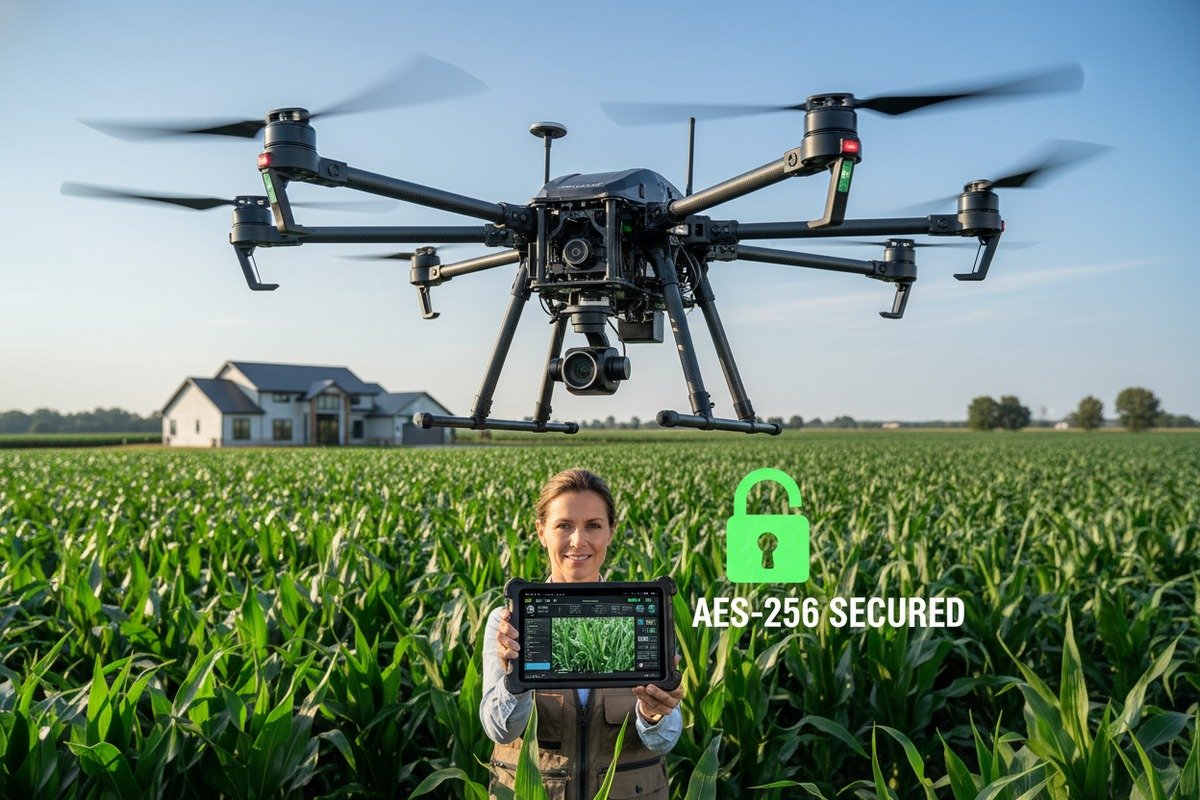
Every week, our engineering team receives calls from farm operators worried about their flight data being intercepted symmetric encryption algorithm 1. This concern is valid and growing rapidly.
Agricultural drones protect customer data through multiple encryption layers including AES-256 protocols, secure authentication mechanisms, encrypted data storage, and protected real-time transmission channels. These features work together to prevent unauthorized access, data interception, and cyberattacks targeting sensitive farm mapping and operational information.
Understanding these security features helps you make informed purchasing decisions. Let me walk you through each critical protection layer.
When we design our flight control systems, data security ranks among our top engineering priorities. Farmers share proprietary techniques and sensitive land data that competitors would love to access.
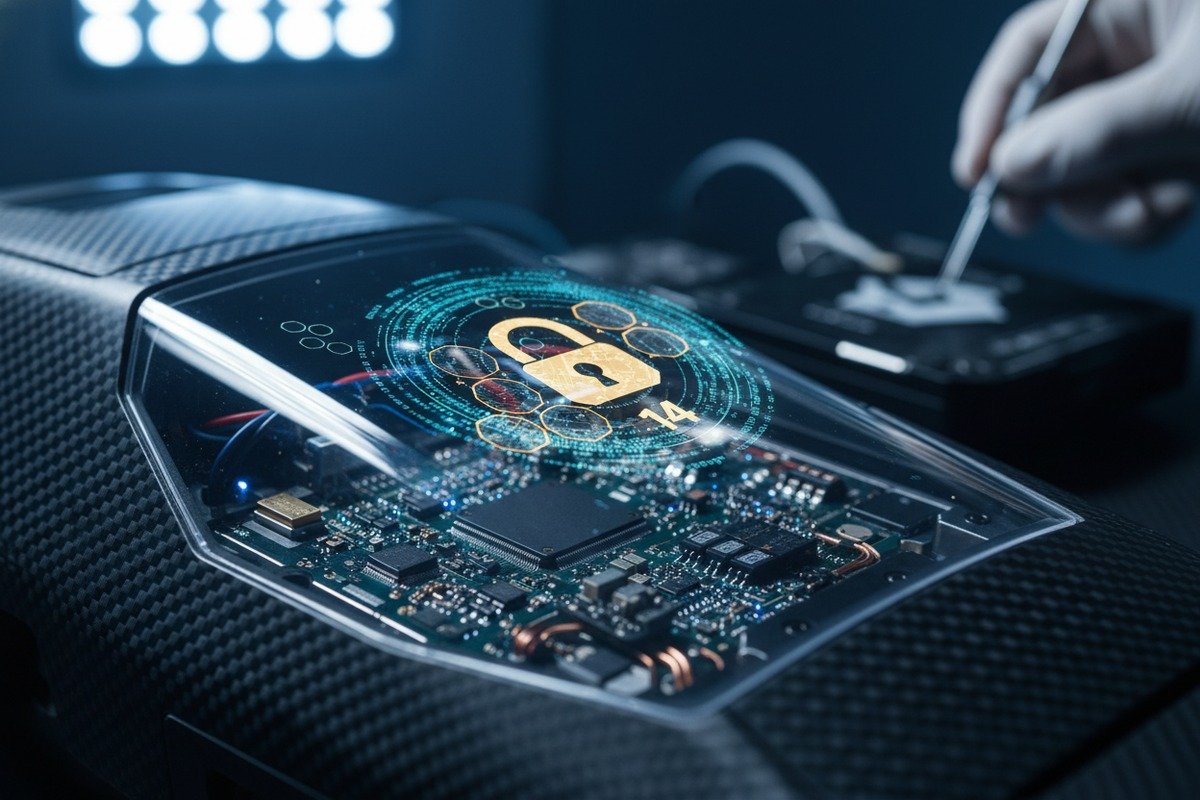
AES-256 encryption secures agricultural flight data by applying 14 rounds of cryptographic transformation to all transmitted information. This military-grade standard scrambles data into unreadable code that only authorized devices with matching decryption keys can decode, making interception attempts practically useless.
Understanding AES-256 Encryption Strength
AES-256 stands for Advanced Encryption Standard 2 with a 256-bit key length. This symmetric encryption algorithm uses identical keys for both encrypting and decrypting data. The "256" refers to the key size, which determines how many possible combinations an attacker would need to try.
To put this in perspective, breaking AES-256 through brute force 3 would require more computing power than currently exists on Earth. Even supercomputers would need billions of years to crack a single key. This is why governments and financial institutions trust this standard.
Our hexacopter drones implement AES-256 at multiple points. The carbon-fiber frame houses processors that encrypt data before it leaves the aircraft. Ground control stations decrypt this information using securely stored keys.
How Data Flows Through Encrypted Channels
| Stage | Encryption Action | Protection Level |
|---|---|---|
| Data Collection | Sensors gather crop health information | Unencrypted (internal) |
| Onboard Processing | Flight controller applies AES-256 | Fully encrypted |
| Transmission | Radio link sends encrypted packets | Protected in transit |
| Ground Reception | Base station receives encrypted data | Still encrypted |
| Decryption | Authorized device applies key | Data becomes readable |
The encryption process happens automatically. When our agricultural drones capture multispectral imagery or GPS coordinates, the onboard systems encrypt this data instantly. This real-time encryption eliminates vulnerable windows where attackers could intercept raw information.
Comparing Encryption Standards
Different encryption standards offer varying levels of protection. Here is how they compare:
| Standard | Key Length | Encryption Rounds | Best Use Case |
|---|---|---|---|
| AES-128 | 128 bits | 10 rounds | Resource-limited devices |
| AES-192 | 192 bits | 12 rounds | Medium security needs |
| AES-256 | 256 bits | 14 rounds | Maximum security |
| ChaCha20 | 256 bits | 20 rounds | Low-power processors |
We chose AES-256 for our agricultural drone lineup because farm data requires maximum protection. Your crop yields, irrigation patterns, and land boundaries represent valuable business intelligence. Competitors or malicious actors could use this information against your operation.
Some manufacturers cut costs by using AES-128. While still secure, this choice signals where their priorities lie. When evaluating drone purchases, always ask which encryption standard the manufacturer implements.
Can I request custom encryption software development to meet my specific corporate security requirements?
Our development team regularly works with enterprise clients who need security features beyond standard offerings. Large agricultural operations often have specific compliance requirements that demand tailored solutions.
Yes, reputable agricultural drone manufacturers offer custom encryption software development for corporate clients. This includes implementing specific encryption protocols, integrating with existing security infrastructure, developing proprietary key management systems, and meeting industry-specific compliance standards like FISMA or SOC 2.

Why Standard Encryption May Not Be Enough
Corporate agricultural operations face unique security challenges. A company managing 50,000 acres across multiple states has different needs than a family farm. These enterprises often must comply with data protection regulations, integrate with existing IT infrastructure, and protect against sophisticated cyber threats.
When we collaborate with clients on custom development, the process starts with understanding their security architecture. Some organizations require their drones to communicate exclusively with internal servers. Others need encryption keys managed through their existing enterprise key management system 5s.
Custom Development Options
Our engineering team can modify several encryption-related components:
Key Management Integration: We can configure drones to work with your existing Key Management System (KMS). This allows your IT department to maintain control over encryption keys rather than relying on manufacturer-managed systems.
Protocol Customization: While AES-256 serves most needs, some clients require additional protocols like ChaCha20 for specific applications or compliance requirements.
Authentication Mechanisms: We can implement custom authentication workflows including integration with your Active Directory, LDAP servers, or proprietary identity management systems.
Data Routing: Custom firmware can ensure your flight data travels only through approved networks and never touches third-party servers.
The Custom Development Process
Working with our team on custom encryption involves several phases. First, we conduct a security requirements assessment. Our engineers meet with your IT and security teams to document exact specifications.
Next comes the development phase. Our software team builds the required features while maintaining the core stability of our flight systems. This typically takes 8-12 weeks depending on complexity.
Testing follows development. We run extensive security audits and penetration tests to verify the custom implementation meets your standards. You receive documentation of all test results.
Finally, we provide deployment support and training. Your team learns to manage the custom features, and we offer ongoing maintenance agreements to address future security updates.
The cost for custom development varies based on scope. Simple integrations start around several thousand dollars, while comprehensive security overhauls for large fleets can reach higher investment levels. However, for enterprises handling sensitive agricultural data, this investment protects against potentially devastating breaches.
What measures are in place to prevent my sensitive farm mapping data from being leaked during real-time transmission?
During our product testing in the United States last year, we demonstrated how unencrypted drone signals could be intercepted from over a mile away. This eye-opening experience reinforced why real-time transmission security matters so much.
Real-time transmission protection involves multiple security layers: encrypted radio links using AES-256, secure communication protocols like TLS/SSL, frequency hopping to prevent signal interception, GPS encryption to block spoofing attacks, and intrusion detection systems that monitor for unauthorized access attempts during flight operations.

The Vulnerability of Unprotected Transmissions
When drones transmit data wirelessly, that signal travels through open air. Without encryption, anyone with basic radio equipment can intercept these transmissions. Farm mapping data includes GPS coordinates, field boundaries, crop health indicators, and yield predictions—all valuable intelligence.
Our matte black hexacopter drones address this through multiple protection mechanisms working simultaneously. Each layer adds security, so even if one defense fails, others remain active.
Multi-Layer Transmission Security
| Security Layer | Function | Threat Mitigated |
|---|---|---|
| AES-256 Encryption | Scrambles all transmitted data | Interception and decoding |
| TLS/SSL Protocols 6 | Creates secure communication tunnel | Man-in-the-middle attacks |
| Frequency Hopping | Rapidly changes transmission frequency | Signal tracking and jamming |
| GPS Encryption | Protects location data | Spoofing and manipulation |
| Digital Signatures | Verifies command authenticity | Fake command injection |
| HMAC Verification | Confirms data integrity | Data tampering during transit |
Understanding Frequency Hopping
Frequency hopping spread spectrum 7 (FHSS) technology rapidly switches the radio frequency during transmission. Our drones can hop between frequencies up to 100 times per second following a predetermined pattern known only to the paired controller.
An attacker trying to intercept your transmission would need to follow these rapid frequency changes. Without knowing the hopping pattern, they capture only fragments of data—useless noise.
Protecting Against GPS Spoofing
GPS spoofing attacks send fake location signals to confuse drone navigation. Attackers could redirect your drone off course or manipulate the coordinates recorded for your farm mapping.
Our systems implement encrypted GPS signals and cross-reference multiple positioning sources. The flight controller compares GPS data against inertial measurement units and visual positioning when available. Inconsistencies trigger alerts and automatic protective responses.
Secure Ground Station Communications
The ground control station represents another potential attack vector. We implement role-based access control (RBAC) to ensure only authorized personnel can access drone controls and data.
Multi-factor authentication adds another barrier. Even if someone obtains your password, they cannot access the system without the second authentication factor—typically a hardware token or mobile app verification.
All data displayed on the ground station travels through encrypted channels. The controller screen shows real-time imagery and telemetry data that passed through the same AES-256 encryption protecting other transmissions.
How will the manufacturer provide ongoing firmware updates to protect my drone's data link from new cybersecurity vulnerabilities?
Our support team releases security patches within 72 hours of identifying critical vulnerabilities. This rapid response capability comes from maintaining dedicated security engineers who monitor emerging threats constantly.
Reputable manufacturers provide ongoing firmware updates through secure over-the-air delivery systems, regular security patch releases, vulnerability notification programs, and long-term support commitments. These updates address newly discovered encryption vulnerabilities, fix security bugs, and enhance protection against evolving cyber threats.

Why Firmware Updates Matter
Cybersecurity is not a one-time achievement. New vulnerabilities emerge constantly as attackers develop more sophisticated techniques. The encryption that seems unbreakable today may have weaknesses discovered tomorrow.
Regular firmware updates close these security gaps before attackers can exploit them. Our engineering team monitors security research communities, government advisories, and our own testing results to identify necessary improvements.
Our Update Delivery System
| Update Type | Frequency | Delivery Method | Installation Time |
|---|---|---|---|
| Critical Security Patches | As needed (within 72 hours) | Secure OTA download | 10-15 minutes |
| Regular Security Updates | Monthly | Scheduled OTA release | 15-20 minutes |
| Feature Updates | Quarterly | Optional download | 20-30 minutes |
| Major Version Upgrades | Annually | Guided installation | 30-45 minutes |
Over-the-air (OTA) updates allow your drone to receive patches without returning to our facility. The ground control software notifies you when updates are available. You choose when to install them based on your operational schedule.
Secure Update Verification
Firmware updates themselves could become attack vectors if not properly secured. Attackers might try to distribute fake updates containing malicious code.
We protect against this through digital signature verification. Every update we release carries a cryptographic signature that your drone verifies before installation. If the signature does not match our authentic release, the installation automatically aborts.
The update files travel through encrypted channels and undergo integrity checks upon arrival. This ensures no tampering occurred during download.
Long-Term Support Commitments
When you invest in agricultural drone technology, you need assurance that support will continue. Our products receive security updates for a minimum of five years from purchase date.
This commitment means your investment remains protected as the cybersecurity landscape evolves. We maintain backward compatibility wherever possible, allowing older hardware to benefit from security improvements.
For enterprise clients, we offer extended support agreements that guarantee updates for up to ten years. These agreements include priority notification of vulnerabilities affecting your specific drone models.
Preparing for Future Threats
Quantum computing poses a potential future threat to current encryption standards. While practical quantum computers remain years away, we are already researching post-quantum cryptography 8 (PQC) solutions.
Our roadmap includes transitioning to quantum-resistant algorithms before quantum computing becomes a practical threat. This proactive approach ensures your data protection remains effective long into the future.
We also monitor regulatory changes affecting agricultural data security. As governments implement new requirements, our firmware updates will include features needed for compliance.
Conclusion
Data link encryption forms the foundation of agricultural drone security. From AES-256 protocols to ongoing firmware updates, these features protect your valuable farm data from increasingly sophisticated threats. Choose manufacturers who prioritize security and commit to long-term support.
Footnotes
1. Explains the concept of symmetric key encryption. ↩︎
2. Provides the official specification of AES. ↩︎
3. Defines brute force attacks on passwords and keys. ↩︎
4. Official standard for AES-256 encryption. ↩︎
5. Replaced 404 NIST glossary link with current NIST CSRC Glossary entry for ‘Key Management System’. ↩︎
6. Explains TLS for secure internet communications. ↩︎
7. Describes the method of rapidly changing carrier frequencies. ↩︎
8. NIST’s project on quantum-resistant cryptographic algorithms. ↩︎

 English
  Español de México
  Deutsch
  Français
  Русский
  العربية
