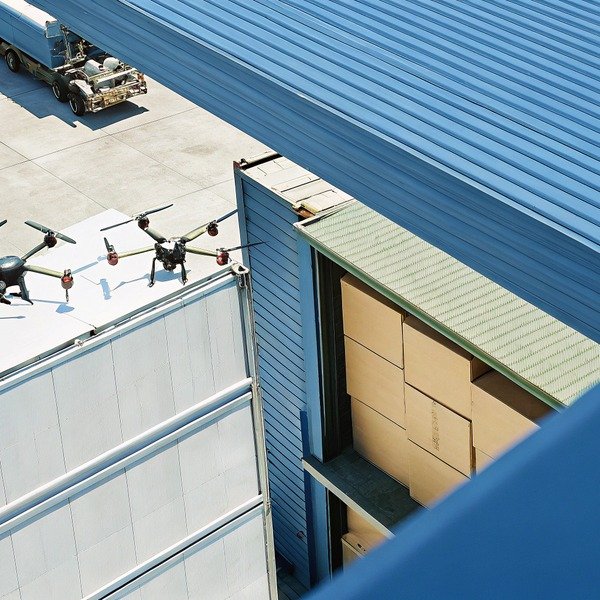
Watching our finished SkyRover units loaded onto trucks in Xi’an makes me anxious about their long journey. You invest heavily in these machines, yet confusing shipping terms often jeopardize your profit margins.
FOB is generally the best choice for importing agricultural drones from China because it offers lower total landed costs and greater control over handling sensitive electronics. While CIF seems convenient, it often hides expensive destination fees and provides inadequate insurance for high-value equipment.
Let’s examine the specific costs and logistical realities to help you make the right decision for your business. logistical realities 1
How do the total landed costs differ between FOB and CIF for my drone order?
When we calculate export quotes for our clients, the freight line item frequently causes confusion. You might think the lower upfront price of CIF saves money, but the final invoice often tells a painful story.
FOB usually results in lower total landed costs because you avoid the hidden markups sellers add to CIF freight and insurance prices. Although CIF quotes look attractive initially, the inflated destination handling charges and administrative fees upon arrival often make it significantly more expensive.

The Illusion of Cheap Shipping
Many of our first-time buyers look at the "freight prepaid" option on a CIF quote and assume it is a bargain. It is easy to fall into this trap. On paper, CIF (Cost, Insurance, and Freight) means we, the seller, pay the shipping costs to your port. However, in international trade, nothing is truly free. international trade 2 When we or any other factory book a CIF shipment, we often bundle the freight cost into the unit price of the drone, frequently adding a margin of 10% to 15% to cover our administrative efforts and currency risks.
More importantly, under FOB (Free On Board), you pay the freight directly to a forwarder of your choice. This transparency allows you to negotiate rates based on volume. If you are importing a 20ft container of our agricultural sprayers, paying the actual market rate for sea freight is almost always cheaper than paying a supplier's bundled rate. Suppliers are experts in manufacturing, not logistics; we do not have the same buying power with shipping lines that a dedicated freight forwarder does.
The Hidden Costs of CIF
The real financial damage of CIF often happens after the ship arrives. This is something we try to warn our partners about constantly. Under CIF, the seller's forwarder in China controls the shipment until it hits the destination port. To win the business from the seller, these forwarders might offer rock-bottom ocean freight rates but then make their money back by charging exorbitant "destination handling fees" to you, the buyer.
You have no control over these fees. When the goods arrive, the destination agent will hold your Bill of Lading hostage until you pay these inflated charges. Bill of Lading 3 We have seen bills where destination fees on a CIF shipment were double the cost of the ocean freight itself. With FOB, your quoted price from your own forwarder includes all these costs upfront, so there are no nasty surprises.
Cost Breakdown Example
To illustrate this, here is a typical cost breakdown for a shipment of 50 agricultural drones to the US West Coast.
| Cost Component | FOB Terms (Estimated) | CIF Terms (Estimated) | Who Controls Cost? |
|---|---|---|---|
| Unit Price | Standard Factory Price | Factory Price + Hidden Margin | FOB: Market / CIF: Seller |
| Ocean Freight | $2,500 (Paid by Buyer) | Included (Paid by Seller) | FOB: Buyer / CIF: Seller |
| Insurance | $150 (Buyer's Choice) | Included (Seller's Choice) | FOB: Buyer / CIF: Seller |
| Destination Fees | $600 (Agreed Upfront) | $1,800+ (Hidden/Inflated) | FOB: Buyer / CIF: Agent |
| Total Logistics Cost | ~$3,250 | ~$4,500+ (Implicit) | FOB is ~30% Cheaper |
We have received frantic calls from new customers who are shocked when their goods arrive at the port. They expect a simple pickup process but are instead hit with a ransom of unexpected fees to release their cargo.
Yes, choosing CIF frequently leads to hidden charges known as “destination terminal handling charges” that are not disclosed in the initial quote. Freight forwarders selected by the seller often inflate these local fees to recover low freight costs, leaving you with no leverage to negotiate.

Understanding the "Kickback" Mechanism
The mechanics of hidden charges in CIF shipments are quite predatory. When we, as an exporter, look for a freight forwarder 4 freight forwarder in China to ship goods under CIF terms, we are naturally drawn to the lowest bidder to maximize our profit or offer you a lower headline price. Some unscrupulous forwarders will offer to ship the container for free or even pay us a "rebate" to handle the shipment.
How do they make money? They have an agreement with their counterpart agent at your destination port (e.g., Los Angeles or Long Beach). This destination agent is instructed to collect specific fees from you, the consignee. These fees are often labeled vaguely as "CISF" (China Import Service Fee), "Handover Fee," or excessive "Terminal Handling Charges." Because you did not hire this agent, you have no contract with them and no way to dispute the charges.
The Impact on Your Bottom Line
For agricultural businesses working on tight margins, an unexpected $1,000 or $2,000 bill at the port can ruin the profitability of a shipment. We have seen cases where the destination fees exceeded the value of the spare parts being imported. This practice is technically legal but highly unethical.
When you buy FOB, you nominate the freight forwarder. Your forwarder gives you a quote that includes the ocean freight and the local destination charges before the ship ever leaves China. You know exactly what you will pay. There are no "kickbacks" because you are the customer, not the supplier.
Common Hidden Charges Checklist
If you are currently stuck in a CIF shipment, look out for these flags on your arrival notice. If you switch to FOB, these become transparent line items or disappear entirely.
- CISF (China Import Service Fee): A pure profit fee for the origin forwarder, charged to you.
- Exchange Rate Surcharges: Agents using terrible exchange rates to convert currency.
- Equipment Imbalance Surcharge: Often invalid or inflated.
- Document Transfer Fee: Charging $100+ just to hand over a piece of paper.
- Warehouse Handling: If it's LCL (Less than Container Load), these fees can be astronomical under CIF.
Does FOB offer me better control over the logistics of sensitive equipment?
Calibrating flight controllers in our Chengdu facility requires extreme precision, and we believe shipping should be no different. You need to know exactly how your delicate equipment is being handled and where it is at all times.
FOB definitely offers better control because you select your own freight forwarder who specializes in handling high-value electronics and hazardous goods like lithium lithium batteries 5 batteries. This ensures you have direct tracking visibility and can dictate the specific routing and handling conditions for your sensitive drone shipments.

Managing Dangerous Goods (Class 9)
Agricultural drones are not just plastic toys; they are powered by high-capacity lithium polymer (LiPo) batteries. In the shipping world, these are classified as Class 9 Dangerous Goods (DG). Shipping DG cargo requires specialized documentation, labeling, and handling.
When you buy CIF, we might choose a general-purpose forwarder who offers the cheapest rate but lacks experience with DG cargo. This can lead to your shipment being bumped from vessels, stored in improper conditions (like hot metal containers on deck exposed to direct sun), or delayed by customs due to incorrect paperwork.
With FOB, you can interview and select a US-based freight forwarder who specializes in hazardous materials. You can ensure they understand the specific UN3480 or UN3481 regulations 6 UN3480 or UN3481 regulations required for lithium batteries. This ensures your drones arrive safe and compliant, rather than seized or damaged.
Tracking and Communication
Communication is another critical factor. Under CIF, if the ship is delayed or diverted, you have to contact us, and then we have to contact our forwarder in China, who then contacts the shipping line. This "telephone game" results in slow and often inaccurate updates.
Under FOB, your forwarder works for you. You get direct login access to their tracking portal. If there is a strike at the port or a delay in the Red Sea, you know immediately. You can also make decisions, such as diverting the cargo to a different port or switching to air freight for urgent units, without needing our permission.
Logistics Control Comparison Matrix
Here is how control varies between the two terms regarding sensitive drone shipments.
| Feature | FOB (Free On Board) | CIF (Cost, Insurance, Freight) |
|---|---|---|
| Carrier Selection | Buyer chooses trusted carriers. | Seller chooses cheapest carrier. |
| Battery Handling | Buyer vets DG expertise. | Unknown handling standards. |
| Route Optimization | Buyer chooses direct/fastest routes. | Seller may choose slow transshipment. |
| Communication | Direct line to logistics provider. | Indirect, through seller. |
| Flexibility | High (can reroute/expedite). | Low (at mercy of seller's agent). |
Which trade term better protects my business against shipping delays and damage?
We build our SkyRover drones to withstand tough field conditions, but saltwater and rough port cranes are different beasts entirely. Watching a valuable shipment sit stuck in customs or arrive crushed is a painful experience for any business owner.
FOB better protects your business against delays and damage by allowing you to insure the cargo fully and choose reliable carriers. Unlike CIF, where the seller provides minimum coverage that may not cover total loss, FOB puts the risk management and claims process directly in your hands.

The Insurance Trap
A common misconception is that CIF is safer because "Insurance" is in the name. However, under Incoterms Incoterms 2020 7 2020 rules, a seller on CIF terms is only required to provide Clause C insurance. This is the bare minimum coverage. It covers catastrophic events like the ship sinking or a fire on board, but it often excludes "particular average" damages—such as rough handling, water damage from leaks, or theft.
If your drones arrive with crushed landing gear due to rough crane operation, CIF insurance 8 CIF insurance might pay out zero. Furthermore, if you do have a valid claim, you often have to deal with an insurance company based in China, communicating across time zones and language barriers.
Taking Charge with FOB
When you ship FOB, you are responsible for buying the insurance, but this is actually a huge advantage. You can purchase Clause A (All Risks) insurance from a reputable provider in your own country. This covers almost any physical loss or damage.
If a drone arrives damaged, you file a claim with your local broker in your local language, and get paid quickly. You are not relying on a policy you have never seen written in a language you cannot read.
Avoiding Customs Delays
Delays often happen at customs entry. Agricultural drones are regulated goods; they may require FCC clearance, FDA notices (if lasers are involved), or EPA documentation. A forwarder chosen by the seller (CIF) may not be familiar with US specific import regulations for drones. They might file the ISF (Importer Security Filing) 9 ISF (Importer Security Filing) late, leading to a $5,000 fine for you.
With FOB, your chosen forwarder is likely an expert in US imports. They will file the ISF on time (before loading in China) and ensure the Harmonized Tariff Schedule (HTS) codes are correct to avoid unnecessary inspections. Harmonized Tariff Schedule 10 This proactive approach minimizes the risk of your goods sitting in a customs exam warehouse while storage fees pile up.
Conclusion
Choosing the right trade term is as critical as choosing the right drone model. While CIF offers a hands-off approach for beginners, it exposes you to hidden costs and higher risks.
For most of our partners, **FOB is the superior choice**. It grants you control over costs, ensures proper handling of sensitive batteries, and provides robust protection for your investment.
Footnotes
1. Leading research institution on supply chain and logistics management. ↩︎
2. Provides general background on the global exchange of goods and services mentioned in the text. ↩︎
3. Explains the legal document used in international shipping mentioned in the article. ↩︎
4. Official US government body regulating ocean freight forwarders and protecting the shipping public. ↩︎
5. Global standards for shipping lithium batteries, which are critical for drone transport. ↩︎
6. Authoritative industry standards for shipping lithium batteries under UN classifications. ↩︎
7. Official source for the trade terms discussed throughout the article. ↩︎
8. The International Chamber of Commerce defines the specific insurance obligations for CIF terms. ↩︎
9. Official US Customs page detailing the mandatory ISF filing requirements and potential penalties. ↩︎
10. Official US database for the HTS codes mentioned for customs clearance. ↩︎

 English
  Español de México
  Deutsch
  Français
  Русский
  العربية
