
At SkyRover, we see how critical seconds are during a fire mission. Delays in support can ground your fleet when you need it most, turning a valuable asset into a liability.
To inquire about response times effectively, request a formal Service Level Agreement (SLA) defining guaranteed initial response windows, such as under 15 minutes for emergencies. Ask for historical data on Mean Time to Repair (MTTR) and verify if they have support teams operating within your specific time zone.
Let's examine the specific questions you must ask to ensure your fleet remains operational.
Does the supplier offer a Service Level Agreement (SLA) with guaranteed response times?
When drafting contracts for our US clients, we emphasize clarity. Without a written guarantee, "fast support" is just a vague promise that risks your operation during critical moments.
An SLA is essential because it legally binds the supplier to specific performance metrics, such as a 4-hour response for critical failures. It should outline penalties for missed targets and define distinct tiers of urgency, ensuring your firefighting missions are prioritized over routine inquiries.
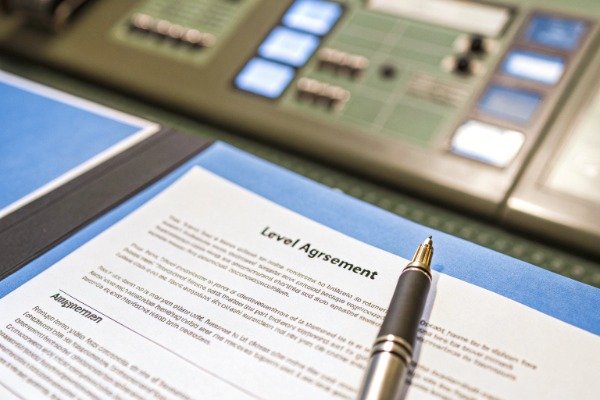
Understanding the Importance of a Written SLA
In the industrial drone sector, verbal promises often fail when pressure mounts. A Service Level Agreement (SLA) is not just paperwork; it is your safety net. It defines exactly what "support" means in measurable terms. Without it, you might wait days for a reply while a wildfire spreads.
Service Level Agreement (SLA) 1
You need to ask for a document that separates "response time" from "resolution time." Response time is how quickly they acknowledge your issue. Resolution time is how long it takes to fix it. A supplier might reply in 10 minutes but take two weeks to ship a spare part. Your SLA must cover both.
resolution time 2
Critical Metrics to Include
When you review the SLA, look for specific numbers. Vague terms like "as soon as possible" are red flags. You want to see hours and minutes. For firefighting drones, a "Mission-Critical" tier is necessary. This ensures that if a drone is grounded during an active fire season, your ticket jumps to the front of the line.
Mission-Critical tier 3
We recommend comparing the SLA tiers offered by potential suppliers. A basic tier might be free but slow. A premium tier might cost more but guarantees speed.
Comparison of SLA Tiers
Here is a breakdown of what you should look for when comparing support levels:
| Функция | Standard Support (Avoid for Firefighting) | Mission-Critical Support (Recommended) |
|---|---|---|
| Initial Response Time | 24 – 48 Hours | < 15 Minutes |
| Доступность | Business Hours Only | 24/7/365 |
| Удаленная диагностика | Email-based | Live Video Call |
| Spare Parts Shipping | Standard Ground | Next Flight Out / Overnight |
| Поддержка на месте | Not Included | Available within 24 Hours |
The Consequence of No SLA
If you do not have an SLA, you are at the mercy of the supplier's workload. During peak seasons, manufacturers are busy. If you are just another email in the inbox, you will wait. With an SLA, you have a contract that forces the supplier to allocate resources to you immediately. This is vital for government service providers who have their own performance mandates to meet.
Which communication channels are fastest for urgent technical issues?
Our engineering team monitors multiple channels, but we know email is too slow for active fires. You need a direct line to immediate technical assistance to minimize downtime.
Instant messaging apps like WhatsApp or a dedicated 24/7 hotline are the fastest channels for urgent issues. Unlike email ticketing systems that may take hours, direct real-time communication allows technicians to diagnose sensor errors or flight control issues immediately while your team is still in the field.
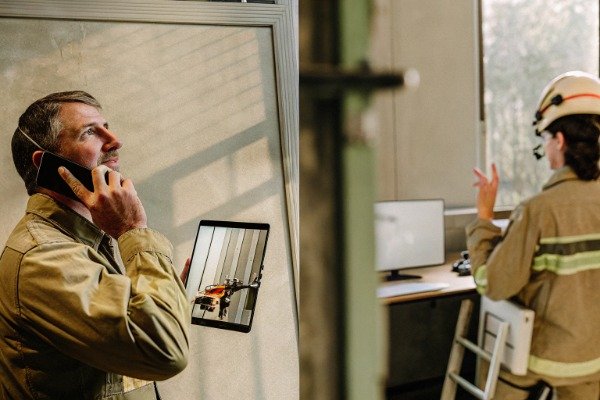
Moving Beyond Email Tickets
In a comfortable office, email works fine. On the fire line, with smoke in the air and a drone refusing to take off, email is useless. You cannot wait for a ticket number. You need a human voice.
When we work with fire departments, we see that they prefer instant messaging groups or direct phone lines. You should ask the supplier if they provide a dedicated technical account manager. This person knows your specific equipment and history. You do not want to explain your drone's configuration to a new support agent every time you call.
instant messaging groups 4
The Role of Live Video Diagnostics
Modern problems require modern solutions. Describing a mechanical noise over the phone is difficult. Ask if the supplier uses video calls for diagnostics.
Tools like Zoom, WhatsApp Video, or specialized AR remote support apps allow the technician to see what you see. They can guide your hand to check a cable or reset a sensor. This capability can resolve 60% of issues without needing to ship the drone back to the factory.
Tools like Zoom 5
Evaluating Channel Efficiency
Different channels serve different purposes. You need to know which one to use for which situation. Do not use the emergency hotline for billing questions, or you might clog the line. Conversely, do not use the web portal for a crash.
Communication Channel Hierarchy
Use this table to evaluate if a supplier's communication setup meets your needs:
| Тип канала | Лучший сценарий использования | Expected Response Speed |
|---|---|---|
| Dedicated Hotline | Active deployment failures, crashes | Immediate (Pick up < 3 rings) |
| Instant Messaging (WhatsApp/WeChat) | Quick troubleshooting, photo sharing | < 5 Minutes |
| Видеоконференция | Complex hardware diagnostics, guided repair | Scheduled within 1 hour |
| Email / Web Portal | Routine maintenance, logs analysis, billing | 12 – 24 часа |
Integration with Field Operations
Ask the supplier if their support team is trained to communicate with field operators. Engineers sometimes use complex jargon. Your drone pilot needs simple, clear instructions. The best suppliers have support staff who understand the high-pressure environment of firefighting. They give short, actionable commands to get the bird back in the air.
Is there a dedicated support team available during US business hours?
Exporting from China to the US taught us that time zones are the biggest barrier. A supplier sleeping while you fight a fire is unacceptable and dangerous for operations.
You must confirm if the supplier has a local support team or a shift-based remote team covering US business hours. If they are based in Asia, verify they offer a "follow-the-sun" model where support staff are active during your daytime operations to prevent 12-hour delays.

The "Black Hole" of Time Differences
The time difference between China and the US is roughly 12 to 15 hours. When it is 1:00 PM in California, it is 4:00 AM in Xi'an. If your supplier does not have a night shift or a local US team, you enter a "support black hole."
разница во времени 6
You send a request in the afternoon. They are asleep. They reply when you are asleep. You reply back the next morning. A simple conversation that should take 10 minutes now takes three days. For a firefighting drone, this delay is impossible to justify.
Verifying True Availability
Do not just take their word for it. Test them. Before you buy, try calling their support line at 2:00 PM your time. See if a human answers.
Ask specifically: "Do you have staff physically located in North America?" or "Do your headquarters staff work night shifts to cover US hours?" Many suppliers claim 24/7 support but actually use an answering service that just takes a message. You need technical engineers, not receptionists, available during your operating hours.
The Follow-the-Sun Model
Top-tier manufacturers use a "follow-the-sun" model. This means support is handed off between teams in Asia, Europe, and America as the day progresses. This ensures that no matter when you call, someone is awake and ready to help.
follow-the-sun model 7
Time Zone Coverage Analysis
Here is why you need to clarify the support hours based on your location:
| Your Location | Supplier Location (e.g., China) | Impact Without 24/7 Support |
|---|---|---|
| US East Coast (EST) | +12 Hours Ahead | High Risk. Your workday is their night. No overlap. |
| US West Coast (PST) | +15 Hours Ahead | High Risk. Your afternoon is their early morning. |
| Europe (CET) | +6 Hours Ahead | Medium Risk. Some overlap in your morning, none in afternoon. |
| Australia (AEST) | +2 Hours Ahead | Low Risk. Good overlap with Asian suppliers. |
Языковые и культурные барьеры
Availability is not just about time; it is about understanding. Support staff working the US shift must speak fluent technical English. Misunderstandings in technical instructions can lead to crashes. Ask to speak with the support team leader during the procurement process to evaluate their communication skills.
What is the escalation process if a technical problem cannot be resolved quickly?
We train our frontline staff to handle most issues, but complex software bugs require senior engineers. You need a clear path to the experts to avoid stagnation.
A robust escalation process ensures that unresolved issues move rapidly from Tier 1 general support to Tier 3 engineering developers. Ask for a flowchart showing how long an issue sits at each level before being promoted, ensuring critical software bugs reach the R&D team within hours, not days.

Why Escalation Paths Matter
Frontline support agents usually follow a script. They are great for basic issues like connection errors or battery warnings. However, industrial drones are complex. You might encounter a rare firmware bug or a sensor calibration drift that is not in the manual.
firmware bug 8
If there is no clear escalation path, your ticket gets stuck. The agent keeps trying the same basic fixes. You need a process that automatically moves the ticket up the chain if it is not solved within a set time.
Tiers of Technical Support
You should ask the supplier to define their support tiers.
- Уровень 1: General troubleshooting, password resets, basic usage.
- Уровень 2: Hardware diagnosis, log analysis, module replacement.
- Уровень 3: R&D engineers, code-level debugging, custom firmware fixes.
For a firefighting department, you want a "fast track" to Tier 2. You are professional users; you have likely already tried the basic fixes. You do not want to waste time proving you turned it off and on again.
The "Loaner Drone" Policy
Sometimes, a problem cannot be fixed remotely. The drone must go back to the factory. This can take weeks.
Ask the supplier: "Do you have a Loaner Drone program?"
If your unit is under warranty and needs repair, will they ship you a temporary replacement immediately? This is standard in the enterprise IT world and is becoming common in high-end industrial drones. It ensures your fire station is never without aerial capability.
Firmware Rollback Capabilities
A common issue we see is a new software update causing bugs. If you update your fleet and suddenly the thermal camera stops working, you cannot wait for a patch.
Ask about "Rollback Support." Can you immediately revert the drone to the previous stable firmware version? The support team should be able to guide you through this process instantly. This is a critical safety valve for maintaining operational readiness.
AR remote support apps 9
Escalation Timeline Example
| Уровень поддержки | Who Handles It? | Max Time Before Escalation | Action Taken |
|---|---|---|---|
| Level 1 | Customer Service Agent | 30 Minutes | Basic checks, manual review |
| Level 2 | Technical Specialist | 2 Hours | Log analysis, video diagnostic |
| Level 3 | R&D Engineer | 4 Hours | Code review, firmware patch |
| Уровень 4 | Management / VP | 24 Hours | Resource allocation, loaner dispatch |
Заключение
Asking these questions protects your investment and saves lives. Ensure your supplier offers a solid SLA, 24/7 support, and clear escalation paths before signing any contract.
сектор промышленных дронов 10
Сноски
1. Defines the contractual agreement standard for support. ↩︎
2. Authoritative definition of resolution metrics in service management. ↩︎
3. Explains the high-priority status required for emergency systems. ↩︎
4. Overview of the real-time communication technology mentioned. ↩︎
5. Official site for the video conferencing tool cited. ↩︎
6. Provides context on global time coordination issues discussed. ↩︎
7. Explains the global support strategy for 24/7 coverage. ↩︎
8. Defines the type of software error causing operational failures. ↩︎
9. Explains the visual technology used for remote diagnostics. ↩︎
10. Official regulatory body for commercial drone operations. ↩︎

 English
  Español de México
  Deutsch
  Français
  Русский
  العربية
