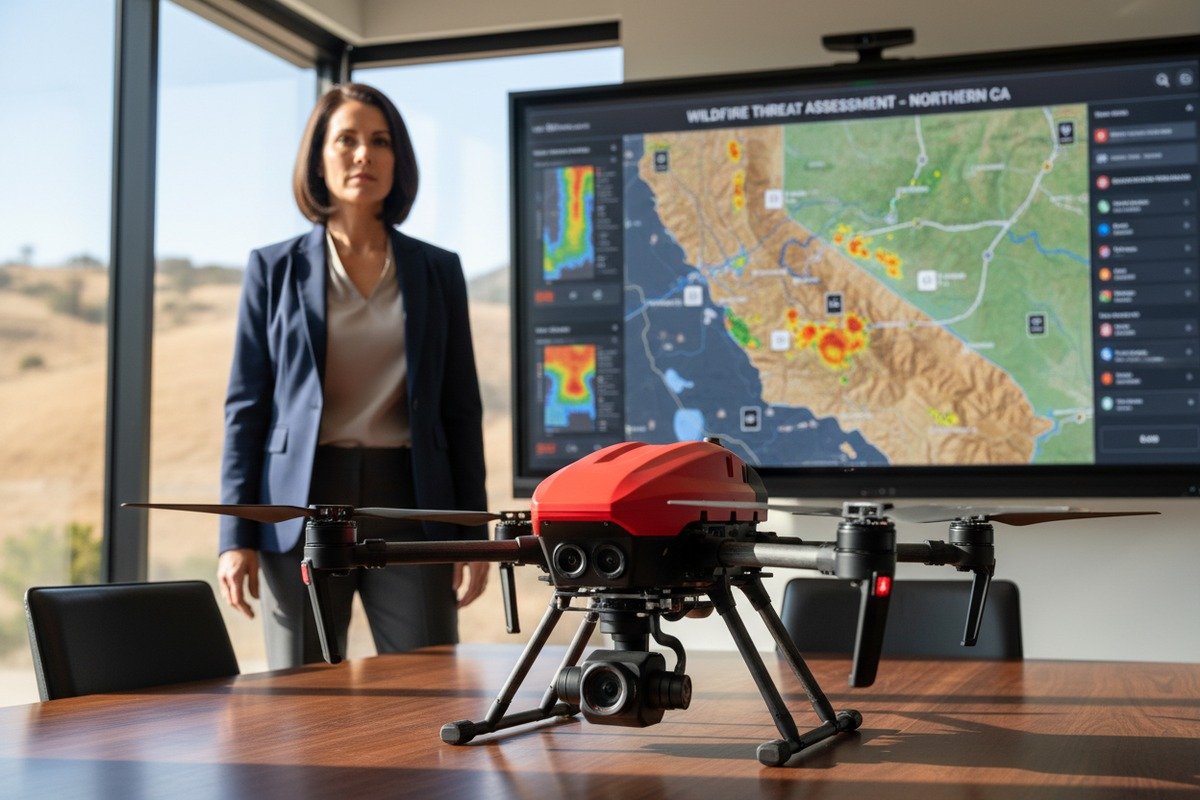
Every year, our production line ships firefighting drones to asset protection firms who just weeks earlier had no idea where to begin wildfire risk audit 1. The threat of wildfire is growing. Properties in California, Colorado, and across the western US face unprecedented risk. Yet most firms freeze at the starting line—overwhelmed by specs, regulations, vendor options, and import logistics FAA regulatory compliance 2. The cost of inaction is clear: one near-miss blaze can destroy millions in protected assets overnight.
Asset protection firms start purchasing firefighting drones by first conducting a wildfire risk audit of their protected properties, then evaluating drone technical specifications and vendor certifications, navigating FAA regulatory compliance, and finally managing the import shipping and customs process to ensure smooth delivery and deployment.
This guide walks you through the entire procurement journey, step by step разрешение тепловизионной съемки 3. Whether you protect remote estates, industrial campuses, or corporate properties, you will find actionable advice below. We wrote it from our experience manufacturing and exporting industrial firefighting drones to the US and Europe IP-rated frame 4. Let’s get started.
How do I choose the right technical specifications for my firm's first firefighting drone?
When we calibrate our flight controllers and test payload systems at our Xi'an facility, we see firsthand how one wrong spec choice can make a drone useless in real fire conditions Система менеджмента качества ISO 9001 5. Many first-time buyers focus on price alone. They overlook грузоподъемность 6, flight endurance, sensor type, and environmental ratings. This leads to regret—and wasted budgets.
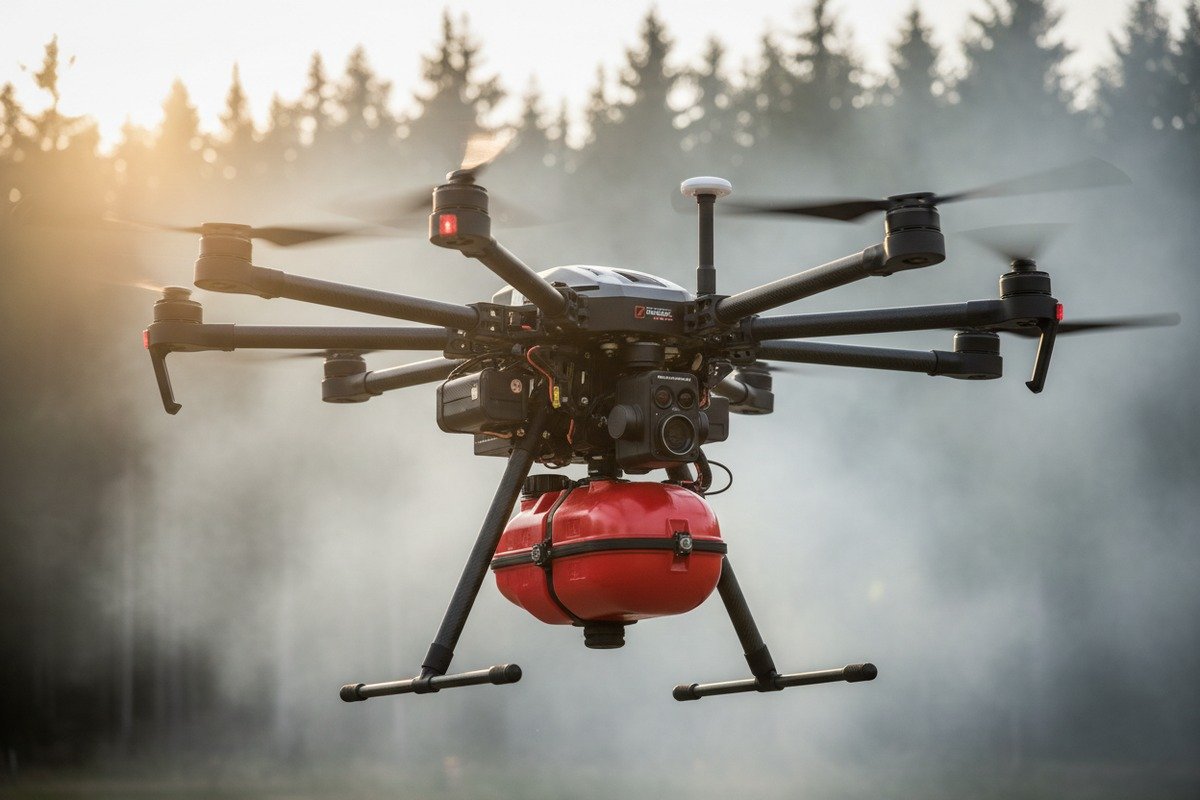
Choose specifications by matching your asset type and fire risk profile to drone capabilities: prioritize payload capacity for suppression agents, thermal imaging resolution for early detection, flight endurance of at least 30 minutes, and an IP-rated frame that withstands heat, smoke, and wind in real wildfire conditions.
Start With Your Risk Profile
Before you open a single spec sheet, answer these questions HS tariff code 7. What kind of assets do you protect? How remote are they? What is the local wildfire history? A firm guarding a hillside estate in Malibu has different needs than one protecting an oil storage facility in Texas.
For remote, high-wildfire-risk properties, you need long flight endurance—ideally 30 to 55 minutes—and strong GPS and autonomous navigation features. For urban or suburban industrial sites, you may prioritize thermal imaging quality and a compact frame that can operate in tighter spaces.
Ключевые характеристики для оценки
Here is a breakdown of the core specs you should compare when evaluating your first firefighting drone.
| Спецификация | Почему это важно | Рекомендуемый диапазон |
|---|---|---|
| Грузоподъемность | Determines how much water or retardant the drone can carry per flight | 10–50 kg for initial suppression |
| Продолжительность полета | Longer flights mean more coverage per battery cycle | 30–55 minutes |
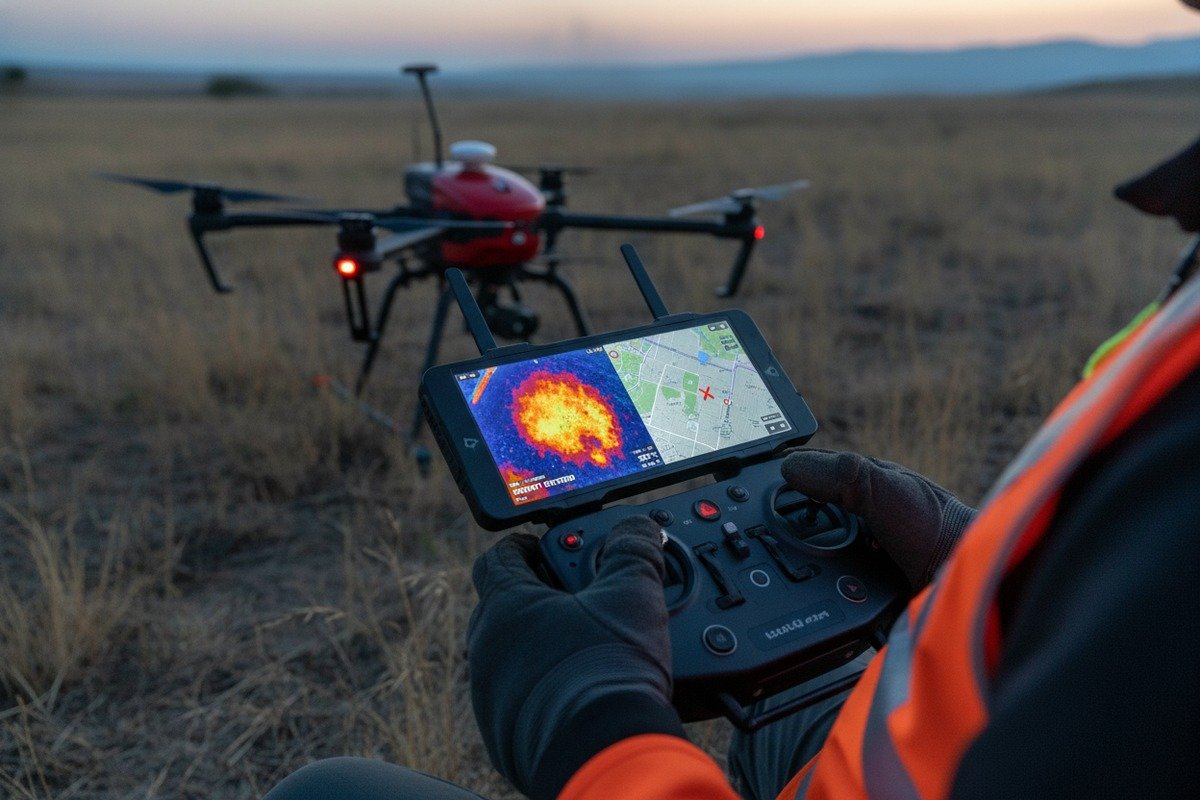
| Разрешение тепловизионной камеры | Higher resolution detects smaller hotspots earlier | 640×512 pixels or higher |
| Максимальное ветровое сопротивление | Fires create strong updrafts; the drone must stay stable | Level 6 wind (up to 13.8 m/s) |
| IP-рейтинг | Protection against dust, water, and heat exposure | IP54 или выше |
| Дальность связи | Ensures control and video feed at distance from the fire | 10–15 km |
| Autonomous Flight Modes | Enables pre-programmed patrol routes and return-to-home | Waypoint, orbit, and RTH |
Payload and Suppression: The Most Misunderstood Spec
Many buyers assume bigger payload is always better. It is not that simple. A 50 kg payload drone is heavy, expensive to operate, and harder to transport. For most asset protection firms starting out, a 15–30 kg payload capacity handles early-stage suppression and retardant delivery effectively. Our engineers have found that matching payload to your most likely fire scenario—small brush fires near a perimeter, for example—gives you the best return on investment.
Sensors Beyond Thermal
Thermal imaging is essential, but consider multi-spectral sensors 8 too. These detect gases like CO and HCN that indicate hidden combustion. Some of our clients also request LiDAR integration for 3D terrain mapping, which helps with pre-incident planning. If your protected assets include chemical storage or hazardous materials, gas detection sensors are not optional—they are critical.
Don't Forget Software Compatibility
The best hardware is useless without software that fits your workflow. Ask whether the drone's flight control software integrates with your existing security and command center platforms. AI-powered fire detection, predictive pathing, and real-time video streaming are features that separate a basic survey drone from a true firefighting tool.
How can I verify if a manufacturer provides the engineering support and certifications I need?
One of the most common complaints we hear from new US importers is this: "My last supplier disappeared after the sale." Our support team in Xi'an fields post-sale engineering questions daily because we know this industry demands ongoing technical partnership, not just a one-time transaction. The pain is real—without remote or on-site support, a grounded drone during fire season is a liability, not an asset.
Verify a manufacturer's support and certifications by requesting documented proof of ISO 9001 quality management, CE or FCC compliance certificates, FAA Part 107 compatibility statements, and a written after-sales support agreement that includes remote diagnostics, firmware updates, spare parts supply, and defined response times.
Certifications That Actually Matter
Not all certifications carry equal weight. Here is a table showing which ones you should prioritize and why.
| Сертификация / Стандарт | Что он охватывает | Зачем он вам нужен |
|---|---|---|
| ISO 9001 | Системы менеджмента качества | Confirms consistent manufacturing quality |
| Маркировка CE | European safety and environmental standards | Required for European markets; signals quality globally |
| FCC Часть 15 9 | Radio frequency emissions compliance | Required for any drone operating in the US |
| Часть 107 FAA 10 Совместимость | Commercial drone operation standards | Your operators need this; the drone must support compliant flight modes |
| IP54 or Higher Rating | Защита от проникновения пыли и воды | Proves the drone can operate in harsh fire environments |
| ITAR / EAR Compliance | US export control regulations | Important if the drone uses certain sensors or technology |
Ask for Documentation, Not Just Claims
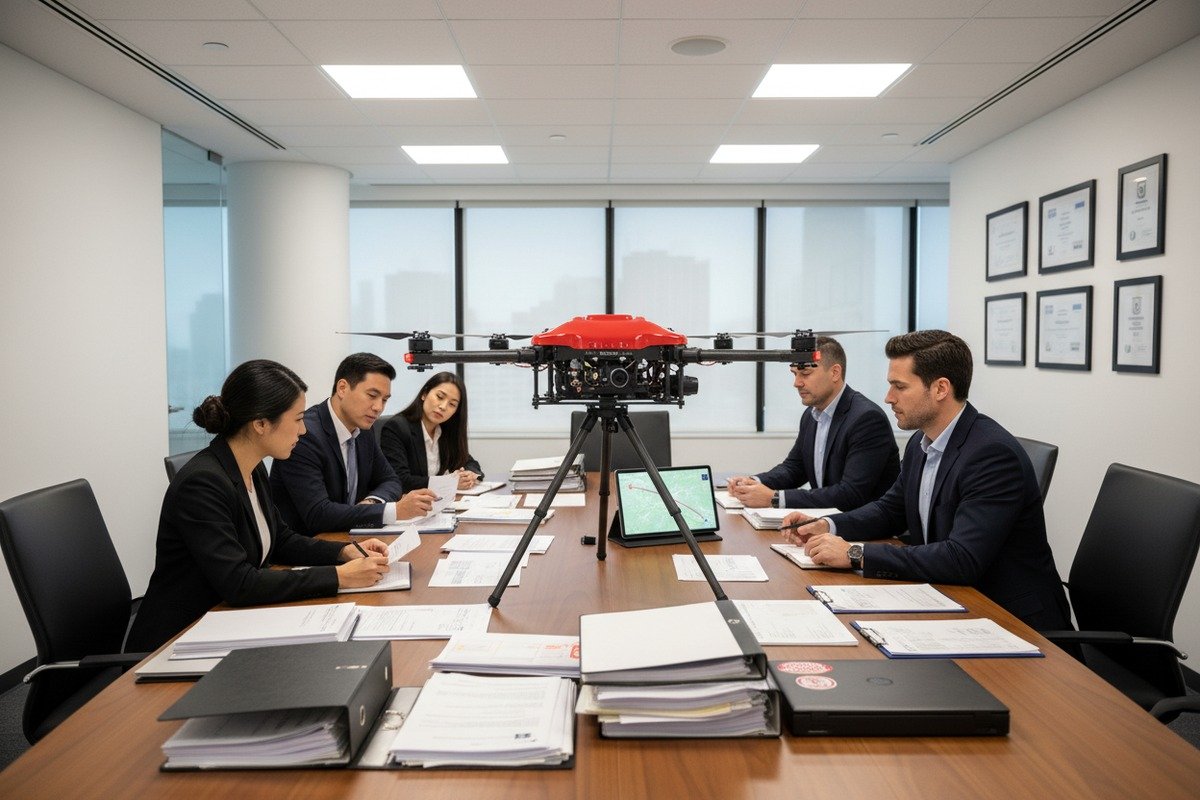
Any manufacturer can say they have certifications. Ask for scanned certificates with valid dates. Check whether those certificates come from recognized third-party bodies. At our facility, we keep all documentation updated and readily available for any procurement manager who requests it. If a manufacturer hesitates or delays, that is a red flag.
Engineering Support: What to Demand in Writing
Before you sign a purchase order, get a written after-sales support agreement. This should cover:
- Удаленная диагностика: Can the manufacturer troubleshoot via video call or remote software access?
- Firmware and software updates: Are these free? How often are they released?
- Наличие запасных частей: What is the lead time? Are critical parts kept in stock?
- Гарантии времени ответа: Will they respond within 24 hours? 48 hours?
- Поддержка на месте: For large orders or custom integrations, will they send an engineer?
We include all of these in our standard export agreements because we have seen what happens when firms are left without support. A drone sitting in a warehouse because of a software glitch during peak fire season is unacceptable.
Check References and Track Record
Ask the manufacturer for references from other asset protection firms or fire departments they have supplied. Contact those references. Ask about delivery timelines, product durability, and how responsive the support team was after the sale. Our clients in the US and Europe are often happy to share their experience because they know how important this decision is.
Can I collaborate on custom software and hardware designs for my specific asset protection requirements?
When our R&D team sits down with a new client, the conversation usually starts with "We need something different." Every asset protection firm has unique requirements—different terrain, different asset types, different integration needs. Off-the-shelf drones can do a lot, but the firms that gain a true competitive edge are the ones that invest in customization. The problem is that many manufacturers either cannot or will not offer this level of collaboration.
Yes, you can collaborate on custom software and hardware designs. Leading manufacturers offer OEM services including branded enclosures, tailored flight control software, custom sensor integration, specialized payload systems, and API-level connectivity with your existing security platforms—provided you communicate requirements clearly during the design phase.
What Can Be Customized?
The scope of customization is broader than most first-time buyers expect. Here is a practical breakdown.
| Область индивидуальной настройки | Примеры | Типичное время выполнения заказа |
|---|---|---|
| Hardware / Frame | Custom payload mounts, ruggedized housings, color branding | 4–8 weeks |
| Датчики | Adding LiDAR, multi-spectral cameras, gas detectors | 3–6 weeks |
| Программное обеспечение управления полетом | Custom waypoint programming, geofencing, auto-patrol routes | 4–10 weeks |
| Data Integration / APIs | Connecting drone feeds to your command center, IoT sensors, or SCADA systems | 6–12 weeks |
| Payload Systems | Specialized nozzles for retardant, modular water tanks, drop mechanisms | 4–8 weeks |
| Branding / OEM | Your company logo, custom packaging, white-label documentation | 2–4 weeks |
Процесс сотрудничества
At our facility, the process typically follows these steps. First, we hold a detailed requirements call. You describe your assets, your fire scenarios, your existing security infrastructure, and your operational goals. Second, our engineers draft a technical proposal with design mockups, timelines, and cost estimates. Third, we build and test a prototype. Fourth, you review and approve—or request changes. Fifth, we move to production.
This process works best when you assign a dedicated point of contact on your side. We have seen projects stall when communication goes through too many layers. A direct line between your procurement manager and our engineering lead speeds everything up.
Software: The Real Differentiator
Hardware customization gets attention, but software is where the biggest gains happen. Our development team can build custom AI modules for your specific fire detection needs. For example, if your protected properties include solar panel farms, we can train detection algorithms to distinguish between panel reflections and actual thermal anomalies. If you need autonomous patrol routes that adapt to wind and weather data in real time, that is achievable too.
We also support full API integration. This means your existing security dashboards, IoT smoke and heat sensors, and command center platforms can receive live drone data without manual intervention. For firms already using platforms like Genetec or Milestone for video management, this integration is a game-changer.
Защита вашей интеллектуальной собственности
Some firms worry about IP when collaborating with an overseas manufacturer. This is a valid concern. We address it by signing non-disclosure agreements before any design work begins and by offering exclusive manufacturing agreements for custom designs. Make sure your contract specifies who owns the design files, software code, and any patents that result from the collaboration.
Минимальные объемы заказа для индивидуальной работы
Custom projects do require a minimum commitment, but it is often lower than people expect. For hardware modifications, our minimum is typically 5–10 units. For software-only customizations, we can sometimes work on a per-project fee basis with no unit minimum. Always ask upfront so you can plan your budget accordingly.
What is the best way for me to handle the shipping and customs process for my first drone import?
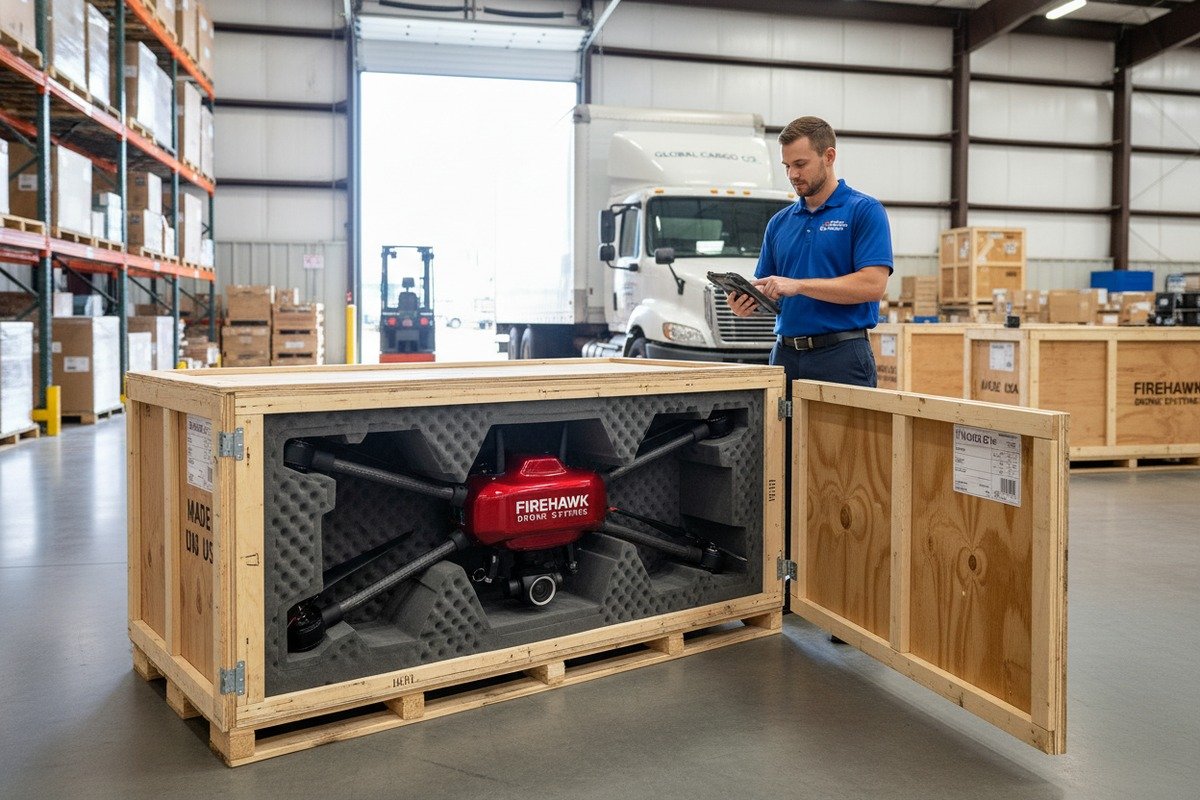
Our logistics team handles door-to-door deliveries to the US and Europe every month. Even so, we know that for first-time importers, the shipping and customs process feels like a black box. One wrong document, one missed tariff code, and your drones sit in a warehouse at the port for weeks. That delay can cost you an entire fire season—and the trust of your clients.
Handle your first drone import by partnering with a manufacturer that offers door-to-door delivery, confirming the correct HS tariff code for unmanned aircraft, preparing all required documents including commercial invoices, packing lists, certificates of conformity, and FCC declarations, and hiring a licensed US customs broker to manage clearance and duty payments.
Understanding the Document Checklist
The paperwork is the most common point of failure for first-time importers. Here is what you need.
- Коммерческий счет-фактура: Lists the product, quantity, unit price, total value, and Incoterms (e.g., DDP, FOB, CIF).
- Упаковочный лист: Details weight, dimensions, and contents of each package.
- Коносамент или Авианакладная: The shipping carrier's receipt and contract of carriage.
- Сертификат соответствия: Proves the product meets applicable standards (CE, FCC).
- Декларация соответствия FCC: Required for any electronic device entering the US.
- Паспорт безопасности материала (MSDS): If your drone ships with lithium batteries (it will), this is mandatory.
- Сертификат происхождения: Confirms where the product was manufactured.
We prepare all of these documents for our clients as part of our standard export service. If your manufacturer does not offer this, you will need to prepare them yourself—or hire a freight forwarder who can.
Выбор правильного способа доставки
| Способ доставки | Время в пути | Уровень стоимости | Лучше всего подходит для |
|---|---|---|---|
| Авиаперевозки | 5–10 days | Высокий | Urgent orders, single units, spare parts |
| Морские перевозки (FCL) | 25–40 days | Низкая | Large bulk orders (10+ units) |
| Морские перевозки (LCL) | 30–45 days | Средний | Smaller bulk orders sharing container space |
| Rail Freight (to Europe) | 18–25 days | Средний | European deliveries balancing cost and speed |
| Экспресс-курьер (DHL/FedEx) | 3–7 days | Очень высокий | Samples, small accessories, urgent spare parts |
For your first purchase, air freight is often the safest choice. It is faster, and you can track the shipment closely. Once you have an established relationship with your manufacturer and a reliable customs process, you can switch to sea freight for cost savings on larger orders.
Правила перевозки литиевых батарей
This is a critical point that many first-time buyers overlook. Firefighting drones use high-capacity lithium polymer batteries. These are classified as dangerous goods under IATA and IMO regulations. Your manufacturer must package and label these batteries according to UN 3481 standards. The MSDS must accompany the shipment. Failure to comply can result in shipment rejection, fines, or delays.
We ship lithium batteries in UN-certified packaging with all required hazard labels. We also provide the MSDS and Dangerous Goods Declaration as standard. Ask your manufacturer if they do the same.
Customs Duties and Tariff Codes
In the US, drones generally fall under HS code 8806 (unmanned aircraft). The specific subheading depends on the drone's weight and whether it is designed for cargo or surveillance. Duty rates vary and can be affected by trade policy changes, so always confirm the current rate with your customs broker before import. As of recent years, additional tariffs on Chinese goods may apply under Section 301, which can add 7.5% to 25% on top of the standard duty.
Work with a licensed US customs broker. They will classify your product correctly, file the entry paperwork, and handle duty payments. The cost of a broker is small compared to the cost of a misclassified shipment or a customs hold.
Door-to-Door Delivery: Why It Matters
We offer door-to-door delivery—known as DDP (Delivered Duty Paid) Incoterms—because it removes the biggest headache for first-time importers. Under DDP, we handle everything: export clearance in China, international shipping, import clearance in the US, duty payments, and final delivery to your warehouse or site. You receive the drone at your door, ready to unbox and deploy.
If your manufacturer only offers FOB (Free on Board) or CIF (Cost, Insurance, Freight), you will need to arrange your own customs clearance and inland transportation. For a first-time purchase, DDP is strongly recommended.
Заключение
Purchasing your first firefighting drone is a high-stakes decision, but it does not have to be overwhelming. Audit your risks, match specs to your scenarios, verify certifications and support agreements, explore custom designs, and plan your import logistics carefully. The firms that move now will lead the industry as wildfire threats grow. Reach out to a manufacturer who can walk you through every step—from engineering to delivery.
Сноски
1. Explains home wildfire risk assessments and mitigation strategies. ↩︎
2. Представляет обзор правил FAA для коммерческих операций с дронами. ↩︎
3. Explains thermal sensor resolution and its impact on image detail for drones. ↩︎
4. Defines IP ratings and their importance for drone protection against environmental elements. ↩︎
5. Describes ISO 9001 as an international standard for quality management systems. ↩︎
6. Defines drone payload capacity and its importance for various applications. ↩︎
7. Replaced HTTP 404 with an official government resource from the International Trade Administration explaining Harmonized System (HS) codes. ↩︎
8. Explains the use of multispectral sensors in drones for mapping and surveying. ↩︎
9. Explains FCC Part 15 regulations for electronic devices to prevent electromagnetic interference. ↩︎
10. Replaced HTTP 404 with the official FAA page for certificated remote pilots, which covers Part 107 regulations. ↩︎

 English
  Español de México
  Deutsch
  Français
  Русский
  العربية
