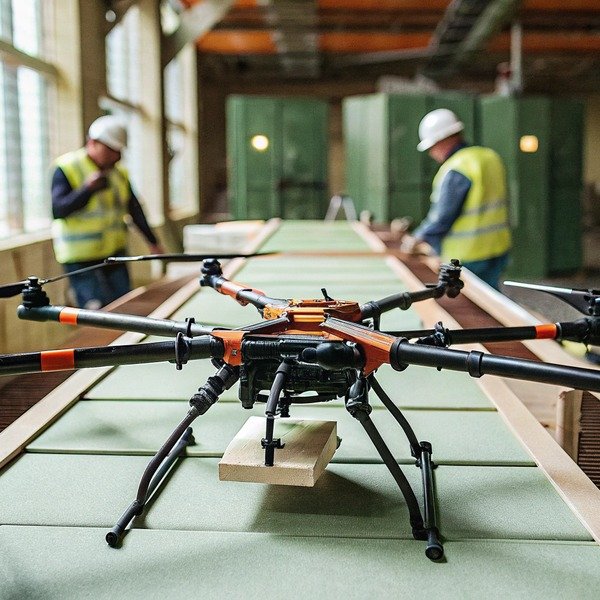
When we designed our latest orange-housed rescue quadcopter, we realized that robust performance isn’t enough; sustainable manufacturing matters just as much to modern fire departments.
Yes, reputable firefighting drone suppliers should possess ISO 14001 certification to prove their production lines meet international environmental standards. This certification ensures the manufacturer strictly controls waste, minimizes hazardous RoHS (Restriction of Hazardous Substances) 1 emissions, and adheres to sustainable practices throughout the entire drone assembly and testing process.
Let’s explore exactly why these green credentials safeguard your investment and operational success.
Which environmental management certifications, like ISO 14001, should I require from my drone supplier?
While sourcing components for our Xi'an assembly lines, we often see confusion about which specific certificates genuinely validate a factory's environmental commitment.
You should primarily require ISO 14001 certification, which validates a functioning Environmental Management System (EMS). Additionally, look for ISO 50001 for energy management and RoHS compliance to ensure hazardous substances like lead and mercury are restricted in the drone’s electronic components.
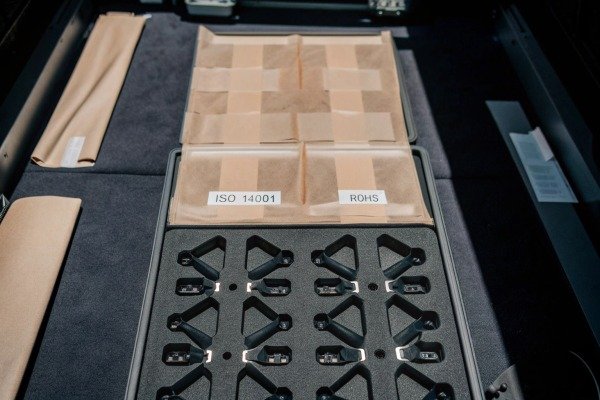
When you evaluate a supplier from China or elsewhere, the alphabet soup of certifications can be overwhelming. However, for high-stakes equipment like firefighting drones, specific environmental standards are non-negotiable indicators of a mature manufacturing process.
The Gold Standard: ISO 14001
ISO 14001 is not just a badge; it is a framework. ISO 14001 2 When we implemented this in our factory, it forced us to map out every interaction our production has with the environment. For a buyer, this certification confirms that the supplier has a "Plan-Do-Check-Act" cycle in place. It means we have protocols for handling the chemicals used to coat the carbon fiber arms детали из углеродного волокна 3 and procedures for disposing of the lithium leftovers from battery testing. If a supplier lacks this, their waste management is likely ad-hoc, which increases the risk of supply chain shutdowns due to environmental violations.
Beyond the Basics: RoHS and REACH
While ISO 14001 covers the она необходима. Ключ в том, чтобы отделить, RoHS (Restriction of Hazardous Substances) covers the product. Firefighting drones often fly over populated areas or sensitive ecosystems. You need to ensure that the heavy metals found in solder or circuit boards are minimized.
- RoHS: Restricts lead, mercury, and cadmium. This is critical because if a drone is lost in a water source during a mission, it limits toxic leaching.
- REACH: An EU regulation that addresses the production and use of chemical substances. Even for US buyers, a manufacturer compliant with REACH is using safer, higher-quality raw materials.
ISO 50001: Energy Management
This is rarer but valuable. It shows the factory is actively managing energy consumption. energy consumption 4 A manufacturer efficient with energy is often efficient with costs, which stabilizes the pricing you receive.
Summary of Critical Certifications
To help you filter potential partners, here is a breakdown of what to ask for:
| Сертификация | Что это подтверждает | Почему это важно для пожарных дронов |
|---|---|---|
| ISO 14001 | Environmental Management System | Proves the factory won't be shut down for pollution; ensures consistent production processes. |
| RoHS | Hazardous Substance Control | Ensures the drone's electronics don't contain banned toxic metals like lead. |
| ISO 50001 | Energy Management | Indicates a high-efficiency factory, often correlating with better pricing stability. |
| UN 38.3 | Безопасность перевозки батарей | Critical for shipping lithium batteries safely; overlaps with environmental safety. |
How does a supplier's environmental compliance actually impact the quality and durability of the firefighting drones I buy?
Our engineering team in Chengdu noticed that strict environmental controls often correlate directly with higher precision in manufacturing and fewer defects in the final unit.
Suppliers with environmental compliance often utilize cleaner, more controlled production environments, reducing contamination risks for sensitive sensors. This rigorous oversight extends to better material sourcing and waste reduction, resulting in structurally sound drones that withstand extreme temperatures and harsh operational conditions longer.
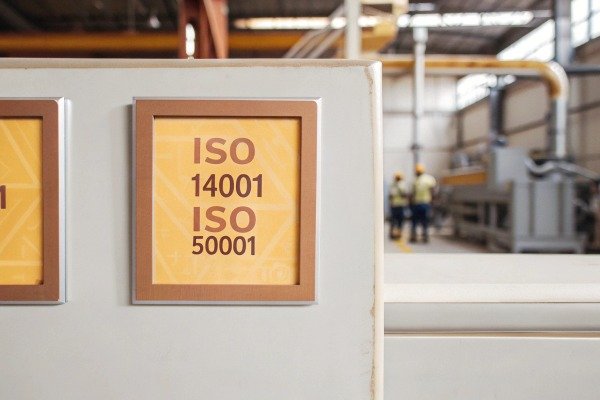
It is a common misconception that "environmental" just means "tree-hugging." In the world of precision electronics and aviation manufacturing, environmental control is synonymous with quality control. A dirty, polluting factory is rarely a high-precision factory.
The "Clean Factory" Correlation
To meet ISO 14001 standards, we have to control dust ISO 14001 standards 5, air quality, and chemical vapors. This environment is exactly what is needed to produce high-quality flight controllers and gimbal motors.
- Soldering Integrity: High levels of particulate matter or uncontrolled humidity (common in non-compliant factories) lead to weak solder joints. On a firefighting drone, a weak joint fails when the motor heats up or vibrates.
- Sensor Calibration: The optical sensors and thermal cameras on our drones require pristine assembly conditions. тепловыми камерами 6 Environmental controls prevent microscopic contamination that could fog a lens years later.
Material Purity and Durability
Environmental compliance dictates how raw materials are stored and handled. For example, the bright orange housing on our drones is made from specific polymers. If a factory does not manage its chemical storage correctly (an environmental violation), moisture can degrade the plastic pellets before molding. This results in a housing that looks fine but becomes brittle in the freezing temperatures often encountered during winter rescue missions.
Battery Reliability
Lithium-polymer batteries are the heart of any electric drone. Environmental management systems strictly regulate how battery cells are handled, stored, and tested to prevent leakage and fires. A supplier who follows these strict environmental rules is far less likely to ship batteries with latent defects. The discipline required to separate hazardous waste is the same discipline required to separate a marginal battery cell from a perfect one.
Impact on Product Lifecycle
| Manufacturing Aspect | Poor Environmental Control | Strong Environmental Compliance | Product Outcome |
|---|---|---|---|
| Chemical Storage | Chemicals stored haphazardly | Climate-controlled, separated storage | Stronger adhesive bonds on the drone frame. |
| Waste Management | Scrap material reused improperly | Defective material immediately recycled/removed | No "regrind" or weak materials in critical parts. |
| Air Quality | Dust and fumes present | Filtration systems active | Clean PCBs, reliable electrical connections. |
How can I verify that the factory's environmental system certifications are genuine before I place an order?
We frequently host audits from European clients who need to verify our documentation; unfortunately, fake certificates are common in the wider industry.
Verify certifications by requesting the supplier’s unique certificate number and checking it against the issuing body’s online database, such as the IAF CertSearch. Requesting a recent third-party audit report or conducting an on-site factory inspection provides definitive proof of their active environmental management practices.

In the digital age, a PDF certificate is easy to forge. We have seen competitors display "certificates" that expired years ago or were issued by non-accredited bodies. As a procurement manager, you need to peel back the layers to ensure you aren't liable for a supply chain scandal.
Step 1: The Database Check
Most legitimate ISO certificates are registered with the International Accreditation Forum (IAF). You can use the IAF CertSearch global database.
- Ask the supplier for the certificate number and the name of the accreditation body (e.g., SGS, TUV, BSI).
- Input these details into the official registrar's website.
- Check the status: It should read "Active." If it says "Suspended" or "Withdrawn," walk away.
Step 2: Request the "Environmental Aspect Register"
A certificate is the result; the Register is the work. ISO 14001 requires a factory to maintain a document listing their environmental impacts (e.g., noise, chemical runoff) and how they mitigate them.
- The Test: Ask your supplier, "Can you share your top three significant environmental aspects from your latest register?"
- The Result: A real manufacturer (like us) can answer this immediately because we review it annually. A trader or a fake factory will stall or send generic marketing brochures.
Step 3: Virtual or Physical Audits
If you cannot fly to China, use technology. During a video call, ask to see the waste storage area.
- Ищите: Clearly labeled bins for hazardous waste (batteries, chemicals).
- Ищите: Posted safety sheets and emergency spill kits.
- Why: You can fake a document, but it is hard to fake a fully operational hazardous waste processing zone on a live video call.
Verification Checklist for Buyers
Use this table to grade your potential supplier’s transparency:
| Метод проверки | Difficulty | Надежность | На что обратить внимание |
|---|---|---|---|
| Online Database Check | Низкая | Высокий | "Active" status and matching scope of business. |
| Document Request | Средний | Средний | Last year’s internal audit report or Aspect Register. |
| Video Walkthrough | Средний | Очень высокий | Organized waste segregation; no open chemical drums. |
| Third-Party Audit | Высокий | Самый высокий | A fresh report from an agency like SGS or Intertek. |
Will choosing a manufacturer with green production standards help me meet my own company's sustainability requirements?
Many of our US partners now ask us for "cradle-to-grave" carbon data cradle-to-grave 7 to satisfy their local government procurement mandates and internal sustainability goals.
Yes, selecting a manufacturer with green standards directly supports your Scope 3 carbon emission goals. Documentation from certified suppliers proves your supply chain adheres to responsible waste and energy practices, helping you satisfy municipal ESG mandates and qualify for government contracts prioritizing sustainability.
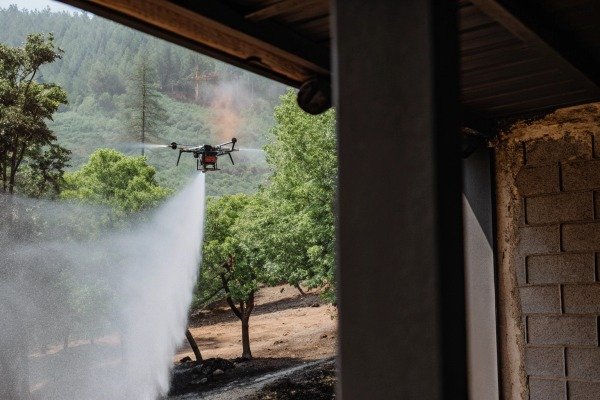
Sustainability is no longer just a "nice-to-have" in public safety procurement; it is becoming a mandate. Whether you are a private distributor selling to the government or a fire department purchasing directly, your upstream supply chain—us, the manufacturers—defines your downstream compliance.
Addressing Scope 3 Emissions
For many organizations, the largest chunk of their carbon footprint is not the electricity they burn (Scope 2), but the emissions Scope 2 8 embedded in the products they buy (Scope 3).
- The Connection: When you buy a drone from a factory that uses renewable energy or has an ISO 14001 waste reduction plan, you are effectively lowering your Scope 3 emissions.
- The Benefit: We provide data that you can plug directly into your annual sustainability reports. This is crucial if you are bidding for contracts in states like California or New York, where environmental impact is a weighted criterion in tender evaluations.
Circular Economy and End-of-Life
Firefighting drones are tools, and tools eventually wear out. A manufacturer with green standards designs for the "Circular Economy." Circular Economy 9 Circular Economy 10
- Modularity: Our drones are built so that the orange housing, arms, and motors can be separated. This means when a drone is retired, the metals can be recycled separately from the plastics.
- Battery Take-back: Suppliers with strong EMS often have programs or advice for proper lithium recycling, relieving you of the burden of hazardous waste disposal.
Competitive Advantage in Tenders
If you are a dealer responding to a Request for Proposal (RFP) from a major city fire department, having a supplier with verified green credentials can be the tie-breaker.
- Differentiation: You aren't just selling a drone; you are selling a "responsibly sourced solution."
- Risk Mitigation: You assure the client that the equipment wasn't made in a sweatshop or a pollution haven, protecting their public image.
Strategic Alignment
| Your Goal | How a Green Supplier Helps |
|---|---|
| Meet ESG Mandates | Provides certifiable proof of ethical supply chain management. |
| Win Government Bids | fulfill "Green Procurement" criteria increasingly found in RFPs. |
| Reduce Liability | Ensures compliance with international regulations on hazardous materials. |
| Brand Reputation | Aligns your brand with modern, responsible industrial practices. |
Заключение
Prioritizing certified suppliers ensures robust equipment and regulatory compliance. We remain committed to sustainable manufacturing, helping you deploy reliable, eco-responsible technology in critical missions.
Сноски
1. UK government guidance on compliance with hazardous substance restrictions in electrical equipment. ↩︎
2. Official ISO page explaining the international standard for environmental management systems. ↩︎
3. Technical information from a leading global manufacturer of carbon fiber materials. ↩︎
4. Official ISO standard details for implementing an effective energy management system. ↩︎
5. Official page for the ISO 14001 standard referenced in the text. ↩︎
6. Official documentation from a major manufacturer of high-precision thermal imaging sensors. ↩︎
7. Explains the lifecycle management concept mentioned in the context of carbon data. ↩︎
8. Official EPA guidance defining Scope 2 emissions. ↩︎
9. Authoritative definition of the Circular Economy principles. ↩︎
10. Wikipedia entry defining the principles of sustainable resource use and recycling. ↩︎

 English
  Español de México
  Deutsch
  Français
  Русский
  العربية
