
We understand the frustration of receiving equipment that performs perfectly in a test lab in Chengdu but fails miserably in a vast cornfield in Iowa. When we design our SkyRover heavy-lift drones, we frequently encounter stories from US buyers who were burned by suppliers shipping hardware with mismatched specs and useless manuals.
To verify a supplier understands US farming, audit their ability to provide FAA Section 44807 exemption documentation and check if their spray systems meet EPA Drift Reduction Technology standards. Ensure their flight software integrates with platforms like John Deere Operations Center and offers local Right to Repair support.
Let’s examine the specific criteria you must evaluate to avoid costly sourcing mistakes and ensure operational success.
Does the supplier demonstrate knowledge of FAA regulations and heavy-lift drone exemptions required for US operations?
Importing a drone is easy, but legally flying it is difficult if we haven’t prepared the necessary paperwork beforehand. We have seen shipments stuck in customs or grounded because the manufacturer treated US airspace rules like mere suggestions rather than strict requirements.
A knowledgeable supplier must provide detailed technical manuals and flight test data necessary for your FAA Section 44807 exemption petition. They should actively assist with remote identification compliance and FCC certification for controllers, proving they build legally compliant hardware for American airspace.

Navigating the Regulatory Landscape
When we export to the United States, we know that the physical capability of the drone is only half the battle. The other half is regulatory compliance. In China, regulations are strict but different; however, a supplier targeting the US market must intimately understand the Federal Aviation Administration (FAA) requirements Federal Aviation Administration 1, specifically Part 107 and the exemptions required Part 107 2 for heavy agricultural drones.
Most agricultural drones capable of carrying significant payloads weigh over 55 pounds. This pushes them out of standard Part 107 rules and requires a Section 44807 exemption. A supplier who truly understands the US market will not just sell you a box; they will provide a comprehensive data package to support your petition. This includes safety case analyses, flight history logs, and pilot operating handbooks written in clear English, not broken translation software.
FCC and Hardware Certification
Beyond the FAA, the Federal Communications Commission (FCC) plays a critical role. We ensure all our remote controllers and data transmission modules carry valid FCC certification. If a supplier cannot provide an FCC ID for their radio equipment, that equipment is technically illegal to operate in the US. This is a common oversight among generic exporters who assume their domestic standards apply globally.
The table below outlines the critical documentation a supplier must be able to produce upon request. If they hesitate or seem confused by these terms, it is a red flag regarding their readiness for the US market.
| Regulatory Requirement | Why It Matters for US Import | Supplier Responsibility |
|---|---|---|
| FAA Section 44807 | Required for drones over 55 lbs (heavy-lift). | Provide flight test data, safety manuals, and Petition for Exemption support. |
| FCC-certificering | Mandatory for radio transmission devices. | Ensure controllers and telemetry modules have valid FCC IDs labeled on the hardware. |
| ID op afstand | Mandatory for all drones operating in US airspace. | Build Standard Remote ID broadcasting capability directly into the drone firmware. |
| EPA Drift Reduction | Critical for chemical application legality. | Provide nozzle testing data against EPA Drift Reduction Technology (DRT) standards. |
Environmental Compliance and Drift
We also pay close attention to the Environmental Protection Agency (EPA) standards. In the US, "the label is the law." If a drone's spray system cannot verify droplet size consistency droplet size consistency 3, it may be illegal to use it for dispensing certain pesticides. We test our spray systems to ensure they meet EPA Drift Reduction Technology (DRT) standards EPA Drift Reduction Technology (DRT) 4. A supplier unaware of DRT ratings is likely building toys, not agricultural tools.
How can I verify that the drone's payload and endurance are truly optimized for large-scale American farmland?
While testing our rotors in Xi’an, we realized that small plots differ vastly from the hundreds of contiguous acres found in the Midwest. A drone that requires a battery swap every ten minutes simply cannot sustain the operational tempo required during a US harvest season.
Verify optimization by requesting case studies involving large-scale row crops like corn or cotton, rather than small orchard data. Ensure the supplier offers calibration presets for US application metrics, such as gallons per acre, and provides battery solutions capable of continuous cycling for high-acreage coverage.

The Gallons Per Acre (GPA) Challenge
In many Asian markets, ultra-low volume (ULV) spraying is the norm, often dipping below 1 gallon per acre. However, US agronomy often dictates higher carrier volumes for proper canopy penetration and efficacy, specifically in fungicides and herbicides for corn and soybeans. When we calibrate our flight controllers, we ensure they can handle high-flow scenarios—often 2 to 5 gallons per acre (GPA)—without compromising flight stability or pump longevity.
You should ask your supplier if their flight planning software defaults to "Liters per Hectare" or if it natively supports "Gallons per Acre" and "Pounds per Acre." It seems like a minor software toggle, but it reflects the manufacturer's mindset. If a pilot has to manually convert units in the field under stress, errors happen. We design our interface to match the user's mental model.
Endurance and Battery Logistics
Battery endurance is often exaggerated in marketing brochures. A supplier claiming "20 minutes flight time" might be measuring a hovering drone with an empty tank. For US farming, you need loaded flight time data. More importantly, you need a charging infrastructure that supports continuous operation.
In our field tests, we found that for a large US farm, the ratio of batteries to chargers is critical. You cannot wait for batteries to cool down. A true US-ready package includes rapid chargers and active cooling systems (like water-cooled charging tanks) to allow for a continuous duty cycle.
Efficiency Comparison
The following table contrasts the specifications often seen in generic exports versus those required for serious US operations.
| Functie | Generic Export Standard | US-Optimized Requirement |
|---|---|---|
| Tankinhoud | 10-16 Liters (Small plot focus) | 30-50+ Liters (Large acreage efficiency) |
| Flow Rate | Optimized for <1 GPA | High-flow pumps capable of 2-5 GPA |
| Battery Strategy | Standard air cooling (Slow turnaround) | Water-cooled or Phase-change material (Rapid cycle) |
| Field Mapping | Manual remote walking | RTK-based boundary import or aerial scouting integration |
| Nozzle Type | Proprietary centrifugal | Standard ISO TeeJet compatibility for easy replacement |
Nozzle Standardization
Another key indicator is hardware compatibility. We equip our drones with standard nozzle bodies that accept ISO-standard tips standard nozzle bodies 5 (like TeeJet). Many Chinese suppliers use proprietary centrifugal nozzles that are impossible to replace at a local Tractor Supply or hardware store. Using standard US plumbing parts on the drone indicates the supplier understands the need for field serviceability.
Will the flight control software and data outputs integrate smoothly with common US precision agriculture platforms?
Our software engineers spend months ensuring our flight logs talk to the platforms your clients actually use. Nothing destroys a workflow faster than a drone that locks data in a proprietary format, forcing farmers to juggle incompatible files manually.
Seamless integration requires compatibility with major farm management systems like John Deere Operations Center and Climate FieldView. Check if the drone supports US-standard NTRIP casters for RTK networks and allows data hosting on US-based cloud servers to meet agricultural data privacy and security expectations.

Breaking the Proprietary Ecosystem
One of the biggest complaints we hear from US customers involves "data silos." A farmer uses John Deere Operations Center to manage John Deere Bedrijfscentrum 6 their planting and harvesting data. John Deere Bedrijfscentrum 7 If our drone conducts a spray mission but generates a report that cannot be imported into that ecosystem, the data loses half its value.
We prioritize API integrations and standard file formats like Shapefiles (.shp) and GeoTIFF. When vetting a supplier, ask for a sample data packet from a recent flight. Try to import that data into Climate FieldView or a similar US platform. Climate FieldView 8 If the data is encrypted or in a proprietary format that requires the manufacturer's specific desktop software to view, it will be a major bottleneck for US adoption.
RTK and NTRIP Compatibility
Precision requires Real-Time Kinematic (RTK) positioning. Real-Time Kinematic 9 In China, there are specific national networks. In the US, farmers rely on a mix of private base stations and state-run NTRIP networks (like DOT networks). A supplier understanding US practices will ensure their drone's RTK module is unlocked and compatible with standard NTRIP casters.
We have seen competitors lock their drones to their own branded base stations, forcing the customer to buy extra hardware. We avoid this. Our systems allow users to input IP addresses and ports for local US correction services, ensuring centimeter-level accuracy without unnecessary hardware costs.
Data Privacy and Security
Data security is no longer just an IT concern; it is a geopolitical one. US farmers are increasingly wary of where their field data is stored. A supplier must be transparent about data handling.
- Server Location: Does the flight app sync to a server in Hangzhou or a generic AWS server in Virginia? We offer options to host data locally or on US-based cloud instances.
- Offline Modes: Can the drone operate entirely offline? Many US farms have poor cellular coverage. We design our ground control stations to function fully without an active internet connection, caching map data locally.
Software Feature Checklist
| Software Feature | US Market Expectation |
|---|---|
| Data Export | One-click export to Shapefile, KML, or API link to John Deere Ops Center. |
| RTK Correction | Open NTRIP protocol (customizable IP/Port) vs. Proprietary lock-in. |
| Map Source | Google Maps or Mapbox satellite layers (familiar to US users). |
| Language | Native English UI (no lingering Chinese characters in error messages). |
| Privacy | Option to disable cloud sync; full offline functionality. |
What questions should I ask to ensure the factory offers adequate after-sales support and parts delivery for the US market?
We know that downtime during the spraying season costs thousands of dollars per hour. Shipping a broken motor back to our factory in Chengdu for repair is not an option when a fungus is spreading across your client’s soybeans.
Ask about their “Right to Repair” policy, specifically if they provide diagnostic software and component-level manuals to local dealers. Confirm the existence of a domestic US-based parts warehouse or certified dealer network to guarantee rapid warranty fulfillment and minimize downtime during critical application windows.
The Right to Repair Necessity
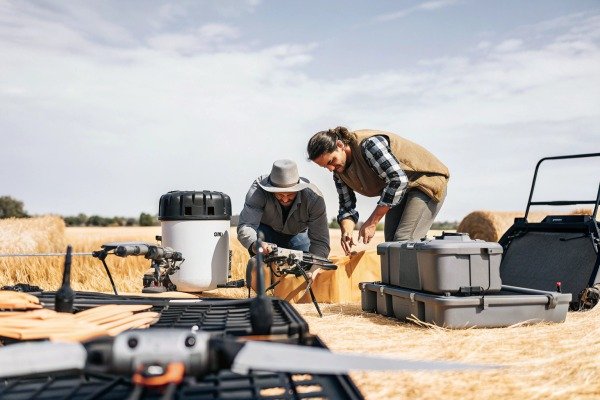
In the US agricultural sector, "Right to Repair" is a massive movement. Right to Repair 10 Farmers and technicians demand the ability to fix their own equipment. When we export, we do not glue our systems shut. We provide exploded-view diagrams and access to the diagnostic software required to recalibrate sensors after a part replacement.
You must ask a potential supplier: "If a motor fails, do I have to send the whole drone back, or will you send me the motor and the software tool to pair it?" If they refuse to share diagnostic tools, they are not viable for the US market. Remote rural areas cannot rely on a centralized repair depot that is weeks away.
Establishing a Local Safety Net
We encourage our distributors to stock a "crash kit" of essential spares—propellers, landing gear, ESCs, and pumps. However, the supplier must back this up. A supplier truly invested in the US market will either have a US subsidiary or a third-party logistics (3PL) partner warehousing critical components within the continent.
Evaluating Support Tiers
To determine if a supplier is ready to support you, use this evaluation framework during your negotiation:
| Support Level | Beschrijving | Suitability for US Market |
|---|---|---|
| Level 1: Factory Direct | Support via WeChat/WhatsApp only. Parts ship from China (5-10 days). | Unacceptable for commercial ag operations. High downtime risk. |
| Level 2: Dealer Stock | Distributor holds consumables. Major repairs ship to factory. | Marginal. Okay for hobbyists, risky for commercial applicators. |
| Level 3: Domestic Hub | Supplier has US warehouse for 2-day part delivery. US-based phone support. | Recommended. rapid turnaround for critical failures. |
| Level 4: Open Ecosystem | Supplier provides schematics, training, and open diagnostic tools to local techs. | Ideal. Aligns with US "Right to Repair" culture. |
Technical Training and Documentation
Finally, look at the quality of the training materials. We invest in creating video tutorials hosted on YouTube or Vimeo that are accessible without a VPN. We also ensure our error codes are documented in English. If a drone flashes "Error 404" and the manual is silent, the machine is useless in the field.
Ask to see their "Troubleshooting Guide" before you buy. If it is two pages long and advises "Restart the drone" for every problem, walk away. A robust supplier provides deep technical documentation that empowers your team to solve problems on the spot.
Conclusie
Sourcing agricultural drones from China requires looking beyond the spec sheet. You must verify the supplier's grasp of the American regulatory environment, their commitment to high-acreage performance, their software interoperability, and their after-sales infrastructure. At SkyRover, we have learned that understanding the farmer's daily reality is just as important as the technology itself. By asking these tough questions, you can distinguish between a toy manufacturer and a true agricultural partner.
Voetnoten
1. The primary government body regulating all aspects of civil aviation in the United States. ↩︎
2. Official FAA regulations page for small unmanned aircraft systems. ↩︎
3. ASABE provides the technical standards for agricultural equipment and chemical application safety. ↩︎
4. Official EPA standards for pesticide spray drift reduction. ↩︎
5. International standard for dimensions and identification of agricultural spray nozzles. ↩︎
6. Official product page for the specific farm management platform mentioned. ↩︎
7. Official platform for managing agricultural data, widely used by farmers in the United States. ↩︎
8. A leading digital farming tool for data visualization and field analysis. ↩︎
9. Technical explanation of the positioning technique used for high-precision drone navigation. ↩︎
10. Overview of the movement advocating for consumer’s ability to repair their own equipment. ↩︎

 English
  Spanish
  German
  French
  Dutch
Dutch  Arabic
