
Watching a shipment of our heavy-lift platforms arrive at a client’s facility is satisfying, yet I know the immediate pressure you feel to verify every component before operational deployment.
To establish a robust acceptance process, create a phased workflow starting with a physical inventory check against the bill of materials, followed by firmware verification, sensor calibration, and a functional flight test. Document all serial numbers and verify compliance certifications before formally signing off on the delivery.
Here is the exact roadmap we recommend to ensure your fleet is ready for the heat.
What specific items should be on my physical inspection checklist immediately after unboxing the firefighting drones?
We pack our drones securely in our Chengdu facility, but transit can be rough. A missed crack now becomes a mission failure later, which keeps our engineering team up at night too.
Your immediate checklist must verify the structural integrity of the airframe, specifically looking for cracks on propeller arms and landing gear. Confirm the presence of all payload accessories, inspect battery contacts for corrosion, and ensure the serial numbers on the chassis match your purchase order and shipping manifest.
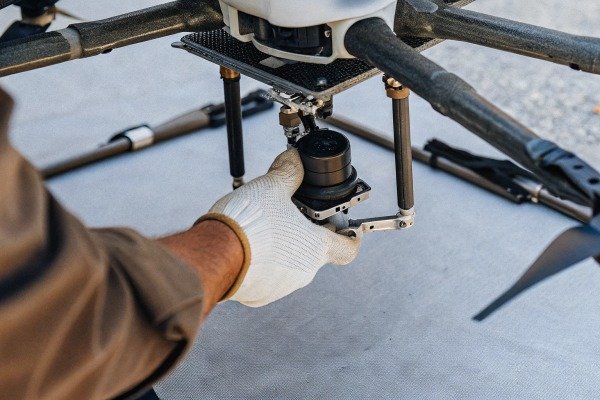
When we finalize the assembly of the black quadcopter with its bright orange, ribbed central body, we conduct a final visual check. You must repeat this rigor the moment you open the box. The physical inspection is the foundation of your acceptance process. If the hardware is damaged, no amount of software updates will fix it.
Structural Integrity Check
Start with the main body. The orange ribbed casing houses the sensitive flight controllers. Look for stress marks or indentations that suggest the box was dropped. Follow the four black propeller arms outward. These arms take the most stress during flight. You need to squeeze them gently to ensure there is no delamination delamination of the carbon fiber 1 of the carbon fiber or plastic delamination of the carbon fiber 2.
Next, examine the X-shaped landing gear. Firefighting drones often land in rough terrain. If the gear is bent or loose out of the box, it will not support the drone's weight when fully loaded. Check the motor mounts at the end of each arm. They must be tight and flush against the arm structure.
Component Inventory and Condition
We often ship accessories in separate compartments. You need to count every item. Do not assume a sealed bag means the contents are correct. Open the battery packs and look at the metal connectors. They should be gold or silver and completely shiny. If you see dark spots, that is oxidation, and you should not accept that battery.
Below is a checklist table to guide your physical inspection:
| Component Group | Inspection Point | Voldoet aan de criteria |
|---|---|---|
| Vliegtuigromp | Ribbed Central Body | No cracks, dents, or loose screws. |
| Aandrijving | Propellers (Dual Black) | No chips on leading edges; hubs lock securely. |
| Landingsgestel | X-Structure Legs | Rigid attachment; rubber feet are present. |
| Sensoren | Obstakelvermijding | Lenses are clean and free of protective film. |
| Nuttige lading | Gimbal Port | Connector pins are straight; no dust inside. |
Finally, check the camera mounted beneath the main body. Remove the lens cap and inspect the glass under a strong light. Any scratch here will ruin your thermal thermische runaway 3 imaging or visual feed during a fire. ruin your thermal imaging 4
How do I conduct a functional flight test to ensure the thermal cameras and extinguishing payloads operate as expected?
A drone that flies well but fails to drop a payload is useless. Our engineering team designs these features to work under stress, but you need to prove it on-site before a real emergency.
Execute a controlled hover to test stability, then perform a radiometric accuracy test using a known heat source to validate thermal readings. Finally, fly a payload release mission with a dummy weight to ensure the drop mechanism triggers correctly without destabilizing the aircraft's center of gravity.
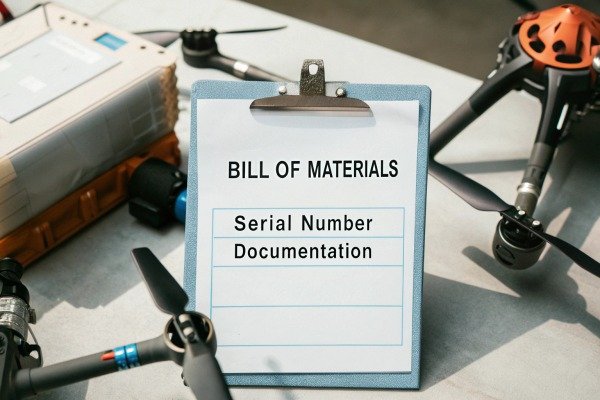
Once the physical check is done, you must move to the flight line. Do not send the drone to a fire immediately. You need a "shakedown" flight. This is where we verify that the software talks to the hardware correctly.
Pre-Flight Calibration
Before the props spin, we recommend you perform a full sensor calibration. This includes the IMU (Inertial Measurement Unit) and the compass. Inertial Measurement Unit 5 If the drone fails to calibrate after three attempts, this is a red flag. It suggests internal sensor damage.
Thermal Sensor Validation
Firefighting relies on thermal data. You cannot just look at the screen and say it works. You need to test the radiometric accuracy radiometric accuracy 6. Set up a heat source, like a portable heater or a vehicle engine, at a known distance.
Switch the camera view to thermal mode. The drone should clearly define the hot spots. Check the temperature readout on your controller. It should match the known temperature of the object within a margin of error (usually ±2 degrees or 2%). Cycle through the color palettes (White Hot, Black Hot, Ironbow) to ensure the software processes the image instantly without lag.
Payload Mechanism Testing
The extinguishing payload is critical. Whether you are dropping fire retardant balls or a hose line, you must test the release mechanism. Do not test this with expensive real supplies. Use a dummy weight that matches the payload specification.
Hover the drone at a safe altitude (e.g., 10 meters). Trigger the release switch. The mechanism should open instantly. Watch the drone's behavior. When the weight drops, the drone will jump up slightly. The flight controller should correct this immediately and return to a stable hover. If the drone drifts or wobbles dangerously after the drop, the gain settings may need adjustment.
| Test Phase | Action Required | Success Indicator |
|---|---|---|
| Hover Test | Hover at 2m for 5 minutes. | Drift is less than 10cm horizontally. |
| Thermal Test | Focus on a heat source (60°C+). | Temperature reading is accurate; image is sharp. |
| Valproef | Release 2kg dummy weight. | Immediate release; aircraft restabilizes < 2 seconds. |
| Endurance | Fly until 20% battery remains. | No voltage sag below safety limits. |
Which certifications and technical manuals must I verify to ensure the shipment meets compliance standards?
Missing paperwork halts operations faster than a broken prop. authorities like the FAA 7 We spend months on certifications, so ensuring you have the right documents for local authorities like the FAA is critical.
You must verify the presence of the User Manual, Maintenance Logbook, and Battery Safety Guidelines. Crucially, confirm the FCC or CE compliance certificates, the radio transmission authorization, and the specific certificate of conformity that matches the drone’s unique serial number for local aviation authority registration.
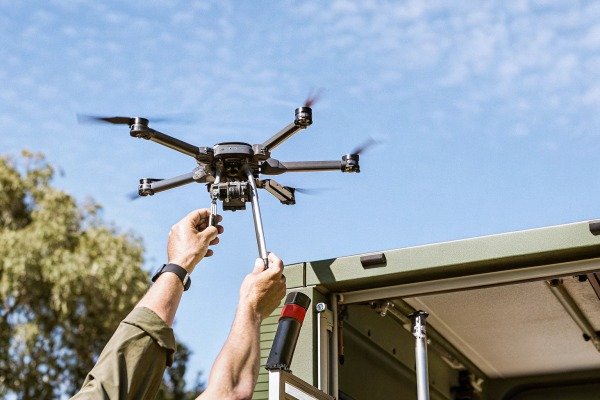
Paperwork is not just for filing; it is your legal shield. When we export to the US or Europe, we include a packet of specific documents. If these are missing, you cannot legally register the drone, and your insurance will likely be void.
Regulatory Registration Documents
For our US clients, the most important document is the FCC compliance certificate for the radio transmission. The remote controller and the drone both emit signals. Without this cert, the equipment is technically illegal to operate.
You also need the "Certificate of Conformity" or "Factory Inspection Report." This document proves that this specific serial number was tested and passed our internal quality control standards. You will need this data when you register the drone with the FAA or Transport Canada register the drone with the FAA 8.
Technical and Maintenance Manuals
Do not accept a generic "Quick Start Guide." Professional firefighting drones require a comprehensive Maintenance Manual. Maintenance Manual 9 This manual tells you when to replace motors, how to check for metal fatigue, and the cycle life of the batteries.
We also include a Battery Safety Data Sheet (MSDS). This is essential for storing your lithium batteries in the firehouse. storing your lithium batteries 10 It tells you the chemical composition and how to handle a thermal runaway event.
Digital Manual Verification
Sometimes, we update manuals after shipping. Check the QR code usually found on the box or the first page of the manual. Scan it to ensure you have the latest digital version. The physical manual might be version 1.0, but the online version might be 1.2, containing critical safety updates.
| Naam document | Doel | Verification Action |
|---|---|---|
| FCC/CE Certificate | Legal radio transmission compliance. | Match ID number on the sticker to the document. |
| Factory QC Report | Proof of unit testing. | Ensure drone Serial Number matches the report. |
| MSDS (Batteries) | Fire safety and storage protocols. | File in your HazMat binder at the station. |
| Gebruikershandleiding | Operational instructions. | Verify it covers the specific model delivered. |
What criteria should I use to reject a unit or request support if I find defects during the quality control check?
Finding a defect is frustrating. We strive for perfection, but if a unit falls short, knowing exactly when to stop and call us saves you time and liability.
Reject any unit exhibiting structural cracks on the carbon fiber frame, signs of battery swelling, or repeated sensor calibration failures. Additionally, if the thermal camera shows dead pixels or the remote controller fails to bind after firmware updates, immediately flag the unit for warranty replacement or engineering support.
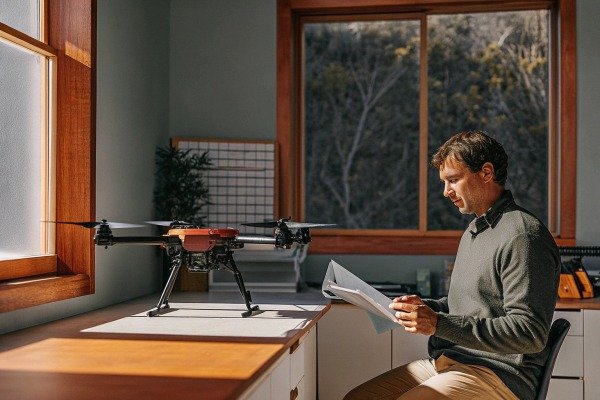
We build our drones to be tough, but defects can happen. You need a clear line in the sand. Knowing what is a "quick fix" versus a "hard reject" will streamline your communication with our support team.
Critical "Hard Reject" Criteria
These are issues that compromise safety. You should not attempt to fix these yourself.
- Carbon Fiber Damage: If you see any crack, delamination, or deep scratch that cuts into the fibers of the arms or landing gear, reject the unit. Structural failure in mid-air is catastrophic.
- Battery Swelling: If a battery is even slightly puffy or does not sit flat on a table, it is dangerous. Do not charge it. Take a photo and demand a replacement.
- Motor Grinding: Spin the motors by hand. They should feel smooth with a slight magnetic resistance. If you hear a grinding noise or feel "gravel" inside, the bearing is bad. This is a manufacturing defect.
"Soft Reject" or Support Requests
These are issues that might be solved with a software patch or remote guidance.
- Firmware Mismatch: Sometimes the controller has newer software than the drone. If they do not connect, contact us. We can guide you through the update process.
- Gimbal Drift: If the camera is slightly tilted, it might just need an auto-calibration. Try the software fix first. If it fails three times, then it becomes a hardware claim.
The RMA Process
If you find a defect, document it immediately. Take clear photos and videos. Send the serial number and the description of the fault to us within 24 hours of unboxing. This helps us trace the batch and prevents disputes about whether the damage happened during your use or during shipping.
Conclusie
Establishing this process protects your investment and ensures safety. We stand behind our technology, and rigorous acceptance testing is the final step in our partnership for successful missions.
Voetnoten
1. General reference for the material properties and manufacturing of carbon fiber reinforced polymers. ↩︎
2. Official FAA handbook chapter detailing inspection of composite materials like carbon fiber. ↩︎
3. Authoritative safety information on lithium-ion battery risks and thermal runaway. ↩︎
4. Technical overview of thermal imaging technology and its application in industrial and emergency sensors. ↩︎
5. Technical definition of the sensor package responsible for measuring a drone’s orientation and velocity. ↩︎
6. Industry leader explanation of radiometric accuracy in thermal imaging. ↩︎
7. Official US Federal Aviation Administration guidelines for Unmanned Aircraft Systems registration and safety. ↩︎
8. Official FAA portal for drone registration requirements and procedures. ↩︎
9. ASTM standards for the content and structure of maintenance manuals for small Unmanned Aircraft Systems. ↩︎
10. International aviation industry standards for the safe handling and storage of lithium-ion batteries. ↩︎

 English
  Spanish
  German
  French
  Dutch
Dutch  Arabic
