
When we ship sensitive payloads from our Xi’an facility to California, the risk of transit damage is a constant concern for buyers relying on timely deployments.
To determine supplier liability for transit damage, review the specific Incoterms defined in your contract, which dictate exactly where risk transfers from seller to buyer FOB (Free on Board) 1. Additionally, examine the purchase agreement for insurance clauses and inspect the packaging standards used to protect delicate sensors during international International Commercial Terms 2 shipping.
Let’s break down the critical factors that protect your investment during transport.
How do Incoterms determine whether I or the supplier is liable for damage during transit?
Our logistics team often explains to new clients that choosing the right shipping term is just as important as selecting the correct thermal camera resolution.
Incoterms define the precise moment risk shifts between parties; for example, under Ex Works (EXW), you bear all transit risks from our factory floor. Conversely, Delivered Duty Paid (DDP) places the full burden of loss or damage on the supplier until the drone arrives at your designated facility.
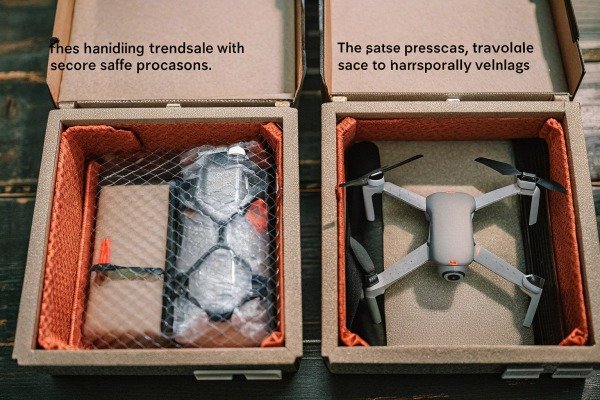
Understanding Incoterms (International Commercial Terms) is fundamental International Commercial Terms 3 to managing risk when importing high-value equipment like our SkyRover firefighting drones. These three-letter acronyms are not just logistics jargon; they are the legal framework that decides who pays for a replacement if a crate falls off a forklift in Shanghai or gets crushed in a warehouse in Los Angeles.
The Point of Risk Transfer
The most critical concept to grasp is the "transfer of risk." This is the geographical or physical point where the supplier's liability ends and yours begins. In our experience, many disputes arise because buyers assume the supplier is responsible until the box is opened in their office. This is often not the case unless specific terms are chosen.
For example, if you agree to FOB (Free on Board), the risk transfers to you the moment the drone is loaded onto the vessel in China. If the ship encounters a storm and the cargo is damaged, that is your liability to handle with your insurance company. We have fulfilled our obligation by getting it onto the ship.
Recommended Terms for Buyers
For procurement managers like you, we generally recommend terms that push the risk further down the supply chain toward your final destination.
- DDP (Delivered Duty Paid): This is the safest option for the buyer. The supplier accepts all risks and costs, including duties and taxes, until the goods are delivered to your door. If the drone arrives with a cracked orange housing or a broken gimbal, it is the supplier's problem to fix.
- DAP (Geleverd ter plaatse): Similar to DDP, but you are responsible for import duties. The supplier still holds the risk for transit damage until the goods arrive at the named place.
Comparing Common Incoterms
We have compiled a comparison table to help you visualize where the liability shifts for a typical drone shipment.
| Incoterm | Supplier Liability Ends | Buyer Liability Begins | Who Pays for Transit Insurance? | Recommended for Buyers? |
|---|---|---|---|---|
| EXW (Ex Works) | At the factory door in China | Immediately upon pickup | Buyer | No (High Risk) |
| FOB (Free on Board) | When cargo is on the ship | Once cargo is on the ship | Buyer | Moderate Risk |
| CIF (Cost, Insurance, Freight) | At the destination port | Risk transfers at origin port, but supplier pays freight/insurance | Supplier (Minimum cover) | Moderate Risk |
| DDP (Delivered Duty Paid) | At the buyer’s final destination | After unloading at destination | Leverancier | Yes (Lowest Risk) |
The Hidden Trap of CIF
Be cautious with CIF. While the supplier pays for insurance, the risk actually transfers to you once the goods are on the ship in the export country. Furthermore, the insurance obligation is usually only for minimum cover (Clause C), which might not cover specific damages to delicate electronics. Always clarify the level of coverage if you must use CIF.
What specific clauses should I include in my purchase agreement to protect against shipping losses?
Drafting contracts for our customized OEM projects has taught us that vague terms often lead to lengthy disputes when specialized hardware arrives broken.
Your agreement must include a "Functional Integrity" clause ensuring sensors work upon arrival, not just that the box is intact. Also, mandate comprehensive transit insurance covering full replacement value and strictly define the "Inspection Period" to allow at least 72 hours for thorough testing.
A standard purchase order is rarely enough when buying sophisticated firefighting technology. The physical damage to the black symmetrical frame or the landing gear is easy to spot, but internal damage to flight controllers or sensors is invisible vluchtregelaars 4 to the naked eye. You need robust contractual language to cover these scenarios.
The "Functional Integrity" Clause
Standard shipping warranties often cover only "visible physical damage." However, a hard impact during transit can misalign the camera gimbal or decalibrate the thermal sensors without leaving a scratch on the outer orange housing.
We advise inserting a Functional Integrity Clause. This states that the product is considered "delivered" only after it passes a power-on self-test (POST) and a basic flight diagnostic. This shifts the burden back to the supplier to ensure the packaging absorbs enough shock to protect internal calibration, not just the external shell.
Defining the Inspection Window
Time is your enemy in transit claims. Most standard contracts require you to report defects within 24 hours. For a complex industrial drone, this is insufficient. You need time to unbox, charge batteries, and run diagnostics.
We recommend negotiating an Inspection Period of at least 72 hours (3 business days). This gives your technical team ample time to perform a "bench test" of the avionics. If you discover a gyroscope error on day two, this clause protects your right to claim it as transit damage rather than user error.
Essential Contract Clauses Checklist
Below are specific clauses you should verify with your legal team before signing the purchase agreement.
| Clause Name | Doel | Key Element to Include |
|---|---|---|
| All-Risk Insurance | Ensures full value coverage. | Must cover 110% of invoice value (ICC Clause A). |
| Packaging Compliance | Sets a standard for protection. | Must meet ISTA 3A standards for air cargo. |
| Concealed Damage | Covers internal/invisible breaks. | Allows claims for non-visible damage found during testing. |
| Force Majeure Exclusion | Protects against vague excuses. | Ensure "carrier negligence" is NOT a force majeure event. |
| Dispute Resolution | speeds up settlements. | Specify arbitration in a neutral location or the buyer's jurisdiction. |
Penalty for Improper Battery Declaration
Firefighting drones use high-capacity Lithium-Polymer Lithium-Polymer (LiPo) batteries 5 (LiPo) batteries. Lithium-Polymer (LiPo) batteries 6 If these are damaged in transit due to improper packing, they become a fire hazard. Your contract should explicitly state that the supplier is fully liable for any fines, seizures, or damages resulting from non-compliance with IATA Dangerous IATA Dangerous Goods Regulations 7 Goods Regulations. IATA Dangerous Goods Regulations 8 This incentivizes the supplier to use the highest quality fire-retardant packaging for batteries.
How can I verify that the supplier's packaging standards are high enough to prevent damage?
Before any unit leaves our assembly line, we run rigorous vibration tests vibration tests 9 because we know vibration tests 10 how rough international freight handlers can be with fragile avionics.
Request detailed photos of the internal cushioning and shock-absorbing materials used for specific components like the gimbal and arms. Ask for proof of "drop testing" compliance and ensure the supplier uses custom-cut foam inserts rather than generic bubble wrap to secure the drone's center of gravity.
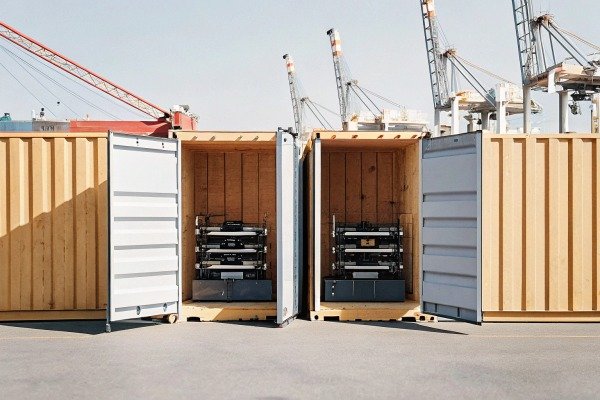
The journey from China to the United States involves trucks, airplanes, forklifts, and potentially customs inspections. The only thing standing between your expensive drone and a hard concrete floor is the packaging. Verifying this voor shipment is a proactive step that many buyers overlook.
The Importance of Custom-Cut Foam
Generic packaging is the enemy of industrial drones. The drone features a symmetrical cross-shaped frame with slender landing gear. These protruding parts are stress points. If the drone sits loosely in a box filled with peanuts or bubble wrap, the landing gear will likely snap under the weight of the drone during a drop.
You should insist on high-density, custom-cut EVA foam. This foam should be laser-cut to the exact dimensions of the drone body, the propeller arms, and the gimbal. This ensures that the weight is distributed evenly across the drone's structural frame, rather than resting on fragile components.
Requesting Pre-Shipment Evidence
Do not just take the supplier's word for it. We encourage our clients to ask for a "Packaging Validation Report" or simple photo evidence before the final balance is paid.
- The "Box-in-Box" Method: For high-value units, the drone should be inside a hard carrying case (like a Pelican case), and that case should be inside a cardboard shipping carton with additional buffer material.
- Sensor Protection: Ask specifically how the camera gimbal is secured. It should have a "gimbal lock" or a foam block preventing it from swinging around.
- Battery Separation: Batteries should be packed individually in fire-proof bags or separated compartments, never installed in the drone during shipping.
Packaging Standards to Reference
When communicating with suppliers, referencing specific industry standards shows you are a knowledgeable buyer.
Understanding Packaging Certifications
| Standaard | Beschrijving | Why You Want It |
|---|---|---|
| ISTA 3A | Simulates delivery via parcel delivery systems. | Tests for drops, vibrations, and compression common in FedEx/UPS/DHL shipping. |
| IP67 (Case) | Ingress Protection for the hard case. | Ensures the inner case is waterproof and dustproof, protecting against rain on the tarmac. |
| UN38.3 | Safety standard for lithium batteries. | Mandatory for shipping batteries; ensures they won't catch fire under stress. |
The "Shake Test" Logic
A simple question to ask the supplier is: "If you shake the box, does anything move?" The answer should be a definitive no. Movement creates kinetic energy, which leads to impact damage. If we cannot guarantee zero movement within the case, we redesign the foam. You should demand the same level of attention to detail.
What evidence must I provide to the supplier to successfully claim compensation for damaged goods?
When a client reports a broken propeller arm, our claims team immediately asks for specific documentation to validate the issue against our pre-shipping logs.
You must submit high-resolution photos of the external packaging before opening it, followed by video evidence of the unboxing process. Additionally, provide the carrier's signed delivery receipt noting visible damage and a diagnostic log from the drone's flight controller showing internal sensor errors.

Successfully claiming compensation is often a matter of forensic evidence. Suppliers and insurance companies are naturally skeptical of claims; they need to rule out the possibility that you dropped the drone after opening it. The burden of proof lies with you, the buyer.
The Golden Rule: The Unboxing Video
We cannot stress this enough: Film the unboxing. This is the single most powerful piece of evidence you can possess.
Start filming before you cut the tape. Show all six sides of the box. Capture the shipping label clearly. Then, film the opening of the box, the removal of the foam, and the first inspection of the drone. If the landing gear is bent or the orange housing is cracked as you pull it out, the video proves undoubtedly that the damage occurred voor it came into your possession. This video makes it nearly impossible for a supplier or insurer to deny a claim.
The Bill of Lading (BOL) Annotation
If the outer box shows any sign of distress—crushed corners, holes, water stains, or retaping—you must note this on the carrier's delivery receipt (Bill of Lading) before you sign it.
If you sign for a crushed box as "Received in Good Condition," you have essentially waived your right to claim that the carrier damaged it. You should write: "Received subject to inspection – Outer box damaged." This small sentence preserves your legal rights against the freight company.
Diagnosing "Invisible" Damage
As mentioned earlier, some damage is internal. If the drone looks fine but drifts uncontrollably during the first flight, this is transit damage to the IMU (Inertial Measurement Unit).
To claim this, you need to export the Flight Controller Logs. Connect the drone to your computer and download the diagnostic report. If the logs show "IMU Calibration Error" or "Gimbal Motor Overload" on the very first startup, send this file to the supplier. We can look at the timestamps. If the errors appear at the first minute of power-on, it proves the unit arrived defective.
Evidence Checklist for Buyers
To ensure a smooth claims process, use this checklist to gather your evidence package.
| Evidence Type | When to Capture | Why It Is Crucial |
|---|---|---|
| External Photos | Before opening the box | Proves the package was mishandled by the carrier. |
| Unboxing Video | During opening | The ultimate proof that damage existed upon arrival. |
| BOL Notation | At time of delivery | Prevents the carrier from claiming they delivered it safely. |
| Serial Number Photo | Immediately after unboxing | Links the damaged unit to the specific invoice/warranty. |
| System Logs | First power-on | Proves internal hardware failure (sensors/software). |
Preserving the Packaging
Finally, never throw away the packaging until the claim is resolved. The insurance adjuster may demand to inspect the box to see if the foam failed. If you discard the box, the supplier can argue that they cannot verify the cause of damage, leading to a claim denial. Keep the box, the foam, and even the filler material until the replacement drone is in your hands.
Conclusie
Securing your investment in firefighting drones goes beyond selecting the best hardware; it requires a proactive approach to logistics liability. By negotiating the right Incoterms, enforcing strict packaging standards, and documenting the receiving process, you ensure that any transit damage is resolved quickly and at the supplier's expense, keeping your fleet ready for the mission.
Voetnoten
1. Official source for Incoterms rules defining risk transfer for sea and inland waterway transport. ↩︎
2. Official source for Incoterms definitions and rules. ↩︎
3. Provides general background on the standardized trade terms used in international shipping. ↩︎
4. Documentation for industrial-grade flight controllers and drone components. ↩︎
5. Official US DOT guidance on shipping lithium batteries. ↩︎
6. Government safety guidelines for transporting high-capacity lithium batteries. ↩︎
7. Official IATA page for Dangerous Goods Regulations. ↩︎
8. Official industry standards for the safe transport of dangerous goods like lithium batteries by air. ↩︎
9. ISTA sets the global standards for transit vibration testing. ↩︎
10. Industry standard for vertical random vibration testing of shipping units. ↩︎

 English
  Spanish
  German
  French
  Dutch
Dutch  Arabic
