
Watching a shipment sit motionless at the port is a nightmare for any procurement manager. When we coordinate logistics for our international clients, we often see that proactive preparation is the only way to prevent costly delays.
To cooperate effectively with customs inspections, you must ensure your broker has immediate access to a complete documentation package, including the End-User Statement. You should verify that all hardware serial numbers match your paperwork, be prepared to pay duties promptly, and remain available to answer questions regarding the drone’s specific firefighting application.
Understanding the specific steps of the inspection process will help you clear your equipment faster.
What specific documentation do I need to provide for a smooth customs inspection?
We dedicate significant time in our administrative office ensuring every piece of paper aligns perfectly with the physical cargo. If a single digit on an invoice is incorrect, your critical equipment could be held for weeks.
You must provide a Commercial Invoice, a detailed Packing List, a Bill of Lading, and a Certificate of Origin. Additionally, firefighting drones require an End-User Statement to clarify non-military use, along with FCC or CE compliance certificates and UN38.3 test reports CE compliance certificates 1 for the lithium batteries included in the shipment.

The Critical Role of the End-User Statement
When you import industrial-grade equipment, especially a high-performance black quadcopter with advanced optics, customs officers look for "dual-use" risks. dual-use risks 2 This means they check if the technology could be used for military purposes. To prevent this misunderstanding, you must provide a clear End-User Statement.
This document serves as a legal declaration. It tells the authorities exactly who will use the machine and for what purpose. For our clients, this statement confirms that the SkyRover drone is destined for a fire department or emergency response contractor. It explicitly states that the equipment is for civil protection, such as thermal search and rescue or fire suppression, rather than combat. thermal search and rescue 3 Without this paper, officers may flag the shipment for an intensive security review.
Accurately Classifying Your Goods
Your documentation must use the correct Harmonized Harmonized System (HS) codes 4 System (HS) codes. Harmonized System (HS) codes 5 If you or your broker select the wrong code, you face fines or recalculations that pause the process.
Most industrial drones fall under heading 8806. However, the specific subheading depends on the weight and payload capacity. Firefighting drones often carry heavy loads, so the classification must reflect the Maximum Take-Off Weight (MTOW). You should also list accessories separately if required by your local laws. For example, the ground control station and the drone body might need distinct descriptions on the Commercial Invoice to avoid confusion during a physical check.
Battery Safety Documentation
Lithium batteries are considered dangerous goods during transport. Customs officials are very strict about battery safety credentials. You cannot simply list "batteries" on the invoice. You must attach the UN38.3 Test Summary. UN38.3 Testoverzicht 6 This proves the batteries have passed safety tests for vibration, shock, and short circuits.
If this report is missing, the port authorities may refuse to release the cargo. They might even demand that the batteries be destroyed or returned to the origin country. We always attach these reports to the master shipping file, but you should keep a digital copy ready to email to your broker instantly.
Essential Documents Checklist
The following table outlines the documents you must have ready before the ship docks at your local port.
| Naam document | Primary Purpose | Critical Details to Verify |
|---|---|---|
| Commerciële factuur | Used to calculate duties and taxes. | Must match the purchase price and include the correct HS Code (typically 8806). |
| Paklijst | Tells inspectors what is in each box. | specific serial numbers for the drone body and remote controller must differ. |
| End-User Statement | Clears security checks for dual-use goods. | Must explicitly state "Civil Firefighting Use Only" and list the final location. |
| UN38.3 Testrapport | Proves battery safety compliance. | Ensure the model number on the report matches the battery label exactly. |
| FCC/CE Certificate | Proves radio frequency compliance. | The ID number on the certificate must be printed on the drone's hardware label. |
How long should I expect the customs inspection process to take for industrial drones?
Our logistics team constantly monitors tracking updates to keep clients informed about arrival times. While we can guarantee production schedules, port inspections introduce a variable that can frustrate even the most organized project timeline.
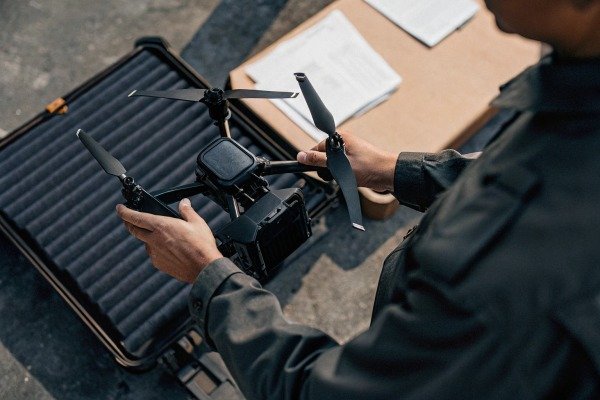
Standard document reviews typically take 24 to 48 hours, but physical inspections can extend the process to 5 to 10 business days. If your shipment is selected for a rigorous “intensive exam” or requires further testing for data security, the delay can last up to three weeks depending on port congestion.
Understanding Inspection Levels
Not all inspections are the same. Customs agencies use a tiered system to manage incoming cargo. Understanding these levels helps you manage expectations within your organization.
- Document Review (X-Ray): This is the most common and fastest check. Officers scan your paperwork and may run the container through a large X-ray machine. If the images match the declared items—showing a symmetrical cross-shaped frame and landing gear—they release the goods. This usually happens within two days.
- Tail Gate Exam: The officer opens the back of the container to look inside. They may cut open a few boxes to verify the contents. If they see the bright orange housing of the firefighting unit as described, they often close it up and approve it. This adds about 3 to 5 days.
- Intensive Exam: This is what causes major delays. The cargo is moved to a separate warehouse (CES). Officers unpack everything. They check serial numbers against the invoice, open battery compartments, and verify labels. This takes time and labor.
The Impact of Port Congestion
The physical location of entry matters. Large ports like Long Beach or Rotterdam handle massive volumes. During peak seasons, your container might sit in a queue for days before an officer even looks at it.
For urgent firefighting equipment, we sometimes recommend using air freight. Airports also have customs inspections, but the volume is lower, and the processing is generally faster. However, large industrial drones with high-capacity batteries often must travel by sea due to dangerous goods regulations on passenger aircraft. If you must ship by sea, plan for a buffer of at least two weeks in your deployment schedule.
Avoiding Storage Fees (Demurrage)
Time is money at the port. Once your container is unloaded, you have a limited number of "free days" (usually 3 to 5). If customs holds your shipment for an inspection that takes longer than these free days, the port charges storage fees, known as demurrage. storage fees, known as demurrage 7
These fees can escalate quickly, sometimes costing hundreds of dollars per day. While you cannot force customs to work faster, you can speed up your response time. If they ask for a document, provide it within the hour. Delays on your end directly result in higher storage bills.
Estimated Clearance Times by Inspection Type
| Inspection Type | Typical Duration | Frequentie | Risk Factor |
|---|---|---|---|
| Electronic Entry / Release | Instant to 24 hours | High (Most shipments) | Laag |
| Document Review / X-Ray | 24 – 48 hours | Medium | Laag |
| Tail Gate / Visual Check | 3 – 5 days | Laag | Matig |
| Intensive Physical Exam | 7 – 15+ days | Very Low (Random or flagged) | High (Demurrage likely) |
What are the common compliance issues that might delay my firefighting drone shipment?
When our engineers design flight controllers, we strictly adhere to international standards to minimize friction at borders. international standards 8 However, we still see shipments get flagged because local regulations regarding data and radio frequencies are constantly evolving.
The most common delays stem from suspected data security risks, lack of FCC/CE radio frequency certification, or incorrect battery labeling. Customs may also hold shipments if the physical serial numbers on the drone do not perfectly match the submitted commercial invoice.

Data Security and Country of Origin
In recent years, data security has become the number one compliance hurdle for drones entering the United States and parts of Europe. Authorities are wary of equipment that transmits video or flight data to servers in foreign countries.
If your drone is flagged for a data security review, officers will examine the manufacturer. They want to ensure the hardware is not on a restricted entity list (like the NDAA list in the US). We ensure our firefighting models use isolated data transmission protocols. However, if customs suspects the device could be used for espionage, they will hold it. You must be ready to provide a technical sheet proving that the drone stores data locally on the SD card and does not auto-upload to external cloud servers without user permission.
Radio Frequency (RF) Compliance
Every industrial drone is a powerful radio transmitter. It communicates with the remote controller and sends video feeds over long distances. To enter the country legally, this radio equipment must be certified by the local telecommunications authority (FCC in the US, CE in Europe).
A common issue arises when the FCC ID label is missing from the drone body. FCC ID label 9 Customs inspectors look for this specific sticker. If they cannot find it, or if the ID number does not show up in their database as a valid active device, they will seize the shipment. We apply these labels during assembly, but you should always ask your supplier for a photo of the label before the goods leave the factory. This allows you to verify the ID yourself.
Discrepancies in Serial Numbers
Customs inspections are black and white. If your invoice lists a drone with serial number SR-2024-X01, but the officer opens the box and sees SR-2024-X02, they will stop the clearance. They assume the invoice is fake or the goods are smuggled.
This often happens due to simple clerical errors in the packing department. The only way to fix this is to amend the manifest, which takes time and incurs fines. Accuracy is paramount. We use barcode scanners to generate packing lists to avoid human error, but you should always emphasize this requirement to any supplier you work with.
Dual-Use Goods and Export Controls
As mentioned earlier, high-end drones are "dual-use." If your paperwork is vague, an inspector might think you are importing a weapon delivery system. This is especially true for drones capable of carrying heavy payloads.
Firefighting drones often have drop mechanisms for fire extinguishing balls. To an untrained eye, this looks like a bomb-drop mechanism. Your compliance relies on explaining the function clearly. You must provide technical manuals showing the mechanism is designed for "fire suppression spheres," not munitions.
Common Compliance Red Flags
| Issue | Why it Causes Delays | Solution |
|---|---|---|
| Missing FCC/CE Logo | Suggests illegal radio interference. | Ensure permanent labels are affixed to the chassis. |
| Vague Product Description | Implies hidden military use. | Use specific terms like "Civil Firefighting UAV." |
| Battery Label Errors | Safety hazard concerns. | Labels must show Watt-hours (Wh) and Voltage clearly. |
| Data Security Concerns | Fear of espionage/spying. | Provide a "Data Sovereignty Statement" or manual. |
How can my supplier assist me if my goods are detained for further examination?
We believe our responsibility does not end when the cargo leaves our loading dock in Chengdu. When a client faces a tough inquiry from customs, we actively step in to provide the technical proof required to clear the shipment.
Your supplier should provide real-time support by supplying detailed technical schematics, firmware logs to prove data safety, and high-resolution photos of the cargo taken prior to sealing. They can also issue revised commercial invoices instantly if clerical errors are found during the inspection.

Pre-Shipment Evidence
The best way a supplier can assist is by creating a "digital twin" of your shipment before it leaves the factory. We take photos of the open boxes, the serial numbers on the drone arms, the battery labels, and the sealed pallets.
If customs detains your goods claiming a mismatch, these photos are your defense. You can send them to the officer to prove that the goods were correct when they left the facility. This often resolves issues related to damaged labels or confusion about what the product looks like. If your supplier does not offer this, you should demand it as part of your procurement contract.
Technical Explanations for Inspectors
Customs officers are not drone engineers. They might detain a shipment simply because they do not understand a component. For example, they might see a specialized thermal camera and assume it is restricted military tech.
In these cases, your supplier must act fast. We often write "Technical Clarification Letters" on company letterhead. We explain, in simple terms, that the component is a standard industrial sensor used for heat detection in fires. We reference the specific export control classification number (ECCN) to prove it is legal export control classification number (ECCN) 10 to export and import. You need a supplier who speaks English well enough to write these technical defenses professionally.
Amending Documentation
If a genuine error occurs—perhaps the weight listed on the packing list is off by 2kg—the supplier must be available to fix it immediately. Time zones can be a problem here. If your goods are stuck in a US port, you need a response during US business hours.
We maintain a support team that monitors urgent logistics issues. We can issue a revised, signed, and stamped Commercial Invoice within an hour. This speed is critical to avoiding those demurrage fees we discussed earlier. A slow supplier who takes two days to reply to an email will cost you thousands of dollars in port fees.
Resolving Packaging Issues
Sometimes, customs will open a package for inspection and fail to repack it correctly, leading to damage. Or, they might confiscate a specific cable they deem non-compliant while releasing the rest of the drone.
A good supplier will help you recover. If a battery is seized, we can rush-ship a replacement via a compliant channel so your operations aren't stalled. If the drone arrives with damage from a rough inspection, we can guide your team on how to inspect the airframe for structural integrity before you fly. We can also help you file the necessary claims by providing the original value documentation.
Conclusie
Cooperating with customs requires precision, speed, and transparency. By preparing accurate documentation, understanding the inspection timeline, and maintaining a strong line of communication with your supplier, you can navigate the complexities of importing firefighting drones and ensure your equipment reaches the front lines without unnecessary delay.
Voetnoten
1. Official European Commission resource explaining CE marking requirements for products sold within the EU. ↩︎
2. General background on dual-use technology and its implications for export and import controls. ↩︎
3. Technical guide on thermal imaging applications in search and rescue from a leading drone manufacturer. ↩︎
4. Authoritative definition from the World Customs Organization regarding the classification system mentioned. ↩︎
5. Official explanation of the global HS code system used for product classification in international trade. ↩︎
6. IATA guidelines for the safe transport of lithium batteries, including required testing documentation. ↩︎
7. Industry definition of demurrage and detention fees from a major global shipping line. ↩︎
8. ISO technical committee page for international standards regarding unmanned aircraft systems. ↩︎
9. Official FCC database search page relevant to verifying the ID mentioned in the text. ↩︎
10. Official US Department of Commerce page defining the specific classification number referenced. ↩︎

 English
  Spanish
  German
  French
  Dutch
Dutch  Arabic
