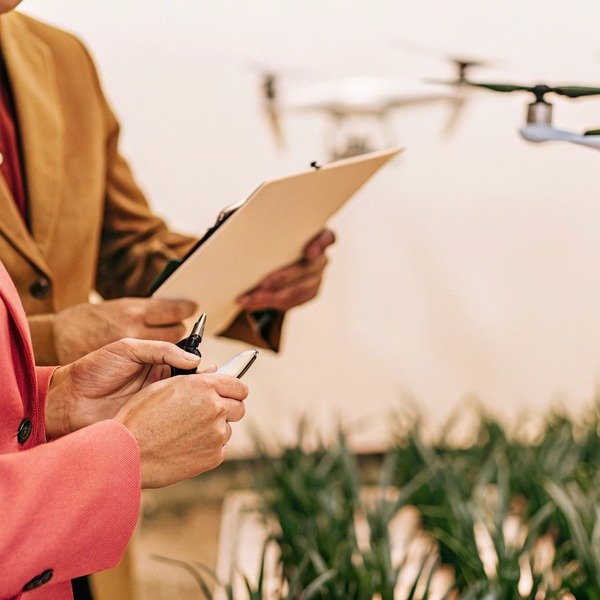
Every harvest season, we hear stories from distressed buyers who purchased equipment that looked great on paper but failed in the field. When we design our flight controllers and frame structures vluchtregelaars 1, we prioritize reliability, but not every factory operates with the same transparency. Asking the right questions early can save you from costly downtime later.
To test a supplier’s professionalism, you must ask specific questions about battery cycle life costs, the guaranteed turnaround time for spare parts, and their experience with Dangerous Goods shipping for batteries. You should also request unedited flight logs or videos demonstrating stability under full payload in windy conditions to verify performance claims.
Here are the critical questions to ask to ensure you are dealing with a capable partner.
How can I determine if the manufacturer truly supports OEM customization and software development?
We often receive inquiries from clients who feel trapped by closed systems that do not communicate with their existing farm management software. When our engineering team collaborates with partners, we know that true customization goes far beyond simply printing a logo on the fuselage.
You should ask the supplier to provide their open API documentation and specific SDK availability for third-party software integration. Additionally, request case studies or examples where they have successfully modified firmware or hardware protocols for previous clients, rather than just offering basic cosmetic branding changes.

The Difference Between Re-branding and Engineering
Many suppliers on Alibaba or generic trading sites claim to offer "OEM services." However, in the drone industry, this term is often misused. For many traders, OEM simply means sticking your sticker on a standard white plastic shell. If your business model requires integrating specific multispectral sensors, custom spraying algorithms multispectral sensors 2, or connecting to a proprietary cloud database, a sticker is not enough.
You need to verify if the supplier has an in-house R&D team or if they are just a sales office for a larger factory. A professional manufacturer will not hesitate to discuss the architecture of their flight control system. flight control system 3
The "SDK" Litmus Test
The most effective way to test a supplier's technical depth is to ask about their SDK Software-ontwikkelingskit 4 (Software Development Kit). A trading company will likely send you a PDF user manual. A real manufacturer will ask you specific questions:
- "Do you need access to the payload SDK or the flight control SDK?"
- "Are you planning to develop an Android-based ground station app?"
If they cannot answer these questions or if they hesitate, it is a red flag. You want a partner who understands that software is just as important as the hardware.
Questions to Expose "Fake" Customization
To dig deeper, use the following comparison to evaluate their responses.
| Vraagcategorie | Amateur/Trader Response | Professional Manufacturer Response |
|---|---|---|
| API Access | "We have an app you can use." | "We provide a REST API for cloud data and an onboard SDK for hardware integration." |
| Hardware Mods | "We can change the color." | "We can modify the mount points and adjust the center of gravity calibration for your specific sensor." |
| Firmware | "The software is fixed." | "We can adjust the gain settings or flight logic to suit your specific crop terrain." |
| Data Security | "Data is safe." | "We support local data storage and can disable cloud syncing for privacy compliance." |
Avoiding the Ecosystem Lock-in
Another critical aspect of professionalism is how they handle data. Ask if their drone requires an active internet connection to fly or if it can operate in a completely offline LAN environment. Professional agricultural operations often occur in remote areas with poor signal. If a supplier tells you that the drone must connect to their Chinese server to unlock flight zones, you face a significant operational risk. A capable manufacturer allows you to control your own data and geofencing parameters.
What should I ask about after-sales technical support and the supply chain for repair parts?
We understand that a broken drone during the spraying season causes massive financial losses every hour it sits on the ground. When we set up our warehouse logistics, we prioritize speed because we know that agricultural work cannot wait for a two-week shipping delay.
Ask the supplier for a detailed list of local repair centers or their express shipping policy for critical components like motors and ESCs. You must verify if they provide diagnostic software that allows you to read black box logs locally, enabling you to troubleshoot issues without shipping the drone back to the factory.

The Reality of Field Maintenance
In agriculture, equipment breakage is inevitable. It is not a matter of "if," but "when." A propeller will clip a branch, or a landing gear will snap on rough terrain. A professional supplier understands this reality and plans for it. An unprofessional supplier will sell you the drone and then disappear when you need a replacement arm.
Critical Component Availability
Do not just ask "Do you have spare parts?" That is too vague. Instead, ask for a "Recommended Spare Parts List" (RSPL) for a fleet of 5 drones operating for one year.
A professional response will include:
- Consumables (Propellers, nozzles, landing skids).
- Wear and tear items (Pumps, flow meters).
- Critical spares (Motors, ESCs, arms).
If they cannot provide this list with pricing, they have not supported a serious commercial operation before.
Remote Diagnostics Capabilities
Shipping a 25kg drone back to China for repair is impossible due to cost and customs regulations. customs regulations 5 Therefore, the ability to repair locally is the single most important factor for long-term success.
Ask the supplier: "How do I extract the flight logs?"
- Bad Answer: "Send the drone to us."
- Good Answer: "Connect via USB, download the log file using our tool, and email it to our engineer. We will analyze it within 24 hours and tell you which part to replace."
Evaluating Service Level Agreements (SLAs)
Use the table below to structure your questions regarding their support infrastructure.
| Support Feature | Question to Ask | Desired Outcome |
|---|---|---|
| Reactietijd | "What is your guaranteed response time for technical tickets?" | Under 12 hours (accounting for time zones). |
| Training | "Do you provide maintenance training videos for changing motors?" | A library of detailed video tutorials, not just a paper manual. |
| Warranty | "Does the warranty cover the drone if I replace the part myself?" | Yes, provided you follow their instructions. |
| Stock | "Do you keep stock of parts for discontinued models?" | Commitment to support models for at least 3-5 years. |
The "Cost of Repair" Trap
Some suppliers sell the drone cheaply but mark up spare parts by 500%. Ask for the price list of the three most expensive parts (usually the flight controller, the spray tank system, and the motors) voor you buy the drone. This transparency tests their honesty and helps you calculate the Total Cost of Ownership 6 Total Cost of Ownership (TCO).
How do I verify the supplier's experience with export documentation and secure door-to-door delivery?
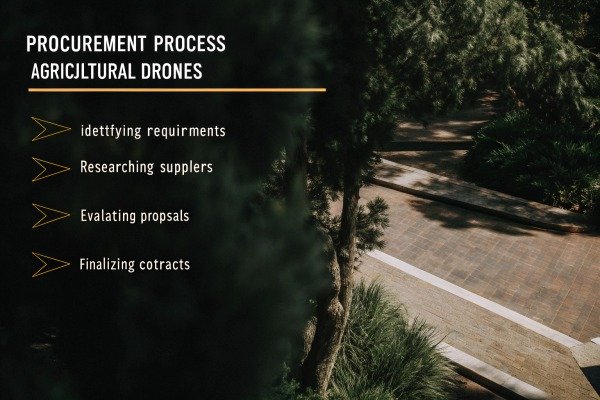
Shipping high-capacity lithium batteries is a complex legal challenge that trips up many inexperienced exporters. In our experience exporting to the US and Europe, we have seen shipments seized at customs simply because the paperwork for the batteries was missing or incorrect.
You must confirm that the supplier provides MSDS and UN38.3 certification for all batteries and ask specifically if they can handle DDP (Delivered Duty Paid) shipping. Requesting proof of previous successful deliveries to your country helps ensure they understand the regulations for importing Class 9 Dangerous Goods.
The Hidden Nightmare of Logistics
Many buyers focus entirely on the drone's specs and forget about how it gets to their door. Agricultural drones differ from consumer drones because of their size consumer drones 7 Agricultural drones 8 and their batteries.
- The Frame: Often too large for standard courier pallets unless folded correctly.
- The Batteries: These are high-voltage, high-capacity Lithium Polymer (LiPo) units. They are classified as Class 9 Dangerous Goods (DG).
If a supplier tries to ship batteries as "general cargo" to save money, you risk having the shipment confiscated and destroyed by customs. You also face potential legal liability.
DDP vs. CIF: Knowing Your Terms
When a supplier quotes a shipping price, you must clarify the "Incoterms."
- CIF (Cost, Insurance, and Freight): They ship it to your nearest port. You are responsible for hiring a broker, paying import duties, paying VAT/Sales Tax, and arranging a truck to pick it up. For a first-time buyer, this can be a nightmare of hidden fees.
- DDP (Delivered Duty Paid): The supplier handles everything. The price you pay includes the drone, shipping, taxes, and customs clearance. The truck simply arrives at your warehouse.
Test Question: "Can you quote me a DDP price to [Your Zip Code] including the battery tax?"
If they don't know what DDP is, they likely lack experience serving international business clients.
Documentation Checklist
A professional supplier will have a folder ready with the following documents. Ask to see them before payment:
- MSDS (Material Safety Data Sheet): Required for safety handling.
- UN38.3 Test Report: Proof that the batteries are safe for air/sea transport.
- Commercial Invoice: Must match the packing list exactly.
- Certificate of Origin: This can sometimes lower your import tariffs depending on trade agreements.
Shipping Times and Expectations
| Shipping Method | Typical Timeframe | Risiconiveau | Opmerkingen |
|---|---|---|---|
| Air Express (DHL/FedEx) | 5-10 Days | Laag | Very expensive. Batteries often cannot fly this way if they exceed 100Wh (which ag batteries do). |
| DG Air Freight | 12-18 Days | Medium | Specialized planes for batteries. Expensive but faster than sea. |
| Sea Freight (LCL) | 30-45 Days | Laag | Most common for bulk orders. Cost-effective. |
| "Grey Channel" | Unpredictable | Hoog | Some suppliers use illegal routes to bypass taxes. Avoid this to protect your business. |
Always ask: "Are the batteries shipped separately from the drone?" Often, the drone arrives by air in one week, but the batteries arrive by sea one month later. You need to know this to plan your operations.
Which questions will help me evaluate the real-world durability and flight endurance of their agricultural models?
Lab tests are conducted in perfect indoor conditions, but we know your fields have dust, high humidity, and gusty winds. When we test our motors, we run them to failure to understand their limits, and you should demand the same level of honesty from your supplier regarding performance.
Ask for the specific “Mean Time Between Failures” (MTBF) data for motors under high-load conditions and request a video of the drone flying with a full tank in 10-15 mph winds. Additionally, inquire about the IP rating validity over time, specifically how the drone maintains water resistance after months of exposure to corrosive agricultural chemicals.

Beyond the Spec Sheet
Every brochure claims a "20-minute flight time" and IP67 Waterproofing 9 "IP67 Waterproofing IP67 Waterproofing 10." However, these numbers are often derived from hovering an empty drone in a windless room. To get the truth, you need to ask questions that force the supplier to reveal real-world data.
The "Full Load" Voltage Sag
Flight time is useless if the battery voltage drops so fast under load that the drone triggers a "Low Battery" landing procedure while still in the middle of a field.
Ask this: "What is the voltage sag per cell when the drone is flying at full speed with a full payload?"
- A weak power system (bad battery or insufficient motors) will show a massive voltage drop immediately upon takeoff.
- A professional supplier will have data charts showing the discharge curve under load.
Corrosive Chemical Resistance
Agricultural drones are constantly bathed in fertilizers and pesticides, many of which are highly corrosive. A standard "waterproof" seal is not enough; the materials must be chemically resistant.
Critical Questions:
- "Are the motor coils treated with a protective coating against corrosion?"
- "Is the flight controller potted (filled with resin) to prevent humidity ingress?"
- "How do I clean the drone? Can I use a high-pressure hose?" (If they say no to a hose, the waterproofing is likely weak).
Wind Resistance and Stability
Stability is safety. If a drone drifts 2 meters in a gust of wind, it could crash into a tree or spray the wrong neighbor's crop.
Request specific evidence: "Please send me a video of the drone hovering in 'Attitude Mode' (non-GPS) or holding position in strong wind."
If the drone wobbles violently or struggles to hold altitude in the video, the propulsion system is underpowered.
Interpreting Durability Data
| Functie | Marketing Claim | Professional Reality Check Question |
|---|---|---|
| Flight Time | "25 Minutes" | "What is the flight time with a full tank, nozzles open, moving at 5 m/s?" |
| Waterproof | "IP67 Rated" | "Which specific components are IP67? Is the battery connector corrosion-resistant?" |
| Dekking | "10 Hectares/Hour" | "Does this calculation include the time to land, swap batteries, and refill the tank?" |
| Obstakelvermijding | "360 Radar" | "Does the radar detect thin power lines or bare tree branches in winter?" |
By asking these tough, technical questions, you signal to the supplier that you are an expert. This usually filters out the low-quality traders and attracts the manufacturers who are confident in their engineering.
Conclusie
Finding a professional agricultural drone supplier requires moving beyond the brochure and interrogating the details of their engineering, logistics, and support systems. By asking about API access, DDP shipping terms, remote diagnostic capabilities, and real-world load testing, you protect your investment. A true partner will welcome these questions as an opportunity to demonstrate their quality, while a mere reseller will struggle to provide the answers you need.
Voetnoten
1. Technical documentation for professional flight controller hardware used in industrial drones. ↩︎
2. Technical information on sensors used for agricultural data collection. ↩︎
3. General background on the hardware and software that manages drone flight. ↩︎
4. Example of professional SDK documentation for drone software development. ↩︎
5. The WCO provides international standards and guidance on customs procedures and trade regulations. ↩︎
6. Authoritative definition of TCO by a major industry analyst firm. ↩︎
7. Official FAA regulations and safety guidelines for operating unmanned aircraft systems. ↩︎
8. Provides a general overview of agricultural drone technology and its applications. ↩︎
9. Official international standard defining Ingress Protection (IP) ratings. ↩︎
10. Official explanation of Ingress Protection ratings for electronic equipment durability. ↩︎

 English
  Spanish
  German
  French
  Dutch
Dutch  Arabic
