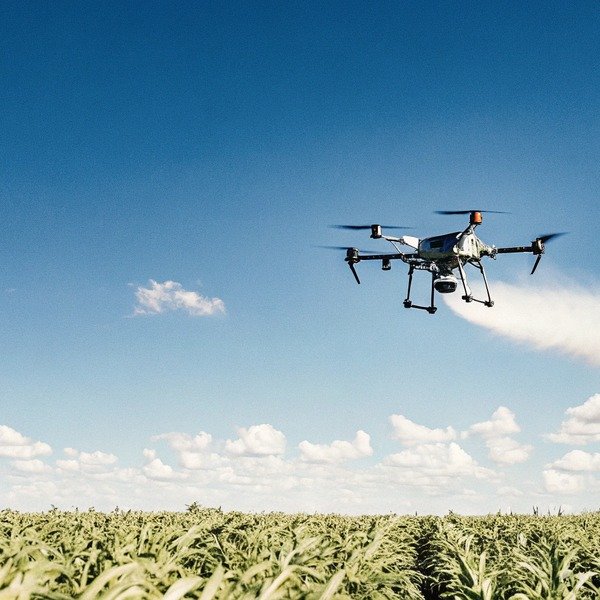
When we draft brochures for our Xi’an factory’s latest ag drones, we realize how tricky US regulations can be for importers like you.
To evaluate marketing materials for US viability, verify that all claims align with FAA Part 137 and FCC regulations rather than just supplier specifications. Ensure technical data uses imperial units, visuals reflect American cropping systems, and liability disclaimers address local insurance requirements to avoid legal risks.
Let’s break down the specific elements you need to check before distributing these materials to your clients.
How can I verify that the supplier's product claims adhere to US advertising laws and FAA drone regulations?
Our engineering team spends months ensuring our flight controllers meet US standards, but marketing claims often exaggerate capabilities, causing compliance headaches for buyers.
Verify compliance by cross-referencing performance claims with the FAA’s Part 137 waiver database and checking for FCC authorization IDs on all radio components. Marketing materials must explicitly state Remote ID compliance and avoid promising autonomous operations that violate current visual line-of-sight rules without specific approvals.

Many suppliers in our industry focus heavily on hardware specifications. They highlight motor power, tank size, and theoretical flow rates. However, in the United States, hardware capability means nothing without regulatory compliance. As a procurement manager, you must look beyond the glossy photos and check the fine print.
The first major hurdle is the Federal Aviation Administration (FAA). Federal Aviation Administration 1 Most agricultural drones weigh over 55 pounds when fully loaded. This places them in a specific regulatory category. If a brochure claims the drone is "Ready to Fly" for anyone, it is misleading. You must ensure the materials mention Section 44807 exemptions and Part 137 certification requirements. If the marketing text Part 137 certification requirements 2 suggests a farmer can buy the drone and start spraying immediately without a license, you cannot use those materials. It exposes your company to liability.
The FCC and Data Security Landscape
Another critical area is the Federal Communications Commission (FCC). Recent bans and restrictions, especially those taking effect in late 2025 regarding foreign-made communication modules, have changed the landscape. If a supplier sends you marketing kits promoting a specific radio transmission system, you must verify its FCC ID. We have seen instances where older models are promoted with invalid certifications.
Furthermore, consider the "Blue UAS" and NDAA (National Defense Authorization Act) implications. While many commercial farms are private, those receiving federal grants or working near sensitive infrastructure face strict hardware restrictions. Your marketing materials should clearly state whether the drone is NDAA compliant. If the supplier ignores this topic, you might be importing stock that large sectors of the US market cannot legally use.
Remote ID and Airworthiness
Since 2023, Remote ID has been mandatory. ID op afstand 3 We integrate these modules into our SkyRover units during assembly, but not all manufacturers do. If the brochure does not explicitly mention "FAA Remote ID Compliant," you will need to add that disclaimer or verify the tech yourself.
Use the table below to audit the claims in your supplier's documents:
| Marketing Claim | Regulatory Reality Check | Action Required |
|---|---|---|
| "Fully Autonomous Spraying" | FAA requires Visual Line of Sight (VLOS) unless a specific waiver is granted. | Add a disclaimer: "Subject to FAA VLOS regulations." |
| "Long-Range 10km Control" | FCC limits transmission power; BLOS (Beyond Line of Sight) is restricted. | Verify FCC ID and add "Max range varies by local laws." |
| "Ready for Immediate Work" | Operators need Part 107 (Pilot) and Part 137 (Ag) certificates. | Change to: "Requires FAA Part 137 Certification." |
| "Secure Data Transmission" | Foreign tech bans (NDAA/FCC) may apply to certain components. | Audit the communication module against the Covered List. |
By filtering these claims, you protect your customers from fines that can reach tens of thousands of dollars.
Do the brochures and manuals use professional, localized English suitable for American agricultural clients?
We have seen many user manuals from competing factories that confuse “pesticide load” with “water weight,” leading to dangerous application errors in the field.
Professional localization goes beyond translation; it requires industry-specific terminology like “GPA” (Gallons Per Acre) instead of generic flow rates. Review manuals for awkward phrasing that confuses safety procedures, and ensure all warning labels EPA labels 4 meet ANSI standards to maintain credibility and safety for American operators.
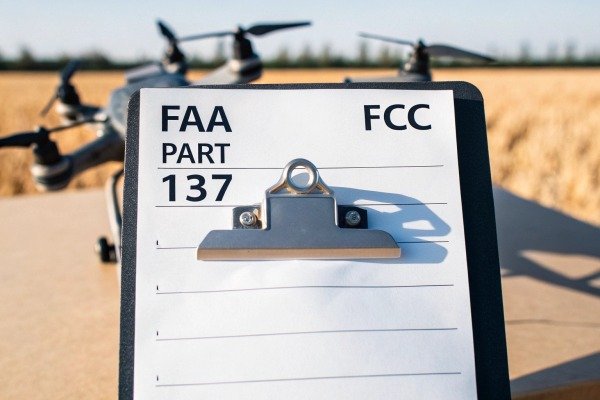
Language barriers are a common issue in international trade. However, in agricultural aviation, a mistranslation is not just embarrassing; it is dangerous. landbouwluchtvaart 5 When we prepare documents for export, we often hire native US experts to review them. You need to ensure your supplier has done the same, or you must be prepared to rewrite them.
Safety Terminology and ANSI Standards
The most critical area is safety warnings. In the US, hazard labels must follow ANSI Z535 standards. ANSI Z535 standards 6 This includes specific ANSI Z535 standards 7 signal words like "DANGER," "WARNING," and "CAUTION," each denoting a specific level of risk. Many generic manuals use these words interchangeably. For example, a "Warning" might be used for a minor maintenance tip. This dilutes the impact of real safety alerts. If the marketing materials or manuals use broken English to describe emergency procedures, liability insurance providers may refuse to cover the equipment.
Agricultural Vernacular
American farmers use a specific vocabulary. If your brochure talks about "liquid medicine" instead of "crop inputs" or "pesticide," it sounds unprofessional. If it refers to "paddy fields" when targeting Kansas wheat farmers, it shows a lack of market understanding. You want to see terms like "swath width," "drift control," and "canopy penetration."
Another red flag is the description of flight modes. Direct translations often result in terms like "AB Point Mode" which might be understood, but "A-B Line Operation" is the standard industry term.
The Risk of Direct Translation
We often see suppliers using machine translation tools. These tools struggle with technical context. For instance, a "propeller holder" might be translated as a "blade clip." While a user might figure it out, it erodes trust. Olivia, as a procurement manager, you know that your customers value professionalism. If the documentation looks cheap, they assume the drone is cheap.
Review the following table for common errors we have observed in the industry:
| Poor Translation (Avoid) | Professional US Terminology | Waarom het belangrijk is |
|---|---|---|
| "Medicine Box" / "Medicine Chest" | Spray Tank / Reservoir | "Medicine" implies pharmaceuticals, not agrochemicals. |
| "Liquid Medicine" | Pesticide / Herbicide / Fungicide | Professional terms define the exact chemical application. |
| "Plant Protection UAV" | Agricultural Spray Drone | "UAV" is technical; "Spray Drone" is the common market term. |
| "Insure the battery is full" | Ensure the battery is fully charged | "Insure" relates to financial coverage; "Ensure" means to make certain. |
| "Bomb dropping" (for granular spreading) | Granular Spreading / Seeding | "Bomb dropping" sounds militaristic and alarms regulators. |
Should I expect the technical data to be presented in imperial units like acres and gallons, or will I need to convert them?
When we configure ground station software for our US partners, we switch everything to imperial units because American farmers simply do not calculate in liters.
You should expect high-quality marketing materials to present data primarily in imperial units, such as acres per hour and gallons per minute. If a supplier only provides metric data, you will need to convert and redesign the assets to ensure they are usable and relevant for US farmers.

The United States is one of the few countries that primarily uses the Imperial system for agriculture. Imperial system 8 Most of the world, including our manufacturing base in China, uses the Metric system. This creates a friction point. If you hand a US farmer a brochure stating a flow rate in "Liters per Minute," they have to pull out a calculator. This creates friction in the sales process.
The Importance of "Acres" and "Gallons"
Efficiency is the main selling point of an agricultural drone. In the US, efficiency is measured in "Acres per Hour." If your material lists "Hectares per Hour," it is immediately less useful. One hectare is approximately 2.47 acres. This is not a simple mental math conversion for most people.
Similarly, tank capacity dictates how many refills are needed. A "30 Liter" tank means little to a farmer mixing chemicals based on gallons per acre. They need to know if it holds 8 gallons or 10 gallons. This affects their mix rates and field planning.
Precision Matters in Conversion
When we work with OEM clients, we advise them to be careful with conversions. Rounding errors can lead to compliance issues. For example, if a drone is marketed as "Under 55 lbs" to meet FAA exemptions, you must be precise. 55 lbs is roughly 24.95 kg. If a supplier rounds 25kg down to "approx 55 lbs," the drone might actually be 55.1 lbs, putting it in a different legal category.
You also need to check the nozzle specifications. US EPA labels for pesticides often US EPA labels 9 dictate droplet sizes and flow rates in gallons per minute (GPM) at specific pressures (PSI). If your technical data only offers Bar and Liters, the farmer cannot verify if they are following the pesticide label instructions. This is a regulatory violation risk.
Data Presentation Strategy
If the supplier provides editable files, you should convert all data points. Do not just put the conversion in parentheses; make the Imperial unit the hero.
Here is a quick reference guide for the critical conversions you will need to perform or verify:
| Metric Unit (Supplier Standard) | US Imperial Unit (Required) | Context |
|---|---|---|
| Hectares (ha) | Acres (ac) | 1 ha ≈ 2.47 ac. Used for coverage rates. |
| Liter (L) | Gallons (gal) | 1 gal ≈ 3.78 L. Used for tank size and flow rate. |
| Kilograms (kg) | Pounds (lbs) | 1 kg ≈ 2.20 lbs. Critical for FAA weight classes. |
| Meters (m) | Voet (ft) | Used for altitude and spray swath width. |
| Liters per Minute (L/min) | Gallons per Minute (GPM) | Essential for nozzle calibration and EPA compliance. |
Do the visual assets showcase crop scenarios and farming environments that look familiar to my local market?
Our marketing team once used a photo of a rice paddy for a brochure in Iowa, and the disconnect immediately alienated our potential corn-growing customers.
Visual assets must depict crops and infrastructure relevant to your specific region, such as corn or soy fields rather than tea terraces or rice paddies. Using unfamiliar imagery reduces trust, as farmers need to see the drone operating successfully in environments that resemble their own fields.

Visuals are powerful. They tell the customer, "This product is for you." However, agriculture looks very different across the world. In Southern China, where many drones are tested, the terrain is often mountainous with terraced fields of tea or rice. In the US Midwest, the terrain is flat with vast grids of corn, soybean, and wheat.
The Psychology of Familiarity
If a farmer in Nebraska sees a drone spraying a tea terrace, they subconsciously categorize the product as "foreign" or "niche." They might worry that the radar systems are tuned for hills, not flat plains, or that the spray width is optimized for small plots rather than broad acres.
We recommend auditing the image library provided by the supplier. Look for generic backgrounds if specific US crops are not available. A blue sky and a green field are safer than a distinctively Asian landscape. Even better, ask your supplier if they have assets from US field trials. At SkyRover, we try to collect footage from our US partners for this exact reason.
Infrastructure and Equipment
It is not just the crops; it is the surrounding environment. US farms often have specific styles of barns, silos, and pivot irrigation systems. Including these in the background adds authenticity. Conversely, showing a drone being operated by someone wearing a conical hat or standing next to a vehicle not sold in the US (like certain mini-trucks) breaks the immersion.
Legal Rights and Copyright
Finally, be very careful with "stock" images provided by suppliers. Sometimes, marketing teams in factories might grab images from the internet without securing global commercial rights. If you use an image on your US website that belongs to a US photographer or a competitor, you could be sued for copyright infringement. Always ask for written confirmation that the supplier owns the rights to the images or has a valid commercial license that extends to your use as a distributor.
Key visual checkpoints include:
- Crop Type: Is it Corn/Soy/Wheat (Good) or Rice/Tea/Tropical Fruit (Risky)?
- PPE: Are the operators in the photos wearing safety gear (masks, glasses) that meets US OSHA standards? US OSHA standards 10
- Milieu: Are there recognizable power lines or roads that might suggest unsafe flying in a US context?
Conclusie
Evaluating compliance, language, units, and visuals ensures your marketing materials build trust and avoid legal pitfalls in the US market.
Voetnoten
1. Official Federal Aviation Administration portal for unmanned aircraft systems regulations and safety. ↩︎
2. Official FAA page detailing certification for agricultural aircraft operations. ↩︎
3. General overview of Remote ID technology and its implementation in various jurisdictions. ↩︎
4. Official EPA resource for understanding pesticide label requirements and legal application standards. ↩︎
5. National Agricultural Aviation Association provides industry standards and safety resources for aerial application. ↩︎
6. Official site for American National Standards Institute regarding safety labeling and signal words. ↩︎
7. Official standard body (NEMA) page for the Z535 safety signaling series. ↩︎
8. Background on the imperial system of units used in the United States. ↩︎
9. Official government resource regarding pesticide labeling regulations. ↩︎
10. Official government site outlining personal protective equipment standards. ↩︎

 English
  Spanish
  German
  French
  Dutch
Dutch  Arabic
