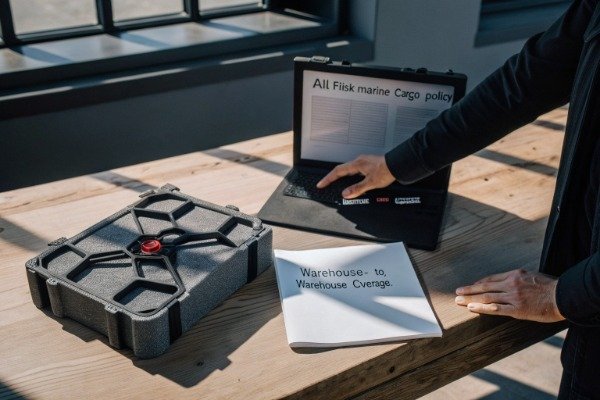
When our team ships firefighting drones overseas, we see firsthand how transit risks can turn a profitable deal into a costly nightmare. transit risks can turn 1
When importing firefighting drones from China, you should purchase All-Risk marine cargo insurance under Institute Cargo Clauses (A) with warehouse-to-warehouse coverage. This provides the broadest protection against physical loss, theft, water damage, and handling accidents—essential for high-value electronics with sensitive components and lithium batteries.
Many importers assume their freight forwarder handles everything. But this assumption can cost you thousands. Let me walk you through exactly what coverage you need and why.
Which Institute Cargo Clauses Provide the Best Coverage for High-Value Electronics?
In our experience shipping drones to the US and Europe, we have learned that choosing the wrong clause can leave you exposed to common transit damages.
Institute Cargo Clauses (A) provides the best coverage for high-value electronics like firefighting drones. It covers all risks of physical loss or damage except specifically excluded perils. This includes theft, water damage, rough handling, and container collapse—the most common issues affecting drone shipments.

Understanding the Three Levels of Coverage
The Institute Cargo Clauses come in three versions. Each offers different protection levels. Here is what you need to know.
Clause (A) is the "All-Risk" option. It covers everything unless specifically specifically excluded perils 2 excluded. This means you do not need to prove what caused the damage. You only need to show damage occurred during transit.
Clause (B) is the middle ground. It covers named perils like fire, explosion, vessel sinking, and earthquake. But it excludes many handling damages.
Clause (C) is the most basic. It only covers major catastrophes like total vessel loss or fire. This is rarely suitable for electronics.
Why Clause (A) Matters for Drones
Firefighting drones contain sensitive components. Flight controllers, thermal cameras, and GPS modules can fail from vibration alone. Our engineers have tested units after rough transit. Even minor impacts can misalign sensors.
Water ingress is another major risk. Containers can leak. Humidity builds up during temperature changes. One US customer lost three units to condensation damage. Their Clause (C) policy did not cover it.
| Coverage Type | What It Covers | What It Excludes | Best For |
|---|---|---|---|
| Clause (A) | All physical loss/damage | Inherent vice, delay, improper packing | High-value electronics, drones |
| Clause (B) | Named perils + washing overboard | Theft, handling damage, breakage | Medium-value general cargo |
| Clause (C) | Major catastrophes only | Most partial damages | Low-value bulk goods |
Common Exclusions You Must Know
Even All-Risk policies have exclusions. These include:
- Inherent vice (battery degradation over time)
- Improper packing by the shipper
- Delay-related losses
- War and strikes (unless added)
- Willful misconduct
When we pack drones at our facility, we use custom foam inserts and moisture barriers. This helps avoid "improper packing" claim denials. Always document your packing process with photos.
How Is the Insurance Premium Calculated for Specialized Firefighting Equipment?
Our export team works with insurance brokers weekly. We have seen premiums vary wildly based on factors many importers overlook.
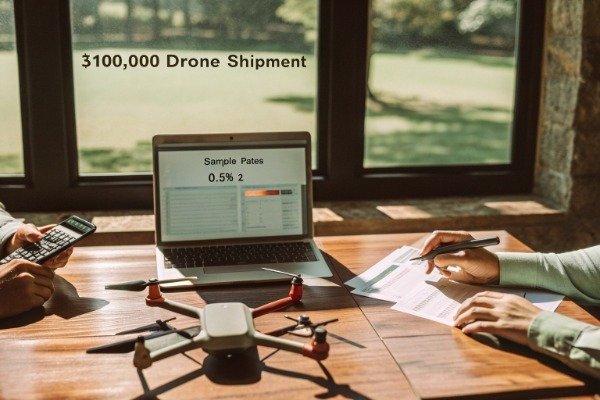
Insurance premiums for firefighting drones typically range from 0.5% to 2% of cargo value. Factors include shipment value, route risk, transit duration, packaging quality, and lithium battery classification. A $100,000 drone shipment might cost $500 to $2,000 to insure under All-Risk coverage.
Key Factors Affecting Your Premium
Insurers assess multiple variables. Understanding these helps you negotiate better rates.
Cargo Value: Higher value means higher premiums. But the percentage often decreases for larger shipments. A $50,000 shipment might cost 1.5%. A $500,000 shipment might cost 0.8%.
Route Risk: China to US West Coast is relatively safe. Routes through the Red Sea now cost more due to recent disruptions. Some insurers add 15-20% for conflict-adjacent routes.
Transit Mode: Sea freight is cheapest to insure. Air freight costs more but has shorter exposure time. Multimodal shipments (sea + truck) need comprehensive coverage.
Lithium Batteries: Firefighting drones use lithium batteries. These are classified as dangerous goods. Some insurers charge extra. Others exclude battery fires entirely.
Sample Premium Calculations
Here is what real quotes look like for drone shipments:
| Shipment Value | Coverage Type | Route | Estimated Premium | Premium Rate |
|---|---|---|---|---|
| $50,000 | Clause (A) | Shanghai to Los Angeles | $625 | 1.25% |
| $100,000 | Clause (A) | Shenzhen to Rotterdam | $900 | 0.9% |
| $200,000 | Clause (A) + War | Ningbo to New York | $2,400 | 1.2% |
| $50,000 | Clause (C) | Shanghai to Los Angeles | $250 | 0.5% |
How to Lower Your Premium
You can reduce costs without sacrificing coverage. Here are proven strategies.
First, improve your packing standards. Insurers offer discounts for certified packaging. Our facility uses ISTA-certified methods. This has reduced our customers' premiums by 10-15%.
Second, choose FCL over LCL. Full container loads have lower damage rates. Your cargo is not mixed with others. Insurers recognize this reduced risk.
Third, build a claims-free history. After 2-3 years without claims, insurers offer loyalty discounts. Some offer 20% reductions for clean records.
Fourth, increase your deductible. A higher deductible lowers your premium. But make sure you can afford the out-of-pocket cost if something happens.
Does Standard Marine Insurance Cover Potential Damage to Drone Batteries?
When we calibrate our flight controllers before shipping, battery safety is always top of mind. But insurance coverage for batteries is complicated.
Standard marine insurance under Clause (A) covers battery damage from external causes like impact, water, or fire. However, it typically excludes inherent vice—meaning gradual degradation or spontaneous failure. You may need specific endorsements for lithium battery coverage, especially for thermal runaway events.

The Lithium Battery Challenge
Lithium batteries power modern firefighting drones. They offer high energy density and long flight times. But they create insurance complications.
Batteries are classified classified as dangerous goods 4 as dangerous goods under IATA and IMDG codes. This affects how they are shipped and insured. Some insurers treat them as high-risk cargo.
Thermal runaway is the main concern. This is when a battery overheats and catches fire. It can happen from manufacturing defects, damage, or improper storage. Standard policies often exclude this.
What Standard Policies Cover
Under Clause (A), your batteries are covered for:
- Physical damage from drops or impacts
- Water damage from container leaks
- Fire damage from external sources
- Theft of the entire unit
Your batteries are NOT covered for:
- Spontaneous combustion
- Gradual capacity loss
- Damage from improper charging
- Defects present before shipping
Getting Proper Battery Coverage
You have several options to close coverage gaps.
Extended Coverage Endorsements: Ask your insurer about lithium battery riders. These add coverage for thermal events. Expect to pay 0.2-0.5% extra.
Manufacturer Warranties: Our drones come with battery warranties. These cover defects for 12-24 months. This complements your cargo insurance.
Proper Documentation: Keep battery test certificates. Document state of charge before shipping. We ship batteries at 30-50% charge to reduce risk.
| Battery Risk | Standard Coverage | With Endorsement | Our Recommendation |
|---|---|---|---|
| Impact damage | Ja | Ja | Standard sufficient |
| Water damage | Ja | Ja | Standard sufficient |
| External fire | Ja | Ja | Standard sufficient |
| Thermal runaway | Geen | Ja | Add endorsement |
| Gradual degradation | Geen | Geen | Use warranty |
| Manufacturing defect | Geen | Partial | Use warranty |
Real-World Battery Incident
One of our European customers experienced a battery issue during transit. A forklift dropped their container. Two battery packs were punctured. The batteries did not catch fire, but they were destroyed.
Their Clause (A) policy covered the damage. The claim was paid within 30 days. Total recovery: $8,500 for batteries plus $2,000 for damaged housing.
If those batteries had failed spontaneously without external cause, the claim would have been denied. This is why documentation matters.
Should I Rely on the Supplier's CIF Insurance or Purchase My Own Policy?
Our sales team often discusses Incoterms with customers. The insurance question comes up constantly. Incoterms with customers 5 Here is what we tell them.
You should purchase your own cargo insurance rather than relying on supplier CIF coverage. CIF insurance typically provides only minimum Clause (C) coverage—about 110% of invoice value. This excludes most partial damages common in drone shipments. Your own All-Risk policy gives you control, broader coverage, and direct claims handling.

Understanding CIF Insurance Limitations
CIF means Cost, Insurance, and Freight. The seller arranges and pays for insurance. Sounds convenient, right? But there are problems. Cost, Insurance, and Freight 6
Under Incoterms 2020, CIF only requires Clause (C) coverage. This is the minimum level. It covers major disasters but excludes:
- Theft
- Handling damage
- Water damage (partial)
- Breakage
For firefighting drones worth $20,000-$100,000 each, this is inadequate. One rough handling incident could destroy your shipment. Clause (C) would not pay.
The Control Problem
When suppliers arrange insurance, you lose control. You cannot choose the insurer. You cannot verify coverage details. You cannot file claims directly.
We have seen customers struggle with supplier-arranged policies. The supplier's insurer is in China. Claims must go through the supplier. Communication delays extend settlement by months.
With your own policy, you control everything. You choose a reputable insurer. You file claims directly. You get paid faster.
Cost Comparison
Many importers think CIF saves money. Let us compare actual costs.
Suppose you are importing $100,000 worth of firefighting drones.
CIF Option:
- Supplier adds insurance cost to invoice
- Typical markup: $800-$1,200
- Coverage: Clause (C) only
- You pay more for less coverage
FOB + Own Insurance:
- FOB price is lower (no insurance markup)
- Your All-Risk policy: $900-$1,500
- Coverage: Clause (A) comprehensive
- You pay similar amount for better coverage
When CIF Might Work
CIF insurance can be acceptable in limited situations:
- Very low-value shipments (under $5,000)
- Trusted long-term suppliers with good policies
- When supplier agrees to upgrade to Clause (A)
- For samples or prototypes
For regular commercial shipments of firefighting drones, we recommend FOB or EXW terms. Then purchase your own comprehensive coverage.
Working With Your Freight Forwarder
Your freight forwarder can help arrange insurance. But do not assume they have done so. Always confirm in writing.
Ask these questions:
- What coverage level is included?
- Who is the underwriter?
- What is the policy number?
- How do I file a claim?
Some forwarders offer basic coverage automatically. Others charge extra. Some offer nothing unless you ask. Never assume. Always verify.
Conclusie
Importing firefighting drones from China requires proper cargo insurance. Choose All-Risk coverage under Institute Cargo Clauses (A). Purchase your own policy rather than relying on supplier CIF terms. This protects your investment and gives you control over claims.
Voetnoten
1. Transit insurance covers loss or damage to goods while in transit. ↩︎
2. Defines ‘peril’ in insurance as a cause of loss covered in a policy. ↩︎
3. Discusses insurance coverage and risk management for lithium-ion batteries. ↩︎
4. IATA’s Dangerous Goods Regulations (DGR) manual is the global reference. ↩︎
5. The ICC’s page on Incoterms rules, defining trade terms like CIF. ↩︎
6. Wikipedia entry defining CIF (Cost, Insurance and Freight) within Incoterms. ↩︎

 English
  Spanish
  German
  French
  Dutch
Dutch  Arabic
