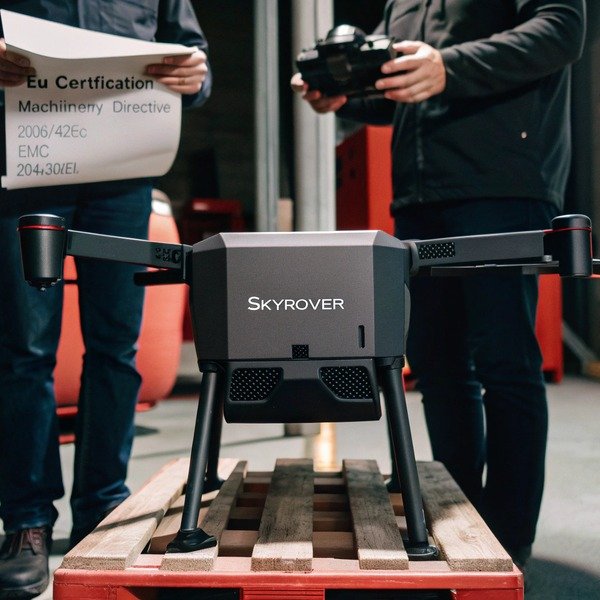
When we design our firefighting drones for export blusdrones 1, we often see clients overwhelmed by complex compliance rules. Missing one document can trap your shipment at customs indefinitely.
To import firefighting drones into Europe, you must comply with Regulation (EU) 2019/945 for technical design and Class C5/C6 markings. Additionally, conformity with the Machinery Directive, Radio Equipment Directive (RED), and RoHS is mandatory, alongside preparing a valid EU Declaration of Conformity to clear customs successfully.
Let’s break down exactly what you need to ensure a smooth import process and safe operation.
How do I verify if my imported firefighting drones meet CE marking requirements?
In our testing labs, we rigorously check every component because we know that a single non-compliant part can invalidate the entire CE mark CE mark 2, causing costly rejections.
You verify CE compliance by checking for the physical CE logo on the drone and reviewing the EU Declaration of Conformity. This document must list adherence to specific directives like the Machinery Directive 2006/42/EC and EMC Directive 2014/30/EU, confirmed by a Notified Body's test report.
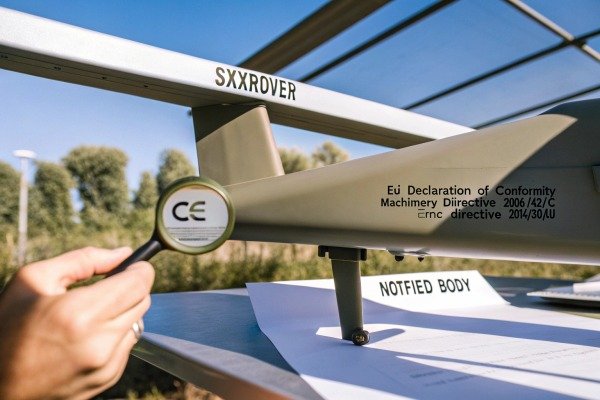
The CE mark is not just a sticker. It is a legal declaration that the product is safe for the European market. For industrial machinery like firefighting drones industrial machinery 3, the requirements are strict. You cannot rely on a simple visual visual line-of-sight 4 check. You must dig into the paperwork that supports that mark.
The Core Directives for Industrial Drones
A firefighting drone is a complex machine. It combines moving parts, radio transmitters, and heavy electrical currents radio transmitters 5. Therefore, it must meet several overlapping standards. If your supplier sends you a one-page certificate, be suspicious. A real compliance packet covers multiple directives.
First, look for the Machinery Directive (2006/42/EC). This is crucial for large drones with heavy propellers. It ensures the mechanical design protects people from injury. Second, the Electromagnetic Compatibility (EMC) Directive (2014/30/EU) is vital. Firefighting drones work near large fires and emergency equipment. They cannot emit interference that disrupts police radios or other aircraft.
Class Identification Labels
Under the newer Regulation (EU) 2019/945, your drone needs a specific class label. For firefighting, this is usually Class C5 or C6. These classes are designed for "Specific" category operations. They allow flight beyond the visual line of sight or near populated areas under controlled conditions.
If the drone only has a generic CE mark but no class identification label (C0 through C6), it might be treated as a "legacy" drone. This severely limits where you can fly it after the transition period ends in 2026. Always demand the correct class label.
Critical Compliance Checklist
| Directive Name | Regulation Number | Doel |
|---|---|---|
| UAS Regulation | (EU) 2019/945 | Defines design requirements and Class labels (C5/C6). |
| Machinery Directive | 2006/42/EC | Ensures mechanical safety of rotors and moving parts. |
| Radio Equipment | 2014/53/EU (RED) | Regulates frequency use (2.4GHz/5.8GHz) and power limits. |
| RoHS Directive | 2011/65/EU | Limits hazardous substances like lead in the circuit boards. |
You must verify that the technical file references all these standards. If the Radio Equipment Directive is missing Richtlijn radioapparatuur 6, customs will block the shipment immediately. Wireless communication is heavily regulated in Europe.
What specific EASA regulations apply to the operation of heavy industrial drones?
We calibrate our heavy-lift flight controllers to strict limits because ignoring operational categories often leads to immediate grounding of the fleet by local authorities.
Heavy industrial drones typically operate under the 'Specific' category of Regulation (EU) 2019/947. This requires authorization based on a Specific Operations Risk Assessment (SORA) or a Pre-defined Risk Assessment (PDRA), mandating that the drone holds a Class C5 or C6 identification label for standard scenarios.
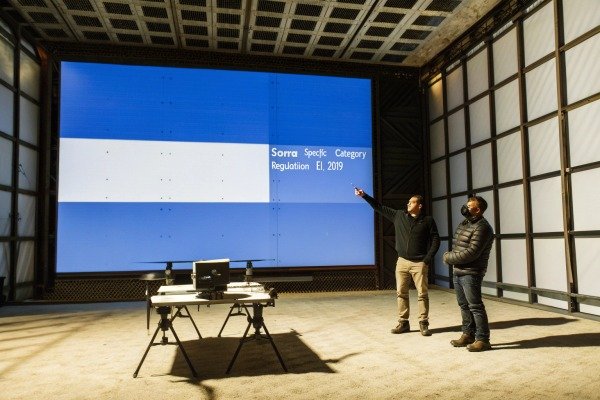
Importing the hardware is step one. Flying it legally is step two. In Europe, the rules for flying are separate from the rules for building. However, they are linked. You cannot fly a firefighting mission in the "Open" category. The "Open" category is for low-risk, visual line-of-sight flying. Firefighting involves high risks.
The "Specific" Category Explained
Firefighting drones carry heavy payloads. They often fly near buildings or people. This places them in the Specifieke categorie. To operate here, the operator (your customer) needs authorization from the National Aviation Authority.
The easiest path to authorization is using a Standard Scenario (STS). There are two main European scenarios:
- STS-01: VLOS (Visual Line of Sight) operations over a controlled ground area.
- STS-02: BVLOS (Beyond Visual Line of Sight) with airspace observers.
Here is the catch: To use these standard scenarios, the drone MUST be marked Class C5 (for STS-01) or Class C6 (for STS-02). If you import a drone without this certification, your customer cannot use these simplified rules. They would have to perform a full, complex risk assessment (SORA), which is expensive and time-consuming.
The 2026 Deadline
EASA regulations are shifting EASA regulations 7. By January 1, 2026, the transitional period ends. National authorizations will expire. Everyone must move to the unified European system.
If you import a drone today that is not Class C5 or C6 compliant, it may become obsolete for professional use very soon. Operators will struggle to get flight permits. We advise all our partners to focus on compliance with Regulation (EU) 2019/947 now to future-proof their inventory.
Risk Assessment Tiers
| Operational Method | Risiconiveau | Vereiste | Drone Class Needed |
|---|---|---|---|
| Open Category | Laag | No prior authorization needed. Strict limits. | C0, C1, C2, C3, C4 |
| Standard Scenario (STS) | Medium | Declaration to authority. Standard rules. | C5 or C6 |
| SORA Authorization | Hoog | Full safety case approved by authority. | Custom / Specific Design |
| LUC (Light UAS Certificate) | Variabele | Organization self-authorizes operations. | C5, C6, or Custom |
Fire departments prefer Standard Scenarios or LUC privileges. Both require certified hardware. Without the right class marking, the drone is just a paperweight.
What technical documentation must I present to European customs for drone clearance?
When shipping our containers to Rotterdam, we double-check every file in the packet, knowing that customs officers strictly detain incomplete shipments regardless of product quality.
Customs requires a complete Technical File containing the EU Declaration of Conformity, user manuals in the local language, and test reports from a Notified Body. For dual-use items like thermal cameras, you must also present valid export licenses and end-user certificates to avoid confiscation.
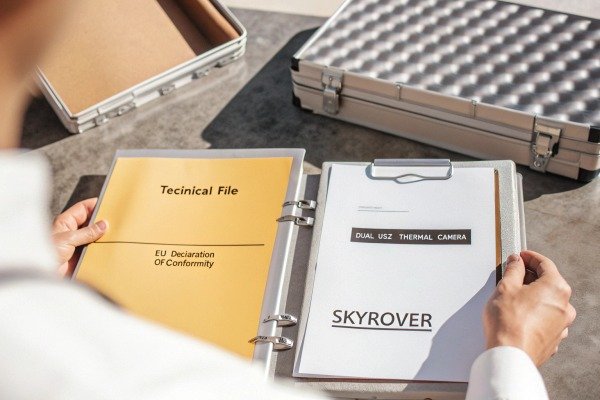
Customs clearance is the final hurdle. European officers are very strict about electronics and machinery. You cannot simply ship the box and hope for the best. You need a "Technical Documentation Packet" attached to the commercial invoice.
The EU Declaration of Conformity (DoC)
This is the most critical document. It is a single sheet of paper signed by the manufacturer or their Authorized Representative in the EU Authorized Representative 8. It lists every directive the drone complies with. It must include the serial number range of the shipment.
Crucially, since we are a non-EU manufacturer, we must appoint an EU Authorized Representative. Their name and address must appear on the product and the document. If customs sees a Chinese address but no European contact for compliance, they will block the entry. This representative holds the technical files and answers questions from authorities.
Dual-Use Goods and Thermal Cameras
Firefighting drones often use high-resolution thermal cameras. These sensors are controlled items. Under Regulation (EU) 2021/821, they are considered "Dual-Use." This means they can have both civilian and military applications.
You may need an export license from the manufacturing country. You might also need an Import Certificate or End-User Statement (EUS) from your buyer End-User Statement 9. If you label a thermal drone simply as a "camera," you risk heavy fines for smuggling restricted technology. Always declare the sensor specifications honestly.
Battery Logistics Documentation
Firefighting drones use massive Lithium Polymer (LiPo) batteries. These are Dangerous Goods (Class 9). To move them through customs and onto trucks, you need the UN 38.3 Test Summary. This proves the batteries are stable. You also need the MSDS (Material Safety Data Sheet). Without these, freight forwarders will refuse the cargo, or customs will quarantine it as a fire hazard.
Essential Import Documents Table
| Document | Provided By | Doel |
|---|---|---|
| EU-conformiteitsverklaring | Manufacturer / EU Rep | Proves legal compliance with all directives. |
| Notified Body Certificate | Testing Lab (NoBo) | Validates Class C5/C6 and technical safety. |
| UN 38.3 Test Summary | Battery Supplier | Required for transporting lithium batteries safe. |
| End-User Statement | Buyer (Importer) | Required for Dual-Use thermal cameras. |
| User Manual (Local Lang) | Fabrikant | Mandatory for consumer safety laws. |
How can my supplier assist with the EU Declaration of Conformity and testing reports?
We often work directly with European testing houses for our clients, as relying on generic factory self-declarations is a risk that serious importers cannot afford.
Your supplier should coordinate directly with an EU-recognized Notified Body to conduct Module B type examinations. They must provide a valid EU Declaration of Conformity signed by an Authorized Representative based in Europe, ensuring legally binding traceability and accountability for the technical data.
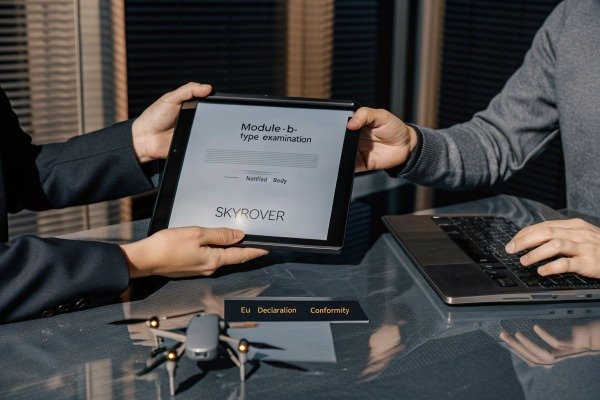
Your supplier is your partner in compliance. You cannot generate these documents yourself. The manufacturer holds the design data, the circuit diagrams, and the source code. Therefore, the burden of proof starts at the factory.
The Role of Notified Bodies (NoBo)
For Class C5 and C6 drones, self-certification is usually not enough. The manufacturer must hire a Notified Body. This is an independent European organization accredited to test products.
Ask your supplier for the EU Type Examination Certificate. This proves a neutral third party has tested the drone. Check the certificate number on the NANDO (New Approach Notified and Designated Organisations) database. Fake certificates are common in our industry. A good supplier will be transparent and send you the link to verify their report.
Setting Up the Authorized Representative
As an importer, you might not want to be the legally responsible person for the technical design. That is a heavy liability. A professional manufacturer will have an Authorized Representative (AR) established within the EU.
This AR signs the Declaration of Conformity. They act as the liaison between the Chinese factory and EASA. If a drone falls out of the sky, the authorities call the AR. Ensure your supplier has this structure in place. If they ask jij to sign the DoC as the manufacturer, refuse. That transfers all legal liability for design flaws onto your company.
Traceability and Updates
Regulations change. A static document is not enough. Your supplier must inform you of firmware updates that affect compliance. For example, if EASA updates the Geofencing requirements Geofencing requirements 10, the drone software must be updated to remain legal.
We establish long-term contracts with our distributors. These contracts guarantee that we will provide updated documentation if regulations shift. We also commit to keeping spare parts available for 10 years, which is often a requirement for industrial government tenders.
Supplier Verification Steps
- Request the DoC Draft: Before paying the deposit, ask to see the Declaration of Conformity.
- Verify the NoBo: Check the 4-digit ID number of the testing lab on the NANDO website.
- Check the Address: Verify the EU Authorized Representative actually exists and is not a shell company.
- Ask for Module B: Confirm they used the Module B (Type Examination) process for Class C certification.
Conclusie
Securing the right certifications ensures your firefighting fleet is legal and safe. Proper documentation today prevents costly operational bans tomorrow.
Voetnoten
1. Academic research paper discussing the design and application of firefighting drone systems. ↩︎
2. Explanation of CE marking services by a leading global inspection and certification company. ↩︎
3. International standards classification for industrial machinery safety and general safety requirements. ↩︎
4. General definition and context for Visual Line of Sight (VLOS) operations in aviation. ↩︎
5. International organization regulating radio frequency spectrum and satellite orbits globally. ↩︎
6. Official European Commission guide to the Radio Equipment Directive 2014/53/EU. ↩︎
7. Official European Union Aviation Safety Agency portal for civil drone regulations. ↩︎
8. Service provider explaining the role and responsibilities of an EU Authorized Representative. ↩︎
9. Official guidance on exporting dual-use items and required end-user documentation. ↩︎
10. Manufacturer documentation detailing geofencing systems and flight safety restrictions. ↩︎

 English
  Spanish
  German
  French
  Dutch
Dutch  Arabic
