
When our engineering team first shipped agricultural drones to European distributors, the biggest challenge wasn’t the hardware EASA guidelines 1. It was understanding the complex web of EU height and speed restrictions that determine whether your drone can legally operate in the field.
EU agricultural drone regulations follow EASA guidelines with a standard 120-meter height limit in the Open Category. Most agricultural spraying drones exceed 25kg, requiring Specific Category authorization. Speed limits depend on manufacturer specifications and operational approvals, typically ranging from 5-19 m/s depending on drone class and application type.
Let me walk you through what these regulations mean for your purchase decision and daily operations.
How do EU altitude and speed limits affect the legal operation of my agricultural drones?
Our export team fields this question weekly from European buyers CE Marking Certificate 2. The confusion is understandable. EASA rules seem straightforward until you realize your 30kg sprayer doesn't fit neatly into the Open Category 3.
EU altitude limits cap Open Category flights at 120 meters above ground level. Agricultural drones over 25kg MTOM require Specific Category authorization with custom height approvals. Speed restrictions vary by C-class marking, with C0 and C1 drones limited to 19 m/s, while agricultural operations often require slower speeds around 5-10 m/s for effective spraying.

Understanding the Three EU Drone Categories
EASA divides all drone operations into three risk-based categories Remote ID mandates 4. This classification system directly impacts what you can buy and how you can use it.
De Open Category suits low-risk flights. You need no prior authorization. But strict limits apply. Maximum height is 120 meters AGL. Visual line of sight 5 is mandatory. Your drone must weigh under 25kg.
De Specifieke categorie covers medium-risk operations. Most commercial agricultural drones fall here. You need an Operational Authorization from your National Aviation Authority 6. Risk assessments are mandatory. Height limits can exceed 120 meters with proper approval.
De Gecertificeerd Categorie handles high-risk operations. Think passenger drones or flights over crowds. Agricultural sprayers rarely need this level.
Height Restrictions Breakdown
| Category | Max Height | Weight Limit | Authorization Required |
|---|---|---|---|
| Open A1 | 120m AGL | <900g | Geen |
| Open A2 | 120m AGL | <4kg | A2 Certificate |
| Open A3 | 120m AGL | <25kg | Geen |
| Specific | Custom (can exceed 120m) | >25kg typical | Yes – OA or LUC |
| Certified | Custom | Any | Full certification |
Speed Regulations by Drone Class
EU regulations don't set universal speed caps. Instead, they tie speed to C-class marking 7s and operational safety.
C0 and C1 class drones have a 19 m/s maximum speed built into their certification. This suits recreational and light commercial use. Agricultural sprayers need different parameters.
For effective crop spraying, slower speeds work better. Our flight controllers are calibrated for 5-10 m/s during application runs. This ensures proper coverage and minimizes drift.
| C-Class | Max Speed | Typical Use | Weight Range |
|---|---|---|---|
| C0 | 19 m/s | Recreation | <250g |
| C1 | 19 m/s | Light commercial | 250g-900g |
| C2 | Variabele | Proximity flights | 900g-4kg |
| C5 | Custom | Agriculture | 4-25kg |
| C6 | Custom | Agriculture | >25kg |
What This Means for Your Purchase
When we configure drones for EU export, we factor in these requirements from the start. The C5 and C6 class markings matter most for agricultural buyers. These classes permit heavier payloads and custom speed parameters.
Your National Aviation Authority may impose additional restrictions. Poland had a temporary derogation allowing 30-meter heights for agricultural drones under 105kg. This expired in January 2026. Now standard Specific Category rules apply.
Will these height and speed restrictions reduce the overall efficiency of my crop-spraying missions?
I hear this concern constantly from farmers and distributors. They worry that regulatory limits will cripple productivity. The reality is more nuanced than a simple yes or no.
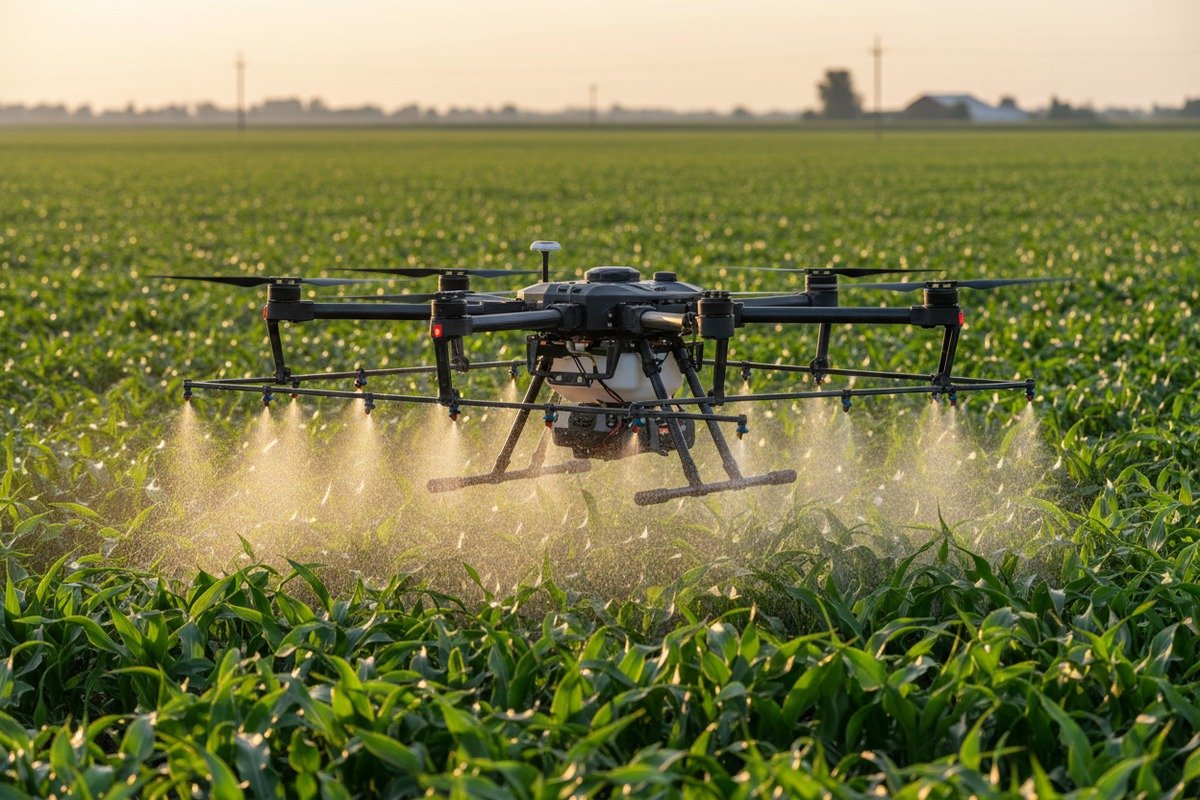
Height restrictions can impact efficiency on hilly terrain where 120 meters may not provide adequate coverage elevation. However, most field spraying occurs at 2-5 meters above crop canopy, well within limits. Speed restrictions actually improve efficiency by ensuring proper chemical application and reducing costly re-spraying due to drift or missed coverage.
The Height Reality for Field Operations
Here's what our agronomist partners tell us: effective spraying happens low. Very low. The 120-meter ceiling rarely affects actual spraying operations.
Standard application height ranges from 2-5 meters above the crop canopy. This ensures droplet coverage without excessive drift. Going higher wastes chemicals and reduces effectiveness.
The height limit matters more for transit. Flying between fields or over obstacles requires awareness of the 120-meter ceiling. But this is manageable with proper flight planning.
Speed and Application Quality
Slower speeds during spraying aren't a restriction. They're a requirement for quality work.
Our spray system calibrations assume 5-8 m/s forward speed. This matches nozzle flow rates to coverage requirements. Flying faster creates gaps. Flying slower wastes time and chemicals.
| Operation Phase | Recommended Speed | Height | Efficiency Impact |
|---|---|---|---|
| Transit to field | 10-15 m/s | 50-100m | Minimal restriction impact |
| Approach pattern | 8-10 m/s | 20-50m | Geen |
| Active spraying | 5-8 m/s | 2-5m | Optimal for coverage |
| Turn maneuvers | 3-5 m/s | 3-8m | Geen |
| Return transit | 10-15 m/s | 50-100m | Minimal restriction impact |
Real Efficiency Factors
The regulations that actually affect efficiency are often overlooked. These include:
Visual Line of Sight requirements limit how far you can send the drone. This means more frequent repositioning for large fields. BVLOS authorizations exist but require additional approvals.
Remote ID mandates coming into full effect in 2026 require electronic identification broadcasts. This adds minimal weight but requires compliance verification.
No-fly zones near airports, military installations, and protected areas can restrict access to certain fields. Check national drone maps before purchasing property or signing contracts.
Member State Variations
National Aviation Authorities can add requirements beyond EASA minimums. Luxembourg and the UK require registration for drones as light as 100g. Some countries require additional pesticide application permits separate from drone authorizations.
Before buying, verify requirements in your specific operating country. Our export documentation team can help identify what's needed.
Can my supplier customize the flight software to help me stay within EU height and speed boundaries?
When distributors visit our facility in Xi'an, this question comes up in every meeting. They want drones that make compliance automatic. Good news: modern agricultural drones can be configured to enforce regulatory boundaries through software.
Reputable manufacturers can program geo-fencing, altitude limiters, and speed governors directly into flight controllers. These software configurations help operators stay compliant automatically. Custom firmware can be tailored for specific EU member state requirements, including no-fly zone databases and operational parameter locks that match your Specific Category authorization.

What Software Customization Includes
Our engineering team works with European distributors to configure three main compliance features:
Altitude Limiters cap maximum height at the meter level you specify. We can set hard limits at 120 meters for Open Category or custom heights matching your Specific Category authorization. The drone physically cannot exceed this ceiling.
Speed Governors restrict maximum velocity. These can be set globally or for specific flight modes. During spraying mode, the controller can enforce 8 m/s maximum. During transit, it might allow 15 m/s.
Geo-fencing creates virtual boundaries. The drone won't enter restricted airspace. We can load national no-fly zone databases or create custom boundaries for your operating area.
How Customization Works in Practice
The process starts with understanding your authorization requirements. If you have a Specific Category OA that permits 150-meter operations in certain zones, we program those parameters into the flight controller.
Here's a typical customization workflow:
- You provide your Operational Authorization details
- Our engineers review the permitted parameters
- We configure firmware with appropriate limits
- Testing verifies compliance
- Documentation proves configuration matches authorization
C-Class Marking and Software Requirements
C5 and C6 drones designed for agricultural use must meet specific technical requirements. These include:
| Vereiste | C5 Class | C6 Class |
|---|---|---|
| Direct Remote ID | Mandatory | Mandatory |
| Geo-awareness | Mandatory | Mandatory |
| Programmable height limit | Ja | Ja |
| Programmable speed limit | Ja | Ja |
| Low-speed mode | Optional | Optional |
| Tethered mode option | Optional | Optional |
Remote ID Integration
Starting in 2026, Remote ID becomes mandatory for drones over 250g with more stringent requirements for C1 and above classes. This system broadcasts identification and location data.
Our drones come with integrated Remote ID modules. The software handles broadcast requirements automatically. No operator intervention needed during flight.
Working with Your National Authority
Software customization helps, but you still need proper authorizations. The drone's programming supports compliance—it doesn't replace paperwork.
We recommend working with your NAA early in the purchasing process. Understand what's required before ordering. This lets us configure your drones correctly from the factory.
Some distributors maintain multiple firmware configurations for different customer needs. A farmer with standard Open Category operations needs different settings than a contractor with Specific Category BVLOS authorization.
What documentation do I need to verify that my imported drones comply with EU height and speed standards?
Our documentation team handles hundreds of EU shipments annually. The paperwork requirements have become more complex as regulations mature. Missing documents can delay customs clearance or prevent legal operation entirely.
EU compliance documentation includes CE marking certificates, C-class declarations of conformity, technical files proving height and speed limiter functionality, Remote ID compliance certificates, and user manuals in official EU languages. Specific Category operations additionally require manufacturer support letters detailing programmable parameters and technical specifications matching your Operational Authorization requirements.
Checklist essentiële documentatie
Every agricultural drone entering the EU needs these baseline documents:
CE Marking Certificate proves conformity with EU safety directives. This covers electrical safety, electromagnetic compatibility, and radio equipment requirements. Without it, customs can reject your shipment.
C-Class Declaration of Conformity specifies which drone class (C5 or C6 for most agricultural units) applies. This declaration comes from the manufacturer and confirms the drone meets class-specific requirements.
Technical File contains design specifications, test reports, and quality control documentation. Authorities can request this to verify compliance claims.
Gebruikershandleiding must be in the official language of destination countries. It should include operational limits, maintenance procedures, and emergency protocols.
Height and Speed Compliance Documentation
To prove your drone respects regulatory boundaries, you need:
| Documenttype | Doel | Who Provides |
|---|---|---|
| Firmware specification sheet | Lists programmable parameters | Fabrikant |
| Altitude limiter test report | Proves limit functionality | Manufacturer/test lab |
| Speed governor certification | Confirms speed restrictions work | Manufacturer/test lab |
| Geo-awareness database documentation | Shows no-fly zone compliance | Fabrikant |
| Configuration certificate | Records specific customer settings | Fabrikant |
Remote ID Documentation
The 2026 requirements make Remote ID documentation essential. You'll need:
Remote ID Module Certificate showing the broadcast system meets EU standards. This includes transmission power, data format, and range specifications.
Integration Test Report proving the Remote ID system works correctly with the specific drone model. Factory integration differs from aftermarket additions.
Registration Confirmation from your drone registration showing the Remote ID is properly linked to your operator account.
Specific Category Additional Requirements
If your operation requires Specific Category authorization, additional manufacturer documentation helps your application:
Technical Support Letter from us detailing the drone's capabilities and limitations. This supports your risk assessment and operational concept.
Maintenance and Inspection Schedule proving the drone can be maintained to continued airworthiness standards.
Training Material Certification showing pilots receive adequate instruction on the specific model.
Working with Customs and Aviation Authorities
Import documentation and operational documentation serve different purposes. Customs needs proof of product compliance. Aviation authorities need proof of operational compliance.
Keep these document sets organized but separate. Customs doesn't need your Operational Authorization. Your NAA doesn't need your import invoice.
Our export team provides document packages organized by purpose. This streamlines both customs clearance and aviation authority reviews.
The EU Trusted Drone Label
Coming changes in 2026 introduce the "EU Trusted Drone" designation. This security-focused label adds supply chain verification requirements.
Documentation will need to prove:
- Component origin and security
- Software integrity verification
- No unauthorized data transmission capabilities
- Compliance with counter-drone detectability requirements
Agricultural drone buyers should monitor this development. The label may become preferred or required for government contracts and sensitive area operations.
Conclusie
EU height and speed restrictions for agricultural drones require careful attention but shouldn't stop your operations. Work with suppliers who understand these regulations and can configure compliant systems from the factory. Proper documentation protects your investment and ensures legal operation across EU member states.
Voetnoten
1. Official EASA page explaining drone regulations and categories. ↩︎
2. Official EASA news stating the definition and importance of CE marking for drones. ↩︎
3. Provides official EASA information on the Open Category for drones. ↩︎
4. Official EASA news announcing the mandatory implementation of Remote ID for drones in Europe. ↩︎
5. Official EASA page outlining the mandatory visual line of sight requirement for Open Category drone operations. ↩︎
6. Explains the role of National Aviation Authorities in drone regulation. ↩︎
7. Official EASA page explaining C-class identification labels and their significance for drone compliance. ↩︎
8. Explains the requirements for operating drones in the Specific Category. ↩︎
9. Official EASA page explaining geo-zones and the role of geo-fencing in drone operations. ↩︎

 English
  Spanish
  German
  French
  Dutch
Dutch  Arabic
