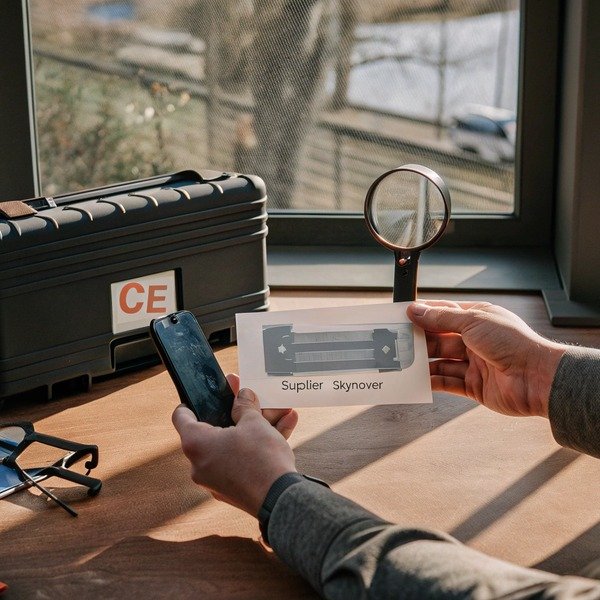
We often see buyers panicking when customs seize their shipments due to invalid paperwork. at our Xi’an facility, we know compliance is just as vital as flight stability.
To verify CE certification for firefighting drones, cross-reference the 4-digit Notified Body number on the CE mark with the EU NANDO database. Request the Declaration of Conformity to confirm it cites Regulations (EU) 2019/945 and 2019/947, and validate the certificate number directly on the issuing body’s official website.
Here is a clear guide to help you distinguish valid documents from expensive counterfeits.
Where can I verify the validity of a CE certificate number online?
Our export team constantly monitors regulatory databases to ensure our shipments to Europe clear customs smoothly. Without proper online verification, your investment remains grounded.
You can verify the validity of a CE certificate number by accessing the European Commission’s NANDO database. Search for the specific Notified Body identified by the four-digit code next to the CE mark, then use their listed website or certificate search tool to confirm the document’s status.

Verifying a certificate online is the most effective way to protect your procurement budget. Many buyers make the mistake of trusting a PDF document sent via email without performing due diligence. A PDF can be edited in minutes, but an entry in an official database is much harder to forge. The primary tool for this verification is the NANDO (New Approach Notified and Designated Organisations) database managed by the European Commission. NANDO (New Approach Notified and Designated Organisations) database 1
Understanding the 4-Digit Code
Every valid CE mark for a regulated industrial product like a firefighting drone must be accompanied by a four-digit identification number if a Notified Body was involved. This number sits right next to the CE logo. If your firefighting drone falls into class C1, C2, C3, C4, C5, or C6, a Notified Body is mandatory. You must take this number and search for it in the NANDO system. If the number does not exist, or if it belongs to an organization that is no longer active, the certificate is invalid.
Cross-Referencing with the Notified Body
Once you identify the organization behind the 4-digit code, do not use the contact details printed on the certificate provided by the supplier. Scammers often clone real certificates but change the verification phone number to their own "customer service" line. Instead, use the official website link provided within the NANDO database profile. Most reputable Notified Bodies (such as Applus+, SGS, or TUV) have a "Certificate Checker" tool on their website. SGS 2 Input the certificate number there. If the database returns "No Record Found" or "Withdrawn," the product is not compliant.
Table: Verification Outcomes and Actions
| Database Result | Status Description | Recommended Action |
|---|---|---|
| Valid / Active | The certificate is current and recognized by the issuer. | Proceed to verify the technical scope matches the drone model. |
| Withdrawn | The certificate was valid but has been cancelled, often due to safety issues. | Do not purchase. Ask the supplier for the new certificate. |
| Suspended | The manufacturer is under review or has failed an audit. | Pause procurement. The risk of customs seizure is high. |
| No Record Found | The number does not exist in the issuer's system. | High probability of forgery. Report the supplier and exit the deal. |
Which specific EU directives must my firefighting drone comply with for valid CE marking?
Designing our SkyRover heavy-lift platforms involves navigating a maze of directives. Missing just one standard in the design phase can render the final product illegal for EU markets.
Firefighting drones must comply with Regulation (EU) 2019/945 for unmanned aircraft systems and the Machinery Machinery Directive (2006/42/EC) 3 Directive 2006/42/EC for safety risks. Additionally, they require compliance with the Radio Equipment Directive (RED) 2014/53/EU for communication and the Electromagnetic Compatibility (EMC) Directive 2014/30/EU.
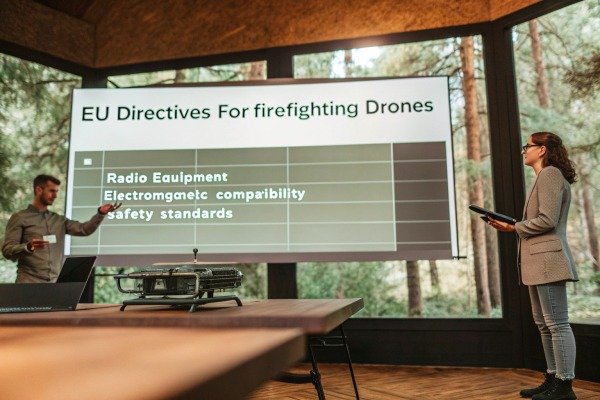
The regulatory landscape for firefighting drones is more complex than for consumer camera drones. consumer camera drones 4 Because these machines carry heavy payloads (like extinguishing balls or liquid tanks) and operate near people in emergency situations, they fall under stricter scrutiny. A generic "CE" stamp is not enough; the underlying documentation must list specific directives. If a supplier sends you a certificate that only mentions the "Toy Safety Directive" or misses the machinery standards, the drone is not legal for industrial use.
The Core Drone Regulation (EU) 2019/945
This is the primary regulation for the design and manufacturing of Unmanned Aircraft Systems (UAS). Unmanned Aircraft Systems (UAS) 5 It defines the class labels (C0 through C6). Firefighting drones typically fall into Class C3, C5, or C6 depending on their weight and operation mode. The Declaration of Conformity (DoC) must explicitly reference this regulation. It sets the rules for physical integrity, maximum noise levels, and remote identification capabilities. If the DoC references old national standards instead of Regulation (EU) 2019/945, the product is obsolete. Regulation (EU) 2019/945 6
Machinery Directive and RED
For industrial drones, the Machinery Directive (2006/42/EC) is non-negotiable. This directive addresses the mechanical risks posed by the propellers and the payload release mechanisms. Firefighting drones are essentially flying machines with dangerous moving parts. Furthermore, the Radio Equipment Directive (RED) 2014/53/EU covers the frequency bands used for control and video transmission. Radio Equipment Directive (RED) 2014/53/EU 7 You must check that the drone operates on allowed frequencies (like 2.4 GHz or 5.8 GHz) and meets power transmission limits. High-power transmitters common in other regions may be illegal in the EU.
Table: Mandatory Directives for Firefighting Drones
| Directive / Regulation | Doel | Key Check for Buyers |
|---|---|---|
| Regulation (EU) 2019/945 | UAS Technical Requirements | Look for the C-Class label (e.g., C3, C5) on the product. |
| Machinery Directive 2006/42/EC | Mechanical Safety | Essential for drones with payloads or heavy rotors. |
| Radio Equipment Directive (RED) | Wireless Communication | Ensure frequency and power output match EU limits. |
| EMC Directive 2014/30/EU | Electromagnetic Compatibility | Confirm the drone won't interfere with other electronics. |
| RoHS Directive 2011/65/EU | Hazardous Substances | Verifies no lead or mercury is used in components. |
What are the common red flags that indicate a supplier's CE certificate might be fake?
We have seen competitors slap generic stickers on untested frames, risking buyer safety. Spotting these cheap shortcuts early protects your budget and your operational reputation.
Common red flags include a CE mark where the circles do not overlap to form an ‘8’, missing Notified Body numbers for C-class drones, and Declaration of Conformity documents lacking specific serial numbers or referencing outdated directives like the R&TTE instead of the RED.
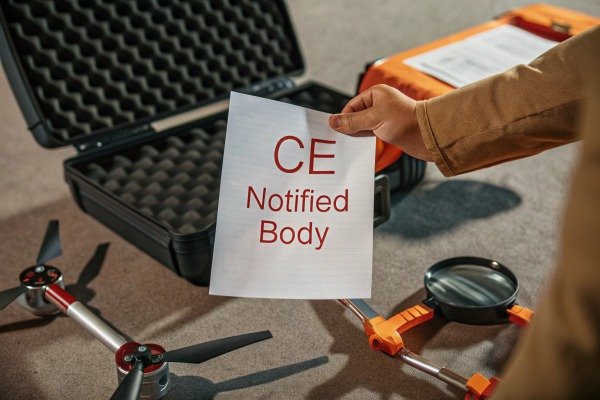
Detecting a fake certificate often requires a keen eye for detail. Counterfeiters generally care about speed and cost, so they make sloppy mistakes in the documentation. One of the most famous visual indicators is the CE logo itself. CE logo 8 The official European Conformity mark consists of two circles that, if extended, would form a figure '8'. The "C" and "E" are spaced specifically. In fake versions, often jokingly referred to as "China Export," the letters are placed too close together. While this is a visual hint, the paperwork usually contains deeper errors.
Analyzing the Declaration of Conformity (DoC)
The DoC is a legal document where the manufacturer takes responsibility for the product. A major red flag is a generic DoC that lists a broad product name like "Drone Series" without a specific model number or serial number range. A valid DoC for a firefighting drone must be specific to that exact model. Additionally, check the date and the signatories. If the document is signed by a person who no longer works there, or if the date predates the regulations listed, it is invalid.
Technical Inconsistencies
Another huge red flag is a mismatch in technical standards. For example, if the certificate references the R&TTE Directive (1999/5/EC), it is an immediate fail. That directive was repealed and replaced by the RED (2014/53/EU) years ago. Seeing repealed directives on a "new" 2024 or 2025 document proves the supplier simply copied an old template. Also, be wary of certificates issued by "voluntary" certification bodies that look official but are not Notified Bodies. If the lab is not on the NANDO list, their certificate has no legal standing for mandatory markings.
Table: Checklist of Immediate Certification Red Flags
| Red Flag Indicator | What It Means | Risiconiveau |
|---|---|---|
| Wrong CE Logo Dimensions | The "C" and "E" are almost touching. | Medium: Suggests lack of attention or intent to deceive. |
| No Notified Body Number | Missing 4 digits on a C3/C5/C6 drone. | Critical: The drone was likely self-declared illegally. |
| Outdated Directives | References repealed laws (e.g., R&TTE). | Critical: The testing is invalid for current markets. |
| Generic Descriptions | Lists "Quadcopter" instead of "SkyRover X500". | Hoog: The document does not cover your specific unit. |
| Photoshop Artifacts | different fonts or misaligned text rows. | Critical: The document is an altered forgery. |
When we selected our testing partners, we spent weeks vetting their accreditation scope. Relying on an unauthorized lab renders the entire certification process legally void.
Confirm authorization by searching the Notified Body’s ID number in the NANDO database and checking their “Scope of Notification.” Ensure the scope explicitly includes Regulation (EU) 2019/945 and relevant machinery standards, as some bodies are only authorized for simple consumer electronics, not industrial drones.

Just because a laboratory is famous or "accredited" does not mean they are authorized to test firefighting drones. Accreditation is specific. A lab might be excellent at testing kitchen toasters (Low Voltage Directive) but have zero authority to certify Unmanned Aircraft Systems under Regulation (EU) 2019/945. If a supplier presents a certificate from a real lab, you must still check if that lab was allowed to issue it for this specific product category.
Checking the Scope of Notification
When you find the Notified Body in the NANDO database, do not stop at the "Active" status. Click on their profile to view their "Notification Scope." This section lists the specific directives and regulations they are authorized to assess. You need to see "Regulation (EU) 2019/945" listed there. If it is missing, they cannot issue an EU-Type Examination certificate for your drone. Many suppliers use cheaper labs that are only authorized for EMC (Electromagnetic Compatibility) and try to pass that off EMC (Electromagnetic Compatibility) 9 as a full drone certification. This is insufficient for firefighting drones which carry high risks.
The Role of Module B (EU-Type Examination)
For high-risk categories of drones (which includes most industrial firefighting models), the assessment procedure usually requires "Module B" followed by Module B 10 "Module C" (Conformity to Type). Module B is the EU-Type Examination where the Notified Body examines the technical design. You should ask the supplier: "Did this drone undergo Module B assessment?" and request the corresponding certificate. If they only provide a "Certificate of Compliance" based on a voluntary test report, it is not a valid EU-Type Examination certificate. You can email the Notified Body directly to confirm if they issued a Module B certificate for that specific manufacturer. They are usually very responsive to these inquiries as they want to protect their brand from being used on fakes.
Why Authorization Matters for Liability
If you import a drone certified by an unauthorized body, you (the importer) become liable for any accidents. In the event of a malfunction during a fire rescue operation, insurance companies will deny claims if the equipment was not legally certified. By confirming the lab's specific scope in the NANDO database, you transfer that liability back to the manufacturer and the testing body, ensuring your organization is protected.
Conclusie
Verifying the authenticity of CE certification is the only barrier between a successful procurement and a costly legal disaster. Always cross-reference the Notified Body in the NANDO database, demand the full Declaration of Conformity, and inspect the physical markings. Taking these steps ensures your firefighting drones are safe, legal, and ready for duty.
Voetnoten
1. Official EU database for verifying Notified Body status. ↩︎
2. Example of a major accredited Notified Body for certification. ↩︎
3. Full legal text of the directive for machinery safety. ↩︎
4. Leading manufacturer representing the consumer drone market segment. ↩︎
5. Academic overview of UAS technology and terminology. ↩︎
6. Official EASA page detailing the specific drone regulation. ↩︎
7. ETSI standards page explaining radio equipment compliance requirements. ↩︎
8. General background on the history and design of the mark. ↩︎
9. International Electrotechnical Commission page defining EMC standards. ↩︎
10. Explanation of the specific examination module by a certification body. ↩︎

 English
  Spanish
  German
  French
  Dutch
Dutch  Arabic
