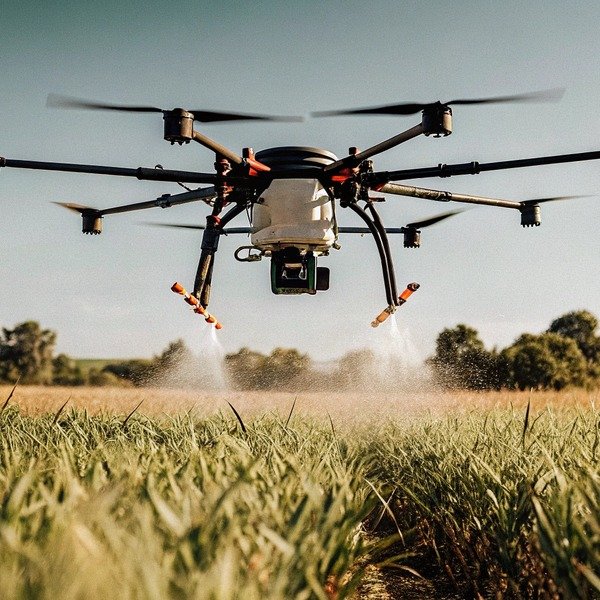
We often see clients face severe delays because they focused solely on flight time and payload, neglecting the critical regulatory specs our engineering team builds into the hardware.
To ensure proper compliance, you must ask suppliers for technical proof of nozzle droplet size calibration, material compatibility with specific pesticide solvents, and drift reduction technology ratings. Furthermore, verify that the drone’s software supports mandatory record-keeping and that the hardware aligns with FAA Part 137 requirements for aerial application.
Below, we break down the specific questions and documents you need to secure before finalizing your purchase.
What specific EPA documentation should I request from my drone manufacturer?
We compile extensive technical data sheets for our US partners because we know that without precise validation of the spray system, your operation cannot legally apply restricted-use pesticides.
You should specifically request nozzle performance charts showing droplet size classification (Coarse to Ultra Coarse) at various pressures, material compatibility matrices certifying tank resistance to harsh solvents, and third-party testing reports that validate the system's drift reduction capabilities under different wind conditions.
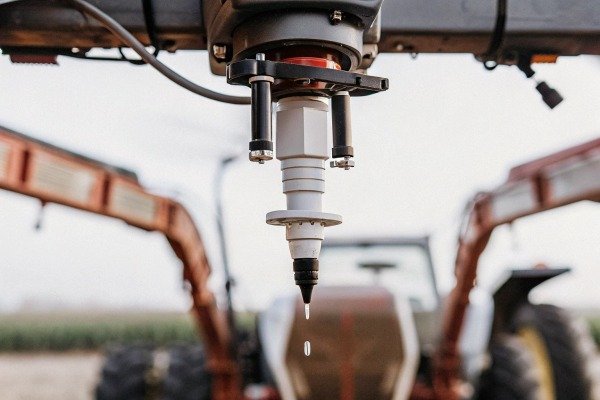
When you are ready to buy, you cannot rely on a simple brochure. You need raw data. In the United States, the Environmental Protection Agency (EPA) does not regulate the drone itself Environmental Protection Agency 1 as a vehicle—that is the FAA's job—but it strictly regulates how pesticides are applied. The "Label is the Law." If a pesticide label says it must be applied with a "Coarse" droplet size to prevent drift pesticide label 2 druppelgrootte 3, your drone must be mechanically capable of producing that exact droplet size.
Requesting Nozzle Calibration Data
The most critical document to ask for is the nozzle calibration report. nozzle calibration 4 Many generic drones come with standard nozzles that create a fine mist. While this looks impressive, it is often illegal for aerial application of herbicides because fine mists drift easily.
You need to ask your supplier: "Does this drone support low-drift nozzles, and do you have a chart showing the flow rate and droplet size spectrum at different pressures?" If the supplier cannot provide this, you risk violating the product label the moment you take off.
Material Compatibility Matrices
Agricultural chemicals are incredibly harsh. Solvents can eat through cheap seals and plastic tanks in weeks. We test our tanks against common solvents to ensure longevity. You should ask for a "Material Compatibility Matrix." This document lists the materials used in the plumbing (like Viton seals or polyethylene tanks) and their resistance to common chemical families.
Drift Reduction Technology (DRT)
The EPA is increasingly looking for Drift Reduction Technology (DRT) Drift Reduction Technology (DRT) 5. Drift Reduction Technology 6 While this is a complex area for drones, you should ask if the manufacturer has any wind tunnel data or field trial results showing how their rotor wash affects spray patterns.
| Naam document | Doel | Why You Need It |
|---|---|---|
| Nozzle Calibration Chart | Shows droplet size vs. pressure | To prove you can follow "Coarse" or "Medium" label requirements. |
| Material Compatibility Matrix | Lists chemical resistance of parts | To ensure the drone won't degrade and leak hazardous chemicals. |
| Drift Testing Report | Data on spray pattern in wind | To demonstrate due diligence in preventing off-target damage. |
| Flow Meter Certificate | Verifies accuracy of liquid output | Critical for applying the exact dosage per acre required by law. |
Do I need to ask for an EPA Establishment Number when importing spraying drones?
Our logistics department frequently helps new importers distinguish between the machinery we build and the actual pesticidal devices that trigger complex federal tracking requirements.
Generally, agricultural spraying drones are classified as application equipment and do not require an EPA Establishment Number unless they physically generate the pesticide themselves or use non-chemical methods, such as UV light or sonic emitters, to destroy pests directly.
This is a common point of confusion for many of our customers. Under the Federal Insecticide, Fungicide, and Rodenticide Act (FIFRA), the EPA distinguishes between a "device" Federal Insecticide, Fungicide, and Rodenticide Act 7 and "application equipment." Understanding this difference can save you from having your shipment seized at the border.
The Distinction Between Devices and Applicators
A standard agricultural drone that sprays a liquid chemical is viewed similarly to a crop duster plane or a hand-held sprayer. It is a tool used to apply a registered pesticide. The pesticide itself must be registered, but the tool does not need an EPA Establishment Number EPA Establishment Number 8.
However, if we were to manufacture a drone that uses high-intensity UV lights to kill mildew on grapes, or a drone that releases a sonic pulse to scare away birds, that drone becomes a "Pesticidal Device." In that specific case, the factory (our facility) would need an EPA Establishment Number, and that number would need to be printed on the drone's label.
When to Ask for the Number
Even though most spray drones are exempt, you should still clarify this with your supplier to be safe. Ask them: "Has this drone been classified as a pesticidal device under FIFRA, or is it solely application equipment?"
If you are importing a drone that includes a "generator" system—for example, a system that mixes chemicals on the fly to create a new active ingredient, or an ozone generator for sanitization—you absolutely need the Establishment Number. Importing such a device without it is a federal violation.
Customs Implications
When filing entry documents with US Customs and Border Protection (CBP), you will likely file a "Negative Declaration" for TSCA/EPA forms if it is standard equipment. However, having a written statement from the manufacturer confirming the classification helps your customs broker clear the goods faster.
| Functie | Classificatie | Establishment No. Required? |
|---|---|---|
| Liquid Spray Tank | Application Equipment | Geen |
| Granular Spreader | Application Equipment | Geen |
| UV Light Emitter | Pesticidal Device | Ja |
| Ozone Generator | Pesticidal Device | Ja |
| Sonic Pest Repeller | Pesticidal Device | Ja |
How do I verify if a supplier is compliant with FIFRA regulations?
We invest heavily in developing software that integrates with digital mapping standards because we understand that compliance is about where you spray just as much as what you spray.
To verify FIFRA compliance, confirm that the supplier’s system supports closed-loop loading to minimize operator exposure, utilizes anti-drip check valves to prevent accidental discharge, and offers software capable of ingesting buffer zone maps to avoid spraying in prohibited areas.

FIFRA (Federal Insecticide, Fungicide, and Rodenticide Act) compliance is not just about the machine; it is about how the machine interacts with the environment and the operator. As a buyer, you need to verify that the hardware features align with the safety standards expected by the EPA.
Closed-Loop Loading Systems
One of the biggest concerns for the EPA is "mixer/loader" exposure. Traditional pouring of chemicals into a tank exposes the worker to fumes and splashes. You should ask your supplier: "Is your drone tank compatible with closed-loop transfer systems?"
A compliant design will often have specific couplers or a tank geometry that allows for direct pumping from the mixing station without opening a lid. This significantly reduces worker risk and is a huge selling point for safety-conscious operations.
Automatic Buffer Zone Management
The EPA publishes "Bulletins Bulletins Live! Two 9 Live! Two," which details geographic restrictions to protect endangered species. If you spray in a protected zone, you are breaking the law.
Modern agricultural drones should have mission planning software that allows you to import shapefiles no-spray zones 10 or "no-spray zones." Ask your supplier: "Can I upload exclusion zones into the flight controller that automatically shut off the spray pump if the drone crosses the boundary?" This feature is a critical safeguard against human error.
Anti-Drip Mechanisms
FIFRA mandates that you prevent environmental contamination. A drone that drips chemical while flying back to the landing pad is a liability. You must verify that the nozzles are equipped with check valves. These small mechanical springs ensure that the moment the pump stops, the flow cuts off instantly, preventing the "trailing drip" that can burn crops or contaminate water sources.
Questions to Ask the Supplier
- Safety Valves: "What is the cracking pressure of the nozzle check valves?"
- Cleaning Protocols: "Do you provide a triple-rinse protocol for the tank that meets EPA container cleaning standards?"
- Data Logging: "Does the remote controller log the exact time, location, and flow rate for every flight?" (This is essential for the records you must keep for 2 years).
| Compliance Feature | Why It Matters for FIFRA | Question to Ask Supplier |
|---|---|---|
| Check Valves | Prevents dripping and off-target contamination. | "Do the nozzles have instant shut-off check valves?" |
| Variable Rate Control | Ensures accurate dosage per acre. | "Is the flow meter linked to flight speed for constant rate?" |
| Geofencing Spray | Respects endangered species buffer zones. | "Can the software auto-stop spray in restricted zones?" |
| Triple-Rinse Mode | Allows proper cleaning of equipment. | "Is there an automated tank cleaning cycle?" |
What are the risks if my supplier ignores EPA requirements for agricultural drones?
We have watched promising businesses fail because they bought cheaper, non-compliant units that ultimately led to legal action and the inability to secure necessary operating insurance.
The risks of ignoring these requirements include substantial civil fines for drift violations, the seizure of equipment by customs or state regulators, the denial of FAA Part 137 operating certificates, and the complete voiding of liability insurance coverage in the event of an accident.

If your supplier ignores these requirements, the liability does not stay with them in China or elsewhere; it lands squarely on you as the importer and operator. The EPA and state agricultural departments hold the applicator responsible.
The FAA and EPA Connection
Many people think the FAA and EPA are separate, but for drones, they are linked. To get your FAA Part 137 certificate (which allows you to spray), you must declare that you will follow all label instructions. If your drone cannot physically follow the label (e.g., it cannot produce the right droplet size), you are operating under false pretenses. This can lead to the revocation of your pilot's license and your operating certificate.
Financial and Legal Exposure
The fines for "take" (harming) of endangered species or drift damage can run into the tens of thousands of dollars per violation. If your drone drifts chemical onto a neighbor's school or organic farm because it lacked proper drift reduction features, the lawsuit could bankrupt a small business.
Furthermore, insurance companies are very strict. If you file a claim for an accident, the first thing they will check is if you were operating legally. If your drone hardware was non-compliant with the pesticide label, they will likely deny your claim, leaving you to pay for damages out of pocket.
Operational Dead Ends
Finally, consider the operational risk. If you buy a fleet of drones that cannot interface with closed-loop systems or don't support the required nozzle types, you might simply be unable to use the chemicals you need. We have seen warehouses full of "bargain" drones that collect dust because they cannot legally apply the products the farmers need.
Summary of Risks
- Regulatory Fines: Up to $20,000+ per violation for severe negligence.
- Customs Seizure: Loss of the entire shipment cost if deemed inadmissible.
- License Revocation: Loss of Part 137 certificate.
- Reputation Loss: Being known as the operator who drifted chemicals onto a neighbor's property.
Conclusie
Asking the right questions about nozzle calibration, material compatibility, and digital compliance features protects your investment and your business. By verifying these details with your supplier upfront, you ensure your fleet is ready for legal, safe, and efficient operation from day one.
Voetnoten
1. Official site for pesticide regulation and EPA oversight. ↩︎
2. Industry standard for droplet size categories and classification. ↩︎
3. Official EPA guidance on how droplet size affects pesticide drift and regulatory compliance. ↩︎
4. ISO standards for agricultural sprayers and nozzle performance. ↩︎
5. Direct link to the EPA program verifying technologies that reduce pesticide drift. ↩︎
6. International standards for pesticide application and drift control. ↩︎
7. General background on the primary US pesticide law. ↩︎
8. Official definition and requirements for obtaining an EPA Establishment Number. ↩︎
9. Direct link to the EPA application for identifying geographically specific pesticide use limitations. ↩︎
10. Example of professional drone software supporting exclusion zones. ↩︎

 English
  Spanish
  German
  French
  Dutch
Dutch  Arabic
