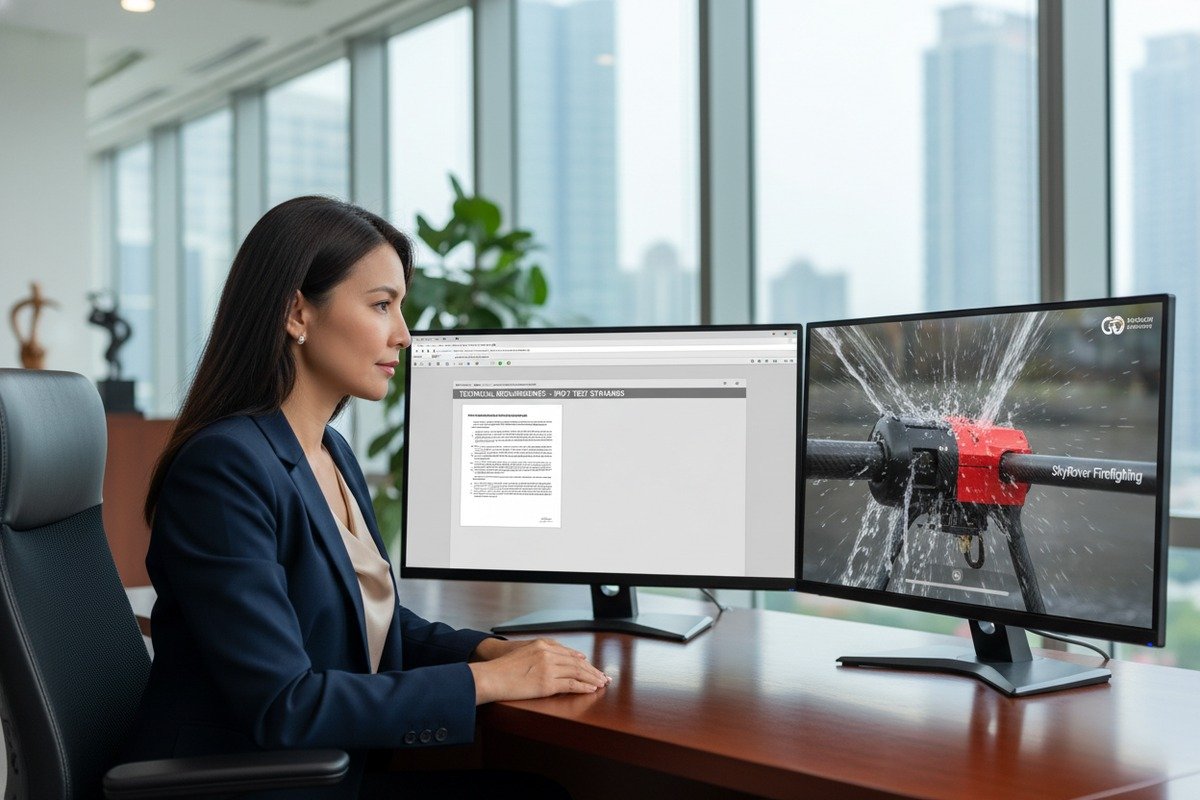
When our engineering team first started exporting firefighting drones to the US market, we noticed a common frustration. Procurement managers struggled to verify motor durability claims. Datasheets looked impressive, but without visual proof, how could buyers trust that motors would survive real fire conditions?
To request motor waterproof and dustproof test videos from suppliers, send a formal written request specifying the exact IP rating, motor model, test parameters, and documentation standards you require. Ask for continuous footage showing water spray angles, dust chamber density, and post-test operational verification to ensure authenticity.
This guide walks you through every step of requesting, evaluating, and verifying motor test videos. You will learn what details matter most, how to spot fake footage, and how to ensure your drones survive extreme firefighting conditions.
What specific details should I look for in a motor waterproof test video to ensure long-term durability?
Our production floor runs motor stress tests 1 daily. Yet we still receive calls from distributors asking what they should actually watch for in test videos. The truth is, most buyers focus on the wrong things. They watch water hit the motor and assume the test is valid.
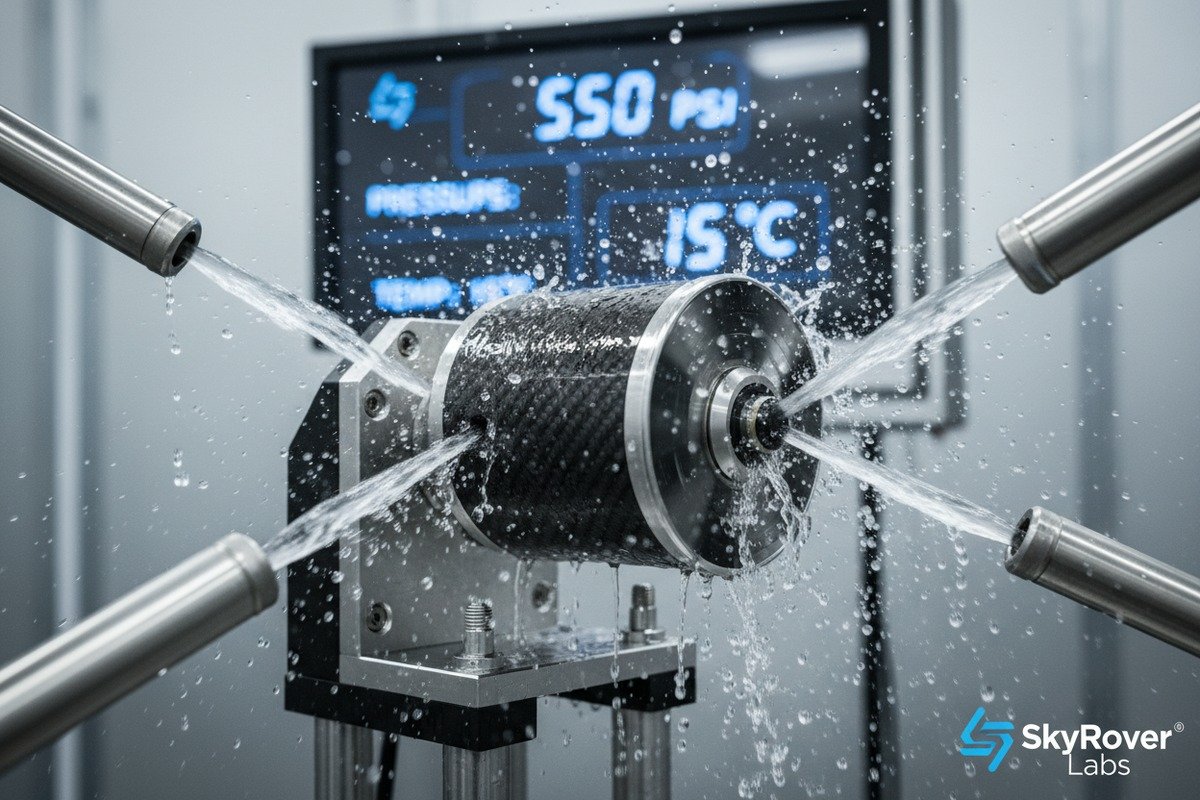
Look for continuous footage showing water spray pressure, exposure duration, motor rotation during testing, and post-test operational checks. The video should display the exact motor model, test date, environmental conditions, and evidence of seal integrity after exposure. Request footage of motor disassembly to verify no internal moisture ingress occurred.
Understanding IP Rating Components
IP-classificaties 2 tell you exactly what protection level a motor offers. The first digit measures dust protection. The second digit measures water protection. For firefighting applications, you need both numbers to be high.
| IP-classificatie | Dust Protection | Water Protection | Suitability for Firefighting |
|---|---|---|---|
| IP43 | Protected against objects >1mm | Protected against water spray | Minimum acceptable |
| IP54 | Protected against dust ingress | Protected against splashing water | Standard operations |
| IP55 | Protected against dust ingress | Protected against water jets | Wet environments |
| IP65 | Dust-tight | Protected against water jets | Heavy rain conditions |
| IP67 | Dust-tight | Protected against immersion up to 1m | Extreme conditions |
Critical Visual Elements in Test Videos
When reviewing footage, pause and examine these elements closely. First, check the water source. A garden hose differs dramatically from a calibrated test nozzle. The IEC 60529 standard 3 specifies exact water pressure and nozzle distances for each IP rating level.
Second, verify the motor is actually running during water exposure. Static tests where water hits a non-operating motor miss the point entirely. Real firefighting conditions involve motors spinning at high RPM while water pelts them.
Third, look for temperature indicators. Our quality control team always displays ambient temperature and water temperature during tests. Thermal shock 4 from cold water hitting hot motors causes seal failures that room-temperature tests miss completely.
Post-Test Verification Requirements
The most important footage comes after the water stops. Request videos showing:
- Motor restart within 60 seconds of water exposure ending
- Current draw measurements compared to pre-test baselines
- Vibration analysis to detect bearing contamination
- Physical disassembly revealing internal component condition
When we ship motors to European distributors, we include QR codes linking to batch-specific test footage. This traceability matters because manufacturing variations affect seal quality. The motor in your drone should come from a batch that passed testing, not just a similar model.
How can I request a customized motor test video that features my own branding or specific IP rating requirements?
Distributors often ask our sales team whether we can produce test videos showing their brand name or specific testing protocols. This request makes sense. When you sell drones to fire departments, showing branded test footage builds credibility with your customers.
Request customized test videos by providing suppliers with your exact specifications in writing. Include your logo files, required IP rating level, specific test duration, and any additional environmental factors you need demonstrated. Professional suppliers will schedule dedicated test runs and provide raw, unedited footage with your branding visible throughout.

Structuring Your Customization Request
Send a formal document outlining every requirement. Vague requests produce vague results. Here is what to include:
| Request Element | What to Specify | Waarom het belangrijk is |
|---|---|---|
| Branding requirements | Logo placement, file formats, color codes | Ensures professional appearance for your market |
| IP rating level | Exact rating needed (IP55, IP65, IP67) | Determines test equipment and parameters |
| Test duration | Minimum continuous exposure time | Validates long-term durability claims |
| Milieuomstandigheden | Temperature range, water type (fresh/salt) | Matches your actual operating conditions |
| Documentation format | Video resolution, metadata requirements | Enables verification and customer presentation |
Negotiating Test Parameters for Your Market
Different regions face different hazards. When our team works with US distributors serving California wildfire response teams, we configure tests differently than for European urban firefighting customers.
Wildfire conditions involve prolonged smoke exposure, fire retardant chemicals 5, and extreme temperature swings. Urban conditions involve high-pressure water from fire suppression systems and shorter exposure durations. Your test video should reflect your specific market conditions.
Ask suppliers whether they can simulate exposure to fire retardant chemicals. Standard IP testing uses clean water, but real firefighting operations expose equipment to Phos-Chek and similar compounds. We maintain separate test protocols for chemical resistance because these substances degrade seals faster than water alone.
Timeline and Cost Expectations
Custom test videos require scheduling dedicated test runs. Expect suppliers to quote additional fees ranging from minimal charges for simple branding overlays to significant investments for completely custom test protocols.
Professional suppliers typically deliver within two to four weeks. Faster turnarounds may indicate pre-recorded generic footage with branding added digitally. Ask for raw footage files alongside edited versions. Raw footage proves the test actually occurred with your specifications.
Request the test to be witnessed via video call if possible. Our quality assurance team has hosted live-streamed tests for key distributors who wanted absolute verification. This approach eliminates any doubt about footage authenticity.
What questions should I ask to verify that the motor testing video provided is authentic and current?
Last year, a US distributor shared a concerning story with our export team. They purchased drones based on impressive test videos, only to discover the footage was three years old. Manufacturing processes had changed. The motors they received performed nothing like the videos suggested.
Ask suppliers for test dates, batch numbers, laboratory accreditation certificates, and metadata from original video files. Request the motor serial numbers visible in footage to match your purchase order. Current videos should show recent dates, modern equipment, and offer live verification options or third-party laboratory reports.

Essential Verification Questions
Build a standard questionnaire for every supplier. These questions separate serious manufacturers from those hiding behind marketing materials.
| Vraagcategorie | Specific Questions to Ask | Red Flags in Responses |
|---|---|---|
| Timing | When was this test conducted? What batch does it represent? | Vague dates, footage older than 12 months |
| Equipment | What testing equipment was used? Is it calibrated? | Cannot name specific equipment models |
| Traceability | Can you match serial numbers in video to my order? | Claims all motors are identical |
| Verification | Will you conduct a live test via video call? | Refuses or makes excuses |
| Third-party | Do you have accredited laboratory reports? | Only internal testing available |
Analyzing Video Metadata
Request original video files, not compressed versions uploaded to YouTube or company websites. Original files contain metadata showing recording date, camera model, and sometimes GPS location. This information is difficult to fake convincingly.
Compare the metadata date to the supplier's claimed test date. Check whether the camera model matches equipment a manufacturing facility would use. Consumer smartphones suggest casual testing. Professional video equipment suggests serious quality control processes.
Our production facility uses dedicated industrial cameras with tamper-evident timestamp overlays. The timestamp burns directly into the video stream and cannot be edited without visible artifacts. Ask whether your supplier uses similar technology.
Third-Party Laboratory Verification
Independent testing laboratories 6 provide the strongest authenticity guarantee. Organizations like TÜV, SGS, and Intertek operate accredited facilities that conduct IP testing according to IEC 60529 standards.
Ask suppliers whether they have commissioned third-party testing. Request the laboratory name, report number, and contact information for verification. Call the laboratory directly to confirm the report exists and matches what the supplier provided.
NIST 7 has developed aerial drone testing frameworks specifically for public safety applications. While not yet mandatory, suppliers who participate in these programs demonstrate commitment to transparency beyond marketing requirements.
Batch Traceability Importance
Manufacturing consistency varies. A motor tested in January may differ from motors produced in June due to supplier changes, equipment calibration drift, or personnel turnover. Insist on batch-level traceability.
When we produce motors for firefighting applications, each batch receives a unique identifier. Test footage references this identifier visibly. Purchase orders link to specific batches. This chain of evidence ensures you receive motors from validated production runs, not untested stock.
How do I evaluate if the supplier's motor testing standards are sufficient for the extreme conditions my firefighting drones will encounter?
Fire departments trust their equipment to perform when lives depend on it. When our engineering team designs motor protection systems, we think about the worst conditions possible. A warehouse fire produces different stresses than a wildfire. Both differ from hazmat incidents involving chemical exposure.
Evaluate sufficiency by comparing supplier test parameters against your actual operating conditions. Standard IP ratings test clean water at controlled temperatures, but firefighting involves salt water, chemicals, extreme temperatures, and prolonged exposure. Request accelerated aging tests, thermal cycling data, and chemical resistance documentation beyond basic IP certification.

Mapping Operating Conditions to Test Requirements
Start by documenting every environmental stressor your drones will face. Then verify whether the supplier's testing addresses each one.
| Environmental Stressor | Standard IP Test Coverage | Additional Testing Needed |
|---|---|---|
| Fresh water spray | Yes (IP55+) | Geen |
| Salt water exposure | Geen | Marine environment protocol |
| Fire retardant chemicals | Geen | Chemical resistance testing |
| Temperature extremes | Partial | Full range thermal cycling |
| Smoke and particulates | Partial | Extended dust chamber exposure |
| High-pressure water jets | Yes (IP66+) | Verify actual pressure levels |
| Prolonged continuous operation | Geen | Endurance testing protocols |
Beyond Standard IP Ratings
IEC 60529 provides a baseline, but firefighting applications regularly exceed standard test conditions. A drone hovering above a burning structure faces radiant heat from below, water spray from firefighting operations, and smoke-laden air simultaneously.
Ask suppliers about thermal cycling tests 8. These involve repeatedly heating and cooling motors through their full operating range. Seals expand and contract during thermal cycles. Poor-quality seals crack and fail after repeated cycling even if they pass initial waterproof tests.
Accelerated aging tests 9 simulate years of environmental exposure in compressed timeframes. UV exposure degrades rubber seals. Vibration loosens connections. Humidity causes corrosion. These tests reveal failure modes that standard IP testing misses.
Chemical Resistance Considerations
Fire retardant chemicals like Phos-Chek contain surfactants and corrosion inhibitors that interact differently with motor materials than clean water. Some seal materials swell when exposed to these chemicals. Others become brittle.
Request documentation showing motor exposure to common fire retardant formulations. If suppliers have not tested against these chemicals, negotiate for custom testing before finalizing large orders. The cost of additional testing is minimal compared to field failures during actual firefighting operations.
Our R&D team maintains a library of fire retardant samples specifically for compatibility testing. We test new seal materials against these chemicals before approving them for firefighting drone production. Ask your suppliers whether they maintain similar protocols.
Performance Degradation Expectations
No waterproofing lasts forever. Seals degrade over time. Conformal coatings wear thin. Understanding expected degradation rates helps you plan maintenance schedules and replacement timelines.
Request data showing motor performance after multiple test cycles. How does current draw change after ten water exposures? Twenty? Fifty? This information helps you set realistic service intervals and warranty expectations for your customers.
Professional suppliers track long-term performance data across thousands of motors. They can provide statistical reliability information showing mean time between failures under various operating conditions. This data separates manufacturers with genuine engineering capability from those selling untested products.
Conclusie
Requesting motor waterproof and dustproof test videos protects your investment and your reputation. Focus on authenticity verification, match test conditions to your operating environment, and demand batch-level traceability. Your firefighting drone customers deserve equipment validated for real-world conditions.
Voetnoten
1. Explains globally recognized protocols for simulating real-world conditions to prove product reliability. ↩︎
2. Explains IP testing as a standardized method to assess enclosure defense against solids and liquids. ↩︎
3. Replaced with a link to the International Electrotechnical Commission (IEC) page for the IEC 60529 standard, providing the most authoritative source. ↩︎
4. Defines thermal shock as a rapid temperature change causing mechanical stress. ↩︎
5. Describes chemical constituents and application of fire retardants in wildfire fighting. ↩︎
6. Represents independent testing, inspection, and certification companies globally. ↩︎
7. Replaced with the official website of the National Institute of Standards and Technology (.gov), which is the most authoritative source. ↩︎
8. Explains environmental stress tests involving cycling through temperature extremes. ↩︎
9. Describes testing using aggravated conditions to speed up normal aging processes. ↩︎

 English
  Spanish
  German
  French
  Dutch
Dutch  Arabic
