
When our engineering team first developed firefighting drone systems 1, we noticed many fire departments struggled with unclear pricing. They wanted professional equipment but felt lost in a sea of confusing quotes and hidden costs.
A professional-grade entry-level firefighting drone system typically costs between $25,000 and $50,000. This budget covers the drone airframe, thermal imaging cameras, flight controllers, batteries, ground control stations, and basic payload delivery systems suitable for fire departments starting their drone programs.
Let me walk you through each cost component so you can plan your budget with confidence thermal imaging cameras 2. We will cover realistic price ranges, customization costs, delivery expenses, and long-term maintenance investments.
What is the realistic price range I should expect for a high-quality entry-level firefighting drone?
Fire departments often call our sales team with this exact question. They have heard prices ranging from $5,000 to $150,000 and feel completely confused about what they actually need.
For a high-quality entry-level firefighting drone with professional-grade components, expect to pay $25,000 to $50,000. This range includes thermal imaging cameras, GPS/RTK navigation, obstacle avoidance sensors, rugged airframes rated for harsh conditions, and basic payload systems for water or foam delivery up to 30 liters.

Understanding the Market Tiers
The firefighting drone market divides into clear tiers. Knowing where your needs fit helps you avoid overspending or buying inadequate equipment.
| Tier | Prijsklasse | Key Features | Beste voor |
|---|---|---|---|
| Thermische basis | $5,000 – $10,000 | RGB camera, basic thermal, limited range | Hobbyist use, not recommended for fire departments |
| Mid-Range | $10,000 – $20,000 | Better thermal resolution, longer flight time | Small departments doing thermal scouting only |
| Professional Entry | $25,000 – $50,000 | Advanced sensors, payload delivery, rugged design | Fire departments starting serious drone programs |
| Advanced Heavy-Lift | $50,000 – $150,000 | 50L+ capacity, tethered options, AI systems | Large departments, specialized operations |
Our production line focuses on the professional entry tier. We have found this sweet spot gives fire departments the best value. You get advanced sensors and real payload capability without the costs of heavy-lift industrial systems.
Breaking Down the Component Costs
When we build a professional-grade entry-level system, each component adds to the final price. Understanding this breakdown helps you evaluate quotes from different suppliers.
The airframe alone costs $3,000 to $8,000 for a quality carbon fiber construction. Our frames use matte black carbon fiber with reinforced joints. This material withstands heat exposure and turbulent conditions near active fires.
Motors and propulsion systems add $2,000 to $5,000. A professional firefighting drone needs eight motors in an octocopter configuration 3. This provides redundancy. If one motor fails, the drone can still land safely.
| Component | Cost Range | Opmerkingen |
|---|---|---|
| Carbon Fiber Airframe | $3,000 – $8,000 | Heat-resistant, impact-resistant |
| Motors/Propellers (8) | $2.000 - $5.000 | Redundant configuration required |
| Flight Controller w/ GPS/RTK | $1,500 – $4,000 | RTK provides centimeter accuracy |
| Thermische camera | $8,000 – $15,000 | Critical for hotspot detection |
| Battery System | $1,500 – $3,000 | Multiple batteries needed |
| Grondcontrolestation | $2.000 - $5.000 | Tablet with specialized software |
| Payload System (5-30L) | $3,000 – $8,000 | Water/foam delivery mechanism |
Comparing ROI Against Traditional Methods
Some procurement managers question whether drones justify the investment. Let me share data that changed many minds.
USDA research shows drone operations cost approximately $1,800 per day. Helicopter operations for similar fire support cost $16,000 per day. That difference adds up fast during extended fire seasons.
Fire departments using drones report 70% faster deployment times. They also see 45% lower costs for hazardous zone operations. Our customers in California tell us their drones pay for themselves within two fire seasons.
How much additional budget should I allocate for OEM customization and proprietary software development?
When distributors contact our engineering team, they often want unique features. They need their brand on the products. They want custom software that integrates with existing fire department systems.
Budget an additional 15% to 35% of your base drone cost for OEM customization and software development. For a $40,000 system, this means $6,000 to $14,000 extra. Basic branding and color changes cost less, while proprietary flight modes and custom ground control software require larger investments.

Types of Customization and Their Costs
Our factory handles customization requests daily. We have grouped them into categories so you can estimate costs accurately.
Visual customization is the simplest. This includes your logo on the drone body, custom colors, and branded packaging. We charge approximately 5% to 10% of the base unit cost for these changes.
Hardware modifications require more investment. Some customers want specific camera mounts, extended battery compartments, or custom payload release mechanisms. These changes run 10% to 20% of the base cost.
Software development demands the largest budget. Writing proprietary flight modes, integrating with existing incident command software, or creating custom data analytics dashboards requires significant engineering time.
| Customization Type | Cost Addition | Tijdlijn |
|---|---|---|
| Visual Branding (Logo, Colors, Packaging) | 5% – 10% | 2-3 weeks |
| Hardware-aanpassingen | 10% – 20% | 4-8 weeks |
| Basic Software Customization | 15% – 25% | 6-10 weeks |
| Full Proprietary Software Development | 25% – 35% | 12-20 weeks |
Software Integration Considerations
Fire departments increasingly need drone data feeds integrated into their incident command systems 5. When we develop custom software, we consider several factors.
Live video streaming requires stable protocols. Our engineers build systems that work with standard fire department networks. We ensure thermal and RGB feeds display correctly on existing monitors.
Mapping integration matters too. Many departments use specific GIS software 6. Our development team creates export formats compatible with these systems. This prevents data silos and improves situational awareness.
AI-based features represent the cutting edge. Startups like Seneca have raised $60 million to develop autonomous fire detection. We can integrate similar capabilities, but this adds significant cost. Budget $15,000 to $30,000 for advanced AI features.
Protecting Your Investment in Custom Development
I always advise customers to negotiate intellectual property terms carefully. When you pay for custom software, clarify who owns the code.
Some manufacturers retain ownership and license it back to you. Others transfer full rights. Our policy gives customers complete ownership of software they fund. This protects your investment and prevents vendor lock-in.
Documentation matters equally. Ensure your contract includes technical documentation, source code access, and training materials. Without these, you cannot maintain or update your custom features independently.
What are the total costs I need to consider for secure door-to-door delivery and import documentation?
In our experience exporting to the US and Europe, logistics often surprises first-time importers. The drone itself might cost $40,000, but getting it to your warehouse adds meaningful expense.
Plan for 8% to 15% of your order value to cover secure door-to-door delivery and import documentation. For a $40,000 drone system, budget $3,200 to $6,000. This includes international shipping, customs brokerage, import duties, insurance, and all required export/import certifications.

Shipping and Handling Breakdown
When we calibrate our shipping quotes, we consider multiple factors. Distance matters less than you might think. Documentation and handling drive most costs.
Air freight for a complete drone system typically costs $800 to $2,000 depending on weight and destination. Our firefighting drones weigh 15 to 35 kilograms with all accessories. Batteries require special handling as dangerous goods, adding surcharges.
Sea freight costs less but takes 4 to 6 weeks. Air freight arrives in 5 to 10 days. For urgent deployments, the speed premium justifies air shipping.
| Kosten Categorie | Typisch bereik | Opmerkingen |
|---|---|---|
| International Freight (Air) | $800 – $2,000 | Includes dangerous goods handling for batteries |
| Insurance (All-Risk) | 1% – 2% of value | Essential for high-value electronics |
| Customs Brokerage | $200 – $500 | Professional handling recommended |
| Import Duties (US) | 0% – 5% | Varies by classification |
| Documentation/Certification | $500 – $1,500 | Export licenses, compliance certificates |
| Last-Mile Delivery | $200 – $400 | From port/airport to your location |
Documentation Requirements
Fire departments and government contractors face strict import requirements. Missing paperwork causes delays and additional storage fees.
Export licenses from China 7 cover controlled technology. Our compliance team handles these automatically. We maintain all necessary certifications for drone exports.
Import documentation for the US includes Commercial Invoice, Packing List, Bill of Lading or Air Waybill, and Certificate of Origin. For drones with cameras, you may need additional FCC compliance documentation.
We prepare all documents before shipping. Our door-to-door service means you receive the drone ready to fly. No customs headaches. No surprise fees.
Avoiding Common Pitfalls
Some importers try to save money by handling customs themselves. This often backfires. Incorrect tariff classifications trigger audits. Missing documents cause port storage fees that exceed any savings.
Battery shipping deserves special attention. Lithium batteries 8 have strict regulations. Improperly packed batteries get rejected. Worse, they create liability issues if damage occurs during transit.
Our logistics team has shipped over 500 drone systems to North America. We know every requirement. We use specialized crates with shock-absorbing foam. We include humidity indicators and GPS trackers. Every shipment arrives documented and protected.
How can I estimate my long-term expenses for technical support and replacement parts to ensure product durability?
When we design our firefighting drones, durability guides every decision. But even the best equipment needs maintenance. Planning for these costs prevents budget surprises.
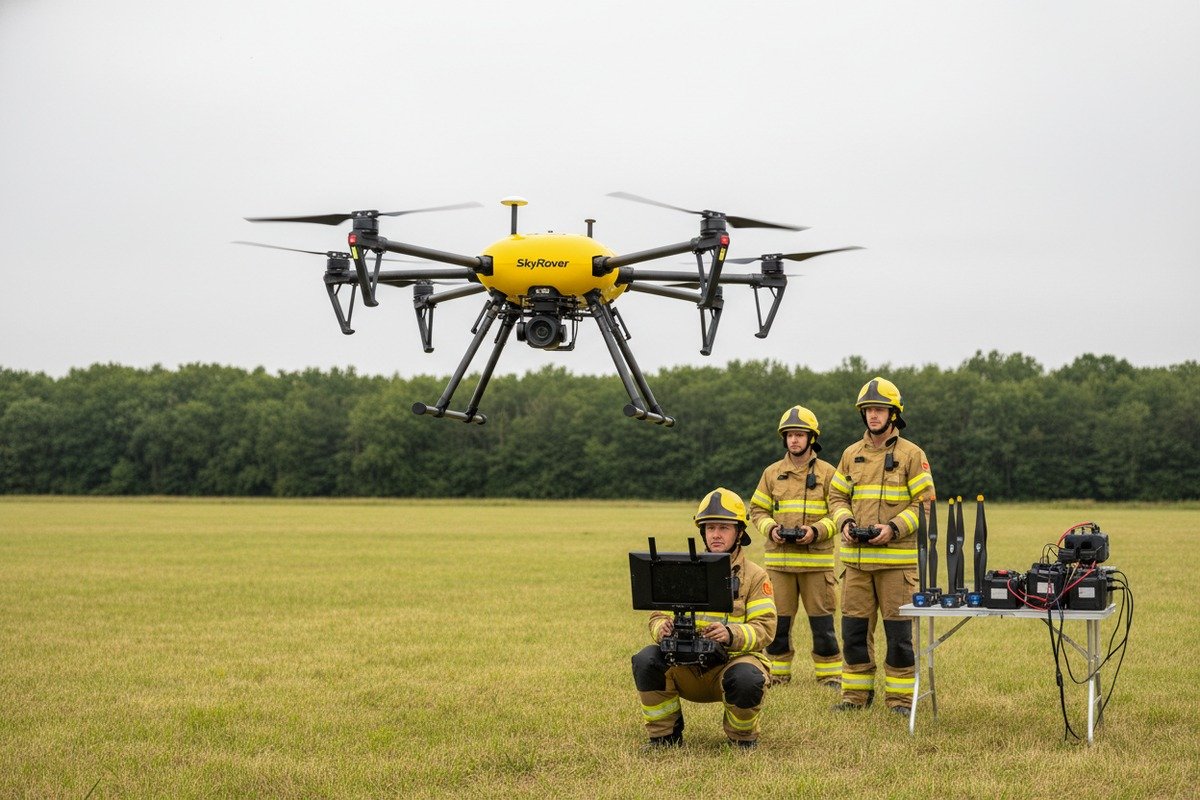
Annual technical support and replacement parts typically cost 10% to 20% of your initial drone investment. For a $40,000 system, budget $4,000 to $8,000 yearly. This covers routine maintenance, battery replacements, propeller sets, software updates, firmware support, and access to technical assistance when issues arise.
Calculating Your Annual Maintenance Budget
Our service team tracks maintenance patterns across hundreds of deployed units. This data helps customers plan accurately.
Batteries degrade fastest. Expect to replace your primary flight batteries every 12 to 18 months with regular use. A quality battery set costs $1,000 to $2,000. Budget for two sets annually if you fly frequently.
Propellers need replacement after damage or every 200 flight hours. A complete propeller set for an octocopter costs $300 to $600. Keep two spare sets in inventory.
Motors rarely fail completely but lose efficiency over time. Plan for one motor replacement annually at $200 to $400 per unit.
| Item | Vervangingsfrequentie | Annual Cost |
|---|---|---|
| Battery Sets | 12-18 maanden | $1,000 – $2,500 |
| Propeller Sets | 200 hours or damage | $400 – $800 |
| Motoren | As needed | $200 – $600 |
| Camera Calibration | Jaarlijks | $200 – $400 |
| Software Subscriptions | Jaarlijks | $500 – $1,500 |
| Technical Support Plan | Jaarlijks | $1,500 – $3,000 |
| Contingency Fund | Doorlopend | $500 – $1,000 |
The Value of Technical Support Plans
Some customers skip technical support to save money. This strategy often costs more long-term.
Our 24/7 technical support includes remote diagnostics. When something behaves unexpectedly, our engineers connect remotely to analyze flight logs. They identify issues before they cause failures. This prevents expensive crashes.
Firmware updates matter for safety and performance. Fire conditions evolve. Regulations change. Our engineering team releases updates that improve flight stability in turbulent conditions and enhance thermal camera algorithms.
Training refreshers keep skills sharp. Drone pilots need recurrent training to maintain proficiency. Our support plans include annual training sessions covering new features and best practices.
Planning for the Unexpected
Even with perfect maintenance, emergencies happen. A drone might get damaged fighting a fire. A sensor might fail at the worst moment.
We recommend keeping a 15% contingency in your annual budget. This fund covers unexpected repairs without disrupting your program.
Replacement part availability also matters. Before purchasing, confirm your supplier stocks critical components. Ask about lead times for major parts. Our warehouse maintains inventory of all common replacement parts. Most ship within 48 hours.
Extended warranties provide additional protection. Our standard warranty covers manufacturing defects for two years. Extended warranties add three more years for approximately 5% of the unit cost annually.
Conclusie
Budgeting for a professional-grade entry-level firefighting drone system requires planning beyond the initial purchase. Account for customization, shipping, documentation, and long-term support. With proper planning, your investment will serve your fire department reliably for years.
Voetnoten
1. Discusses the growing use and benefits of drones in fire service. ↩︎
2. Explains how thermal cameras detect hotspots and aid in fire management. ↩︎
3. Explains octocopter design, highlighting stability, payload capacity, and redundancy for demanding applications. ↩︎
4. Explains how RTK technology provides centimeter-level accuracy for drone positioning and mapping. ↩︎
5. Defines Incident Command System (ICS) as a standardized management system for effective incident response. ↩︎
6. Explains GIS as a technology for creating, managing, analyzing, and mapping all types of data. ↩︎
7. Details China’s export controls on UAVs and related items for national security. ↩︎
8. Provides IATA guidelines for safe air transport of lithium batteries, including restrictions and packaging. ↩︎

 English
  Spanish
  German
  French
  Dutch
Dutch  Arabic
