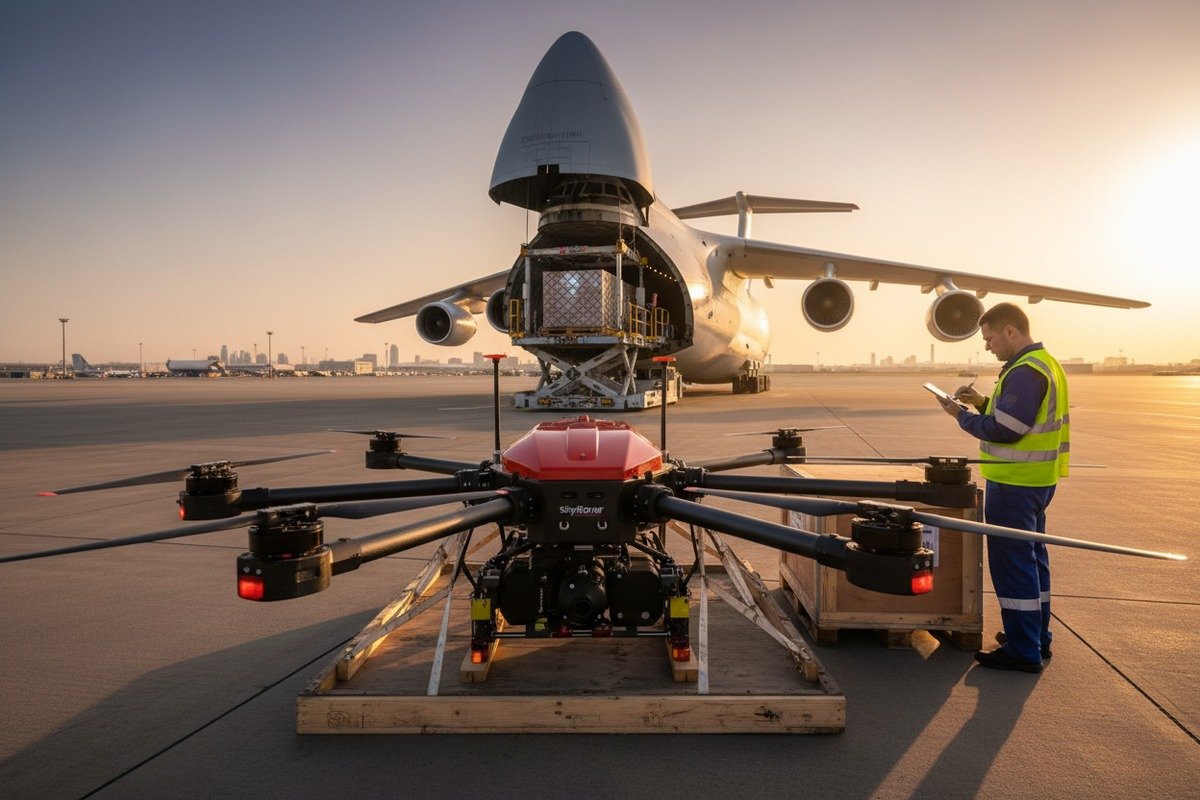
When our production team ships a blusdrone 1 to a fire department in the United States, we watch the calendar closely. Every day matters. The wrong logistics choice can add weeks—sometimes months—to your procurement timeline.
Logistics methods directly determine firefighting drone lead times through three key factors: transit duration, customs clearance speed, and last-mile delivery complexity. Air freight cuts transit to 5-10 days versus 30-45 days for sea shipping, while proper export certifications prevent customs holds that can add 2-4 weeks. Door-to-door solutions reduce handoff delays and simplify coordination.
Let me walk you through each logistics decision point. You will learn how to choose the right shipping method, which certifications to demand, and how to plan your inventory around potential bottlenecks.
How can I determine if air freight or sea shipping is better for my firefighting drone procurement timeline?
Choosing between air and sea freight feels overwhelming at first. Our logistics team fields this question weekly from procurement managers planning their first drone import. The answer depends on your urgency, budget, and order size.
Air freight delivers firefighting drones in 5-10 days compared to 30-45 days via sea shipping. Choose air freight for urgent orders, prototype shipments, or small quantities under 500kg. Select sea shipping for large bulk orders where cost savings outweigh time delays. Factor in port congestion, which can add 1-2 weeks to sea shipments during peak seasons.

Understanding Transit Time Differences
Air freight 2 offers speed that sea shipping cannot match. A firefighting drone leaving our Xi'an facility reaches Los Angeles in approximately 7 days by air. The same unit takes 35-40 days by sea, including port handling at both ends.
However, transit time is only part of the story. Sea shipments require booking 2-3 weeks in advance during busy seasons. Air cargo offers more flexible scheduling with departures available multiple times weekly.
Cost Versus Time Trade-offs
The cost difference between air and sea freight is substantial. Here is a comparison based on typical firefighting drone shipments:
| Verzendmethode | Transit Time | Cost per kg (USD) | Beste voor |
|---|---|---|---|
| Air Freight Express | 3-5 dagen | $8-12 | Emergency replacements |
| Air Freight Standard | 7-10 days | $5-8 | Regular orders under 500kg |
| Sea Freight (FCL) | 30-40 days | $0.50-1.50 | Bulk orders over 1000kg |
| Sea Freight (LCL) | 35-45 days | $1.50-3.00 | Medium orders 500-1000kg |
When to Choose Air Freight
Air freight makes sense in several scenarios. Urgent fire season preparations demand fast delivery. Replacement units for damaged equipment cannot wait 45 days. High-value thermal imaging payloads benefit from reduced handling.
From our experience shipping to U.S. distributors, air freight also reduces damage risk. Fewer handling points mean fewer opportunities for impact damage to sensitive sensors and gimbal systems.
When Sea Shipping Works Better
Sea shipping 3 suits planned inventory builds. If you know your needs 3-4 months ahead, sea freight cuts costs dramatically. A full container of firefighting drones ships for roughly 15-20% of equivalent air freight costs.
We recommend sea shipping for annual bulk purchases. Many of our distributor partners place sea freight orders in January for summer fire season inventory. This approach balances cost efficiency with adequate lead time.
Hidden Factors That Affect Your Decision
Port congestion creates unpredictable delays. Los Angeles and Long Beach ports experienced 2-3 week backlogs during recent peak seasons. Air freight bypasses these bottlenecks entirely.
Battery shipping regulations add complexity. Lithium batteries require special handling documentation for both air and sea transport. Air freight has stricter limits on battery capacity per shipment.
What specific export certifications should I require from my supplier to avoid customs delays for my drone shipment?
When we prepare export documentation at our facility, we know that missing paperwork stops shipments at customs. I have seen drones sit in warehouses for weeks waiting for a single certificate. Requiring the right certifications upfront prevents these costly delays.
Require these essential certifications from your firefighting drone supplier: Certificate of Origin, Commercial Invoice with HS codes, Packing List, Export License (if applicable), CE/FCC compliance certificates, lithium battery test reports (UN38.3), and NDAA compliance documentation for government contracts. Missing any document can trigger customs holds lasting 2-4 weeks.

Essential Export Documentation
Every firefighting drone shipment needs core documents. These are non-negotiable regardless of destination country:
| Document | Doel | Who Provides |
|---|---|---|
| Certificaat van oorsprong 4 | Proves manufacturing location | Leverancier |
| Commerciële factuur | Verklaart waarde en inhoud | Leverancier |
| Paklijst | Details inhoud zending | Leverancier |
| Bill of Lading/Airway Bill | Carrier receipt | Freight forwarder |
| Export Declaration | Customs clearance 5 | Supplier/Agent |
Compliance Certifications That Prevent Delays
Beyond basic shipping documents, regulatory compliance certificates prove your drones meet destination country standards. For U.S. imports, FCC certification confirms radio frequency compliance. European buyers need CE marking documentation.
Our engineering team maintains current FCC and CE certifications for all firefighting drone models. We provide these certificates with every shipment because we know customs agents request them.
Battery Documentation Requirements
Lithium batteries trigger additional scrutiny. The UN38.3 test report 6 proves batteries passed safety testing. Without this document, customs may hold your entire shipment pending battery inspection.
We test all batteries through certified laboratories and include UN38.3 reports automatically. This proactive approach has eliminated battery-related customs delays for our U.S. partners.
NDAA Compliance for Government Sales
Government fire departments often require NDAA-naleving 7. This confirms that drone components do not originate from prohibited manufacturers. Our FLIR SIRAS-equivalent models use NDAA-compliant supply chains with U.S.-based final integration.
Request NDAA compliance documentation before ordering if you sell to government agencies. Discovering non-compliance after delivery creates major problems and potential contract cancellations.
HS Code Accuracy Matters
Harmonized System codes 8 classify your drones for customs duty assessment. Incorrect HS codes trigger audits and delays. Firefighting drones typically fall under HS 8806.10 (unmanned aircraft with maximum takeoff weight under 250kg).
We print accurate HS codes on every commercial invoice. Our customs specialists verify codes against current tariff schedules to prevent classification disputes.
Pre-Clearance Strategies
Some importers use pre-clearance programs to speed customs processing. Working with a licensed customs broker who specializes in drone imports helps identify documentation gaps before shipment.
We recommend establishing broker relationships before placing large orders. Your broker can review our documentation packages and request any additional certificates specific to your port of entry.
Will opting for a door-to-door logistics solution simplify my import process and shorten my total lead time?
Managing multiple logistics vendors creates coordination headaches. Our customers often ask whether door-to-door service is worth the premium. After shipping thousands of firefighting drones globally, we have clear data on this question.
Door-to-door logistics solutions typically reduce total lead time by 3-7 days compared to port-to-port shipping. They eliminate handoff delays between carriers, customs brokers, and local transporters. For buyers unfamiliar with import procedures, door-to-door service prevents costly mistakes that cause holds and redelivery charges.

What Door-to-Door Service Includes
Door-to-door shipping handles everything from our warehouse to your facility. A single provider manages pickup, export customs, international transit, import customs, and final delivery. You receive tracking updates throughout without managing multiple contacts.
Time Savings Breakdown
Each handoff point in traditional shipping adds potential delays. Here is how door-to-door service reduces overall lead time:
| Logistics Stage | Port-to-Port Time | Door-to-Door Time | Time Saved |
|---|---|---|---|
| Pickup to port | 2-3 days | Inbegrepen | 1-2 days |
| Export customs | 1-2 days | Dezelfde dag | 1 day |
| Transit | Same | Same | 0 days |
| Import customs | 2-3 days | 1-2 days | 1-2 days |
| Port to destination | 3-5 dagen | Inbegrepen | 2-3 days |
| Total | 8-13 days added | 1-2 days added | 5-8 days |
Single Point of Contact Advantage
When problems occur, door-to-door providers own the solution. With port-to-port shipping, you might chase three different companies to resolve a delay. Your customs broker blames the freight forwarder. The forwarder blames the origin agent.
Our door-to-door service includes 24/7 dispatch support. When a customer in Texas needed urgent delivery rerouting due to a warehouse flood, our logistics team adjusted final delivery within hours. Port-to-port arrangements cannot offer this flexibility.
Kostenoverwegingen
Door-to-door service costs 10-20% more than arranging each segment separately. However, this premium often pays for itself through avoided delays and reduced administrative time.
Calculate your internal cost of managing logistics vendors. If your procurement team spends 5-10 hours coordinating each shipment, door-to-door service may actually save money.
When Port-to-Port Makes Sense
Experienced importers with established broker relationships may prefer port-to-port control. Large companies with dedicated logistics staff can optimize each segment independently.
For fire departments placing occasional orders, door-to-door service eliminates learning curves and prevents expensive mistakes.
Tracking and Visibility Benefits
Modern door-to-door providers offer real-time GPS tracking throughout transit. You see exactly where your firefighting drones are at any moment. This visibility allows proactive communication with end users about delivery timing.
We integrate tracking data with shipment notifications so our customers can monitor progress without logging into multiple carrier portals.
How do I account for potential logistics bottlenecks when planning my firefighting drone inventory levels?
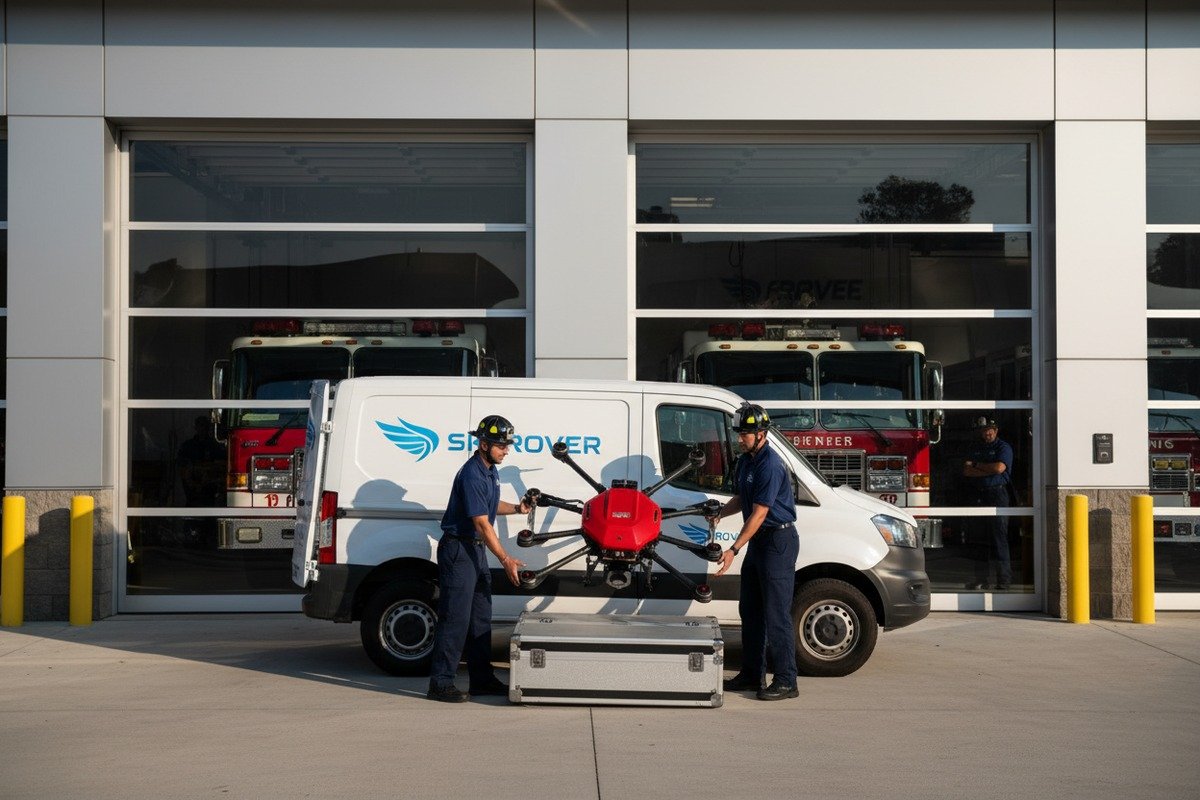
Our production planners learned hard lessons from supply chain disruptions. Post-COVID apparatus procurement timelines stretched from one year to four years in extreme cases. Planning inventory around potential bottlenecks prevents stockouts during critical fire seasons.
Build 30-60 days of safety stock above projected demand to buffer against logistics bottlenecks. Monitor seasonal shipping patterns, port congestion reports, and supplier lead times monthly. Maintain relationships with multiple freight providers to access backup capacity. Use predictive analytics based on historical fire season data to anticipate demand spikes.
Identifying Common Bottleneck Points
Logistics bottlenecks occur at predictable points. Understanding these helps you plan appropriate inventory buffers:
| Bottleneck Type | Typical Duration | Prevention Strategy |
|---|---|---|
| Congestie in de haven | 1-3 weeks | Ship earlier or use alternate ports |
| Customs holds | 2-4 weken | Pre-clear documentation |
| Carrier capacity shortage | 1-2 weken | Book space early |
| Supplier production delays | 2-6 weeks | Maintain safety stock 9 |
| Last-mile delivery issues | 3-7 dagen | Use door-to-door service |
Veiligheidsvoorraden berekenen
Safety stock should cover your longest reasonable delay scenario. If port congestion could delay shipments by 3 weeks and customs problems could add 2 weeks, plan for 5 weeks of safety stock during peak risk periods.
For firefighting drones, peak risk aligns with fire season buildup. Order inventory in Q1 for Q2-Q3 deployment windows. This timing avoids summer shipping congestion and ensures equipment arrives before wildfire season intensifies.
Supplier Lead Time Monitoring
We provide our distributors with production lead time estimates updated monthly. Current manufacturing lead times for firefighting drones run 4-6 weeks from order confirmation. This excludes shipping time.
Request similar visibility from any supplier you work with. Understanding production timelines helps you order early enough to absorb potential shipping delays.
Multi-Carrier Relationships
Relying on a single freight provider creates vulnerability. When one carrier faces capacity constraints, having backup relationships ensures you can still ship.
We maintain partnerships with three air freight forwarders and two sea freight providers. This redundancy has allowed us to maintain delivery commitments even during capacity crunches.
Predictive Ordering Based on Historical Data
Fire department procurement follows seasonal patterns. Historical fire incident data predicts demand spikes. Agencies in California order heavily before summer. Southeastern departments stock up before hurricane season.
Work with your suppliers to share demand forecasts. Advance notice allows production planning and material procurement that shortens your lead times.
Component-Level Planning for Spare Parts
Firefighting drones require ongoing maintenance. Spare batteries, propellers, and sensor modules should be stocked alongside complete units.
Our experience shows that spare part lead times often exceed complete drone lead times. Batteries require separate shipping compliance. Individual components may ship via different methods than complete systems.
Regional Warehouse Strategies
Some distributors establish regional warehouses to buffer against international shipping delays. Maintaining U.S.-based inventory eliminates international transit from customer delivery times.
We support this strategy by offering bulk shipments to distributor warehouses. Your regional stock handles immediate orders while international shipments replenish inventory on longer cycles.
Conclusie
Logistics decisions directly control your firefighting drone procurement timeline. Choose air freight for urgent needs and sea shipping for planned inventory builds. Require complete export certifications before shipment. Consider door-to-door service to eliminate handoff delays. Build safety stock to buffer against bottlenecks.
Voetnoten
1. Authoritative guide on firefighting drones, their applications, and models. ↩︎
2. Provides information on air freight solutions for time-sensitive shipments. ↩︎
3. Explains ocean freight, its role in global trade, and benefits for large shipments. ↩︎
4. Replaced HTTP 404 with an authoritative government source on Certificates of Origin. ↩︎
5. Defines customs clearance, its process, and importance in international trade. ↩︎
6. Details UN 38.3 testing requirements for safe transportation of lithium batteries. ↩︎
7. Explains NDAA compliance for drones, focusing on government procurement and security. ↩︎
8. Official source explaining Harmonized System codes for classifying traded products. ↩︎
9. Defines safety stock and its importance in inventory management against disruptions. ↩︎

 English
  Spanish
  German
  French
  Dutch
Dutch  Arabic
