
When our production team ships drones to farms across the globe, we know one truth: equipment fails at the worst times technische ondersteuning op afstand 1. A sprayer drone grounding during peak season can cost thousands in lost yield. The question is not if problems happen, but how your supplier responds.
To evaluate supplier crisis management, verify their remote technical support availability, assess spare parts shipping speed, review contingency plans for mass defects, and request documentation proving they can handle export regulation changes. Strong suppliers maintain 24/7 support teams, regional parts warehouses, and compliance departments ready for sudden policy shifts.
This guide walks you through the exact steps our partners use to vet drone suppliers Parts Supply Chain 2. We will cover practical checklists, red flags to watch, and questions that separate reliable manufacturers from risky ones.
How can I verify that my drone supplier provides reliable remote technical support when my equipment fails in the field?
Our engineers receive distress calls from farms at all hours. A drone down during harvest is not just an inconvenience. It can mean crop loss, missed spray windows, and angry clients. Remote support quality separates good suppliers from great ones.
Verify remote technical support by requesting documented response time guarantees, testing their support channels before purchase, confirming multi-language capabilities, and asking for references from existing customers in your region. Reliable suppliers offer 24/7 video call diagnostics, remote firmware access, and clear escalation procedures.
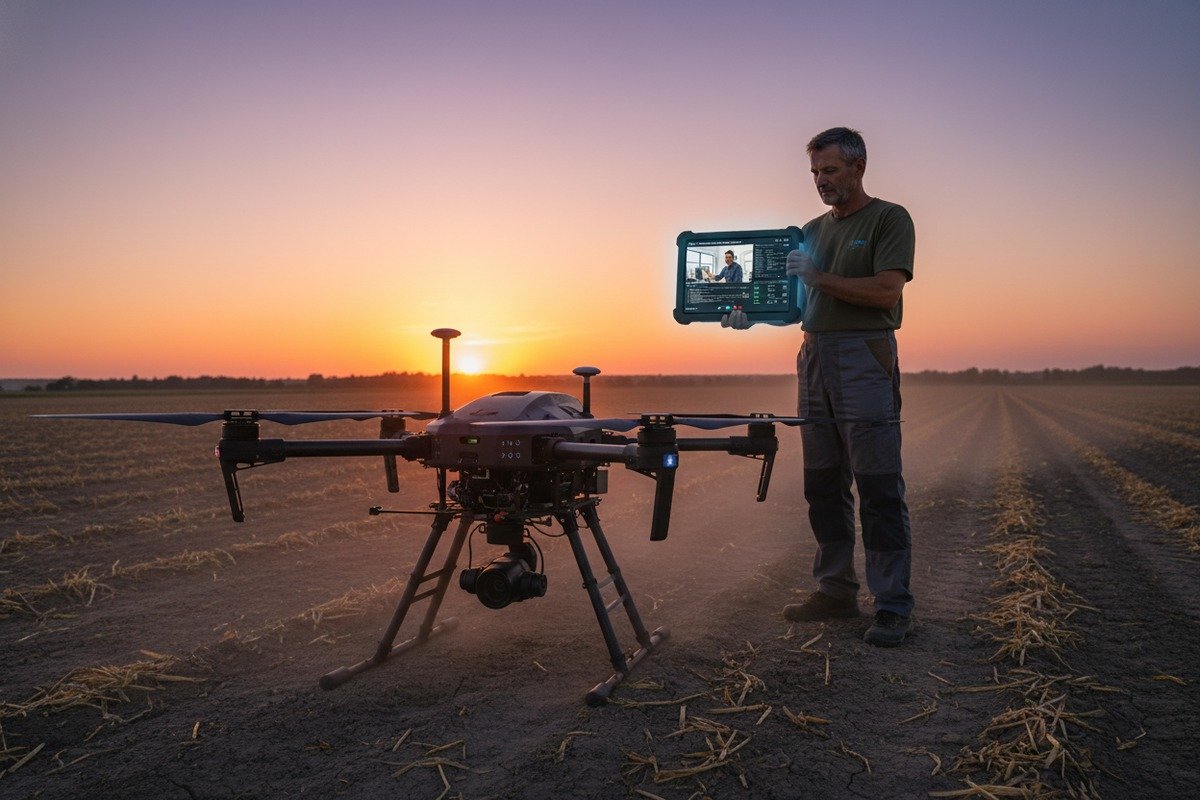
Why Response Time Matters More Than You Think
When a hexacopter fails mid-field, every hour counts. Crops do not wait for business hours. Our support team in Xi'an operates across time zones because we learned early that American farmers need help at 3 AM China time.
Ask potential suppliers these direct questions:
- What is your guaranteed first response time?
- Do you offer video call diagnostics?
- Can your team remotely access my drone's flight controller?
- What languages does your support team speak?
Ondersteuning testen voordat u begint
Smart buyers test support quality before signing contracts. Send a technical question to their support email. Call their hotline. Time the response. A supplier who takes three days to answer a pre-sale question will take longer when you are already a customer.
| Support Quality Indicator | Green Flag | Rode vlag |
|---|---|---|
| First Response Time | Under 4 hours | Over 24 hours |
| Video Call Availability | 24/7 or business hours your timezone | Alleen e-mail |
| Diagnose op afstand | Can access flight logs remotely | Requires you to ship drone back |
| Language Support | Native speakers in your language | Machine translation only |
| Escalation Path | Clear tier system with engineers | Single point of contact |
Building Your Verification Checklist
Request these documents from any supplier:
- Written SLA (Service Level Agreement 3) with response time guarantees
- Support team organizational chart showing coverage hours
- Case studies of past crisis resolutions
- Contact information for at least three current customers
When we onboard new distributors, we provide direct engineer contacts. This bypasses general support queues during emergencies. Ask if your supplier offers similar VIP channels.
The Hidden Cost of Poor Support
A drone grounded for one week during peak spraying season can cost a commercial operator $5,000 to $15,000 in lost revenue. Compare this to the cost difference between suppliers. The cheapest drone often comes with the most expensive support gaps.
What steps should I take to evaluate a manufacturer's ability to ship emergency repair parts without long delays?
On our assembly lines, we track every component from batteries to motor mounts. We know which parts fail most often and stock them accordingly. But not every manufacturer thinks this way. Parts availability can make or break your operation.
Evaluate emergency parts shipping by confirming regional warehouse locations, requesting current inventory reports for common failure items, checking carrier partnerships, and verifying average delivery times to your location. Top suppliers maintain safety stock in multiple regions and offer expedited shipping options with tracking.
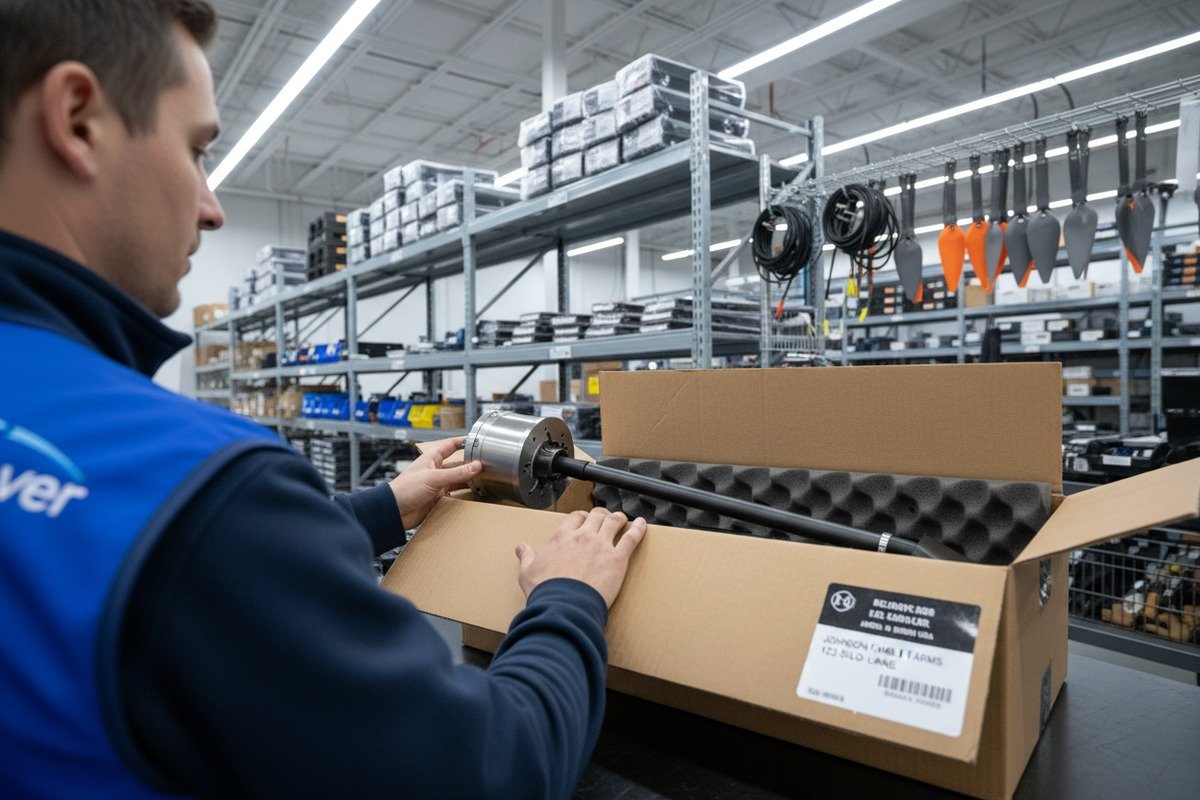
Understanding the Parts Supply Chain
Agricultural drones 4 contain components from multiple sources. Batteries come from specialized manufacturers. Sensors require semiconductor chips. Motors need rare earth magnets. In 2026, geopolitical pressures have disrupted many of these supply chains.
Ask suppliers about their sourcing strategy:
- Do you manufacture components in-house or source externally?
- Where are your backup suppliers located?
- What is your current inventory level for critical parts?
Critical Parts to Check
Not all parts matter equally. Focus your evaluation on components that fail often or have long lead times.
| Component | Typical Failure Rate | Lead Time Risk | Stock Priority |
|---|---|---|---|
| Batterijen | High (2-3 year lifespan) | Medium | Kritisch |
| Schroeven | High (damage from debris) | Laag | Hoog |
| Motoren | Medium | Hoog | Kritisch |
| Vluchtregelaars 5 | Laag | Zeer hoog | Kritisch |
| Sproeikoppen | Hoog | Laag | Hoog |
| Sensors (multispectral) | Laag | Zeer hoog | Medium |
| GPS-modules | Laag | Hoog | Medium |
Strategie regionaal magazijn
Shipping from China to the United States takes 5-15 days for standard air freight. During harvest emergencies, this is too long. Our distribution partners in key markets maintain local stock for this reason.
Questions to ask about warehouse locations:
- Do you have warehouses outside your home country?
- Can I see current inventory levels at each location?
- What is the fastest shipping option to my region?
- Do you offer consignment stock arrangements?
Evaluating Shipping Partners and Customs Clearance
Parts shipments face the same customs scrutiny as complete drones. Some components, like certain batteries, require special handling documentation.
Request proof of:
- Established relationships with major carriers (DHL, FedEx, UPS)
- Experience with agricultural equipment customs codes
- Battery shipping certifications (UN38.3)
- Track record of successful expedited shipments
Building Contingency into Your Contract
Smart procurement managers negotiate parts terms into their initial purchase agreement. Include clauses covering:
- Guaranteed maximum delivery time for critical parts
- Price locks for spare parts for a defined period
- Minimum inventory levels the supplier must maintain
- Penalty clauses for delayed shipments
Our standard contracts include these terms because we understand the cost of downtime.
How do I assess a supplier's contingency plan for handling mass product defects or quality control crises?
Our quality control team catches issues before drones leave the factory. But even the best systems sometimes miss problems. What matters is how a supplier responds when defects appear across multiple units. This reveals their true character.
Assess contingency plans by requesting documented recall procedures, reviewing past quality incident reports, verifying insurance coverage for product liability, and confirming they have dedicated quality crisis teams. Reliable suppliers maintain batch traceability systems, conduct root cause analysis protocols, and offer replacement or refund guarantees for systematic defects.

Why Mass Defects Happen
Even careful manufacturers face systematic failures. A bad batch of capacitors from a sub-supplier can affect hundreds of units. Firmware bugs might only appear under specific field conditions. The 2026 supply chain pressures have increased component quality variance across the industry.
Common causes of mass defects include:
- Sub-supplier component failures
- Manufacturing process changes
- Firmware or software bugs
- Design flaws discovered post-release
- Environmental factors (humidity, temperature extremes)
Evaluating Traceability Systems
When defects appear, suppliers must identify which units are affected. This requires robust batch tracking.
| Traceability Level | What It Tracks | Crisis Response Speed |
|---|---|---|
| Basic | Serial number only | Slow (manual records) |
| Intermediate | Serial + manufacturing date | Matig |
| Advanced | Serial + component batch + assembly line + operator | Fast |
| Premium | All above + supplier lot numbers + test results | Very Fast |
Ask to see their traceability system in action. Request a demo showing how they would identify all units containing a specific component batch.
Questions to Reveal Preparedness
Direct questions expose whether suppliers have real plans or just marketing claims:
- Describe your most recent quality crisis and how you handled it.
- What is your process for root cause analysis?
- How do you communicate with affected customers?
- What compensation do you offer for confirmed defects?
- Do you carry product liability insurance 6?
Suppliers who hesitate or give vague answers likely lack real contingency plans.
Documentation to Request
Before purchase, ask for:
- Quality management system certification (ISO 9001 or equivalent)
- Product liability insurance certificate
- Written recall procedure document
- History of past recalls and resolutions
- Customer references who experienced quality issues
Our factory maintains ISO 9001 certification 7 and carries comprehensive liability coverage specifically because our international partners require this assurance.
The Financial Side of Quality Crises
Mass defects cost money. Someone pays. Make sure your contract clarifies who bears these costs.
| Cost Category | Supplier Responsibility | Buyer Responsibility |
|---|---|---|
| Replacement Units | Full coverage expected | Geen |
| Verzendkosten | Should be covered | Sometimes shared |
| Field Service Labor | Negotiate coverage | Often buyer's cost |
| Crop/Revenue Loss | Rarely covered | Usually buyer's risk |
| Reputation Damage | Cannot be recovered | Cannot be recovered |
Strong suppliers accept responsibility for replacement units and shipping. Weaker ones try to shift costs to buyers.
When we ship our hexacopters to the United States or Europe, we navigate a maze of regulations. Remote ID requirements, export controls, battery certifications, agricultural equipment standards. In 2026, these rules shift faster than ever. Suppliers without compliance expertise become liabilities.
Request evidence of regulatory expertise by asking for current export licenses, customs clearance success rates, compliance team credentials, and documentation of past regulatory challenges they resolved. Strong suppliers maintain dedicated compliance departments, hold necessary certifications (CE, FCC, UN38.3), and provide complete import documentation packages.

The 2026 Regulatory Landscape
Geopolitical pressures have reshaped drone export rules this year. New Remote ID mandates require drones to broadcast identification, location, altitude, and velocity. Some regions now require supplier diversification documentation. Trade tensions have created new tariff and licensing requirements.
Key regulations affecting agricultural drone imports:
- FAA Remote ID compliance 8 (United States)
- EASA regulations (European Union)
- FCC radio frequency certifications
- UN38.3 battery transport certification
- Agricultural chemical application permits
- Country-specific import licenses
Compliance Documentation Checklist
Request these documents before placing orders:
| Documenttype | Doel | Red Flag If Missing |
|---|---|---|
| Uitvoervergunning | Legal permission to export | Major |
| FCC/CE Certification | Radio and safety compliance | Major |
| UN38.3 Battery Certificate 9 | Safe battery transport | Major |
| Certificate of Origin | Tariff determination | Matig |
| Remote ID Compliance Statement | US airspace operation | Major for US sales |
| Agricultural Equipment Certification | Legal field use | Varies by region |
Evaluating Compliance Team Capability
A supplier's compliance capability shows in their team structure and track record.
Ask these questions:
- Do you have a dedicated compliance or regulatory team?
- How many staff work on export documentation?
- What regulatory changes have you adapted to in the past year?
- Can you provide references from customers who imported successfully?
- How do you monitor upcoming regulation changes?
Our compliance team monitors regulatory updates weekly. When Remote ID rules finalized, we updated firmware months before deadlines. This proactive approach protected our partners from last-minute scrambles.
Customs Clearance Track Record
Past performance predicts future results. Ask suppliers for:
- Percentage of shipments cleared without delays (target: 95%+)
- Average customs clearance time to your country
- Examples of customs issues they resolved
- Names of customs brokers they partner with
Building Regulatory Flexibility into Contracts
Regulations change. Smart contracts anticipate this reality.
Include clauses covering:
- Supplier responsibility for maintaining current certifications
- Notification requirements for regulation changes affecting products
- Commitment to provide updated documentation within defined timeframes
- Price adjustment procedures if new tariffs apply
The Cost of Compliance Failures
When shipments get held at customs, costs multiply. Storage fees accumulate daily. Seasonal windows close. Customers lose confidence. One failed shipment can damage a business relationship permanently.
Our investment in compliance infrastructure reflects this reality. We maintain relationships with customs brokers in major markets and update our documentation proactively.
Conclusie
Evaluating supplier crisis management protects your agricultural drone investment from preventable disasters. Strong suppliers prove their reliability through documented support systems, regional parts inventory, quality contingency plans, and regulatory expertise. Ask hard questions, request evidence, and test responses before committing. Your harvest depends on it.
Voetnoten
1. Provides a general definition and overview of technical support, including common delivery methods. ↩︎
2. Provides a government guide on enhancing supply chain resilience, crucial for managing parts availability. ↩︎
3. Replaced with an authoritative definition of Service Level Agreement from IBM. ↩︎
4. Replaced with the official FAA page for Unmanned Aircraft Systems, which includes information on agricultural applications. ↩︎
5. Explains how drone flight controllers function as the UAV’s brain, processing data and commands for stable flight. ↩︎
6. Replaced with an authoritative definition of product liability insurance from IRMI. ↩︎
7. Official source defining ISO 9001, its requirements for quality management systems, and benefits. ↩︎
8. Replaced with the official and working FAA page dedicated to Remote ID for drones. ↩︎
9. Details the UN 38.3 testing requirements for safe transportation of lithium batteries. ↩︎

 English
  Spanish
  German
  French
  Dutch
Dutch  Arabic
