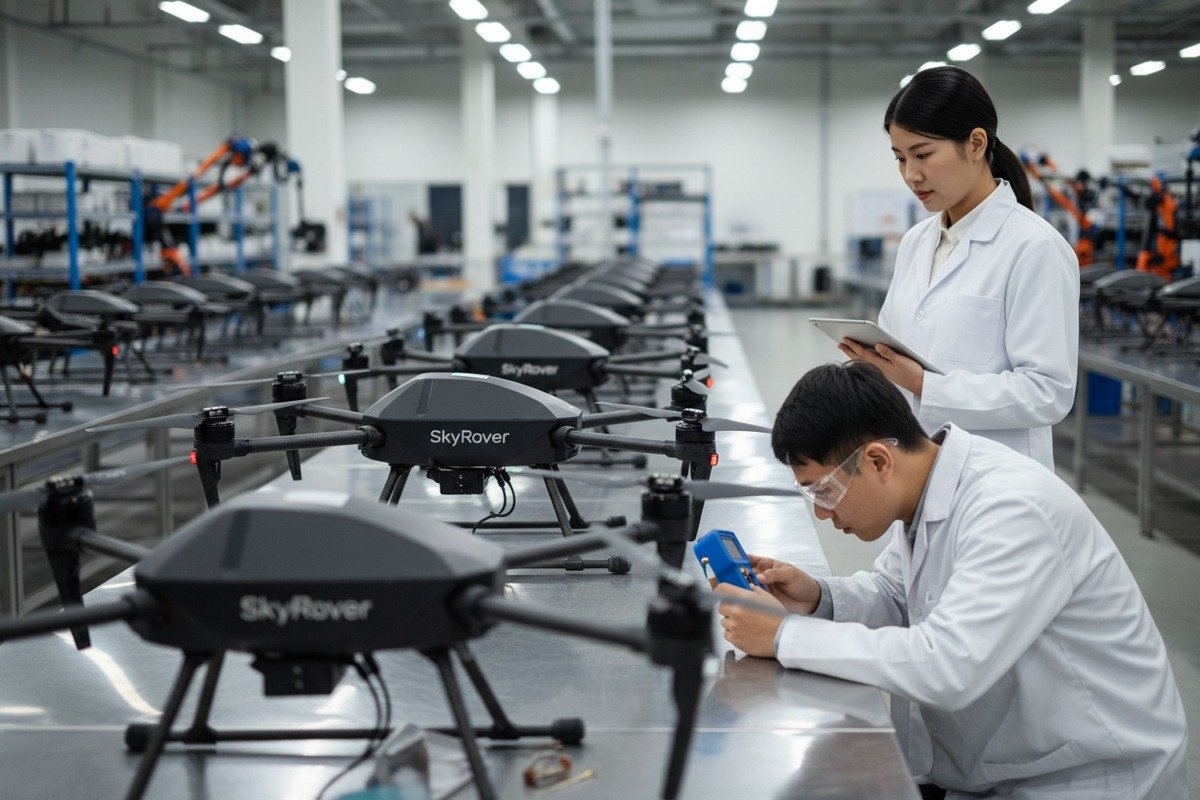
Last month, one of our US distributors shared a frustrating story statistical process control 1. They approved a flawless drone sample, but the bulk shipment showed 15% drift variance. This cost them thousands in returns.
To evaluate sample versus mass production quality in agricultural drones, buyers must verify spray quality index consistency, test nozzle flow rates across batches, audit component sourcing documentation, and require statistical quality control data from at least 5% of production units before shipment approval.
The gap between a perfect prototype and a reliable bulk order is where most sourcing deals fail Incoming Quality Control 2. Let me walk you through what our quality team has learned from shipping thousands of agrarische drones 3 worldwide.
How can I ensure the mass production units match the performance of my initial agricultural drone sample?
When we first started exporting hexacopter sprayers to European farms, we learned a hard lesson Bill of Materials 4. Our sample drones performed beautifully, but early production batches showed inconsistent spray patterns.
To ensure mass production matches sample performance, require your supplier to provide batch-level testing data for key metrics including spray quality index, droplet size distribution, and flight endurance. Request video documentation of random unit testing and demand statistical process control charts showing variance within acceptable limits.

Understanding the Sample-to-Production Gap
The core problem is simple. Samples get special attention. Engineers hand-pick components. Technicians spend extra time on calibration. Quality inspectors triple-check everything. Mass production cannot afford this luxury.
In our facility, we address this by establishing baseline metrics during sample approval. We document every specification. Then we create tolerance ranges that production must meet.
Key Performance Metrics to Track
Here are the critical numbers you should monitor:
| Metrisch | Sample Benchmark | Acceptable Mass Production Range | Red Flag Threshold |
|---|---|---|---|
| Spray Quality Index 5 (SQI) | 1.27 | 1.20 – 1.40 | Above 1.50 |
| Flow Rate Accuracy | ±2% | ±5% | Beyond ±8% |
| Spray Angle Deviation | ±3° | ±7° | Beyond ±10% |
| Droplet VMD | As specified | ±10% of spec | Beyond ±15% |
| Vliegduur | As tested | -5% to +10% | Below -10% |
Research shows that drones achieve an SQI of 1.27 compared to 3.07 for traditional boom sprayers. But this advantage disappears if mass production introduces too much variance.
Practical Verification Steps
First, request that your supplier test a random sample from each production batch. At our plant, we test 5% of every batch using water-sensitive papers 6. We analyze droplet distribution using ImageJ software.
Second, ask for calibration records. Every nozzle should have flow rate documentation. Our testing shows nozzles can deviate 7-10% from manufacturer specs on spray angle alone.
Third, demand flight logs from test units. Battery performance, GPS accuracy, and motor response should all match sample specifications.
Creating an Approval Protocol
Before signing off on mass production, establish a written protocol. Include specific test methods, acceptance criteria, and rejection procedures. This removes ambiguity and gives you legal standing if quality fails.
What quality control protocols should I require to prevent "sample bias" in my bulk drone order?
Our engineering team developed our current QC system after a client in Texas returned 30 units. The samples had flown perfectly. The production units had inconsistent motor timing that caused erratic spraying.
To prevent sample bias, require three-tier quality control: incoming component inspection with documented specifications, in-process testing at assembly checkpoints, and final quality assurance including flight testing. Demand that suppliers provide serialized test reports linking each unit to its specific test data and inspector.

The Three-Tier QC Framework
Sample bias happens when production shortcuts bypass the care given to prototypes. A robust QC framework catches problems before they reach your warehouse.
Tier 1: Incoming Quality Control (IQC)
Every component entering production needs verification. Motors, ESCs, flight controllers, and nozzles should match the specifications used in your approved sample.
We maintain a component database at our facility. When parts arrive, technicians compare them against baseline specifications. Any deviation triggers a hold for engineering review.
Tier 2: In-Process Quality Control (IPQC)
Assembly checkpoints catch problems early. For agricultural drones, critical checkpoints include:
- Frame assembly torque verification
- Motor mounting alignment
- Wiring harness continuity testing
- Tank and pump pressure testing
- Nozzle installation angle measurement
Tier 3: Final Quality Assurance (FQA)
Every completed drone needs functional testing. This includes powered flight, spray system operation, and software verification.
Documentation Requirements
| Documenttype | What It Should Include | Frequentie |
|---|---|---|
| Component Certificates | Supplier name, lot number, test results | Every incoming batch |
| Assembly Checklist | Inspector signature, timestamp, pass/fail | Every unit |
| Flight Test Report | Duration, GPS accuracy, motor temps | Every unit |
| Spray Test Data | Flow rate, pressure, pattern photos | Minimum 10% of batch |
| Calibration Records | Equipment used, last calibration date | Daily verification |
Audit Rights and Inspection Access
Your purchase agreement should include audit rights. This means you or your representative can visit the factory during production. Unannounced visits are most valuable.
When our clients visit our Xi'an facility, they see the actual production line. They watch random units being tested. This transparency builds trust and keeps quality high.
Rode vlaggen om op te letten
Be cautious if suppliers resist documentation requests. Vague answers about testing procedures suggest weak QC. Unwillingness to share component sources indicates possible substitution risks.
Also watch for unusually fast delivery promises. Quality testing takes time. If a supplier can deliver 500 drones in two weeks, they probably skip important steps.
How do I verify that the durability and flight endurance remain consistent from the prototype to the final shipment?
Two years ago, we redesigned our carbon fiber frame sourcing process. Some batches looked identical but failed stress tests earlier than others. The supplier had quietly changed resin formulations.
Verify durability and endurance consistency by requiring accelerated life testing data, material certification for structural components, and comparative flight logs between sample and production units. Insist on environmental stress testing including temperature cycling and vibration exposure that simulates at least one season of agricultural operation.

Why Durability Varies in Mass Production
Agricultural drones face brutal conditions. Dust, pesticide residue, temperature swings, and constant vibration stress every component. Materials that perform well in a sample may fail under production pressures.
The main causes of durability variance include:
- Material batch variations from raw material suppliers
- Process parameter drift during long production runs
- Worker fatigue affecting assembly precision
- Tool wear changing component fit
Accelerated Life Testing
Real durability testing takes months. Accelerated testing compresses this timeline by increasing stress levels.
| Type test | What It Simulates | Duur | Key Measurements |
|---|---|---|---|
| Vibration Testing | Motor operation, flight loads | 48 hours continuous | Frame crack initiation, fastener loosening |
| Temperature Cycling | Day/night, seasonal changes | -20°C to +50°C, 100 cycles | Battery capacity retention, seal integrity |
| Salt Fog Exposure | Coastal/humid environments | 96 hours | Corrosion on electronics, motor bearings |
| UV Exposure | Sun degradation | 500 hours equivalent | Plastic brittleness, wire insulation |
| Spray System Cycling | Daily agricultural use | 1000 on/off cycles | Pump failure, nozzle clogging |
Our drones undergo these tests before new designs enter production. We also randomly pull units from production batches for verification.
Flight Endurance Verification
Battery performance degrades fastest. A sample with fresh cells will always outperform production units with batteries that sat in storage.
Request flight endurance testing on production units using these conditions:
- Full payload weight
- Ambient temperature matching your operating region
- GPS-logged flight paths for distance verification
- Continuous spray operation during flight
Document the time from takeoff to 20% battery warning. This number should fall within 5% of your sample benchmark.
Material Traceability
For the carbon fiber hexacopter frames we manufacture, every batch has material certificates. These trace back to the composite supplier's production lot. If durability issues emerge later, we can identify whether material was the cause.
Ask your supplier for material certifications on:
- Frame structural components
- Motor housings
- Battery cells
- Tank materials
- Nozzle bodies
Field Validation Protocol
Before accepting a large shipment, arrange field validation. Deploy 3-5 production units under actual agricultural conditions for at least two weeks. Compare their performance to your original sample.
Track spray coverage uniformity using water-sensitive papers at multiple points in each field. Research shows that coefficient of variation in coverage should stay below 30% for acceptable results.
What steps can I take to confirm my supplier uses the same high-end components in mass production as they did in my sample?
When we send samples to potential distributors, every component is documented. We learned this practice from a competitor's scandal where they shipped samples with premium motors but production units with cheaper alternatives.
Confirm component consistency by requiring a detailed bill of materials with manufacturer part numbers for your approved sample. Demand that production purchase orders match these specifications and request photographic evidence of component markings on random production units. Include contractual penalties for unauthorized substitutions.
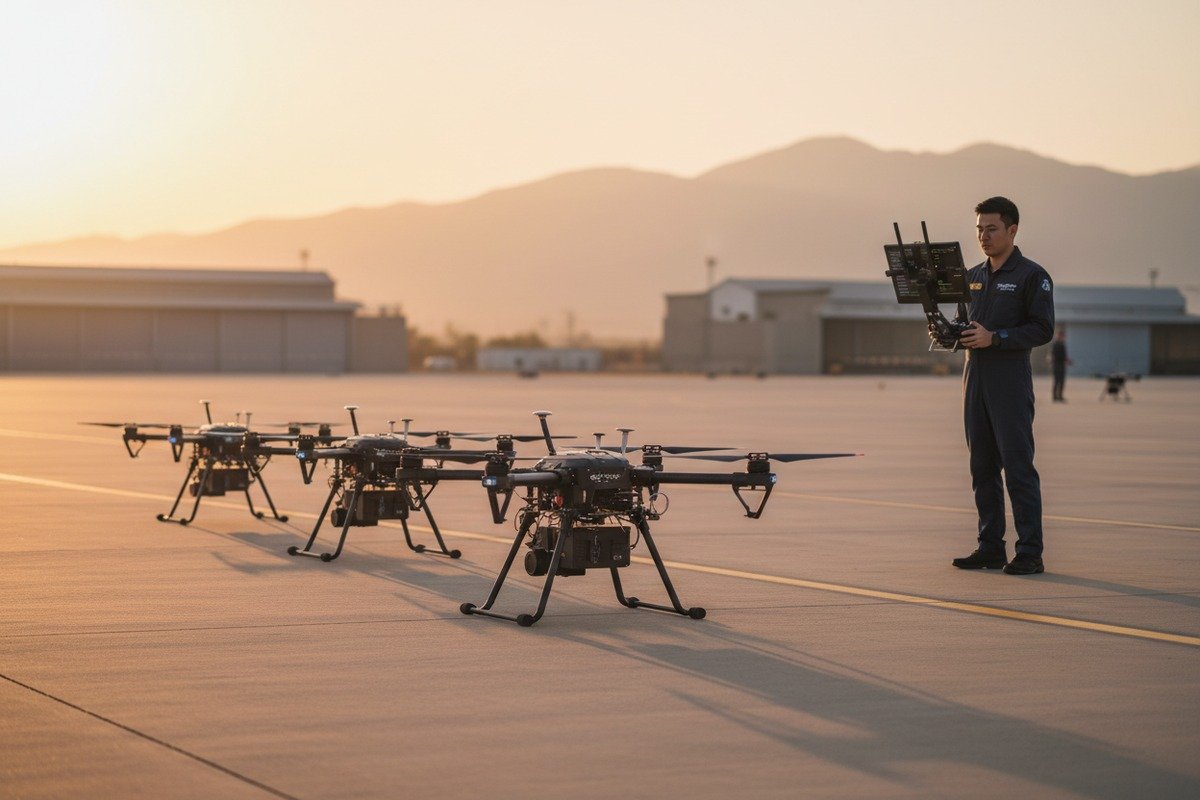
The Component Substitution Problem
Component substitution is tempting for manufacturers. A motor that costs $45 looks identical to one costing $30. The difference only shows after hundreds of flight hours.
Common substitution targets include:
- Motors (brand, winding quality)
- Electronic speed controllers
- Besturingskaarten
- GPS modules
- Battery cells
- Nozzle assemblies
- Wiring and connectors
Creating a Verified Bill of Materials
Your approved sample should come with a complete BOM. This document lists every component with:
| BOM Field | Example Entry | Waarom het belangrijk is |
|---|---|---|
| Part Description | Brushless Motor 5010 | Basic identification |
| Fabrikant | T-Motor | Brand verification |
| Part Number | MN5010-15 360KV | Exact specification |
| Quantity | 6 | Confirms count |
| Supplier Source | Authorized distributor | Prevents counterfeits |
| Unit Cost | $48.50 | Baseline for substitution detection |
If production costs suddenly drop without explanation, component substitution is likely.
Verification Methods
Visual Inspection
Many components have visible markings. Motors show brand names. Chips have part numbers. Request close-up photos of these markings on random production units.
Weight Verification
Genuine components have consistent weights. A motor substitution often changes weight by several grams. Weigh production units and compare to your sample.
Performance Benchmarking
The AI integration common in modern agricultural drones provides data. Flight controller logs show motor response curves. Deviations from sample data indicate possible changes.
Contractual Protection
Your purchase agreement should include:
- Approved vendor list – Only named component suppliers are acceptable
- Change notification requirement – Any substitution needs written approval
- Penalty clauses – Financial consequences for unauthorized changes
- Audit rights – Access to purchase records and inventory
Supply Chain Transparency
At our facility, we maintain relationships with major component manufacturers. Our distributors can verify through these manufacturers that we purchase genuine parts.
Ask your supplier if their component suppliers will confirm the business relationship. Legitimate manufacturers welcome this verification.
Testing for Counterfeit Components
Counterfeit electronics 8 plague the drone industry. These fakes often pass visual inspection but fail under stress.
Signs of counterfeits include:
- Inconsistent printing quality on labels
- Weight variations exceeding 5%
- Performance degradation faster than specifications
- Missing or incorrect date codes
When possible, send components from production units to independent testing labs. This investment prevents much larger losses from field failures.
Conclusie
Protecting your agricultural drone investment requires systematic verification at every stage. From sample approval through final shipment, demand documentation, test data, and transparency. The protocols we have discussed come from real production experience and real client feedback. Apply them consistently, and you will receive drones that perform as promised.
Voetnoten
1. Explains the definition and application of statistical process control. ↩︎
2. Explains the purpose and process of incoming quality control. ↩︎
3. Replaced HTTP 403 with a Wikipedia page providing a comprehensive overview of agricultural drones. ↩︎
4. Defines the manufacturing bill of materials and its components. ↩︎
5. Defines spray quality and its importance in pesticide application. ↩︎
6. Replaced HTTP 403 with an informative article on the use of water-sensitive paper for agricultural spraying. ↩︎
7. Provides a comprehensive definition and purpose of accelerated life testing. ↩︎
8. Replaced HTTP 404 with a Wikipedia page offering an authoritative overview of counterfeit electronic components. ↩︎

 English
  Spanish
  German
  French
  Dutch
Dutch  Arabic
