
Watching our heavy-lift drones stabilize perfectly over a test fire at our Xi’an facility is always a proud moment, but we know that engineering excellence is only half the battle for our European clients. The other half is logistics. Failing to accurately account for the journey from our factory floor to your warehouse can turn a profitable procurement project into a financial headache.
The total landed cost for importing firefighting drones includes the EXW product price, international freight, marine insurance, and customs duties based on HS code 8806. You must also add import VAT calculated on the CIF value plus duties, alongside local clearance fees and potential hazardous goods surcharges for lithium batteries.
Let’s break down the specific mathematics and logistics required to ensure your budget remains accurate.
What import duties and VAT rates do I need to factor into my budget?
When we prepare export documentation for our partners in Germany or France, we often notice confusion regarding how tax layers are applied to high-value equipment. Missing a decimal point in these calculations or misunderstanding the tax base can significantly impact your profit margins.
You generally face an import duty rate between 0% and 4.2% for drones from China under HS code 8806, depending on the specific sub-category. Additionally, you must pay your country’s standard VAT rate, ranging from 19% to 27%, which is calculated on the cumulative total of the goods' value, shipping, and duty.
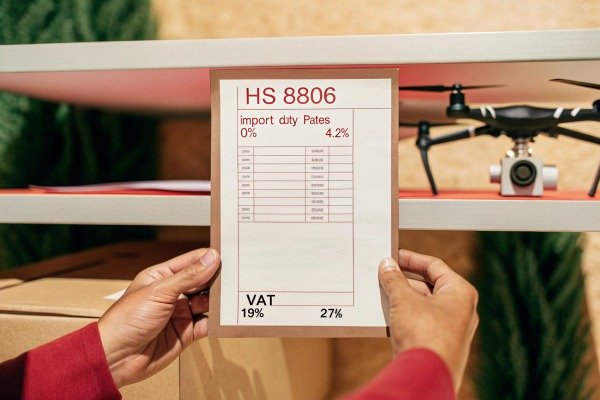
Understanding the tax structure in the European Union is critical Europese Unie 1 because it is not a flat fee; it is a compound calculation. If you calculate your VAT solely on the product price, you will underestimate your landed cost.
Identifying the Correct HS Code
The Harmonized System (HS) code is the DNA of your import. For the firefighting drones we manufacture, the classification usually falls under 8806. This heading covers "Unmanned aircraft." Specifically, you will likely look at subheadings like 8806.24 of 8806.94 depending on the maximum take-off weight (MTOW) of the drone.
- Lightweight drones: Often attract lower scrutiny but are rarely suitable for firefighting.
- Heavy-lift drones: These are the industrial workhorses we build. You must check the EU TARIC database using the code 8806 to find the specific duty rate for China (CN). While many tech products enjoy a 0% rate under the Information Technology Agreement, industrial drones can sometimes attract duties up to 4.2% or more if classified differently due to their payload mechanisms.
The "Tax on Tax" Effect
The most common mistake we see procurement managers make is the order of operations. You do not pay VAT on the factory price. You pay VAT on the "Customs Value."
- CIF Value: Cost of Drone + Insurance + Freight.
- Duty Amount: CIF Value × Duty Rate.
- VAT Base: CIF Value + Duty Amount.
- Final VAT: VAT Base × Local VAT Rate (e.g., 21% in Netherlands).
This means you are effectively paying a tax on the duty you have already paid. For high-value items like a fleet of SkyRover firefighting drones blusdrones 2, this compound effect adds up quickly.
Member State Variations
While customs duties are uniform across the EU customs duties 3 (paid at the first point of entry), VAT rates vary by country. Importing through a country with a lower VAT rate does not necessarily save you money if your final destination is elsewhere, as you may have to settle the difference.
| Land | Standard VAT Rate | Estimated Duty (HS 8806) | Impact on Landed Cost |
|---|---|---|---|
| Duitsland | 19% | ~0% – 4.2% | Matig |
| Frankrijk | 20% | ~0% – 4.2% | Matig |
| Nederland | 21% | ~0% – 4.2% | Moderate-High |
| Hungary | 27% | ~0% – 4.2% | Hoog |
| Luxemburg | 17% | ~0% – 4.2% | Laag |
Note: Duty rates VAT rates 4 are subject to change based on trade relations and specific technical characteristics of the drone.
By verifying these numbers before we ship, you ensure that your allocated funds cover the release of the cargo without delay.
How do different shipping methods affect my final price per unit?
We pack heavy-lift quadcopters daily, and the sheer physical footprint of a secure drone case often surprises clients who are used to shipping smaller electronics. Choosing the wrong carrier or mode of transport can double your logistics spend without adding value to your operation.
Air freight offers speed for urgent deployments but costs significantly more due to volumetric weight calculations on bulky drone packaging. Sea freight reduces shipping costs by up to 80% for larger orders, though it increases transit time to 30-45 days and requires stricter battery safety compliance for ocean transport.
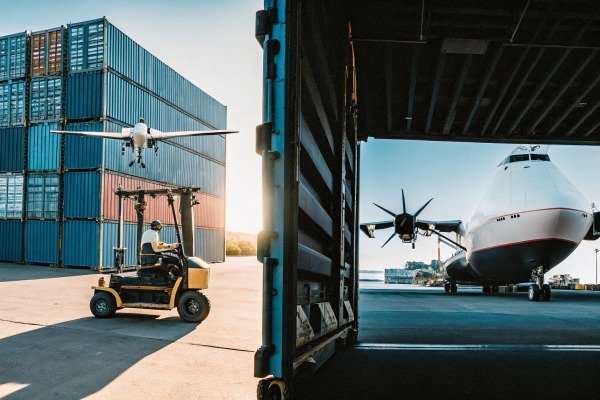
The choice between air and sea freight is rarely just about time; it is a fundamental shift in how your costs are calculated.
The Volumetric Weight Trap
In our factory, we design packaging to protect sensitive gimbals and thermal cameras. This means the boxes are large, filled with protective foam. Airlines charge based on "chargeable weight," which is the higher of the actual weight or the volumetric weight. volumetric weight 5
- Formula: Length (cm) × Width (cm) × Height (cm) / 5000 (or 6000 depending on carrier).
- Reality: A firefighting drone might weigh 15kg, but its box might have a volumetric weight of 45kg. If you ship by air, you are paying for 45kg of space, not 15kg of hardware. This creates a massive variance in unit pricing.
Sea Freight Economics (LCL vs. FCL)
For larger orders—say, equipping an entire fire department—sea freight is the only logical choice.
- LCL (Less than Container Load): You pay for the cubic meters (CBM) you use. This is great for orders of 5-10 units. However, be wary of destination port fees, which can be high for LCL.
- FCL (Full Container Load): If you are buying enough units to fill a 20ft container, the cost per unit drops dramatically. The risk of damage is also lower because the goods are not handled or consolidated with other cargo at the port.
Battery Logistics: The Critical Variable
Firefighting drones rely on high-capacity LiPo batteries. These are Class 9 Dangerous Goods (UN3480). Klasse 9 Gevaarlijke goederen 6
- Air Freight: Extremely strict. Limits on state-of-charge (SoC) usually set to 30%. Expensive "Hazardous Goods" surcharges apply per shipment. Some passenger airlines refuse them entirely, forcing you to use more expensive freighter aircraft.
- Sea Freight: Easier to move large quantities, but the container must be declared as hazardous. This limits which vessels will take the cargo and can add a "HazMat surcharge" to the ocean freight bill.
Cost Comparison Scenario
To help you visualize the difference, here is a hypothetical comparison for a shipment of 10 industrial drones.
| Shipping Mode | Estimated Transit Time | Cost Basis | HazMat Difficulty | Approx. Cost Index |
|---|---|---|---|---|
| Air Express (DHL/FedEx) | 5-7 Days | Volumetric Weight | Zeer hoog | 100% (Baseline) |
| Air Freight (Airport-to-Airport) | 7-10 Days | Volumetric Weight | Hoog | 60% – 70% |
| Sea Freight (LCL) | 35-45 Days | Cubic Meter (CBM) | Matig | 15% – 25% |
| Rail Freight (China-Europe Express) | 18-25 Days | CBM / Container | Matig | 30% – 40% |
We often advise clients to use a hybrid approach: ship one unit by air for immediate training and testing, and send the bulk of the fleet by sea to optimize the total landed cost.
Our logistics team frequently warns clients about the costs that do not appear on the commercial invoice but appear on the bill from the local handling agent. Ignoring compliance fees for batteries or radio transmission can delay clearance for weeks and rack up storage fees.
Beyond standard duties, you must budget for customs brokerage fees, terminal handling charges, and hazardous goods surcharges for high-capacity LiPo batteries. Furthermore, insurance typically costs 0.5% to 1% of the cargo value but is essential to protect against damage to sensitive sensors and optics during transit.

When you look at the "hidden" side of the ledger, you find the costs that often cause budget overruns. These are not hidden in a malicious sense, but they are often omitted from preliminary online calculators.
The Customs Brokerage Reality
Unless you have your own customs deferment account and software connected to the local customs authority customs authority 7, you will need a broker.
- Brokerage Fee: This is the service fee for filing the paperwork. It might be a flat fee (e.g., €150) or a percentage of the shipment value.
- Disbursement Fee: If the broker pays the VAT and Duty on your behalf to speed up release, they will charge a fee for lending you that money (often 2-3% of the advanced amount).
Terminal Handling Charges (THC) and Port Fees
If you ship via sea freight (LCL), this is a major pain point. You might pay a low rate to ship the goods from China to Rotterdam, but once the ship arrives, the "deconsolidation" begins.
- CISF (China Import Service Fee): Sometimes added at destination.
- Release Fees: Paid to the warehouse at the port.
- Delivery Order Fee: The cost to exchange the Bill of Lading for the right to collect the goods.
For a small shipment, these local charges can sometimes exceed the cost of the ocean freight itself. This is why we always recommend requesting a "Local Charges Quote" from your forwarder before booking.
Compliance and Inspection Costs
Firefighting drones are complex machines.
- Dual-Use Checks: Because our drones have heavy-lift capabilities and long-range transmission, they might be flagged for a physical inspection to ensure they match the paperwork. Customs inspections cost money—you pay for the labor of the inspectors unpacking your goods.
- CE Marking Verification: European customs are strict about CE compliance. If your paperwork is missing a Declaration of Conformity for the radio equipment or machinery directive, the goods will be held. Storage fees at a customs bonded warehouse can run €50–€100 per day.
Insurance: Non-Negotiable for Precision Tech
You are importing precision optical instruments and thermal sensors.
- General Cargo vs. Sensitive: Standard freight liability is calculated by weight (SDR per kg), which is woefully insufficient for high-value drones.
- All-Risk Insurance: We strongly recommend "All-Risk" coverage (Institute Cargo Clauses A). It usually costs about 0.5% to 1% of the Commercial Invoice value + Freight. If a drone arrives with a cracked frame due to rough handling, this insurance is the only thing protecting your investment.
Checklist of "Hidden" Landed Costs
| Fee Category | Beschrijving | Estimated Range |
|---|---|---|
| Customs Brokerage | Filing import declaration | €80 – €200 per entry |
| Terminal Handling | Port movement/unloading | €150 – €400 (Sea LCL) |
| Deferment/Disbursement | Fee for advancing tax payments | 2% – 3% of Tax Amount |
| Storage/Demurrage | Penalty for late pickup | €50 – €150 per day (after free time) |
| Hazardous Surcharge | Documentation for Class 9 Batteries | €50 – €100 per shipment |
| Verzekering | Cargo protection | 0.6% of (C+F) Value |
How does choosing DDP delivery simplify my landed cost calculation?
We recently helped a client in Germany switch to a Delivered Duty Paid (DDP) model Delivered Duty Paid (DDP) 8 to streamline their accounting and remove the variability of logistics. It removes the guesswork from logistics but requires a transparent supplier relationship to ensure you are not overpaying for the convenience.
Choosing DDP (Delivered Duty Paid) transfers all risk and responsibility to the supplier, meaning your quoted price includes freight, duties, taxes, and clearance fees. This provides a guaranteed final price per unit, simplifying your financial planning and eliminating the administrative burden of dealing with customs brokers directly.

In the world of international trade, DDP is the closest you can get to a "Amazon-like" buying experience for industrial equipment.
How DDP Works for You
Under DDP Incoterms, we, the manufacturer, become the importer of record Incoterms 9 (or use our agent to act as one).
- Quote: We give you a single price (e.g., €8,500 per drone).
- Process: We handle the export from China, the ocean/air freight, the import clearance in Europe, the payment of duty and VAT (unless negotiated otherwise regarding VAT reclamation), and the final truck delivery to your door.
- Result: You pay exactly €8,500. There are no surprise bills from a port authority or a customs broker.
The Financial Trade-Off
While DDP simplifies the math, it acts as a premium service.
- Risk Premium: Since we assume the risk of shipping price spikes or customs delays, we must build a safety margin into the DDP price.
- Control: You lose control over the shipping process. If we choose a slower carrier to save costs, you cannot intervene easily.
- VAT Complexity: For B2B transactions, DDP can sometimes complicate VAT recovery if the supplier (us) pays the import VAT. Often, we prefer DDP excluding VAT (sometimes called DDP via a forwarder), where we pay the duties and transport, but the import VAT is charged to your deferment account so you can reclaim it easily.
Comparing Incoterms for Landed Cost
| Functie | EXW (Ex Works) | FOB (Free on Board) | CIF (Cost, Ins., Freight) | DDP (Delivered Duty Paid) |
|---|---|---|---|---|
| Product Cost | Inbegrepen | Inbegrepen | Inbegrepen | Inbegrepen |
| Export Transport | Buyer Pays | Supplier Pays | Supplier Pays | Supplier Pays |
| Intl. Freight | Buyer Pays | Buyer Pays | Supplier Pays | Supplier Pays |
| Verzekering | Buyer Pays | Buyer Pays | Supplier Pays | Supplier Pays |
| Import Duty | Buyer Pays | Buyer Pays | Buyer Pays | Supplier Pays |
| Import VAT | Buyer Pays | Buyer Pays | Buyer Pays | Supplier Pays |
| Risk Transfer | At Factory | At Port of Origin | At Port of Destination | At Your Door |
| Cost Predictability | Laag | Medium | Middelhoog | Zeer hoog |
When to Choose DDP
For clients like Olivia—who are busy procurement managers needing reliability—DDP is excellent for sample orders or when your internal team lacks a dedicated logistics specialist. However, for large recurring orders (e.g., 50+ units a year), moving to FOB and managing your own freight often yields a lower average landed cost because you are not paying our risk premium.
At SkyRover, we are flexible. If you want the "easy button," we quote DDP. If you want to optimize every cent and have your own forwarder, we are happy to quote EXW or FOB. The key is to decide how much administrative effort you are willing to invest to lower your landed cost.
Conclusie
Calculating the total landed cost for firefighting drones requires moving beyond the sticker price. You must account for the specific HS code duties, the "tax on tax" VAT impact, and the unique logistics of shipping hazardous lithium batteries. lithiumbatterijen 10 Whether you choose the control of FOB or the simplicity of DDP, clarity is your best defense against budget overruns. If you are ready to plan your fleet deployment, our engineering and logistics teams are here to provide the precise weight and dimension data you need for an accurate calculation.
Voetnoten
1. Official portal providing context on the EU’s political and economic structure. ↩︎
2. Manufacturer page illustrating the technical capabilities of industrial firefighting UAVs. ↩︎
3. World Trade Organization overview of tariffs and duties in international trade. ↩︎
4. Official EU Commission page detailing current Value Added Tax rates across member states. ↩︎
5. Logistics provider explanation of dimensional weight calculations for shipping costs. ↩︎
6. IATA standards defining classification and transport requirements for hazardous materials. ↩︎
7. Official European Commission Customs portal for regulations and procedures. ↩︎
8. General reference explaining the specific Incoterm and its implications for buyers. ↩︎
9. International Chamber of Commerce rules defining commercial terms and responsibilities. ↩︎
10. Educational resource outlining safety protocols for handling lithium-based power systems. ↩︎

 English
  Spanish
  German
  French
  Dutch
Dutch  Arabic
