
Sourcing reliable firefighting drones is stressful. At our factory in Chengdu, we know that vetting suppliers online is your first critical step to avoiding costly mistakes and ensuring mission safety.
To identify a specialized firefighting drone manufacturer, verify if their website features dedicated public safety product categories, high-temperature resistance ratings, and specific payload integrations like fire retardant tanks. Look for ISO quality certifications and case studies showcasing real-world fire suppression rather than generic surveillance footage.
Let’s break down the specific indicators you need to check on a supplier’s site to separate true manufacturers from mere resellers.
What specific certifications should I look for on the About Us page?
Missing paperwork halts imports. When we export to the US, we ensure our documentation meets strict standards so your procurement process remains smooth, compliant, and free of customs delays.
You should look for ISO 9001 for quality management and specific aviation safety certifications like CE, FCC, or FAA compliance indicators. Crucially, check for industry-specific standards such as NFPA compliance mentions or ingress protection (IP) ratings that prove the equipment can withstand harsh firefighting environments.

When you navigate to the "About Us" or "Certifications" page of a potential supplier, you are looking for more than just a business license. You are looking for evidence of a Quality Management System (QMS) and specific product safety standards. In our production facility, we maintain strict adherence to these standards because we know that industrial equipment cannot fail in the field.
Quality Management System (QMS) 1
The Importance of Quality Management Systems
The most fundamental certification to look for is ISO 9001. This indicates that the factory follows a consistent standard for manufacturing. If a website does not list this, or if the certificate looks outdated or blurry, it is a significant red flag. It suggests that their production line may lack the rigorous quality control checks necessary for high-end industrial drones.
Environmental and Safety Standards
Firefighting drones operate in dangerous environments involving water, smoke, and extreme heat. Therefore, you must look for IP Ratings (Ingress Protection). A general consumer drone might not list this, but a specialized firefighting drone must be at least IP65 or IP67 rated. This certifies that the drone is dust-tight and can withstand water jets, which is unavoidable when flying near fire hoses.
Additionally, look for compliance with radio and aviation standards. For exports to the US and Europe, FCC en CE marks are non-negotiable. These ensure that the drone’s transmission systems will not interfere with other emergency communication equipment.
Industry-Specific Compliance
While not always a "certification" in the traditional sense, mentions of NFPA (National Fire Protection Association) standards or adherence to local civil aviation authority (CAA) regulations for emergency services indicate that the manufacturer understands the specific legal and operational frameworks of the firefighting industry.
| Certification / Standard | What It Means | Why It Matters for Firefighting |
|---|---|---|
| ISO 9001 | Quality Management System | Ensures consistent manufacturing quality and fewer defects. |
| IP65 / IP67 | Ingress Protection Rating | Guarantees the drone survives water spray and heavy smoke particles. |
| FCC / CE | Radio Frequency Compliance | Legal requirement for import; prevents interference with emergency radios. |
| UN38.3 | Battery Transport Safety | Essential for shipping high-capacity lithium batteries safely via air or sea. |
Do the product case studies show real-world firefighting scenarios or generic stock photos?
Generic photos often hide a lack of experience. We document our field tests extensively because we know you need proof that the drone performs in actual fire conditions, not just in a studio.
Authentic case studies feature specific details like location, fire type, and operational data, whereas generic ones rely on stock imagery or vague descriptions. Look for videos showing payload deployment, such as dropping extinguisher balls, and testimonials from municipal fire departments to verify the supplier’s actual field experience.

A website can claim anything, but visual evidence is harder to fake. When analyzing a supplier’s "Case Studies" or "Applications" section, you need to apply a critical eye to distinguish between a manufacturer who actually builds firefighting solutions and a trading company that simply rebrands general-purpose drones.
Analyzing Visual Evidence
True specialists will show their drones in "dirty" environments. You should see photos of the drone covered in soot, flying through smoke, or being operated by personnel in full turnout gear. If the images look pristine, overly polished, or resemble 3D renders, the supplier may not have real-world deployment experience.
Look for specific suppression mechanisms in action. Are there photos of the drone dropping fire extinguishing balls? Is there a video of a tethered system powering a drone for hours during a simulation? Is the drone carrying a dry powder tank? These are complex integrations that require significant engineering.
The "Surveillance Trap"
Many generalist drone companies try to pivot to the firefighting market by simply attaching a thermal camera to a standard drone. They will market this as a "firefighting drone." While useful for spotting fires (surveillance), these are not suppression drones.
To avoid this trap, look for case studies that involve active engagement with the fire. A surveillance drone watches; a firefighting drone acts. If the case studies only show thermal overlays of a forest but no suppression activity, the supplier likely specializes in photography or inspection, not firefighting.
Seeking Client Testimonials
Real manufacturers often partner with local government bodies or fire departments for testing. Look for logos of municipal fire departments or quotes from fire chiefs. Even if the names are redacted for privacy, the context of the story—mentioning specific flight altitudes, wind speeds during the fire, or the type of chemical used—adds credibility.
municipal fire departments 2
| Functie | Authentic Manufacturer Case Study | Generic / Reseller Case Study |
|---|---|---|
| Visuals | Raw footage, smoke, soot, specific payloads. | Stock photos of firemen, clean drones, 3D renders. |
| Action | Dropping retardants, tethered hovering, thermal mapping. | Just flying or hovering; generic aerial views. |
| Data | Mentions wind speed, flight duration, payload weight. | Vague terms like "high performance" or "efficient." |
| Partners | Specific fire departments or trial locations mentioned. | No specific client names or locations. |
How can I tell if the technical specs are detailed enough for professional use?
Vague specs lead to operational failure. Our engineering team lists precise data points because we understand that professional buyers require exact performance metrics for mission planning and risk assessment.
prevent thermal runaway 3
Professional technical specifications must include precise data on payload capacity, maximum flight time with full load, and wind resistance levels. Look for detailed charts covering thermal camera resolution, battery cycle life, and transmission range in complex environments, rather than just marketing buzzwords like "long-range" or "heavy-lift."
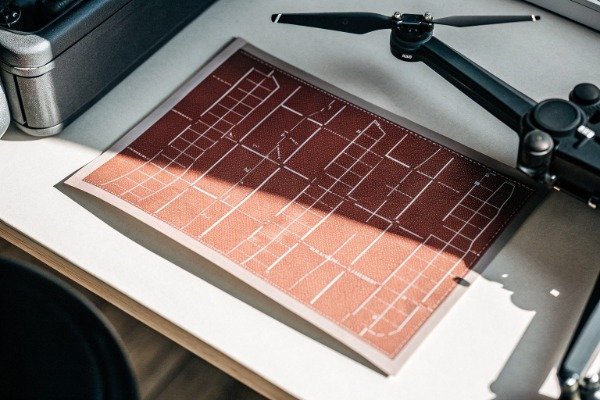
When you are procuring equipment that costs thousands of dollars and is responsible for saving lives, "good battery life" is not a specification—it is a marketing claim. You need hard numbers. A specialized manufacturer will provide a detailed datasheet that allows you to calculate exactly how the drone will perform in a specific mission profile.
interfere with other emergency communication equipment 5
Payload and Endurance Metrics
The most critical relationship in drone physics is between payload weight en flight time. A deceptive website will list the maximum flight time (with no payload) and the maximum payload capacity separately, implying the drone can do both simultaneously. It cannot.
You must look for a chart or graph that shows the flight time curve. For example, "45 minutes at hover (no load)" vs. "20 minutes with 10kg payload." If the website does not provide this distinction, they are hiding the true performance limitations of the aircraft. For firefighting, where every minute over the target counts, knowing the loaded flight time is essential.
Sensor and Optical Capabilities
For firefighting drones equipped with thermal cameras, the specs must go beyond "4K resolution." You need to look for radiometric data. This means the camera doesn’t just see heat; it can measure the temperature of specific pixels.
Look for terms like:
- Thermal Sensitivity (NETD): Should be <50mk or <30mk (lower is better).
- Temperature Measurement Range: Must cover high ranges (e.g., -20°C to +550°C or higher).
- Palette Options: White hot, black hot, ironbow, etc.
Connectivity and Control Range
Firefighting often happens in urban canyons or dense forests where signal interference is high. A professional spec sheet will specify the transmission range in different conditions (FCC vs. CE modes, obstructed vs. unobstructed). Look for details on frequency hopping capabilities or dual-link redundancy, which ensures the pilot maintains control even if one frequency band is jammed or blocked by a building.
| Specification Category | What to Look For (Professional Standard) | What to Avoid (Red Flag) |
|---|---|---|
| Flight Time | Specific times listed for specific payload weights. | Single "Max Flight Time" number with no context. |
| Windweerstand | Level 6 or 7 (or specific m/s rating). | "High wind resistance" or "Stable in wind." |
| Thermische camera | Radiometric, specific resolution (e.g., 640×512), NETD <50mk. | "Thermal imaging included" or "Night vision." |
| Transmissie | Range in urban/interference environments (e.g., 5km urban). | "Max range 15km" (theoretical only). |
Does the website list specific R&D capabilities for high-temperature environments?
Standard drones melt near fires. We test our materials rigorously against heat stress, ensuring that the drones we build survive the extreme conditions your team faces during emergency response operations.
equipped with thermal cameras 6
A specialized website will explicitly detail R&D efforts regarding heat-resistant materials, cooling systems for electronics, and high-temperature battery performance. Look for mentions of specific testing protocols, such as heat-stress chambers or chemical decontamination procedures, which confirm the manufacturer designs drones specifically for proximity to intense heat sources.

Firefighting drones are not just flying cameras; they are industrial tools that must operate on the edge of an inferno. A standard plastic consumer drone will warp or suffer electronic failure if it flies too close to a heat source. Therefore, a genuine manufacturer’s website will highlight their Research and Development (R&D) focus on durability and environmental hardening.
Battery Transport Safety 8
Material Science and Durability
Scan the product pages for information on the airframe materials. You want to see mentions of aviation-grade carbon fiber, aerospace aluminum, or specialized high-temperature composites. These materials provide the necessary structural integrity while remaining lightweight.
Furthermore, look for details on heat shielding. Does the drone have specialized shielding for the battery compartment or the flight controller? In our design process, we often have to insulate critical components to prevent thermal runaway. If the website doesn’t mention how the drone protects itself from external heat, it likely isn’t designed for close-range fire suppression.
Battery Safety and Thermal Management
Batteries are the most volatile component of a drone. High temperatures degrade battery performance and can lead to explosions. A specialized supplier will discuss their Battery Management System (BMS) and cooling technologies.
Look for features like:
- Self-heating batteries: For cold-weather starts (common in winter fires).
- Active cooling vents: To dissipate heat generated during high-power flight.
- Fire-retardant battery casings: To prevent the drone from becoming a fire hazard itself.
Testing Protocols
Finally, the most convincing proof of R&D capability is the transparency of testing. Does the website show their testing facilities? Look for images or descriptions of:
- Wind tunnels: To test stability.
- Rain chambers: To verify IP ratings.
- High/Low-temperature chambers: To simulate operating environments from -20°C to 60°C.
- Vibration testing: To ensure the frame holds up under heavy payload stress.
If a supplier openly shares their testing methodology, it demonstrates confidence in their engineering and a commitment to transparency that is vital for government and industrial procurement.
civil aviation authority (CAA) 9
Conclusie
Vetting a supplier requires looking beyond the homepage. By checking certifications, verifying case studies, and analyzing specs, you ensure your fleet is built for the heat of battle.
IP65 or IP67 rated 10
Voetnoten
- Official ISO page defining the quality management standards mentioned. ↩︎
- Official US government agency for fire administration. ↩︎
- Global safety science leader explaining battery thermal runaway risks. ↩︎
- Academic resource defining redundancy in engineering systems. ↩︎
- FCC guide on radio interference, relevant to the context. ↩︎
- Industry leader explaining thermal imaging applications in firefighting. ↩︎
- NOAA page defining wind scales used for resistance ratings. ↩︎
- Authoritative IATA guidelines on shipping lithium batteries. ↩︎
- International organization overseeing global civil aviation standards. ↩︎
- Official IEC page explaining Ingress Protection ratings. ↩︎

 English
  Spanish
  German
  French
  Dutch
Dutch  Arabic
