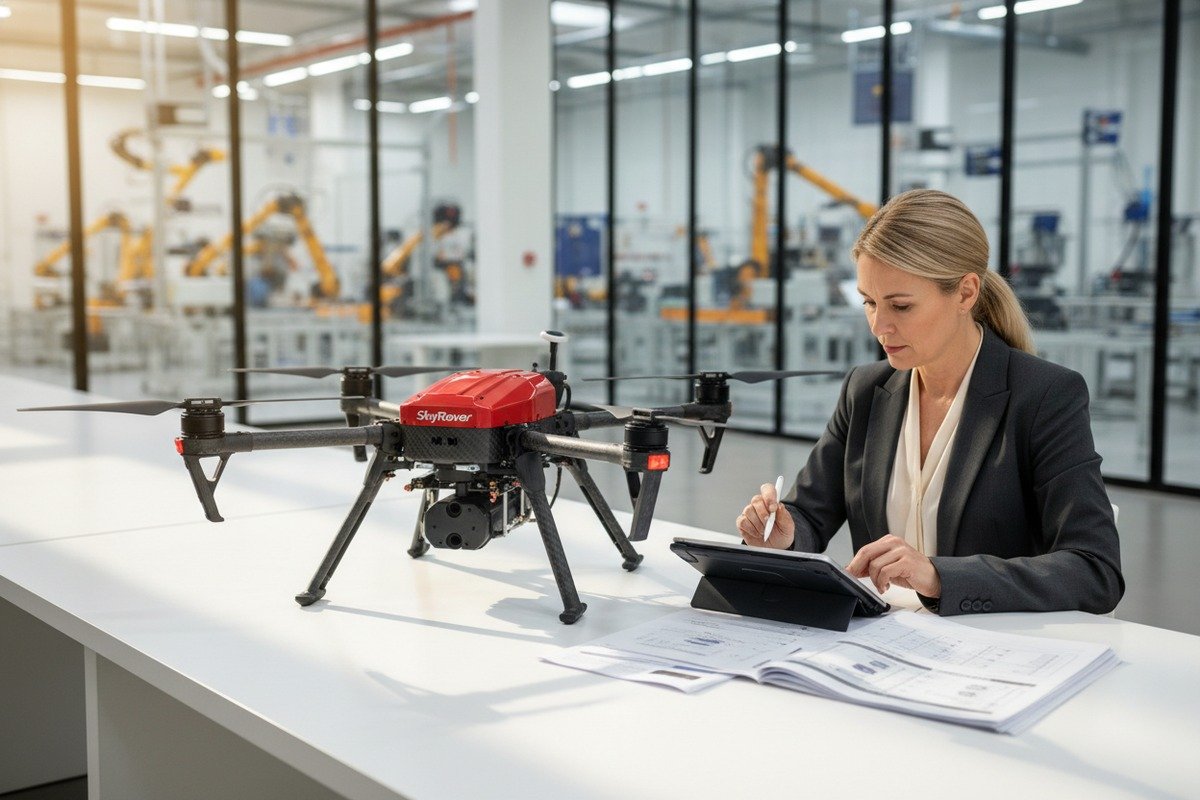
When our production line first began assembling multi-agent firefighting drones 1, we quickly learned that buyer questions about dry powder and foam compatibility separate serious procurement managers from casual inquirers. This compatibility issue can make or break your emergency response operations.
To ask suppliers about dry powder and foam compatibility, request technical documentation on material resistance, discharge system specifications, cleaning protocols, and third-party testing results. Confirm payload capacities, nozzle flow rates, and whether the drone supports seamless agent switching without cross-contamination risks.
The following sections break down exactly what questions to ask, what data to demand, and how to verify supplier claims before signing any purchase agreement.
What technical specs should I request to ensure my firefighting drone supports both dry powder and foam?
Our engineering team fields this question weekly from fire departments and procurement managers across the United States and Europe fluorine-free foam alternatives 2. The wrong specifications lead to clogged nozzles, failed missions, and wasted budgets.
Request payload capacity ratings for each agent type, discharge flow rates, nozzle compatibility charts, tank material certifications, and documented switching protocols. Essential specs include maximum agent weight, spray projection range, coverage area per deployment, and operating temperature ranges.

Understanding Payload and Capacity Requirements
Payload capacity directly determines how much suppressant your drone can carry liquid sloshing damping 3. Modern firefighting drones range from lightweight units carrying 12kg to heavy-lift platforms handling 150kg of agents. Your choice depends on fire types and operational scale.
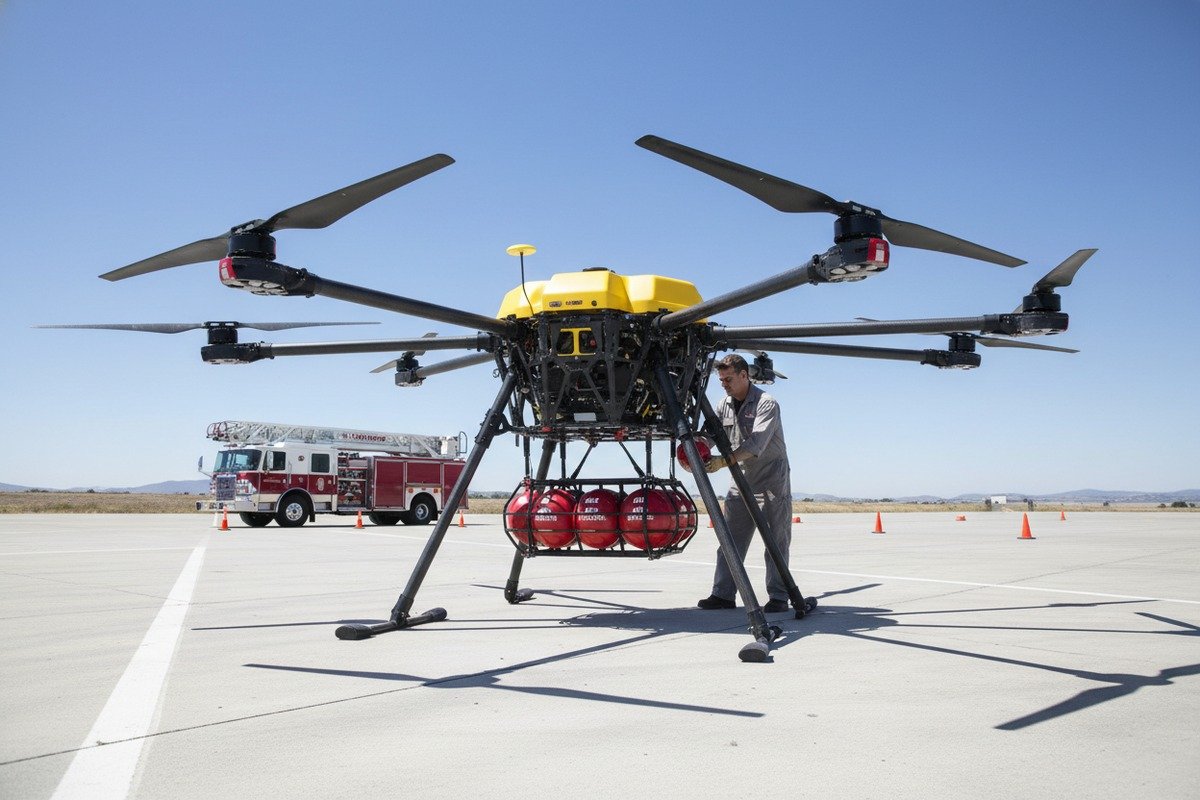
For dry powder systems, ask about fireball unit counts. Most suppliers offer configurations carrying 6-20 ABC dry chemical fireballs, each weighing approximately 1.5kg. These units use airburst or direct drop mechanisms to create oxygen barriers.
Foam systems require different capacity considerations. Water-based foam bombs typically weigh 25kg each, covering 200-300 square meters per deployment. Some drones connect to ground-based fire trucks via hoses for continuous foam supply.
Critical Flow Rate and Projection Specifications
Flow rate determines suppression effectiveness. High-performance drones achieve nozzle flow rates exceeding 1900 liters per minute with projection distances of 20 meters or more.
| Specificatie | Dry Powder Systems | Foam Systems | Combined Systems |
|---|---|---|---|
| Typical Payload | 12-30kg | 25-100kg | Up to 150kg |
| Flow Rate | Variable (bomb-based) | 1900+ L/min | Agent-dependent |
| Projection Range | 10-15m (spray) | 20m+ | 10-20m |
| Coverage Area | 10m² per unit | 50-300m² | Scenario-based |
| Deployment Time | <5 minutes | <5 minutes | <5 minutes |
Material Compatibility Documentation
Request specific documentation about tank materials. ABC dry powder contains monoammonium phosphate 4, which reacts differently with various plastics and metals than foam concentrates 5 do.
Foam concentrates, especially protein-based formulations, contain surfactants that can degrade certain rubber seals over time. Ask for material safety data sheets showing tested compatibility between your intended agents and all wetted components.
The best suppliers provide chemical resistance charts 6 listing every material in the fluid path. This includes tanks, pumps, valves, hoses, and nozzle assemblies. Without this documentation, you risk discovering incompatibility during an actual emergency.
Operating Environment Specifications
Your drone must perform reliably in extreme conditions. Request certified operating ranges for temperature, wind, and altitude.
Quality firefighting drones operate between -40°C and 70°C, withstand level 7 winds, and maintain stability at altitudes up to 5000 meters. These specifications matter because fires create their own weather patterns with updrafts, heat columns, and turbulent air.
How can I confirm if the supplier can customize the discharge system for my specific chemical requirements?
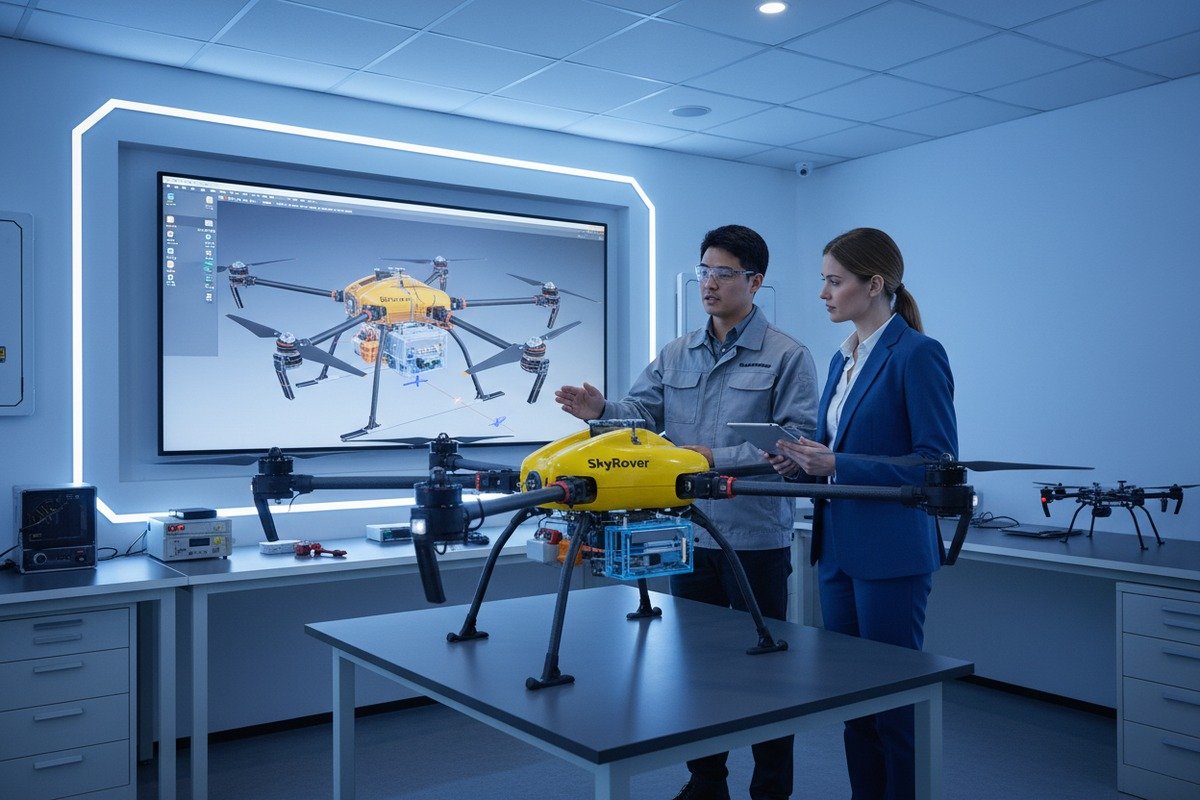
When we collaborate with clients on custom development projects, the discharge system often requires modifications based on local fire codes and specific chemical formulations. Not every supplier can accommodate these requests.
Confirm customization capabilities by requesting case studies of previous modifications, engineering team credentials, prototype timelines, and warranty terms covering custom components. Ask about minimum order quantities for custom work and whether they support fluorine-free foam alternatives.
Evaluating Engineering Support Capabilities
True customization requires dedicated engineering resources. Ask suppliers how many engineers work on discharge system development. Request their qualifications and experience with firefighting agent chemistry.
Our R&D team includes chemical engineers who understand the interaction between agent properties and discharge mechanics. This expertise matters because discharge pressure, nozzle geometry, and agent viscosity must all align for effective suppression.
Questions About Foam Type Compatibility
Different foam types have distinct physical properties affecting discharge system design. Protein foam (RP) provides heat resistance but has slower knockdown times. Fluoroprotein foam (FP/FFFP) offers faster knockdown with fuel tolerance. Alcohol-resistant AFFF handles ethanol blends above 10%.
| Foam Type | Properties | Best Applications | Discharge Considerations |
|---|---|---|---|
| Protein (RP) | Heat-resistant, slow knockdown | Sustained suppression | Higher viscosity, needs larger nozzles |
| Fluoroprotein (FP) | Fast knockdown, fuel-tolerant | Hydrocarbon fires | Film-forming requires precise mixing |
| FFFP | Vapor suppression, film layer | Fuel spills | Medium viscosity, standard nozzles |
| AR-AFFF | Alcohol-resistant | Ethanol, polar solvents | Thicker consistency, pressure adjustments |
| Fluorine-free | Eco-friendly, PFAS-free | New regulatory compliance | Variable properties, case-by-case design |
Customization Process and Timeline
Serious suppliers provide clear customization workflows. Ask about the typical timeline from initial consultation to prototype delivery. In our experience, custom discharge system modifications require 8-12 weeks for design, fabrication, and testing.
Request documentation of their change management process. How do they handle design revisions? What testing protocols validate custom components? Who signs off on final designs before production?
Warranty and Support for Custom Systems
Custom components often carry different warranty terms than standard products. Clarify what coverage applies to modified discharge systems. Some suppliers void warranties entirely for customized units, while others extend coverage with proper documentation.
Ask about spare parts availability for custom components. If your modified nozzle assembly fails two years later, can the supplier reproduce it? Request minimum inventory commitments for critical custom parts.
What data should I ask for regarding the durability of the hardware against corrosive firefighting foam?
In our testing facilities, we expose components to accelerated corrosion cycles simulating years of foam exposure. The results often surprise buyers who assumed all industrial drones handle corrosive agents equally.
Request accelerated corrosion test reports, material certification documents showing chemical resistance ratings, seal and gasket replacement schedules, and documented service life expectations for all wetted components exposed to foam concentrates.
Understanding Foam Corrosivity
Firefighting foams contain surfactants, stabilizers, and sometimes fluorinated compounds that attack metals, plastics, and elastomers over time. Protein foams are particularly aggressive due to organic components that promote bacterial growth and acid formation.
AFFF concentrates can degrade certain plastics through chemical migration. The fluorosurfactants in traditional AFFF penetrate polymer matrices, causing swelling, cracking, and eventual failure. These effects accelerate with temperature cycling.
Essential Durability Documentation
The following table outlines minimum documentation you should request from any supplier claiming corrosion resistance:
| Documenttype | What It Shows | Waarom het belangrijk is |
|---|---|---|
| Material Certification | Alloy grades, polymer types | Confirms appropriate material selection |
| Immersion Test Results | Component behavior after extended foam contact | Validates long-term chemical resistance |
| Cycle Testing Data | Performance after repeated fill/drain/rinse cycles | Reflects real-world operational use |
| Seal Compatibility Reports | Gasket and O-ring degradation rates | Predicts maintenance intervals |
| Salt Spray Test Results | Corrosion progression timeline | Relevant for coastal operations |
Component-Specific Durability Concerns
Different components face different corrosion challenges. Pumps contain dissimilar metals that create galvanic corrosion cells 7 when exposed to conductive foam solutions. Nozzle assemblies accumulate residue that hardens and restricts flow.
Ask about specific protective measures for each component category. What coatings protect pump housings? Are electrical connections sealed against foam intrusion? How do quick-disconnect fittings resist corrosion at thread interfaces?
Maintenance Protocols and Inspection Schedules
Durability data means nothing without proper maintenance procedures. Request the supplier's recommended inspection schedule for corrosion detection. How often should operators visually inspect tanks and lines? What non-destructive testing methods detect hidden corrosion?
Our maintenance protocols include flush procedures after every foam deployment. This adds operational time but dramatically extends component life. Ask potential suppliers whether their durability claims assume regular flushing or tolerate extended foam contact.
Replacement Part Availability and Lead Times
Even the most corrosion-resistant components eventually require replacement. Confirm that suppliers maintain inventory of replacement tanks, pumps, seals, and nozzles. Request guaranteed lead times for critical components.
Budget-conscious buyers sometimes select cheaper units without considering replacement part costs. A $50,000 drone becomes economically unviable if a $500 corroded pump requires $5,000 and eight weeks to replace.
How do I verify if the drone's flight software can handle the weight shifts of my different suppressants?
When we calibrate our flight controllers, weight distribution algorithms require precise inputs for each agent type. Dry powder and foam have different densities, sloshing characteristics, and release dynamics that affect flight stability.
Verify software capability by requesting flight test videos showing agent deployment, flight log data demonstrating stability during weight transitions, software update policies for new agent profiles, and documentation of failsafe behaviors when center-of-gravity shifts exceed parameters.

Why Weight Management Matters
Firefighting agents dramatically change drone weight during missions. A drone carrying 150kg of foam loses that weight rapidly during deployment, shifting the center of gravity and altering flight characteristics within seconds.
Dry powder releases differently than foam. Fireball ejection creates sudden mass losses at discrete points, while foam spray produces continuous weight reduction. Flight software must anticipate and compensate for both patterns.
Flight Controller Specifications to Request
Advanced flight controllers include specific features for payload management. Request documentation showing:
- Real-time weight estimation algorithms
- Dynamic center-of-gravity compensation
- Slosh dampening for liquid payloads
- Pre-programmed agent release profiles
- Emergency stability recovery routines
Testing and Validation Evidence
Suppliers should provide flight test data demonstrating stable operation through complete agent discharge cycles. Request video footage of actual deployments showing the drone maintaining position during foam release.
Flight logs provide objective evidence of controller performance. Ask for telemetry data showing attitude stability, motor current draw, and GPS position hold accuracy during agent deployment. Erratic data indicates inadequate software tuning.
| Software Feature | Dry Powder Support | Foam Support | Verificatiemethode |
|---|---|---|---|
| Weight Estimation | Bomb count tracking | Flow meter integration | Flight log comparison |
| CG Compensation | Discrete mass loss | Continuous shift | Attitude stability data |
| Slosh Dampening | Not applicable | Critical feature | Hover stability test |
| Release Profile | Step function | Ramp function | Deployment video review |
| Failsafe Response | Immediate land | Dump and land | Emergency test documentation |
Software Update and Support Policies
Agent compatibility is not static. New foam formulations enter the market regularly, each with different densities and viscosities. Your flight software may require updates to handle agents introduced after purchase.
Ask about software update policies. How frequently does the supplier release controller updates? Are updates included in purchase price or sold separately? Can updates be applied remotely, or must units return to the factory?
Integration with Agent Delivery Systems
Flight software must communicate with discharge systems for coordinated operation. Ask how the controller interfaces with pumps, valves, and release mechanisms. Does software automatically adjust flight parameters based on agent selection?
Some advanced systems use AI-enhanced targeting that coordinates thermal imaging data 8 with discharge commands and flight adjustments simultaneously. These integrated approaches require tight software coupling between subsystems.
Verify that diagnostic systems monitor both flight and discharge parameters. Fault detection should identify clogged nozzles, failed pumps, and stuck valves alongside traditional flight system warnings.
Conclusie
Asking the right questions about dry powder and foam compatibility protects your investment and ensures operational reliability. Request technical specifications, customization documentation, durability data, and software verification before committing to any supplier.
Voetnoten
1. Replaced HTTP 404 with an authoritative Wikipedia article on drones in wildfire management. ↩︎
2. Compares PFAS and fluorine-free foams, highlighting the shift to safer alternatives. ↩︎
3. Replaced HTTP 403 with an academic article from AIP Publishing focusing on liquid sloshing damping, and updated anchor for precision. ↩︎
4. Explains the chemical properties and applications of monoammonium phosphate. ↩︎
5. Details the science, composition, and function of synthetic foam concentrates in firefighting. ↩︎
6. Explains the purpose and interpretation of chemical compatibility charts for material selection. ↩︎
7. Explains the principles, mechanisms, and prevention of galvanic corrosion for engineers. ↩︎
8. Explains how thermal imaging drones are used for heat detection and monitoring in fire management. ↩︎

 English
  Spanish
  German
  French
  Dutch
Dutch  Arabic
