
When our engineering team first received reports of firefighting drones losing control near European critical infrastructure 1, we knew the landscape had changed forever. Anti-drone systems 2 designed to neutralize hostile UAVs were now affecting legitimate emergency response operations. This creates a serious problem for procurement managers sourcing drones for European firefighting missions.
To evaluate firefighting drone supplier expertise against European anti-drone systems, assess their compliance with EASA C5/C6 classifications, verify anti-jamming technologies, review Remote ID integration, examine EU Trusted Drone label readiness, and demand documented case studies of successful operations near counter-drone installations.
The following guide walks you through each critical evaluation area EASA C5/C6 classifications 3. We will cover signal interference testing, certification requirements, software customization capabilities, and supplier track record assessment. Let us begin with the most pressing technical concern.
How can I verify if a supplier's firefighting drone can withstand signal interference from European anti-drone systems?
Our production facility runs interference simulation tests on every firefighting drone before shipment Remote ID integration 4. We have learned that European buyers face unique challenges—counter-drone systems at airports, borders, and public venues can disrupt legitimate firefighting operations if drones lack proper hardening.
Verify interference resistance by requesting documented test results against RF jamming, GPS spoofing, and communication disruption. Suppliers should demonstrate redundant navigation systems, frequency-hopping protocols, and automatic return-to-home functions that activate when primary signals degrade beyond operational thresholds.
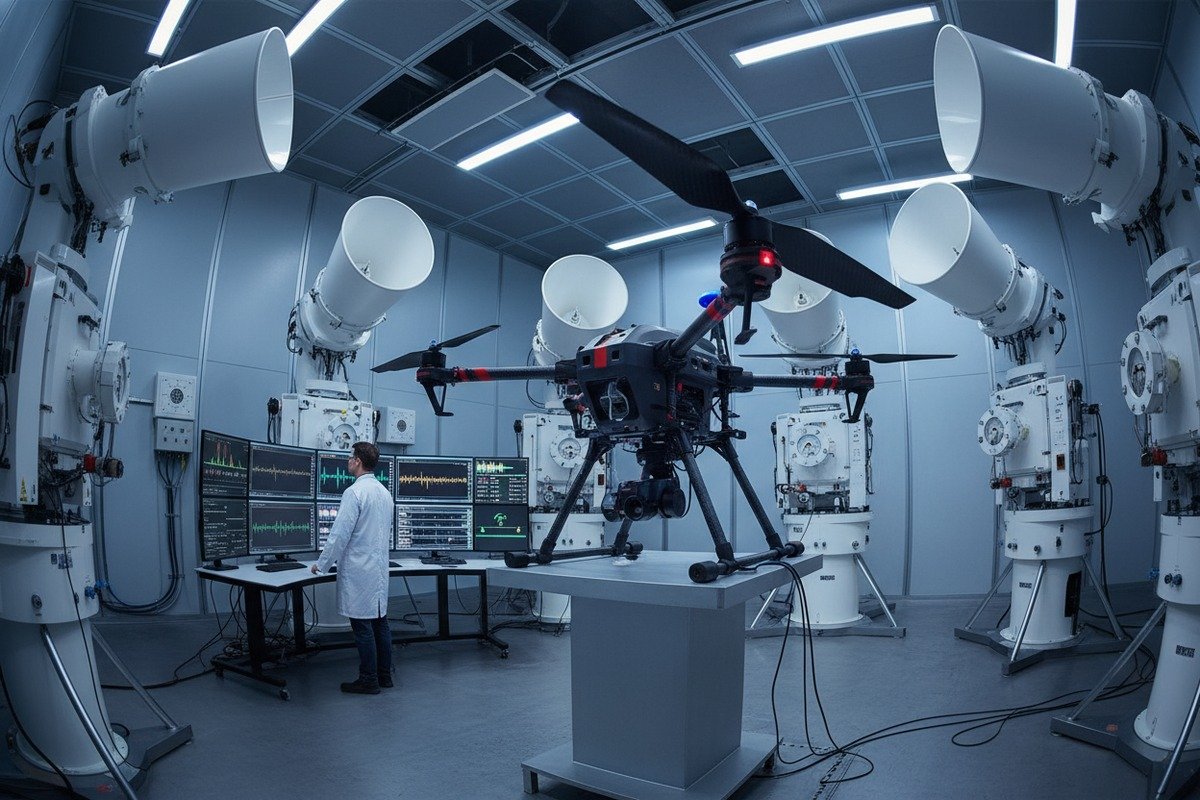
Understanding the European Counter-Drone Landscape
European anti-drone systems use multiple detection and neutralization methods Richtlijn radioapparatuur 5. These include radar tracking, radio frequency scanning, electro-optical identification, and infrared sensing. When a hostile drone is detected, operators may deploy jamming signals, GPS spoofing 6, or even physical interdiction.
For firefighting drones, the problem is clear. These systems cannot distinguish between a rogue consumer drone and a legitimate emergency response aircraft. During wildfire suppression near critical infrastructure, your drone may encounter active countermeasures.
Key Technical Features to Demand
When evaluating suppliers, request specifications on these anti-interference technologies:
| Technology | Functie | Waarom het belangrijk is |
|---|---|---|
| Multi-constellation GNSS 7 | Uses GPS, GLONASS, Galileo simultaneously | Continues navigation if one system is spoofed |
| Inertial Navigation Unit (INU) | Maintains position without external signals | Provides backup during complete signal loss |
| Frequency-hopping spread spectrum | Rapidly changes communication frequencies | Defeats narrow-band jamming attempts |
| Encrypted datalinks | Secures command and telemetry channels | Prevents command injection attacks |
| Autonomous waypoint navigation | Pre-programmed flight paths stored locally | Completes mission without real-time control |
Practical Verification Steps
Ask suppliers for third-party test reports. Independent laboratories in Europe conduct electromagnetic compatibility testing under controlled conditions. These reports show how drones perform when exposed to specific interference levels.
Request video documentation of interference tests. Legitimate manufacturers maintain records of their hardening validation. At our facility, we record every test sequence and provide timestamps for client review.
Inquire about fail-safe behaviors. What happens when your drone loses GPS lock? A well-designed firefighting drone should hover in place, attempt signal reacquisition, and execute return-to-home if recovery fails. Poorly designed units may drift uncontrollably or crash.
Field Performance History
Beyond laboratory testing, ask for operational case studies. Has the supplier deployed drones near European airports, ports, or borders where counter-drone systems operate? What was the outcome? Suppliers with genuine experience will provide detailed accounts.
What specific certifications should I look for to ensure my drones comply with European airspace security regulations?
When we prepare export documentation for European clients, the certification checklist has grown substantially since 2024. Regulatory changes under the EU Drone Action Plan mean suppliers must demonstrate compliance across multiple frameworks—not just basic CE marking.
Essential certifications include EASA C5 or C6 class markings for firefighting operations, EU Declaration of Conformity referencing RoHS 3, Remote ID capability documentation, and emerging EU Trusted Drone label readiness. Verify that suppliers understand Specific Category authorization requirements and can support national aviation authority applications.
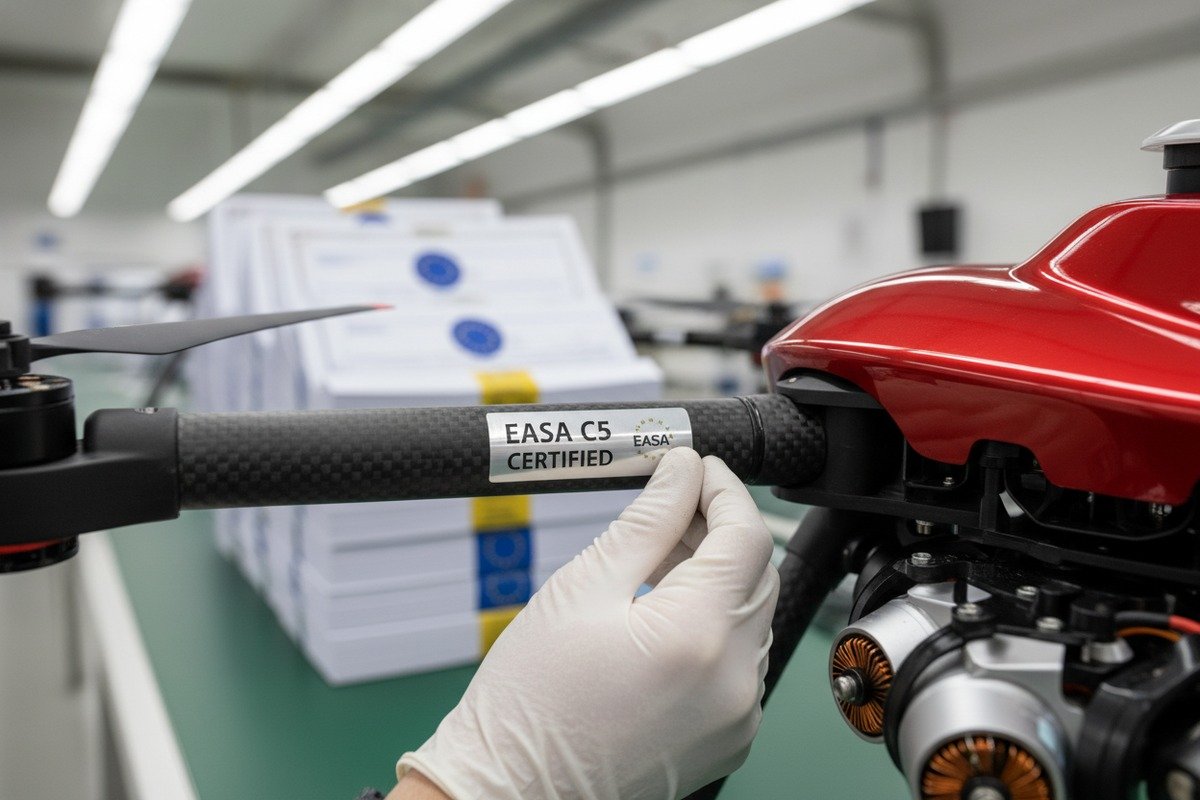
The EU Drone Classification System
European regulations categorize drones into Open, Specific, and Certified categories based on operational risk. Firefighting drones typically fall under Specific Category due to flight altitude, payload, and operational environment.
Within classifications, C-class markings indicate technical compliance:
| C-Class | Maximum Takeoff Mass | Typische toepassing | Belangrijkste vereisten |
|---|---|---|---|
| C0 | <250g | Recreation | Basic safety |
| C1 | <900g | Photography | Remote ID, geo-awareness |
| C2 | <4kg | Surveying | Low-speed mode, tethering option |
| C3 | <25kg | Industrial inspection | Enhanced geo-awareness |
| C4 | <25kg | Model aircraft | No electronic systems required |
| C5 | <25kg | Specific operations | Flight termination system |
| C6 | <25kg | High-risk specific | Advanced FTS, containment features |
For firefighting missions, C5 or C6 markings are appropriate. These classes require flight termination systems and enhanced containment features essential for operations near people and property.
The 2026-2028 Regulatory Shift
Our engineering team closely monitors upcoming changes. The European Commission proposes lowering registration thresholds from 250g to 100g by 2028. Remote ID requirements expand to cover nearly all operational drones.
The proposed "EU Trusted Drone" label introduces supply chain security assessments. EU Trusted Drone label 8 This label will indicate that drones meet cybersecurity standards, use vetted components, and resist tampering. For firefighting applications, this label may become a procurement requirement for government contracts.
Documentation Suppliers Must Provide
A complete compliance package includes:
- EU Declaration of Conformity (DoC): Must explicitly reference relevant directives including RoHS 3 9 and Radio Equipment Directive
- CE marking documentation: Shows conformity assessment procedures followed
- EASA Design Verification Report: For Specific Category operations
- Remote ID technical specifications: Demonstrates broadcast compliance
- Geo-awareness database compatibility: Shows integration with European airspace data
- Component traceability records: Bill of Materials analysis for supply chain verification
RoHS and Environmental Compliance
European environmental regulations add another layer. RoHS 3 restricts hazardous substances in electronic equipment. Your supplier must demonstrate compliance through component testing and documentation.
Additionally, PFAS restrictions affecting firefighting foams by 2029 may impact drone payload chemicals. Ask suppliers about their roadmap for PFAS-free extinguishing agent compatibility.
National Authority Requirements
Beyond EU-wide regulations, individual member states impose additional requirements. Germany, France, and Spain each have specific authorization processes for firefighting drone operations. A capable supplier understands these variations and can support documentation for multiple jurisdictions.
Can my supplier provide the engineering support needed to customize flight software against local jamming technologies?
Our software development team works directly with European clients to address specific counter-drone environments. We have learned that off-the-shelf solutions rarely meet the demands of firefighting operations near protected infrastructure. Customization is not optional—it is essential.
Capable suppliers offer dedicated engineering support including custom flight controller firmware, adaptive navigation algorithms, region-specific geofencing updates, and integration with emergency service command systems. Evaluate their software development team size, response time guarantees, and documented customization case studies before committing to procurement.
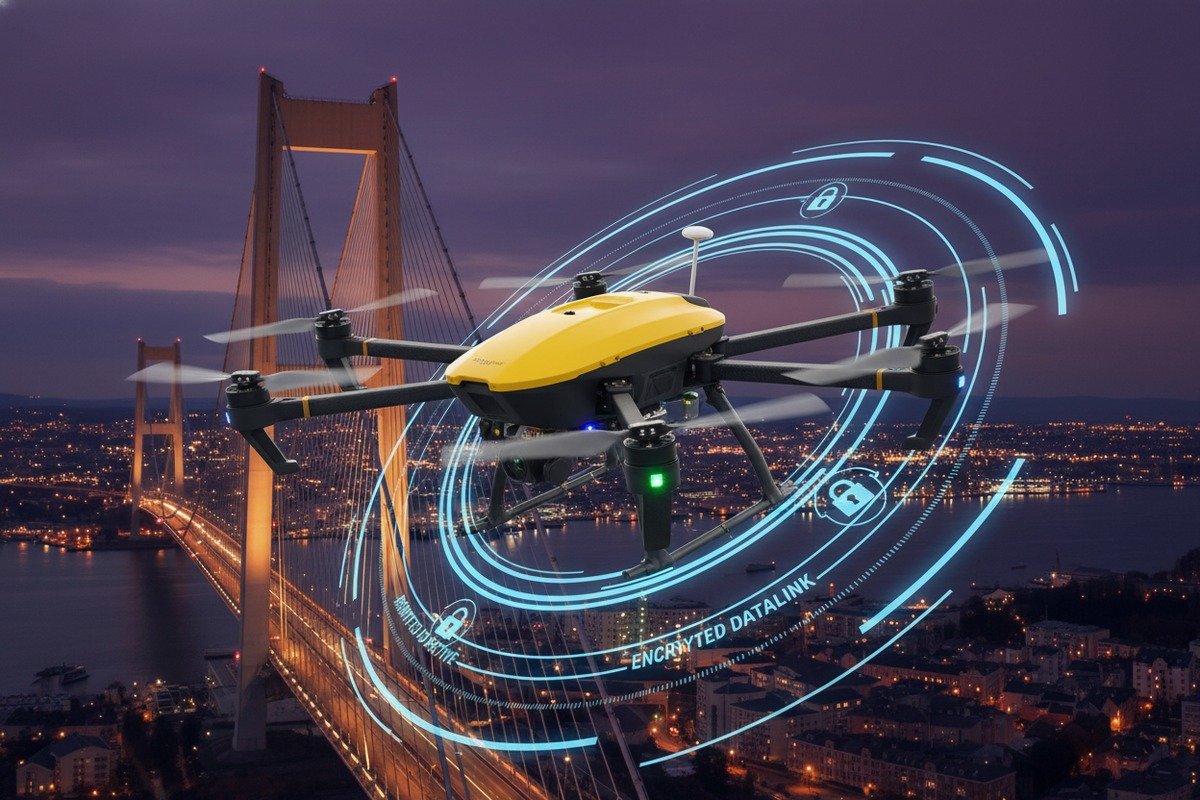
Why Standard Software Falls Short
Generic firefighting drone software assumes uncontested airspace. European operational environments are different. Urban firefighting near airports means active surveillance radar. Forest fire suppression near borders may encounter military-grade jamming systems.
Standard software lacks the intelligence to recognize and respond to these threats. It may interpret interference as equipment failure and execute inappropriate emergency procedures.
Custom Software Capabilities to Evaluate
When assessing supplier engineering support, examine these capabilities:
| Vermogen | Standard Software | Custom Solution |
|---|---|---|
| Jamming detection | None or basic | Real-time RF spectrum analysis |
| Response to interference | Fixed return-to-home | Adaptive path planning |
| Navigation backup | Single GPS | Multi-source fusion with INS |
| Geofencing updates | Manual upload | Over-the-air automatic |
| Command center integration | Generic protocols | Custom API development |
| Threat logging | Basic telemetry | Detailed interference forensics |
Adaptive Flight Path Planning
Advanced suppliers offer AI-driven navigation that responds to detected threats. When jamming is sensed in a particular area, the system automatically calculates alternative routes. This capability requires sophisticated sensor fusion and machine learning algorithms.
Ask suppliers to demonstrate this capability in simulation. Request documentation showing how their adaptive systems performed during testing against various jamming profiles.
Integration with Emergency Services
Firefighting operations require seamless data flow to command centers. Thermal imaging, fire spread mapping, and wind condition data must reach incident commanders in real time.
Custom software development enables integration with specific command systems used by European fire services. This may include proprietary protocols, secure communication channels, and standardized data formats.
Our engineering team has developed integrations for multiple European emergency service platforms. Each required custom API work and extensive testing to ensure reliability under operational stress.
Ongoing Support Requirements
Software customization is not a one-time event. Counter-drone systems evolve. Regulations change. Your supplier must commit to ongoing support.
Evaluate these support parameters:
- Response time for critical software issues
- Frequency of firmware updates addressing new threats
- Process for requesting custom features
- Remote diagnostic capabilities
- On-site engineering support availability
Evaluating Development Team Credentials
Ask suppliers about their software engineering team. How many developers focus on flight control systems? What are their backgrounds in aerospace, electronic warfare, or cybersecurity? Request case studies showing successful customization projects for similar applications.
At our facility, we maintain a dedicated team for European market customization. This team includes engineers with specific experience in counter-drone system behavior and mitigation strategies.
How do I assess a manufacturer's past performance in delivering reliable drones for high-risk European firefighting missions?
When potential clients visit our production facility, we show them our quality control processes before discussing past projects. Performance claims mean nothing without verifiable evidence. Your due diligence should focus on documented outcomes, not marketing materials.
Assess past performance by requesting specific European deployment case studies with measurable outcomes, contacting reference customers directly, reviewing failure rate data and root cause analyses, examining warranty claim histories, and verifying that the manufacturer maintains spare parts inventory with documented delivery times for European destinations.
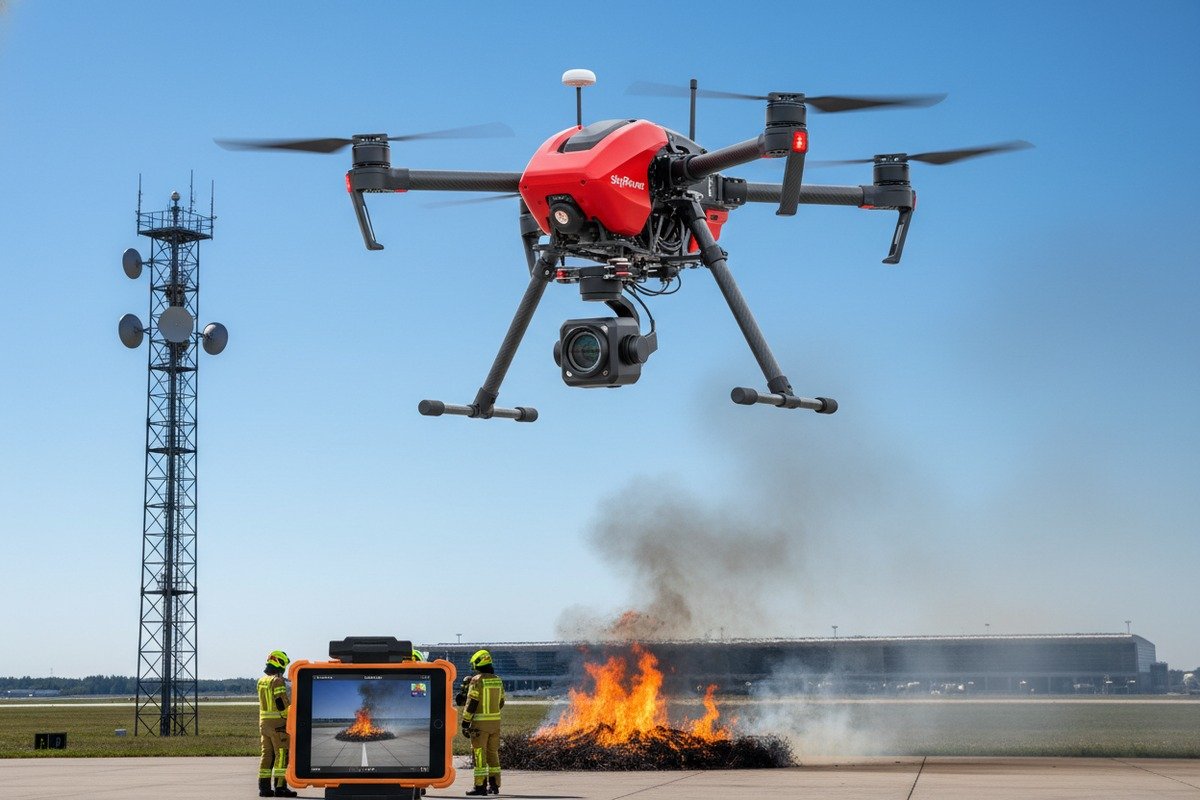
Building a Comprehensive Evaluation Framework
Procurement decisions for high-risk applications require systematic assessment. We recommend a ten-point supplier scorecard that covers technical capability, regulatory compliance, support infrastructure, and track record.
| Evaluatiecriteria | Gewicht | Assessment Method | Passing Threshold |
|---|---|---|---|
| European deployment history | 15% | Case study review | ≥3 documented missions |
| Failure rate data | 15% | Statistical analysis | <2% mission-critical failures |
| Regulatory compliance | 15% | Certificate verification | Full C5/C6 documentation |
| Anti-interference capability | 15% | Test report review | Documented resilience |
| Engineering support | 10% | Team assessment | Dedicated European support |
| Spare parts availability | 10% | Inventory audit | <14 day delivery |
| Garantievoorwaarden | 5% | Contract review | ≥24 month coverage |
| Training provision | 5% | Program evaluation | Certified curriculum |
| Reference customers | 5% | Direct contact | ≥3 verifiable contacts |
| Financial stability | 5% | Business review | Operating >5 years |
Verifying Case Studies
When suppliers present European deployment case studies, verify the details. Contact the organizations mentioned. Ask specific questions about drone performance, support responsiveness, and any issues encountered.
Be skeptical of vague claims. Phrases like "successfully deployed across Europe" without specific locations, dates, and measurable outcomes should raise concerns. Legitimate suppliers provide detailed accounts including challenges faced and how they were resolved.
Analyzing Failure Data
Request failure rate statistics and root cause analysis reports. A mature manufacturer tracks every field failure, investigates causes, and implements corrective actions.
Questions to ask:
- What is the mean time between failures for this model?
- What are the most common failure modes?
- How have you addressed identified weaknesses?
- What is the catastrophic failure rate during firefighting operations?
Our quality management system maintains complete failure tracking. We share this data with clients because transparency builds trust and demonstrates commitment to continuous improvement.
Spare Parts and Support Infrastructure
High-risk missions cannot wait weeks for replacement parts. Evaluate the supplier's logistics capability for European destinations.
Critical factors include:
- Spare parts inventory locations (ideally within Europe)
- Documented delivery times for common replacement components
- Emergency expedited shipping options
- Technical support availability in European time zones
- On-site repair capability or authorized service partners
Reference Customer Conversations
Speak directly with existing customers. Ask about their complete experience—not just initial procurement, but ongoing support, warranty claims, and any problems encountered.
Prepare specific questions:
- How quickly did the supplier respond to technical issues?
- Were any warranty claims disputed?
- Did the drones perform as specified in real firefighting conditions?
- Would you purchase from this supplier again?
Conclusie
Evaluating firefighting drone suppliers for European operations requires systematic assessment across technical capability, regulatory compliance, and proven performance. Use the frameworks and checklists provided to make informed procurement decisions that protect both your investment and mission effectiveness.
Voetnoten
1. Official EU page detailing critical infrastructure resilience and the Critical Entities Resilience Directive. ↩︎
2. Provides an overview of anti-drone and counter-UAS technologies for detecting and neutralizing threats. ↩︎
3. Reports on EASA’s proposals for new drone classes and their specific technical requirements. ↩︎
4. Official EASA announcement regarding mandatory remote identification for drones across Europe. ↩︎
5. Official EASA page mentioning the Radio Equipment Directive in the context of drone regulations. ↩︎
6. Wikipedia article explaining GNSS spoofing attacks, how they work, and their vulnerabilities. ↩︎
7. Explains how multi-constellation GNSS improves positioning accuracy and reliability by using multiple satellite systems. ↩︎
8. Replaced with an official European Commission press corner document discussing the EU Trusted Drone Label. ↩︎
9. Replaced with the official European Commission page for the RoHS Directive, which encompasses the current ‘RoHS 3’ regulations. ↩︎

 English
  Spanish
  German
  French
  Dutch
Dutch  Arabic
