
At SkyRover, we see many clients struggle with vague contracts that leave them vulnerable. Delays in receiving firefighting equipment can cost lives and money. You need ironclad terms to protect your investment and ensure operational readiness.
Focus on Liquidated Damages for delays, clear definitions of the Production Start Date, and specific Incoterms like DDP. Ensure the contract mandates Factory Acceptance Testing (FAT) before shipment and includes "Termination for Default" clauses if delays exceed a critical long-stop date.
Let's break down the specific clauses that secure your timeline and ensure your fleet arrives when you need it.
What penalty clauses should I include for late deliveries?
In our experience exporting to the US, deadlines are critical for public safety projects. Without penalties, suppliers might prioritize other orders, leaving you waiting while the fire season approaches and your budget cycle closes.
You should include a Liquidated Damages (LD) clause specifying a daily penalty, typically 0.5% of the contract value per day of delay, capped at 10% total. This financial deterrent ensures the supplier prioritizes your shipment and compensates you for operational losses.

When you negotiate a contract for high-value industrial equipment like firefighting drones, the penalty clause is your primary enforcement tool. It transforms a delivery date from a "goal" into a financial obligation.
The Structure of Liquidated Damages
We often advise clients to structure penalties simply. A complex formula confuses both parties. The standard approach in the drone industry involves a fixed percentage per day.
- The Daily Rate: A rate of 0.5% per day is standard for custom industrial machinery. It is high enough to hurt the supplier's profit margin if they delay but not so high that they refuse to sign.
- The Cap: Most manufacturers, including us, will negotiate a cap. A 10% cap is reasonable. It limits the supplier's total risk while covering your potential short-term losses.
- The Trigger: The penalty must trigger automatically the day after the agreed delivery date. Do not allow for a "grace period" unless it is very short (e.g., 3 days).
Differentiating Penalties from Compensation
It is vital to use the term "Liquidated Damages" rather than "Penalty" in many legal jurisdictions. Penalties can sometimes be voided by courts if they are seen as punitive. Liquidated Damages are viewed as a pre-agreed estimate of the loss you suffer because of the delay.
Termination for Default
Money is not always the solution. If the delay drags on for months, you need a way out. You must include a "Long-Stop Date." This is a final deadline—usually 30 to 60 days past the original delivery date. If we fail to deliver by this date, you should have the right to cancel the contract entirely and receive a full refund of your deposit. This protects you from being tied to a failing supplier indefinitely.
Table: Standard vs. Aggressive Penalty Clauses
| Functie | Standard Clause (Supplier Friendly) | Aggressive Clause (Buyer Friendly) |
|---|---|---|
| Daily Rate | 0.1% per day | 0.5% to 1% per day |
| Maximum Cap | 5% of total contract value | 10% to 15% of total contract value |
| Grace Period | 7-14 days before penalties start | 0 days (Immediate trigger) |
| Exclusions | Broad Force Majeure (includes supply chain) | Strict Force Majeure (Acts of God only) |
| Remedy | Penalties are the only remedy | Penalties + Right to Terminate |
By clearly defining these financial consequences, you ensure that your order remains at the top of the production queue.
How do we define the exact start date for the production lead time?
We often see confusion when clients assume production starts the moment they sign the PDF. Misunderstandings here cause frustration when the "clock" hasn't actually started ticking due to pending deposits or technical clarifications.
Define the start date as the precise moment when the down payment is received and all technical specifications are signed off. Do not rely on the contract signature date alone, as engineering confirmations or banking delays often push back the actual manufacturing kickoff.
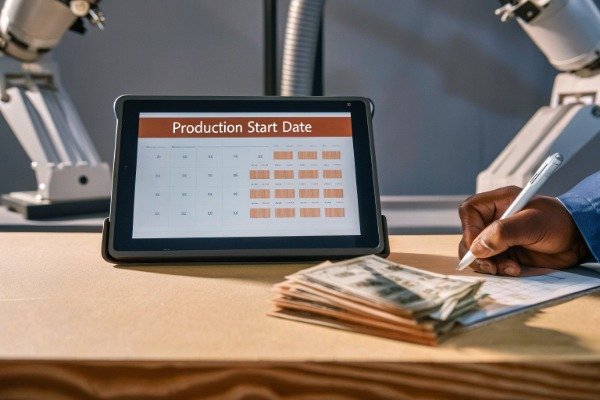
Ambiguity regarding the "Start Date" is the number one cause of disputes in international trade. You might think the 30-day lead time starts on Monday when you sign. The factory might think it starts next Friday when the wire transfer arrives.
customs duties 1
The "Effective Date" Trap
In our factory, we cannot order raw materials—like high-performance motors or thermal cameras—until we have working capital from the deposit. If your finance department takes a week to process the wire transfer (T/T), and the international SWIFT system takes another three days, ten days have passed. If the contract says "30 days from signature," the supplier is already behind schedule before they begin.
The Technical Freeze
Firefighting drones are complex. They often require customization, such as specific frequency bands for video transmission or custom mounting brackets for searchlights.
- The Rule: The lead time clock should not start until the "Technical Freeze" is agreed upon.
- Het risico: If you sign the contract but then ask, "Can we change the camera gimbal?" three days later, production halts.
- De oplossing: Your contract must state: "Lead time commences upon the later of: (a) receipt of the advance payment, or (b) written confirmation of final technical specifications."
Managing Expectations
To avoid surprises, we recommend a "Kick-off Meeting" clause. Within 48 hours of the deposit receipt, both parties meet (virtually) to confirm the clock has started. This creates a shared record of the deadline.
Table: Triggers for Production Lead Time
| Trigger Event | Impact on Timeline | Buyer Recommendation |
|---|---|---|
| Contract Signature | Legal agreement exists, but production rarely starts. | Don't use this as the start date. |
| Deposit Receipt | Funds allow material purchasing. | Primary Trigger. Ensure swift payment. |
| Drawing Approval | Engineering is finalized. | Secondary Trigger. Sign off quickly. |
| Component Arrival | Sub-suppliers deliver parts. | Never use this. It's the supplier's responsibility. |
By locking down these definitions, you prevent the supplier from making excuses about when the timeline actually began.
Force Majeure 2
Should I require weekly production updates as part of the contract?
Our project managers send regular reports to keep clients calm and informed. Without updates, you are blind to potential delays until it is too late to react, leaving you with no time to adjust your deployment plans.
Klasse 9 Gevaarlijke goederen 3
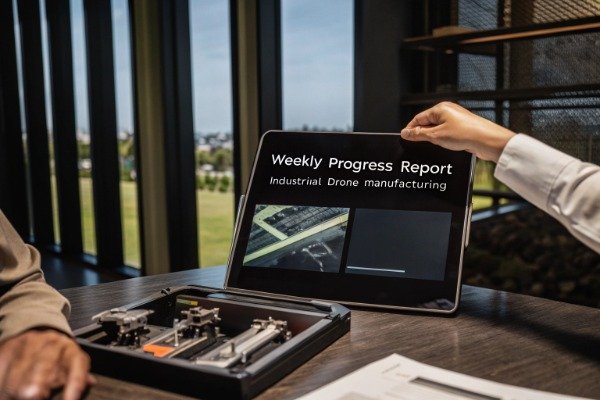
Yes, mandate weekly production updates that include photos and status reports on key components like motors and flight controllers. This clause forces transparency, allowing you to spot bottlenecks early and verify that the manufacturing progress matches the promised delivery timeline.
Lithium Polymer (LiPo) batteries 4
Trust is good, but verification is better. When you are importing equipment from overseas, you cannot walk onto the factory floor to check progress. You must rely on digital reporting.
Incoterms define who is responsible 5
What a Good Update Looks Like
A generic email saying "Everything is fine" is useless. Your contract should specify the format of the update.
- Visual Proof: Require photos of your specific units on the assembly line. We often send videos of the drone arms being assembled or the soldering of the power distribution boards.
- Component Tracking: Ask for status on critical long-lead items. For example, "Thermal sensors received," or "Batteries in aging test."
- Schedule Variance: The report must state if the project is on track, ahead, or behind. If behind, the supplier must propose a recovery plan immediately.
Factory Acceptance Testing (FAT)
The final update is the most critical: the FAT. Before the drones are packed, you should require a live video demonstration or a detailed test report.
- Flight Test: Proof that the drone hovers stable for the full endurance time.
- Payload Test: Proof the fire extinguishing balls or liquid payload release mechanism works.
- Software Sync: Verification that the firmware is updated and compatible with your region's maps.
The "Right to Inspect" Clause
Include a clause that gives you the right to send a third-party inspector (like SGS or Intertek) to the factory before final payment. Even if you never use it, the existence of this clause keeps the manufacturer honest. They know you could check, so they maintain higher standards.
H3: Early Warning Systems
Weekly updates act as an early warning system. If a supplier misses a weekly report, it is a red flag. It usually means they have bad news they don't want to share. By making the report a contractual obligation, a missed report becomes a breach of contract, giving you leverage to demand answers immediately.
How do we handle delays caused by customs or shipping carriers?
Exporting from China to the US involves complex logistics and regulatory hurdles. If customs holds your drones for inspection, who pays for the storage fees? You must clarify this liability upfront to avoid unexpected costs.
vluchtregelaars 6
Use Incoterms such as DDP (Delivered Duty Paid) to shift the risk of customs and shipping delays onto the supplier. Additionally, include a "Regulatory Documentation Lead Time" clause requiring all compliance paperwork to be submitted weeks before the physical shipment arrives.
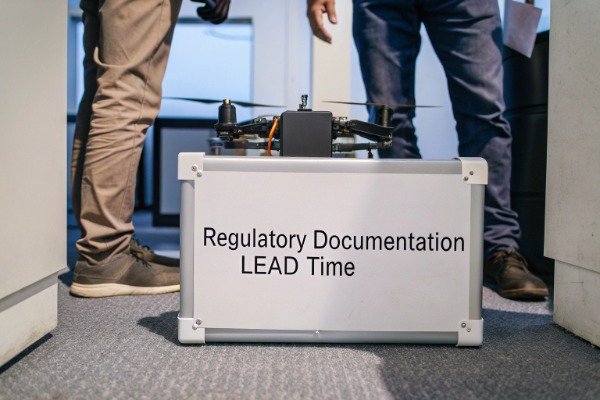
Once the drones leave our factory, they enter the unpredictable world of international logistics. This is where "Lead Time" often fails. A drone can be built on time but sit in a warehouse in Los Angeles for three weeks due to paperwork errors.
international SWIFT system 8
The Power of Incoterms
Incoterms define who is responsible for the goods at every step.
- EXW (Ex Works): You pick up the drones at our factory door. You handle Chinese export customs, shipping, and US import. Avoid this. It puts 100% of the risk on you.
- DDP (Delivered Duty Paid): The supplier delivers the drones to your door in the US. They handle all shipping, insurance, and customs duties. The lead time clock only stops when the box arrives at your facility. This is the safest option for you.
Battery Logistics
Firefighting drones use massive Lithium Polymer (LiPo) batteries. These are Class 9 Dangerous Goods. They cannot fly on passenger planes and often require specialized cargo flights or sea freight.
- The Split Shipment: Often, the airframe flies by air (fast), and batteries go by sea (slow).
- The Clause: Your contract must specify that "Delivery" is not complete until both the airframe and the batteries have arrived. A drone without batteries is a paperweight.
Force Majeure vs. Foreseeable Delays
Suppliers love "Force Majeure" clauses (Acts of God). They will try to use it to excuse delays caused by "supply chain shortages."
- Your Stance: Do not accept component shortages as Force Majeure. A professional manufacturer should secure parts before signing the contract.
- Acceptable Force Majeure: Earthquakes, typhoons, war, or new government regulations (like a sudden export ban).
- Notification: The clause must require the supplier to notify you within 5 days of the event. They cannot wait until the delivery date to claim Force Majeure.
Table: Common Shipping Risks and Contractual Solutions
| Risk Scenario | Who Pays (Standard) | Contract Clause Solution |
|---|---|---|
| Customs Exam Hold | Buyer (Importer of Record) | DDP Incoterm: Supplier pays storage and handles clearance. |
| Battery Rejection | Buyer (if arranging shipping) | Hazmat Logistics Clause: Supplier warrants proper packaging and labeling. |
| Damage in Transit | Buyer (if no insurance) | CIF or DDP: Supplier must insure goods for 110% of value. |
| Missing Paperwork | Buyer (fines/delays) | Regulatory Doc Clause: Docs provided 14 days pre-shipment. |
By controlling the shipping terms, you extend your protection beyond the factory gates, ensuring the lead time covers the entire journey to your warehouse.
wire transfer (T/T) 9
Conclusie
Clear contracts prevent headaches. Focus on penalties, clear start dates, and strict shipping terms to ensure your firefighting drones arrive ready for action, protecting your budget and your timeline.
Liquidated Damages 10
Voetnoten
1. Government resource explaining import taxes and fees. ↩︎
2. Legal definition of the contract clause regarding unforeseeable events. ↩︎
3. Official FAA classification for shipping lithium batteries. ↩︎
4. Technical details on the specific battery chemistry used. ↩︎
5. Links to the official International Chamber of Commerce rules. ↩︎
6. Explains the critical drone avionics component. ↩︎
7. Provides technical context for the drone components. ↩︎
8. Official source for the global financial messaging network. ↩︎
9. Explains the standard international payment method mentioned. ↩︎
10. Defines the specific legal concept of agreed-upon damages. ↩︎

 English
  Spanish
  German
  French
  Dutch
Dutch  Arabic
