
When our engineering team started testing batteries under simulated fire conditions, we discovered something troubling IEC 61960 standards 1. Supplier-provided cycle ratings often dropped by 40% in real-world heat. This gap costs fleet operators thousands in unexpected replacements.
You should request cycle-life data at elevated temperatures (50–60°C), degradation curves showing capacity loss per 100 cycles, thermal runaway onset temperatures, fast-charging impact on lifespan, and third-party test reports following IEC 61960 standards. This data reveals true operational costs and safety margins.
The following sections break down exactly what metrics to demand, how extreme heat affects performance, which test reports matter most, and how to calculate your true long-term costs.
How many charge cycles can I realistically expect from high-end firefighting drone batteries?
On our production floor, we see a common pattern. Procurement teams receive impressive cycle-life numbers from suppliers, then face premature battery failures in the field NMC chemistry 2. The disconnect between lab ratings and real performance creates budget chaos.
High-end firefighting drone batteries typically deliver 800–1,200 cycles for NMC chemistry and 2,000–3,000 cycles for LFP chemistry at 80% capacity retention. However, these numbers assume ideal 25°C conditions. At firefighting temperatures of 50–60°C, expect 40–50% fewer cycles.

Understanding Cycle Life Ratings
Cycle life refers to the number of complete charge-discharge cycles before battery capacity drops below 80% of its original rating. 80% capacity retention 3 This 80% threshold is the industry standard for end-of-life.
When we test batteries in our facility, we track multiple benchmarks. The 80% retention mark is baseline. We also monitor 70% retention for extended use planning. These numbers help fleet managers schedule replacements before critical failures occur.
Chemistry Matters More Than Marketing Claims
Different battery chemistries deliver vastly different cycle counts. Here is what our testing reveals:
| Battery Chemistry | Typical Cycle Life (25°C) | Cycle Life (55°C) | Energy Density (Wh/kg) |
|---|---|---|---|
| NMC (Standard) | 800–1,200 cycles | 400–700 cycles | 160–220 |
| NCM811 (High Nickel) | 600–1,000 cycles | 300–600 cycles | 260–420 |
| LFP | 2,000–3,000 cycles | 1,200–1,800 cycles | 120–180 |
| LiPo (Standard) | 300–500 cycles | 150–300 cycles | 140–200 |
LFP batteries offer the longest lifespan but sacrifice flight time due to lower energy density. NCM811 provides maximum flight duration but degrades faster under heat stress. Your mission profile determines the right trade-off.
Depth of Discharge Changes Everything
How deeply you discharge batteries dramatically affects total cycle count. Our engineers track this relationship closely:
At 50% depth of discharge 4, batteries often achieve 2,000+ cycles. At 100% depth of discharge, the same battery might deliver only 800–1,000 cycles. Firefighting operations typically demand full discharge for maximum flight time. Request cycle-life data specifically at 100% depth of discharge.
What to Request From Suppliers
Ask suppliers for degradation curves showing capacity loss per 100 cycles at your expected operating temperature. Request data for both partial (50%) and full (100%) discharge scenarios. Demand testing results at 40°C, 50°C, and 60°C ambient temperatures.
If a supplier only provides 25°C data, treat their cycle-life claims with skepticism. Real firefighting conditions rarely match laboratory comfort.
How will extreme heat during emergency missions affect my drone's battery lifespan?
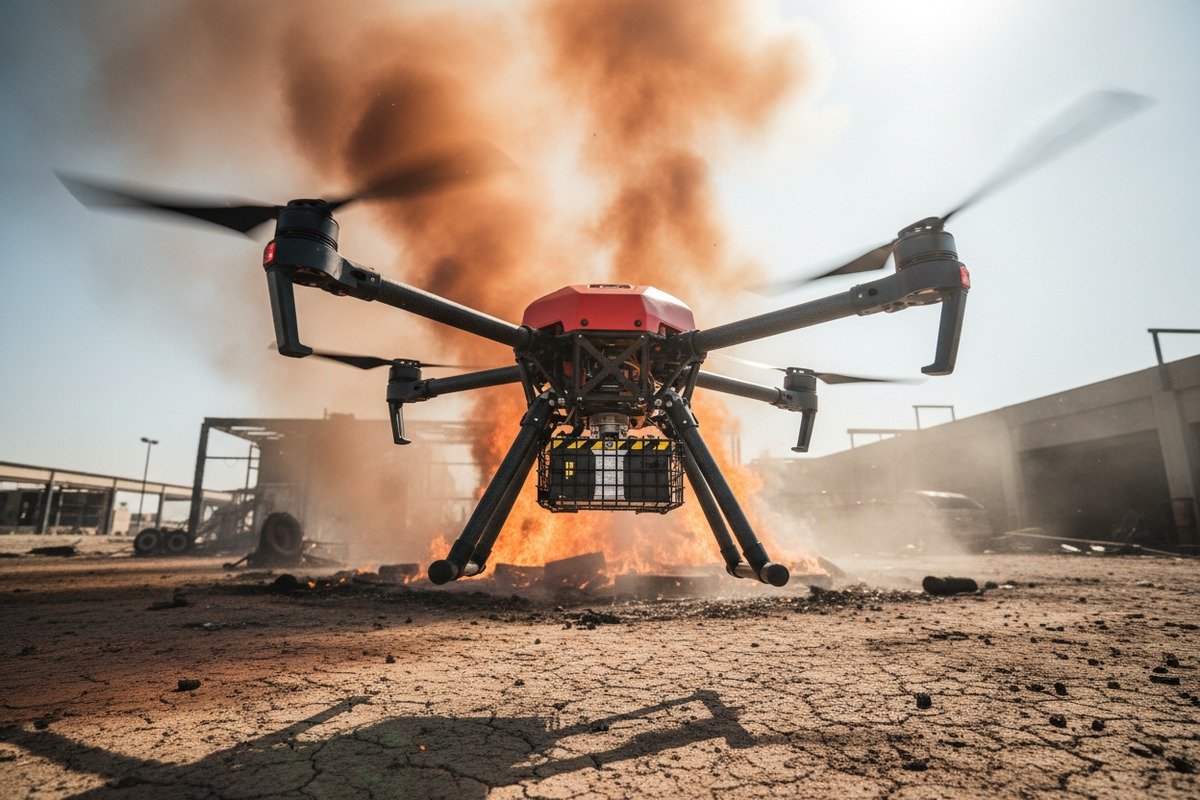
We learned this lesson during field validation tests in Arizona. Batteries that performed flawlessly in our climate-controlled testing chamber showed alarming capacity drops after just weeks of desert deployment. Heat is the silent killer of battery lifespan.
Extreme heat accelerates chemical decomposition inside lithium batteries, reducing cycle life by 40–60% at sustained 50–60°C operation. Internal resistance increases approximately 1–2% per degree Celsius above 25°C, causing voltage sag that compromises flight performance and safety.
The Chemistry of Heat Damage
Heat breaks down the liquid electrolyte inside conventional lithium batteries. This decomposition creates gas buildup, increases internal resistance, and reduces the active material available for energy storage.
At 55°C, chemical reactions accelerate exponentially compared to 25°C operation. Our testing shows batteries operating continuously at elevated temperatures lose capacity nearly twice as fast as those kept cool.
Critical Thermal Metrics to Request
When evaluating suppliers, demand these specific thermal specifications:
| Thermal Metric | What It Tells You | Aanvaardbaar bereik |
|---|---|---|
| Maximum Continuous Operating Temperature | Safe sustained operation limit | 55–60°C |
| Peak Temperature Tolerance | Brief exposure limit | 65–70°C |
| Thermal Runaway Onset Temperature 6 | Safety failure point | >150°C |
| Internal Resistance Increase per °C | Performance degradation rate | <2% per °C |
| Voltage Sag at 50°C | Power delivery under heat | <0.5V drop |
Separator Technology Saves Lives
The separator inside batteries prevents internal short circuits. Traditional polyolefin separators become unstable at high temperatures. Alumina-coated ceramic separators 7 maintain integrity even during thermal stress.
Our production lines now exclusively use ceramic separator technology for firefighting applications. Testing shows less than 2% internal short-circuit risk compared to over 20% for polyolefin alternatives. This difference can prevent catastrophic thermal runaway during fire suppression operations.
Thermal Management Integration
Advanced battery systems include active thermal management. This might include:
- Phase-change materials that absorb excess heat
- Active cooling systems with small fans or liquid cooling
- Temperature-aware BMS that reduces charge rates when hot
- Thermal imaging integration for real-time monitoring
Request documentation on how the supplier's thermal management system extends cycle life under high-temperature operation. Ask for comparative cycle-life data with and without active cooling engaged.
Storage Considerations
Calendar aging occurs even when batteries sit unused. High storage temperatures accelerate this degradation. Request calendar-life data showing capacity retention after 6, 12, and 24 months at various storage temperatures.
Standard lithium-ion systems lose 2–3% capacity per month in storage. Optimal storage conditions typically require 30–50% state of charge and temperatures between 15–25°C. Firefighting fleets often store batteries for months between peak seasons. This calendar aging adds up.
What specific test reports should I request to verify the battery durability of my industrial drones?
During supplier audits at our facility, we've reviewed hundreds of battery specification sheets. Many contain impressive numbers with no supporting evidence. Third-party validation separates marketing claims from engineering reality.
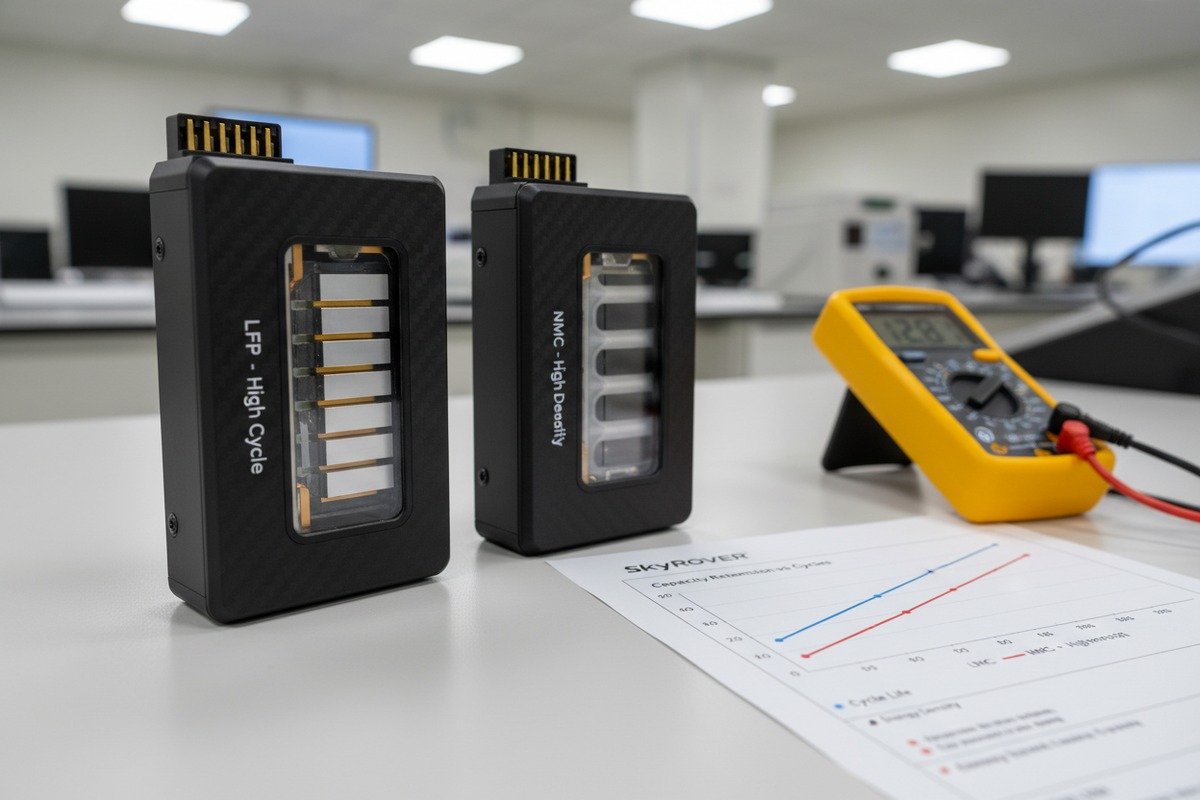
Request IEC 61960 certified test reports from accredited laboratories showing cycle-life curves at multiple temperatures, voltage sag data under maximum load, thermal runaway testing results, and BMS response time documentation. Verify reports include raw data, not just summary statistics.
Essential Third-Party Certifications
Independent testing laboratories provide unbiased verification. Look for these certification standards:
| Certificering | Wat dekt het? | Waarom het belangrijk is |
|---|---|---|
| IEC 61960 | Cycle life and performance | International standard for secondary lithium batteries |
| UL 2054 | Safety testing | Required for US market compliance |
| UL94 V0 | Flame retardant housing | Self-extinguishes within 10 seconds |
| UN 38.3 8 | Transportation safety | Required for air and ground shipping |
| CE-markering | European conformity | Required for EU market entry |
Cycle-Life Test Report Requirements
Comprehensive cycle-life reports should include degradation curves plotted against cycle number at multiple temperatures. Request data at 25°C (baseline), 40°C (warm operation), and 55°C (firefighting conditions).
The curves should show capacity retention percentages at 100, 200, 500, and 1,000 cycles. Linear degradation suggests stable chemistry. Accelerating degradation indicates potential reliability issues.
BMS Documentation
Battery Management Systems prevent catastrophic failures. Request documentation covering:
- Response time to fault conditions (should be under 100 milliseconds)
- Temperature monitoring resolution and sensor placement
- Cell balancing accuracy and methodology
- Over-charge and over-discharge protection thresholds
- Thermal runaway detection and shutdown protocols
Our engineering team reviews BMS specifications for every battery we integrate. Systems without thermal runaway detection are unsuitable for firefighting applications where heat exposure is guaranteed.
Batch Testing and Quality Control
Individual battery testing proves only that one sample performs well. Batch testing reveals manufacturing consistency. Request statistical process control data showing variance across production runs.
Ask suppliers these questions:
- What percentage of batteries from each batch undergo testing?
- What is the standard deviation in cycle-life performance across batches?
- Do you maintain serial number traceability for warranty claims?
- Can you provide historical performance data from previous batches?
Warranty Documentation Review
Warranty terms reveal supplier confidence in their products. Strong warranties specify cycle count guarantees, calendar life commitments, and failure rate expectations.
Watch for warranty exclusions. Some suppliers void coverage for fast-charging use or high-temperature operation. If your firefighting operations require these conditions, the warranty may be worthless.
Request written confirmation that warranty coverage applies to your specific use case, including expected temperatures and charging protocols.
How can I calculate the long-term replacement costs for my firefighting drone fleet based on supplier data?
When we help customers plan fleet deployments, total cost calculations often surprise them. The cheapest battery upfront frequently becomes the most expensive choice over time. Smart procurement requires lifecycle math.
Calculate cost per cycle by dividing total battery cost by expected cycle count at your operating conditions. A $500 battery lasting 1,000 cycles costs $0.50 per cycle, while an $800 battery lasting 2,500 cycles costs $0.32 per cycle. Include charger costs, replacement BMS modules, and downtime expenses.

The Cost Per Cycle Formula
This simple formula reveals true battery economics:
Cost Per Cycle = Total Battery Cost ÷ Cycles to 80% Capacity (at your operating temperature)
Use supplier-provided cycle data for your actual operating conditions, not ideal laboratory ratings. If suppliers only provide 25°C data, reduce cycle expectations by 40–50% for firefighting calculations.
Comprehensive Cost Comparison
Here's a realistic comparison using actual market data:
| Cost Factor | Budget Battery | Mid-Range Battery | Premium Battery |
|---|---|---|---|
| Unit Cost | $400 | $650 | $950 |
| Cycles (at 55°C) | 350 | 700 | 1,200 |
| Cost Per Cycle | $1.14 | $0.93 | $0.79 |
| 5-Year Replacement Count (2,000 cycles needed) | 6 batteries | 3 batteries | 2 batteries |
| 5-Year Total Cost | $2,400 | $1,950 | $1,900 |
The premium battery costs more than twice as much upfront but delivers the lowest total cost over five years.
Hidden Costs to Include
Battery replacement costs extend beyond the unit price:
- Downtime costs: Each replacement takes drones offline. For emergency response operations, this unavailability has real consequences.
- Shipping and logistics: International shipping adds $50–150 per battery depending on size and destination.
- Disposal costs: Many regions require certified battery recycling, adding $20–50 per unit.
- Labor costs: Swapping batteries, updating firmware, and recalibrating systems requires technician time.
- Charger wear: Fast-charging cycles accelerate charger component degradation.
Fleet-Scale Calculations
For fleets with multiple drones, multiply single-battery costs across your entire operation. A 10-drone fleet operating 3,000 total cycles annually might need 3–5 battery replacements per year with budget cells versus 1–2 with premium alternatives.
Factor in your operational tempo. Firefighting operations during peak wildfire season may compress annual cycle counts into just a few months. This concentrated use generates heat stress that accelerates degradation beyond standard projections.
Working With Suppliers on Cost Data
Request itemized pricing breakdowns that include:
- Base battery pack cost
- Compatible charger systems
- Replacement BMS modules (if separately available)
- Extended warranty premiums
- Bulk purchase discounts
Ask suppliers to calculate cost per cycle using their own data. Suppliers confident in their products will provide this analysis. Those who refuse may be hiding unfavorable numbers.
Our sales team provides these calculations for every customer quote. Transparency builds trust and helps procurement managers justify purchases to their leadership.
Conclusie
Battery procurement for firefighting drones demands data beyond marketing claims. Request temperature-specific cycle life, thermal stability metrics, third-party certifications, and cost-per-cycle calculations. This information protects your investment and ensures mission reliability when lives depend on your equipment.
Voetnoten
1. Official international standard for secondary lithium batteries. ↩︎
2. Provides comprehensive information on Nickel Manganese Cobalt battery chemistry. ↩︎
3. Explains the industry standard for battery end-of-life and its implications. ↩︎
4. Defines and explains the concept of battery depth of discharge. ↩︎
5. Offers detailed insights into Lithium Iron Phosphate battery chemistry. ↩︎
6. Explains thermal runaway and its critical safety implications for batteries. ↩︎
7. Details the technology and benefits of ceramic-coated battery separators. ↩︎
8. Authoritative source on the mandatory transportation safety standard for lithium batteries. ↩︎

 English
  Spanish
  German
  French
  Dutch
Dutch  Arabic
