
Every year, our engineering team receives damaged drones from offshore oil rigs ISO 9227 standards 1. The culprit is almost always the same: corrosion. Salt spray, chemical fumes, and humidity destroy unprotected components faster than most operators expect.
Essential anti-corrosion properties for oil drilling firefighting drones include titanium alloy or carbon fiber composite frames, IP67+ sealed electronics, epoxy or polyurethane protective coatings, UV-resistant polymers, and self-healing surface treatments. These features protect against saltwater, chemical exposure, and extreme temperatures common in offshore environments.
Understanding these properties helps you make smarter purchasing decisions MIL-STD-810G certification 2. Let me walk you through the key areas you need to evaluate before investing in a firefighting drone fleet.
How can I verify that the drone frame materials will withstand salt spray and humidity on an offshore oil rig?
Our factory has tested hundreds of material samples in simulated offshore conditions. The difference between a drone that lasts six months and one that survives three years often comes down to frame material selection and proper verification methods.
You can verify frame material durability through salt spray testing certificates (ASTM B117), material composition reports showing titanium or marine-grade aluminum content, and third-party corrosion resistance ratings. Request accelerated aging test results that simulate 1,000+ hours of salt fog exposure before committing to any supplier.

Understanding the Offshore Corrosion Environment
Offshore oil rigs create one of the harshest operating environments for any equipment. The combination of salt-laden air, high humidity, and temperature swings attacks metal components continuously. Splash zones near the water surface experience corrosion rates up to ten times higher than dry zones on the same platform.
When our engineers design firefighting drone frames, we consider three distinct exposure zones. The atmospheric zone faces salt spray carried by wind. The splash zone receives direct contact with seawater. The submerged zone, while rare for drones, can occur during emergency water landings.
Material Selection Criteria
| Type materiaal | Corrosion Resistance | Gewicht | Kostenniveau | Best Application |
|---|---|---|---|---|
| Titanium Alloy (Grade 5) | Uitstekend | Medium | Hoog | Critical structural joints |
| Koolstofvezelcomposiet | Uitstekend | Laag | Hoog | Main frame body |
| Marine-Grade Aluminum (6061-T6) | Goed | Laag | Medium | Secondary structures |
| Anodized Aluminum | Very Good | Laag | Medium | Motor mounts |
| 316L Stainless Steel | Very Good | Hoog | Medium | Fasteners and hardware |
Verification Methods You Should Demand
Request salt spray test certificates following ASTM B117 3 or ISO 9227 standards. These tests expose materials to continuous salt fog for hundreds of hours. A quality frame should show no red rust after 500 hours minimum.
Ask for material traceability documents. These certificates confirm the exact alloy composition. Some suppliers substitute cheaper grades that look identical but fail faster in marine conditions.
Real-World Testing Beyond Certificates
In our experience shipping drones to Gulf of Mexico operators, laboratory tests only tell part of the story. We recommend asking potential suppliers for field performance data from existing offshore customers. A drone that performed well in Norwegian North Sea conditions will likely handle similar challenges elsewhere.
Consider requesting a sample unit for your own testing. Deploy it on your rig for 30-60 days before placing a bulk order. This approach has saved several of our customers from expensive mistakes with other suppliers.
What specific IP ratings and sealing standards should I demand to protect my drone's electronics from corrosive chemical fumes?
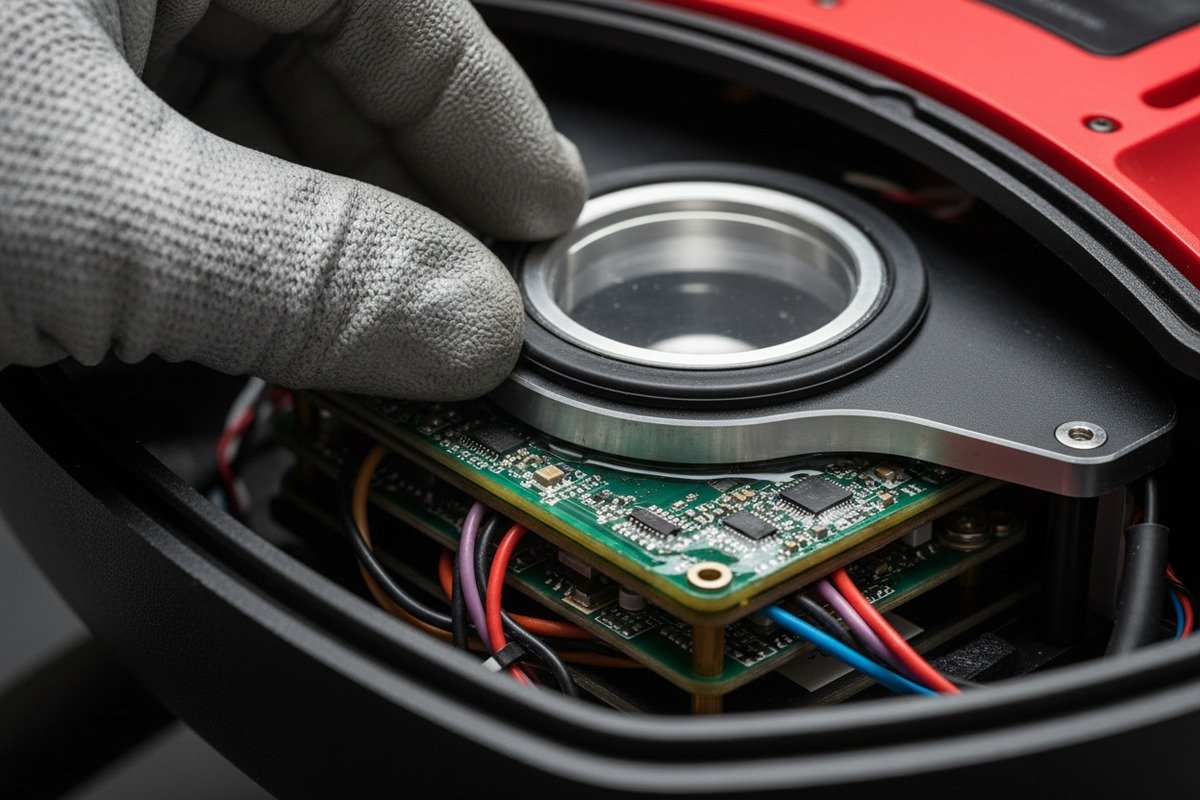
When we calibrate our flight controllers for offshore deployment, electronic protection is our primary concern. Chemical fumes from oil processing, fire suppressants, and cleaning agents create invisible threats that destroy circuit boards within weeks.
Demand IP67 rating minimum for all electronic compartments, with IP68 preferred for critical flight systems. Require MIL-STD-810G certification for chemical resistance, conformal coating on all circuit boards, and hermetically sealed sensor housings. These standards ensure electronics survive hydrogen sulfide, methane, and fire suppressant chemical exposure.
Decoding IP Ratings for Offshore Use
IP ratings measure protection against dust and water. The first digit indicates dust protection (0-6 scale). The second digit indicates water protection (0-9 scale). For firefighting drones on oil rigs, you need both numbers maximized.
| IP-classificatie | Dust Protection | Water Protection | Offshore Suitability |
|---|---|---|---|
| IP65 | Dust-tight | Low pressure water jets | Inadequate |
| IP66 | Dust-tight | High pressure water jets | Minimum acceptable |
| IP67 | Dust-tight | Immersion up to 1 meter | Recommended |
| IP68 | Dust-tight | Continuous submersion | Ideal for critical components |
| IP69K | Dust-tight | High-pressure hot water | Maximum protection |
Chemical Resistance Beyond Water
Standard IP ratings don't address chemical vapor exposure. Oil rigs produce hydrogen sulfide, volatile organic compounds, and various hydrocarbon fumes. These chemicals penetrate standard rubber seals and attack electronic components.
Our production line applies conformal coating 4s to all circuit boards. These thin polymer layers create chemical barriers directly on components. We use silicone-based coatings rated for continuous exposure to corrosive gases at temperatures up to 200°C.
Sealing Technologies That Actually Work
Silicone O-rings degrade faster than most people realize in chemical environments. For our offshore firefighting drones, we specify fluorocarbon (Viton) gaskets 5 for all critical seals. These materials resist oil, fuel, and most industrial chemicals.
Cable penetrations represent common failure points. We use hermetically sealed connectors with gold-plated contacts. The gold plating prevents oxidation that increases electrical resistance and causes intermittent failures.
Sensor Housing Considerations
Thermal cameras, LiDAR units, and gas sensors need protection without blocking their function. We design custom housings with sapphire glass windows for optical sensors. Sapphire resists scratches and chemical attack far better than standard glass or plastic.
Pressure equalization valves prevent seal failure during altitude changes. However, these valves must include chemical filtration to prevent corrosive gases from entering during normal breathing cycles.
How do I evaluate the long-term durability of anti-corrosion coatings before I place a bulk order?
During our R&D process, we discovered that many coating failures only appear after 6-12 months of real-world exposure. By then, your bulk order is already deployed, and replacement costs multiply quickly.
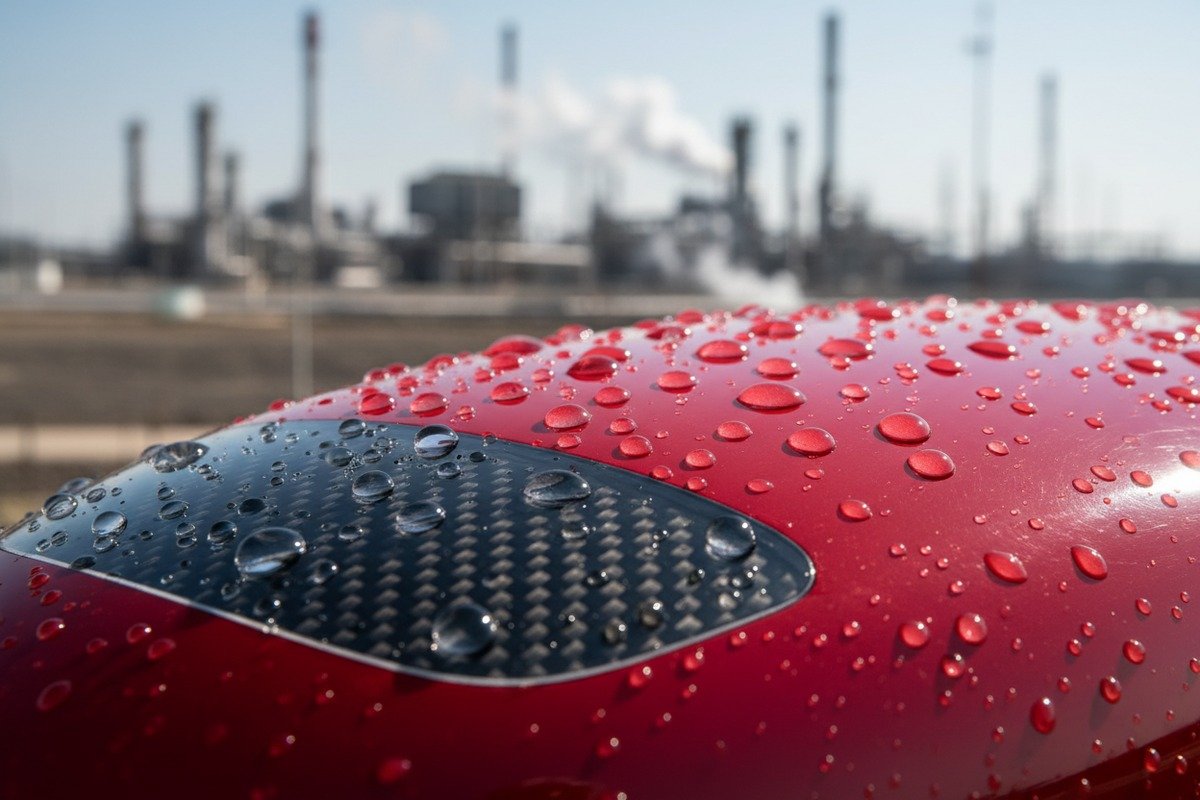
Evaluate coating durability by requesting accelerated weathering test results (ASTM G154), cross-hatch adhesion test certificates (ASTM D3359), and documented field performance data from similar deployments. Require minimum 2,000-hour QUV exposure testing and demand coating thickness measurements on production samples, not just prototypes.
Types of Protective Coatings
Different coating technologies serve different purposes. Understanding their strengths and limitations helps you evaluate supplier claims critically.
| Coating Type | Thickness Range | Duurzaamheid | Repairability | Beste voor |
|---|---|---|---|---|
| Epoxy Paint | 50-150 microns | Hoog | Matig | Frame exteriors |
| Polyurethane | 25-75 microns | Zeer hoog | Goed | UV-exposed surfaces |
| Powder Coating | 60-120 microns | Hoog | Difficult | Metal components |
| Anodizing | 5-25 microns | Uitstekend | Not repairable | Aluminum parts |
| Ceramic Coating | 10-50 microns | Uitstekend | Difficult | Heat-exposed areas |
| Self-Healing Polymer 7 | 20-100 microns | Matig | Self-repairing | Scratch-prone areas |
Accelerated Testing Methods
QUV weathering tests simulate years of UV exposure in weeks. Look for results showing at least 2,000 hours of exposure. This roughly equals 3-5 years of actual outdoor service depending on location.
Salt fog testing should show no coating degradation after 1,000 hours minimum. Some manufacturers only test to 500 hours, which correlates to roughly 18 months of coastal exposure.
Field Performance Documentation
The most reliable indicator of coating durability is actual field performance. Ask suppliers for case studies from existing offshore customers. Request contact information so you can verify claims directly.
When we provide references to potential customers, we include specific deployment locations, operational hours, and any maintenance interventions required. This transparency builds trust and helps buyers make informed decisions.
Production Consistency Checks
Prototype performance often exceeds production quality. Our quality control includes random coating thickness measurements on every production batch. We provide these measurements with shipment documentation.
Request that your supplier perform destructive testing on samples from your actual production run. Cross-hatch adhesion tests reveal whether coatings will peel under mechanical stress. Salt spray tests on production samples confirm real-world durability.
Maintenance and Recoating Considerations
Even excellent coatings require periodic maintenance. Our design philosophy incorporates modular construction for easy coating reapplication. Propeller arms and motor housings can be removed, recoated, and reinstalled during scheduled rig downtime.
Self-healing coatings represent an emerging technology worth considering. These polymers contain microcapsules that release protective agents when scratched. While more expensive initially, they reduce maintenance frequency significantly.
Can I request customized engineering treatments to improve the chemical resistance of my firefighting drone fleet?
Our collaboration with clients on custom designs has taught us that standard off-the-shelf solutions rarely meet the specific needs of specialized offshore operations. Every rig presents unique chemical exposure profiles.
Yes, reputable manufacturers offer customized engineering treatments including specialized alloy selection, custom conformal coating formulations, enhanced sealing configurations, and application-specific surface treatments. Request detailed engineering consultations to match treatments with your specific chemical exposure profile and operational requirements.

Identifying Your Specific Needs
Before requesting customization, document your operational environment thoroughly. What chemicals does your rig process? What fire suppressants do you use? What temperature ranges do your drones face?
Our engineering team uses this information to recommend targeted treatments. A drone operating near sour gas processing faces different challenges than one deployed on a sweet crude platform.
Available Customization Options
| Treatment Category | Customization Options | Typische levertijd | Kosten |
|---|---|---|---|
| Frame Materials | Alternative alloy grades, hybrid composites | 4-6 weeks | +15-30% |
| Surface Coatings | Custom formulations, additional layers | 2-4 weken | +10-20% |
| Sealing Systems | Chemical-specific gaskets, enhanced barriers | 3-5 weeks | +10-25% |
| Electronic Protection | Specialized conformal coatings, potting | 2-4 weken | +5-15% |
| Sensor Housings | Custom materials, enhanced windows | 4-8 weken | +20-40% |
Engineering Consultation Process
The best suppliers provide detailed engineering consultations before quoting customization work. During these discussions, we review your operational parameters, exposure conditions, and performance requirements.
We then propose specific modifications with clear justifications. This might include substituting standard fluorocarbon seals with perfluoroelastomer versions for extreme chemical exposure. Or applying additional ceramic coating layers near high-heat zones.
Minimum Order Requirements
Customization typically requires minimum order quantities to justify engineering and tooling costs. Our standard threshold is 10 units for minor modifications and 25 units for significant engineering changes.
However, we work with customers to find practical solutions. Sometimes standardizing on a higher specification across your entire fleet reduces per-unit costs while meeting special requirements.
Documentation and Certification
Custom treatments require updated documentation. We provide revised technical data sheets, updated test certificates, and modified maintenance procedures for all customized configurations.
For customers in regulated industries, we support certification processes by providing engineering calculations, test reports, and compliance documentation as required.
Long-Term Support Considerations
Before ordering customized drones, confirm that your supplier can support them long-term. Custom parts need spare availability. Specialized coatings need reapplication capability.
We maintain detailed records of all customizations and guarantee spare parts availability for a minimum of seven years after delivery. This commitment protects your investment over the drone fleet's operational lifetime.
Conclusie
Selecting the right anti-corrosion properties protects your investment and ensures reliable firefighting capability when your offshore operation needs it most. Focus on verified materials, proper IP ratings, proven coatings, and customization options that match your specific environment.
Voetnoten
1. International standard for salt spray corrosion tests. ↩︎
2. Found a reputable explanation of MIL-STD-810G standards and testing. ↩︎
3. Found official ASTM International page for B117 standard. ↩︎
4. Protective polymeric film applied to printed circuit boards. ↩︎
5. High-performance synthetic rubber known for chemical and temperature resistance. ↩︎
6. Standard for ingress protection against dust and water, defined by IEC. ↩︎
7. Materials with the ability to repair damage autonomously, often polymers. ↩︎
8. Found official ASTM International page for G154 standard. ↩︎

 English
  Spanish
  German
  French
  Dutch
Dutch  Arabic
