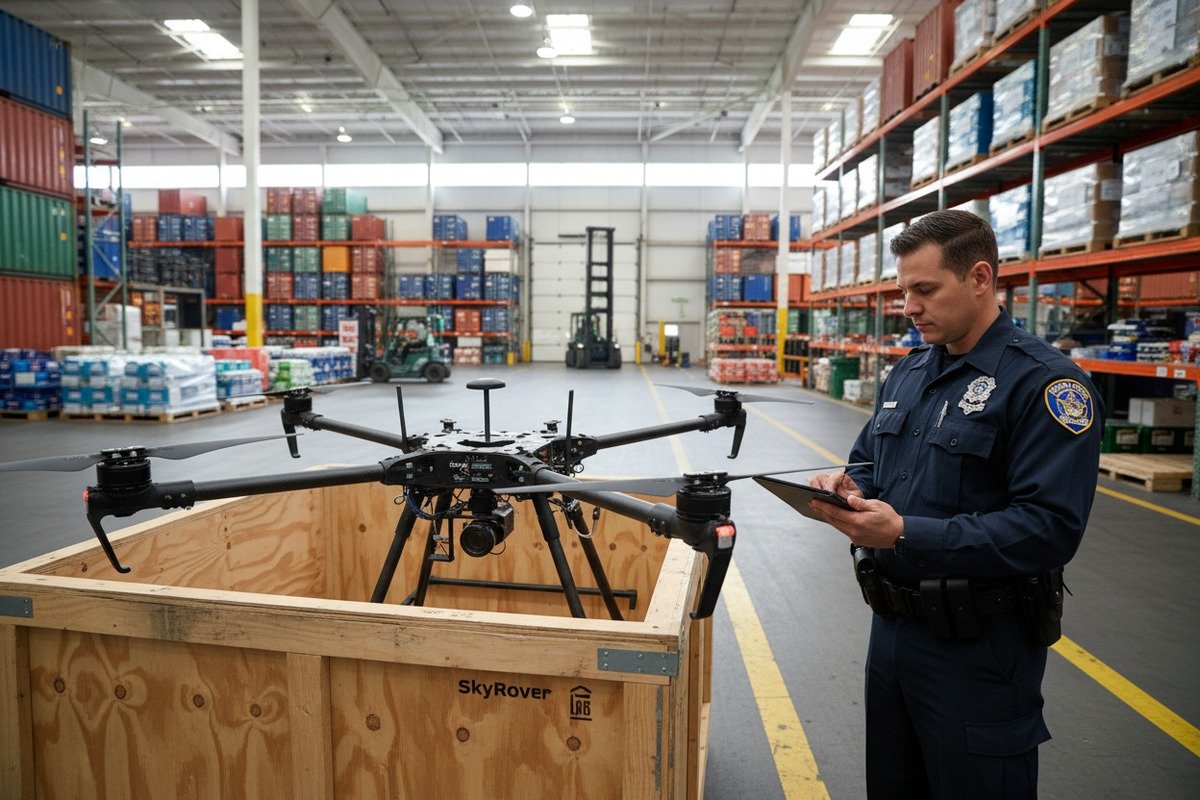
Every week, our shipping team handles dozens of agricultural drone orders bound for U.S. ports. The customs process can feel overwhelming. One missed document or wrong classification code can delay your shipment for weeks.
Key U.S. customs inspection points for agricultural drones include accurate HTSUS classification under code 8806.21.00, country of origin verification, FCC and FAA certification compliance, lithium battery transportation regulations, forced labor prevention checks, and complete documentation including commercial invoices and certificates of origin.
Understanding these inspection points before you place an order saves time, money, and frustration HTSUS classification 1. Let me walk you through each critical checkpoint based on our years of export experience.
How do I ensure my agricultural drone shipment complies with FCC and FAA certification requirements?
When our engineering team develops a new agricultural drone model, certification compliance is built into the design phase. Many importers discover compliance gaps only after their shipment gets held at customs. This creates costly delays and potential seizures.
To ensure FCC and FAA compliance, verify your drone has valid FCC equipment authorization for radio frequency emissions, confirm FAA registration eligibility, and check Remote ID capability. Request FCC ID numbers and test reports from your supplier before shipping.
Understanding FCC Equipment Authorization
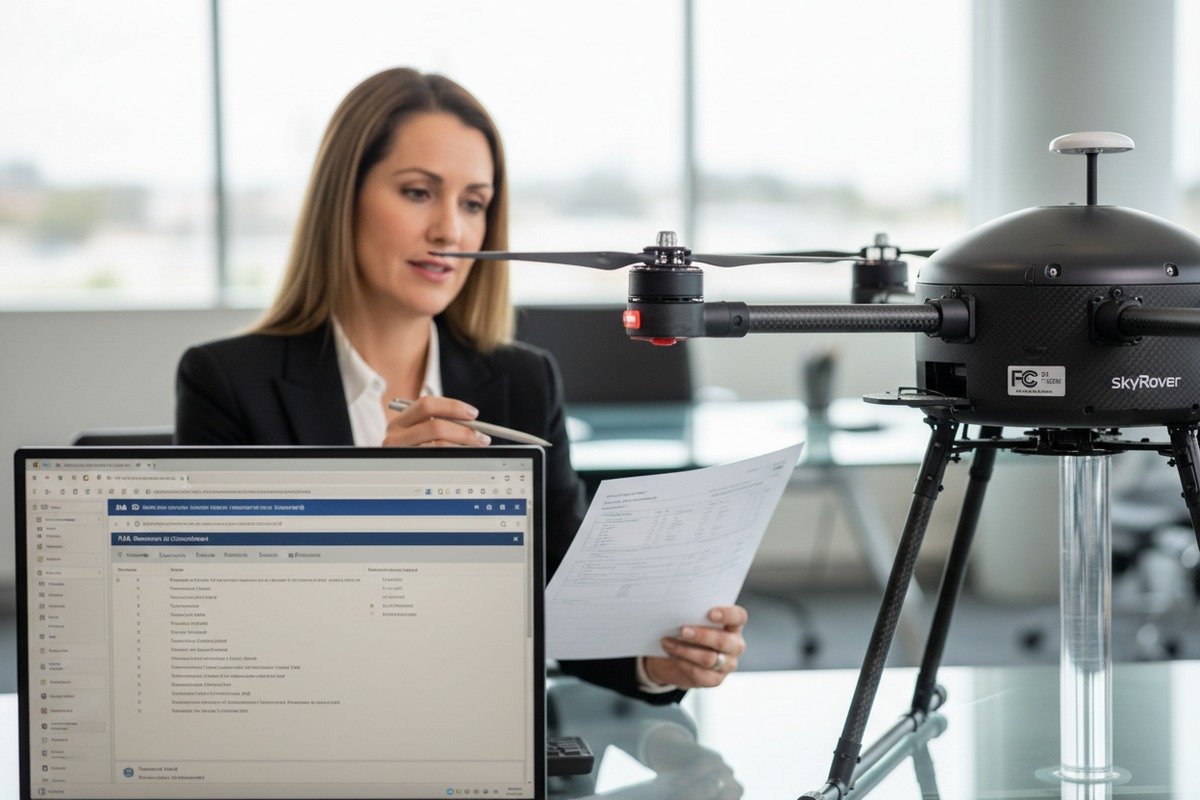
The FCC regulates all devices that emit radio frequencies. Agricultural drones use GPS, remote control signals, and often camera transmission systems. Each of these requires FCC authorization.
Our production facility tests every drone model through accredited labs before export. The FCC ID appears on the drone body and packaging. You can verify any FCC ID through the FCC's online database.
Without proper FCC authorization, customs officers can seize your entire shipment. The FCC maintains strict enforcement because unauthorized devices can interfere with emergency communications and aviation frequencies.
FAA Requirements for Imported Drones
The FAA does not inspect drones at customs directly. However, CBP officers verify that imported drones can meet FAA operational requirements. Drones weighing over 0.55 lbs (250g) must be registered with the FAA before flight.
Since 2023, all drones must have Remote ID capability 2. This system broadcasts the drone's identification and location during flight. Agricultural drones without Remote ID cannot legally operate in the United States.
| Type certificering | Issuing Agency | When Required | Verificatiemethode |
|---|---|---|---|
| Equipment Authorization | FCC | Before import | FCC ID database lookup |
| Drone Registration | FAA | Before operation | FAA DroneZone portal |
| Remote ID Compliance | FAA | Before operation | Manufacturer declaration |
| Part 137 Certificate | FAA | For aerial application | FAA certification process |
Agricultural Spraying Operations
If your drones will spray pesticides or fertilizers, the operator needs an FAA Part 137 Agricultural Aircraft Operator Certificate 3. This is separate from import requirements, but smart importers verify their drones meet Part 137 equipment standards.
Our agricultural spraying drones come with documentation showing tank capacity, spray rate calibration, and drift reduction features. This helps your customers obtain their Part 137 certificates faster.
What specific documentation must I prepare to avoid U.S. Customs delays for my drone order?
In our export department, we have seen shipments delayed for months because of missing paperwork. One customer lost a farming season because their customs broker submitted an incomplete invoice. Proper documentation is your first line of defense against delays.
Essential documents include commercial invoice with detailed product descriptions, packing list, bill of lading or airway bill, certificate of origin, FCC Declaration of Conformity, import permit if required, and proof of HTSUS classification. Missing any document can trigger inspection delays.
Commercial Invoice Requirements
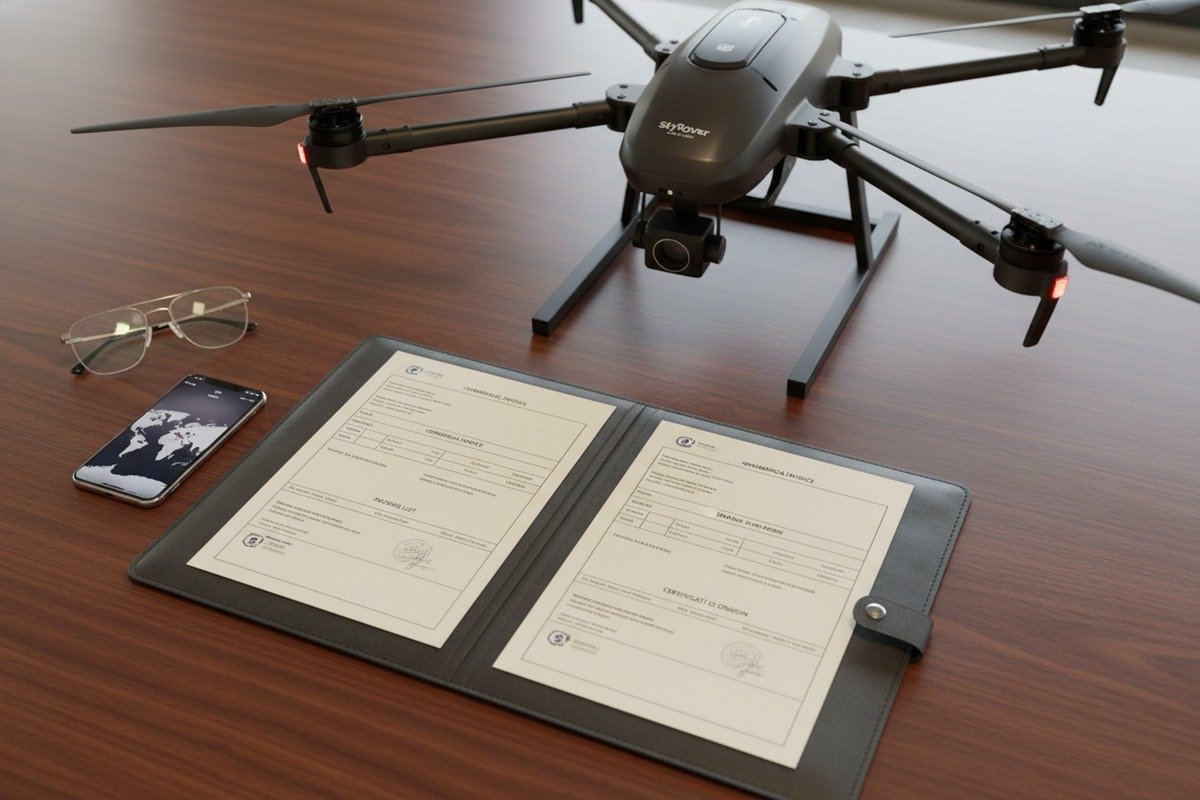
Your commercial invoice must include complete product descriptions. Generic descriptions like "drone" or "UAV" trigger automatic inspection flags. CBP officers need specific details to verify classification and value.
We prepare commercial invoices that list model numbers, component materials, weight specifications, and unit values. This level of detail speeds customs processing significantly.
Checklist essentiële documentatie
| Document | Doel | Wie levert het |
|---|---|---|
| Commerciële factuur | Value declaration and product identification | Leverancier |
| Paklijst | Quantity and weight verification | Leverancier |
| Bill of Lading/Airway Bill | Shipping contract and tracking | Freight forwarder |
| Certificaat van oorsprong 5 | Country of manufacture verification | Supplier or Chamber of Commerce |
| FCC Declaration of Conformity | Conformiteit met radiofrequentie | Leverancier |
| MSDS for Batteries | Hazardous materials compliance | Battery manufacturer |
| Import Bond | Customs duty guarantee | Douane-expediteur |
Country of Origin Documentation
CBP pays close attention to country of origin declarations. The certificate of origin must accurately reflect where your drones were manufactured. This affects duty rates, trade agreement eligibility, and potential restrictions.
Our certificates clearly state manufacturing location, component sourcing, and assembly details. We also provide supporting documentation showing our facility address and production records when requested.
Working with Customs Brokers
A licensed customs broker 6 handles the technical filing requirements. They submit your entry documents, calculate duties, and communicate with CBP on your behalf.
When we ship to U.S. customers, we coordinate directly with their customs brokers. We send document packages before the shipment arrives. This gives brokers time to review everything and ask questions.
Good documentation reduces inspection rates. CBP uses risk assessment algorithms. Complete, accurate paperwork signals a legitimate, compliant shipment.
How do I handle the customs inspection process for the high-capacity batteries in my drones?
Our agricultural drones use high-capacity lithium polymer batteries for extended flight times. These batteries power spraying operations across large fields. But lithium batteries are classified as dangerous goods. Improper handling can result in shipment rejection or destruction.
Handle battery customs inspection by ensuring UN38.3 certification, proper packaging per IATA DGR or IMDG Code, accurate MSDS documentation, correct hazard labels, and battery watt-hour ratings under transport limits. Separate battery shipments may require different handling than drone-integrated batteries.
Lithium Battery Classification
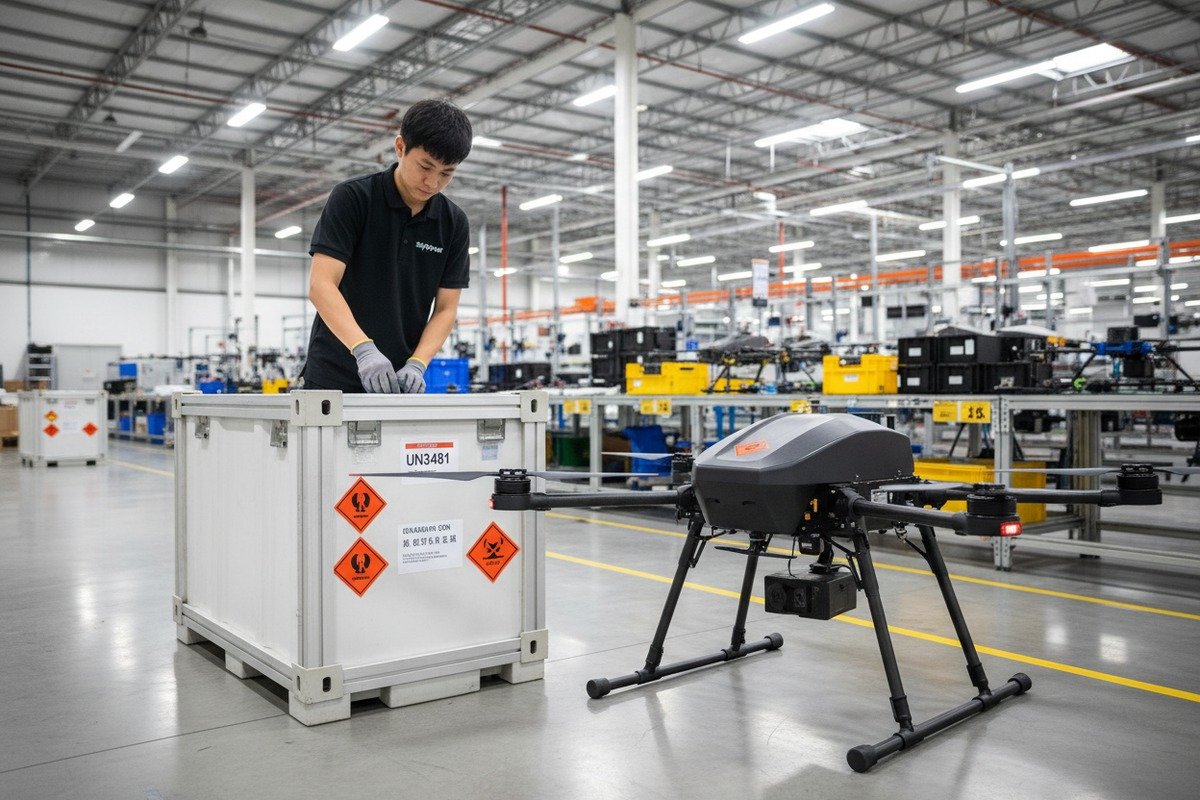
Lithium batteries fall under Class 9 dangerous goods. The classification depends on watt-hour rating and whether batteries are packed with equipment, in equipment, or shipped alone.
Our agricultural drone batteries typically range from 15,000 to 30,000 mAh. These high-capacity cells require careful classification. We calculate watt-hour ratings and provide this information on all shipping documents.
UN38.3 Testing Requirements
All lithium batteries must pass UN38.3 safety testing before international transport. This test series includes altitude simulation, thermal cycling, vibration, shock, and short circuit tests.
We maintain UN38.3 test reports for every battery model we ship. These reports prove our batteries meet international safety standards. CBP and transportation authorities can request these documents at any time.
| Battery Specification | Air Freight Limit | Sea Freight Limit | Documentation Required |
|---|---|---|---|
| Watt-hours per cell | 100 Wh max | 100 Wh max | UN38.3 test summary |
| Lithium content | 2g max per cell | 2g max per cell | MSDS sheet |
| Package marking | UN3481 label | UN3481 label | Shipper's declaration |
| State of charge | 30% maximum | No specific limit | Manufacturer certificate |
Packaging and Labeling Standards
Proper packaging prevents damage and satisfies regulatory requirements. Batteries must be protected against short circuits. This means terminal protection, individual cell separation, and sturdy outer packaging.
Our shipping team uses UN-certified packaging materials. Each package carries proper hazard labels, handling marks, and shipper declarations. We include the emergency contact number and proper shipping name on all documentation.
Air vs. Sea Freight Considerations
Air freight has stricter battery regulations than sea freight. Airlines limit battery state of charge to 30% for cargo shipments. Some carriers refuse lithium battery shipments entirely.
Sea freight allows more flexibility but takes longer. Many of our customers choose ocean shipping for large battery orders. The lower cost and fewer restrictions offset the longer transit time.
For urgent orders, we can ship drones and batteries separately. The drones travel by air while batteries come by sea. This hybrid approach balances speed and compliance.
How can I verify that my Chinese supplier has the necessary export qualifications to prevent customs seizures?
Before we ship any order, we provide customers with our complete export qualification package. Some importers learn too late that their supplier lacks proper credentials. This results in seized shipments, lost investments, and damaged business relationships.
Verify supplier qualifications by checking business registration, export license validity, factory audit reports, FCC/CE certifications, forced labor compliance documentation, and intellectual property ownership. Request these documents before placing orders and verify them through official databases.
Business Registration Verification
Every legitimate Chinese manufacturer has a business license issued by local authorities. This license shows company name, registration number, legal representative, and business scope.
Our business license authorizes drone manufacturing and export. You can verify Chinese business registrations through the National Enterprise Credit Information Publicity System. This free database confirms company legitimacy.
Export License and Customs Registration
Chinese exporters need customs registration to ship goods internationally. This registration number appears on all export documents. Without it, shipments cannot legally leave China.
We maintain current customs registration and inspection quarantine certificates. These credentials prove our authority to export manufactured goods. We share these documents with customers during the qualification process.
Forced Labor Compliance
CBP enforces the Wet ter voorkoming van gedwongen arbeid door Oeigoeren 8 strictly. Shipments linked to forced labor face seizure and penalties. This enforcement particularly affects Chinese manufacturers.
| Verification Item | Hoe te controleren | Rode vlaggen |
|---|---|---|
| Zakelijke licentie | Nationaal Krediet Informatiesysteem voor Ondernemingen | Expired license, mismatched business scope |
| Douane Registratie | Request certificate copy | Missing or expired registration |
| Factory Location | Satellite imagery, audit reports | Undisclosed locations, frequent address changes |
| Supply Chain Documentation | Component origin certificates | Vague sourcing information |
| Forced Labor Compliance | Social compliance audit reports | No audits, refused audits |
| FCC-certificering | FCC ID database | Invalid or missing FCC ID |
Our facility in Xi'an maintains third-party social compliance audit reports. These audits verify working conditions, employee treatment, and ethical sourcing practices. We provide audit reports to customers concerned about supply chain compliance.
Intellectual Property Considerations
CBP seizes goods that infringe patents, trademarks, or copyrights. Your supplier must own or license all intellectual property in their products.
We hold patents for our drone designs and software systems. We can provide patent documentation and licensing agreements. This protects you from intellectual property seizures at customs.
Factory Audit Options
Many importers conduct factory audits before placing large orders. Third-party audit companies verify manufacturing capabilities, quality systems, and compliance practices.
We welcome factory audits. Our facility has passed audits from customers in the United States, Europe, and Asia. Audit reports give you confidence in our capabilities and compliance status.
Pre-Shipment Inspection Services
Before shipping, you can hire inspection companies to verify product quality and documentation completeness. Companies like SGS, Bureau Veritas, and Intertek offer these services in China.
We coordinate with inspection companies regularly. A pre-shipment inspection catches problems before your products leave China. This prevents customs delays and quality disputes.
Conclusie
Navigating U.S. customs for agricultural drones requires attention to FCC/FAA certifications, complete documentation, battery compliance, and supplier verification. Partner with qualified manufacturers who understand these requirements. Your smooth customs clearance starts with proper preparation.
Voetnoten
1. Replaced HTTP 403 with the official Harmonized Tariff Schedule of the United States (HTS) search portal. ↩︎
2. Replaced HTTP 404 with the current official FAA Remote ID for Drones page. ↩︎
3. Replaced HTTP 404 with the official FAA page on dispensing chemicals and agricultural products (Part 137) with UAS. ↩︎
4. Details the FCC’s process for approving radio frequency devices. ↩︎
5. Explains the purpose and importance of a Certificate of Origin in international trade. ↩︎
6. Explains the role and responsibilities of a licensed customs broker. ↩︎
7. Details the international safety testing requirements for lithium batteries. ↩︎
8. Provides official information on the UFLPA and its enforcement by CBP. ↩︎

 English
  Spanish
  German
  French
  Dutch
Dutch  Arabic
